Showing posts with label Guest Blogger Fridays. Show all posts

Friday, April 20, 2012

Guest Blogger, Paul La Rosa: On Writing a Memoir

I consider myself an experienced writer. After all, I’ve been a newspaper reporter, a producer for CBS News, and the author of four true crime books. But I had never written a memoir until I began trying two years ago.

Writing a memoir is different.

My first challenge was deciding which tense to write in. Initially, I chose to write in the past tense, as I’ve mostly done in all my previous books. But then I went to a memoir writing workshop on in Guatemala and began to change my mind. I don’t remember if one of the writers leading the workshop (Joyce Maynard and Laura Lippman) suggested switching to the present tense or if it was one of the other students but that’s what I did.

That might seem minor but it made a world of difference. Writing in the past tense means seeing your life in hindsight, with 20/20 vision, and I didn’t want that. I didn’t want to be always making judgments about the past, as if “Wow, it was much harder being a reporter without the internet.” Boring.

I wanted to experience the past as I had done when I was living it, at least as much as possible and the present tense allowed that to happen. I was seeing my life through the eyes of a kid who was kind of clueless and overwhelmed by most things. I also tried to temper my voice a bit, not using as big words when I was seven years old as in later chapters when I was a college student. That was tricky but one reviewer picked up on it so I thought I was successful.

One is also influenced by other writers, and around the time I began my book Leaving Story Avenue; My journey from the projects to the front page I was reading The Brief Wondrous Life of Oscar Wao by Junot Diaz. I loved the rushing, kind of staccato pace of his writing and tried to give my own writing that feeling of immediacy.

If you read the first chapter of my book – about the fast-paced Daily News city room at deadline -- I think you’ll see what I mean. After that, when my book goes into my backstory, I had to slow down until I got back to writing about the newsroom again.

Writing aside, I also had to make some big decisions about content. When you’re writing about a life, you have to ask yourself a lot of questions: What goes in? What stays out? How honest do you really want to be? Some of what you’ve experienced is bound to be embarrassing; can you stand exposing yourself that way?

Of course, the answer is that you have to be honest to pull a reader into your story but you can never put in every experience you’ve had. That too would be way too boring. So I was always honest – there’s no James Frey moments in the book where I said I spent time in jail but did not – and told some embarrassing stories about myself, but I also left out some moments that would have made me too uncomfortable.

I also decided to end my memoir in 1983. People ask me why and there are several reasons. I felt the story had come to a natural end. The point had been made. I wanted the book to be about my journey from being a clueless kid in a Bronx housing project to being a sardonic writer for the largest circulating newspaper in the country. How did that happen? Well, if you read the book, you’ll hopefully understand.

I’ve lived a lot of life since 1983. I left The News, the paper I grew up with and loved, for television. I also had children. Again, I was placed in situations where I was clueless and had to learn but, you know what, that’s the subject of another book somewhere down the line.

One final note: This time, instead of being published by one of the Big-6 publishers, I’m being published by a small independent in Brooklyn just starting out (Park Slope Publishing). Why? Well, the Big-6 editors loved my book but weren’t giving me the love I wanted to feel. This house in Brooklyn did that, so I traded in broad distribution for mostly buying the book online.
I think that’s how most people buy books these days anyway. I love bookstores but, even when they carried my other books, they were always hard to find. Let’s see how it goes just being available online and in a few bookstores near where I live. I did want the book to be available as a trade paperback and it is because I did not want to ignore those people who love the feel of the page.

At the same time, we made the book available in all e-reader formats so as not to shut someone out. I hope our plans work. We shall see but, hey, you can help by, you know, buying the book. It’s relatively cheap and it’s online everywhere!


About the blogger: Paul LaRosa is a journalist with more than 30 years experience in print and television. For nearly 20 years, he’s been a successful producer for the CBS News magazine “48 Hours.” He’s written for The New York Times, The Los Angeles Times and has authored four previous non-fiction books. To read his blog and for more information, please go to his website: www.paullarosa.com.

Saturday, April 7, 2012

Guest Blogger, Danielle E. Bowers: "The Hunger Games" Film Adapation in Review **Spoiler Alert**

As a big fan of Suzanne Collins’s The Hunger Games, I waited for the movie with a mixture of glee and dread. I wanted to see these amazing books brought to life, but at the same time I knew it couldn’t measure up. Unlike Harry Potter and The Lord of the Rings books, The Hunger Games was written by an author with a strong background in scriptwriting. Her style of writing, the lush descriptions, and the non-verbal communication between the characters transferred well to the big screen.


From setting to costumes to casting, meticulous care was given to the slightest detail. It was obvious that everyone involved with the making of this movie wanted to show Suzanne Collins’s vision of how The Hunger Games looked from her eyes. From the point of view of a fan, I was delighted by this adaptation of the book.


First, casting: there weren’t many casting choices that seemed out of place to me. The casting of each character was a long, drawn-out process with "The Hunger Games" and it shows.


Katniss Everdeen- Jennifer Lawrence hit Katniss out of the ballpark. So much of the story deals with the internal conflicts within the character and she pulls it off beautifully. At the reaping you can see the stunned shock in her face and her struggling to hold it together as she answers Effie’s questions. Someone nominate this girl for an Oscar please.


Gale Hawthorne- Liam Hemsworth brought Gale’s confident masculinity to life. He didn’t get enough screen time in this movie, but what he did get he made the most of. We get a taste of his partnership with Katniss and his intense bitterness toward the Capital.


Peeta Mellark- Josh Hutcherson did a fine job with Peeta, but the movie could have done a lot better with the characterization. We didn’t see a lot of the motivations behind his devotion to Katniss so he came across as simple. Maybe it’s just my general dislike of the character, but I couldn’t connect with him in the movie. The expression on his face when he was reaped was awesome though. This was a kid who knew he was going to die. Maybe if they played the angle that he knew he couldn’t make it out of the arena, but he was going to help Katniss get out, it would have worked better. I couldn’t figure out his motivation for helping her to the point of suicide. Yes, he loves her, I get that. But why? Show me the reasons.


Haymitch Abernathy- I think Woody Harrelson was too good looking in the movie (Haymitch is not that handsome!) and not repulsive enough in his behavior. This is man who has mentored twenty-three years of tributes only to see them die. That’s 46 children. He was too…cheery. But the movie did need a touch of comic relief and he provided it. Maybe in the next two movies we’ll see a darker Haymitch. I did enjoy his reaction to Katniss shooting an arrow at the Gamemakers. It was more in character for Haymitch than how he reacted to that scene in the book.


Cinna- The casting of Lenny Kravitz as Cinna was perfect. The warmth and kindness of the character glowed even if he didn’t g et much time on screen. Another of the small details from the book is the lack of makeup that is rampant in the Capital. Kravitz wears the simple clothing with only a touch of gold eyeliner, just as Collins describes Cinna wearing in the book.

Effie Trinket- I can’t say enough good things about the casting and portrayal of Effie by Elizabeth Banks. Her costumes, the way she talked, and the casual way she treated the tributes going to their death was true to the books. Even the antagonism between Haymitch and herself was shown in the movie.


President Snow- We see a lot of Snow in the movie and he wasn’t what I expected. I thought he’d be shorter, clean shaven, with a greasy feel to him. It didn’t take long for me to get used to Donald Sutherland’s Snow though. He looked like a grandfather, but you could feel the controlling menace coming from him.


Primrose Everdeen - Prim, played by newcomer Willow Shields, doesn’t get a lot of screen time, but in what time she had, she nails the character: fearful, sweet, and too delicate for the harsh world she’s living in.


Now, on to the plot, setting, presentation, et cetera!


The movie doesn’t waste any time launching the viewer into the story, so I’m going to do the same and report as the scenes unfold.


From the start of the film, the viewer sees that the dynamic of Katniss and her mother is complicated. The director and actors pulled it off beautifully here. The tension between the two women is always there and they don’t have to say a word. Small facial cues, awkward conversation, and camera movement spelled out the strained relationship. Whenever Katniss would interact with Prim in a motherly way, their mother would stiffen and interrupt.


District 12 is painted exactly the way I imagined it from the book: depressed, repressed, and faded. The Hob was even portrayed perfectly for the one scene it got. The look and feel of a flea market crammed into a space too small to hold it was right on too. I loved the attention to detail in the District 12 scenes and I can’t find a thing to complain about.


One significant area where the movie deviates from the book is when Katniss gets the Mockingjay pin. Instead of a gift from her friend Madge, who also happens to be the Mayor of District 12’s daughter, she gets it at the Hob from a vendor. This change is a better fit for the movie and allows for a scene between Katniss and Prim where she gives the pin to her sister and promises that if she wears it, nothing bad will happen to her. It becomes a different kind of symbol in the film as a result.


The Reaping. There is so much to say about the Reaping. The filmmakers managed to make it look and feel as grim as it was and the defeat in the children was heartbreaking. Effie Trinket’s garish makeup and costume were appropriately out of place, as was her cheerful attitude. The hot pink against the muted browns and grays of the audience really exemplified the stark difference between the Capital and the districts farther away from it. The three-fingered salute the citizens of District Twelve give Katniss at the Reaping as a farewell and acknowledging her bravery and sacrifice was also powerful imagery and a great choice.


We then see the Capital of Panem through the eyes of Katniss and Peeta while on the train and again when they arrive. Wigs, bright colors, and makeup that would make Lady Gaga jealous fill the screen. It’s here that we get a good look inside the Hunger Games and are given a sense of just how removed the Capital is from the reality of places like District 12.


The movie takes good advantage of being able to show what is going on elsewhere in the story, rather than being limited to Katniss’s point of view as we were in the book. We meet the character of Seneca Crane, for example, someone who is mentioned in the books but who Katniss never meets directly. He is the Head Gamemaker and through his point of view we can see how the Games are the height of entertainment for the Capital. Every stage of the Games is choreographed to a science. The POV flexibility also lets us see the tributes on their chariot rides through the city from the perspective of the audience. We see Katniss and Peeta in their fire costumes and can watch Claudius and Caesar skip over half the tributes, showing the impact the pair was having.


One scene I was looking forward to seeing in the movie was when Katniss gets the opportunity to show off her skills for her score to get sponsors. When she shot the apple out of the pig’s mouth and said, “Thank you for your consideration” I wanted to cheer. The look on the faces of the Gamemakers was perfect. Her out-of-character formal courtesy was also just right.


I was underwhelmed, though, by the start of the Games. In the trailer there is a mechanical voice counting down to 1, providing more suspense, but the voice-over disappears in the movie and is replaced by silent, fiery red, visual numbers. However, when Katniss enters the arena from the lift the filmmakers switched to handheld cameras, making the chaos of the bloodbath at the cornucopia feel real: glimpses of people running, screaming, and locked in battle as Katniss grabbed a bag and was attacked. While it was a strong message, this makes for shaky footage and after a few minutes I felt car-sick, but the overall effect was impactful. The cameras also cut to shots of Prim and Mrs. Everdeen watching the start and Gale sitting alone in his and Katniss’s meadow. That, in particular, was a good shot to add. The fact that Gale can’t stand to watch Katniss going into the bloodbath makes his feelings for her all the more palpable.


While the Games continue there are several scenes involving the control center and the Gamemakers. Obviously, in the books we’re told and shown that the Gamemakers steer the tributes and do things to spice up the action. But in the film, now the viewers can see Seneca Crane ordering the forest fire. One line from the movie that haunts me is Crane laughing, “Get the cannon ready” as he steers Katniss toward the pack of Career tributes.


Then we have the scenes with Rue. If the next two movies are going to be a success then these really had to hit home…and they do. There wasn’t a dry eye in the theater when Katniss was singing and covering Rue’s corpse with flowers. Another scene that stuck with me after the movie was the three-fingered salute she gave the camera to bid Rue farewell. Seeing District 11 watching this and returning the gesture was beautiful. In the book District 11 sent Katniss Rue’s bread as a thank you, but I found the movie’s choice even stronger.


Aside from small changes like Haymitch leaving physical notes in the sponsor gifts, the movie sticks to the book pretty closely during the Games. Peeta and Katniss team up after the rules change and the movie slows down. In the books the connection formed between Katniss and Peeta is subtle and layered; he is the ying to her yang. He needs her strength; she needs his kindness. There is the history of him taking punishment to give a starving girl some bread. He has reasons for his self-sacrifice. Peeta’s blind devotion to Katniss in the movie though, as I mentioned earlier, didn’t hold my interest.


An earlier scene showed Snow explaining to Seneca Crane why it was bad for the underdogs to win the Games. It would improve the moral in impoverished districts and give them hope. In the books, Districts 1, 2, and 3 were always represented by Career tributes who were children trained to compete. These districts are the wealthiest and with the strongest ties to the Capital. Most of the Peacekeepers of Panem come from District 2, for example. Snow’s words in the movie show an interesting facet I never considered in the books, that the Games were rigged so the Career tributes won most of the time.


With the death of Thresh from District 11 the Games are down to three tributes and Katniss knows that this is the finale. We see the Gamemakers again and Seneca Crane ordering the release of the designed Muttation dogs. With the scenes between Crane and Snow, it is not surprising when the plot deviates from the book here. In the book, Cato is fleeing the muttations and leads them to the Cornucopia. Peeta and Katniss are the original targets of the dogs in the movie, possibly because they weren’t supposed to win. In the Gamemakers eyes the star-crossed lovers from District 12 would be killed, leaving Cato from District 2 as the victor.


Instead of being chased by the muttations, Cato was lying in wait on top of the Cornucopia. He was mortally wounded and the scene from the book with him getting Peeta in a strangle hold over the rim was present. Instead of drawing an X on Cato’s hand, Peeta just taps it. Cato falls into the clutches of the dogs thanks to a well-placed arrow to the hand.


The muttations were in the movie were CGI creations with faces that looked almost human. They were identical and I found myself looking for characteristics of Glimmer, Rue, and others in them as they had in the book. This was a little disappointing, but it didn’t ruin the movie for me.


Now, the berries. I liked this scene when many didn’t. It showes that Katniss knew what she was doing. She wanted it to look like the act of two people desperately in love and, while Peeta may have been there, Katniss was doing it knowing that the Capital had to have a victor. It was the ultimate game of chicken.


The ending didn’t have that suspenseful “did he make it or not?” question it does in the book either, as in the movie, Peeta didn’t suffer the leg wound during the battle with Cato and the mutts. In the book he’s bleeding to death even as they are being named the victors. It would have been a powerful scene to include showing Katniss pounding on the glass while the doctors worked on Peeta.


Instead, the viewer is shoved right from the scene where the hovercraft picks them up out of the Arena into a scene with Katniss and Haymitch. There is no fear regarding her or Peeta’s health. Instead, Katniss is cleaned and dressed up, and Haymitch is warning her that the Capital is upset about her double-suicide stunt with the berries.


Then we come to the end when, if a viewer hasn’t read the books, one might be confused by Katniss’s sudden pulling away from Peeta and her decision to forget their time together in the Arena. The books make it clear but the end of the film is so rushed that I left the theater feeling unsatisfied—and I read the book. We’re flung through an emotional and visual wringer and there wasn’t enough mental runway left for a landing. We get scene after scene of the aftermath, but not enough time to process.


For example, the image of Gale waiting for Katniss at the train station was compelling. And seeing how Seneca Crane meets his fate (locked in a room with a bowl of nightlock berries) was a wonderful addition. Even the closing shot of Snow watching Katniss arriving home was a great way to end this movie and a hint that the Games aren’t actually over. But we don’t get to absorb—it’s all just thrown at us then the credits begin to roll. This was probably done on purpose to hammer home the point that there isn’t a happily ever after…at least not yet.


Final thoughts on The Hunger Games: Isn’t it nice not to walk out of a movie in horror whispering, “What did they do to my favorite book?” Finally, the filmmakers are taking the original audience of a movie—the readers—and honoring the vision of an author that made them love the book. Instead of saying, “I can do this better!” filmmakers are taking beloved scenes from the books and bringing them to life. If I were rating this movie against other movies, I would give it seven out of ten stars. As an adaption of the book--eight out of ten stars.


There were small things I didn’t like about the adaption of The Hunger Games, but the new POVs added more than made up for it. If I hadn’t read the books I think I still would have enjoyed the movie. Maybe not enough to go see it again the second night, but the previews would have lured me in. I’m glad I read the books prior to going to see the movie though because I was able to appreciate the scenes, the small details, and the characters better for having enjoyed the story beforehand.


About the blogger: Danielle lives in Massachusetts with her husband and children. A former Veterinary major in college, she now writes full time and travels.

Friday, March 30, 2012

Guest Blogger, Tara Hart: Books I Have Loved Before

Did you have a favorite book when you were a child? Can you still see its cover in your mind? Have you ever wished you still had a copy so you could read it aloud to yourself one last time?


My favorite book when I was learning to read was called Simon's Book by Henrik Drescher. Simon's Book is the story of a sketch-drawing of a boy named Simon, a monster, and what happens when they are left to their own devices on a piece of paper overnight. Luckily for Simon, the fountain pens and ink bottle decide to help him by drawing his escape from the monster. But when that escape plan goes awry, everyone is pleasantly surprised to find that the monster is FRIENDLY! In the morning the illustrator awakens to find a book in place of the sketch he left the night before.

My original copy of Simon's Book was lost along the path of childhood. I don't remember exactly when it disappeared or what happened to it, but I often found myself wishing I could re-read it and visit my old friends: Simon, the monster, the fountain pens, and the good ole ink bottle.

One day, several years ago, I was leaving a grad school class that was held in a library, and as I often did, I stopped to peruse the pile of books the library had culled from their shelves to give away. While looking through the pile of picture books, I couldn't believe it--there was Simon! I was delighted but also sad that my friends had been discarded. I knew they needed to come home with me that day.

Over the years I have thought about gifting Simon's Book to one of my friends' children, to introduce them to the wonderful illustrations and the fun story of Simon and the monster. Every time I go to take the book down off the shelf and wrap it as a gift, though, I stop and think about how sad I was without the book. So, I re-read it "one last time" and fall in love with my old friends all over again. Back the book goes on the shelf.

Maybe someday I will be able to give them away freely, but for now Simon and his friends live on my shelf, and from time to time I take them down and have a visit just so they know that I still love them.

What was YOUR favorite book as a kid?

Friday, March 23, 2012

Guest Blogger, Gloria Loman: Little Things...Like Knowing Your AUDIENCE

Why, hello again, Booklanders!

It’s time for us to chat about something a bit more serious—and infuriating—about the state of the book biz these days.
Earlier this week, B&N announced who the typical Nook customers are: women a little afraid about technology who value content. They nicknamed her “Julie.”
Well, well. Isn’t that nice? Publishing seems to have finally caught up with most other commercial businesses in knowing their customer!!!
A few years ago, I had a savvy entrepreneurial author ask me if the publisher I worked for planned to test her title or cover through focus groups. I laughed, even though I thought it was a great idea. The truth is that all the important decisions made on any book—covers, titles, subtitles, even what gets acquired—are made by publishers, editors, publicists, and marketing managers. These people may not have read the manuscript in question, may not read the genre or category, and may not even have set foot in a bookstore for the past six months. Frankly, I feel that most of my colleagues in publishing have no idea what the average reader is looking to read or how they browse a bookstore.
There are many problems ahead for legacy publishing (Amazon, fewer bookstores to sell more books at, the availability of self-publishing options, e-book pricing) but for me, the elephant in the room is not knowing who our customers—readers—are, and what they are willing to spend $27, $15, $9.99, or $1.49 on.
Consider this: do any of the Big Five publishers (Simon & Schuster, Random House, Harper Collins, Hachette or Penguin) really know who their customers are? No. Should they? Yes.
The best example of how this works successfully is in retail—Bloomingdales’ staff knows the general profile of their customer (suburban/urban, affluent, elegant) as does Wal-Mart (suburban/rural, price conscious, conservative). But smart suppliers know their customer too, even in creative industries. Donna Karan knows who buys DKNY and who buys her couture; why can’t publishers know exactly who we are publishing books for?
Some of the problem lies in publishing folk having the wrong idea about who buys our product. We like to pretend that everyone reads as voraciously as we do and that each individual believes that books are as necessary to life as air, but neither is true. We should be able to target specific audiences, from the lady who is in four book clubs (our most devoted and regular customer base) to the college kid who buys the huge bestseller only after it’s made into a movie (the occasional customer). We need to know why people buy our books in order to give them what they want.
Thanks to technology (which “Julie,” apparently, is scared of), we can easily and cheaply find out. Once again, retail shows us the way. We could work with different sales channels to reward repeat customers. Buy three Vintage books, get one free by redeeming it through Random House’s website, no matter where you buy the other three titles. Continue to offer $1.99 e-book specials each month, but require that readers sign up for the HarperCollins email newsletter (which not only promotes future titles, but also registers a customer’s preferences upon subscription). Imprints at S&S and Penguin could offer a free book if customers take a survey about their reading habits on Twitter. Publishers could even require retailers to tell us what they know about customers (gasp!). All of these techniques could help publishers sell more books, from being able to make better acquisition decisions to improving publicity and marketing campaigns. Retail figured this out long ago: knowing your customer is the key to getting and keeping that customer—and essentially to making more money.
Publishing people rely on each other as “taste-makers,” to intuit the audience for a book—guesstimating at its best. However, most people at the Big Five rarely act like everyday readers: They don’t read their favorite authors anymore (because they’re too busy reading for work); they browse bookstores looking for specific books instead of seeing what catches their attention; and worst of all, when they talk about a popular book, they discuss publishing strategies rather than its plot, characters, or why they enjoyed it (or not).
Hello, publishing people? If we want to save this industry, we need to become readers again. Maybe all you Booklanders can even help publishing folk get back to the true reason we’re all in this business.
Let’s encourage each other to read one book a month that’s not for work, simply something you would have picked up on your own before you read constantly for your job.
Let’s encourage the savvy publishers we work for to use a simple technique that has been successful for so many other businesses: Know your customer and produce product that they love.
If we get to know “Julie” and successfully entertain her, then we will continue to thrive and be relevant. But if we maintain a distance between ourselves and our readers, we are likely to not only fail “Julie” but the readers we all are too.

Friday, March 16, 2012

Guest Blogger, Dan Cabrera: Book Review, "Underworld" by Don DeLillo

When considering America in the twentieth century, trash probably isn’t the first thing that comes to mind. By “trash” I mean garbage, refuse, or waste. The thrown away, tossed aside detritus of everyday life that, when assembled together, paints a complete portrait of who we are. This is what Don DeLillo does with his 1997 novel Underworld*. He takes the discarded, the peripheral, and brings it into full view. He looks at America in the second half of the twentieth century--and our own inner lives--by sifting through the remains. For DeLillo, one nation’s trash is his treasure.

Underworld is a grand tome that is deservedly called a “Great American Novel,” a “Masterpiece,” or just “Very Long.” At 827 pages, DeLillo packs his dense novel full of fascinating characters, richly detailed locations, and enough emotional heft to carry at least five books. DeLillo, along with Cormac McCarthy, is rightly considered one of the titans of late twentieth century American literature. His prose is straightforward and unadorned, yet his language is so evocative and descriptive that you can feel everything he writes. His brilliance lies in his ability to probe the psyche of a person, a nation, an event, or even an object. A master of aesthetics, DeLillo is a pointillist painter with words.

While DeLillo can hone in on a moment and extrapolate reams of data to understand that moment from all angles, he still manages to paint a sweeping picture of Cold War America. Told in reverse-chronological order, Underworld begins in the modern day (which was then the late 90’s) and goes backwards through the decades until 1951. The prologue, practically a novella, focuses on a fateful day in 1951 when “the shot heard round the world” took place. The “shot” refers to a baseball home run during a playoff game between the New York Dodgers and Giants, which, coincidentally--amazingly--took place the same day the Soviet Union exploded their first atomic bomb. Truth is stranger than fiction, but DeLillo uses the day to capture the grandeur, paranoia, and interconnectedness that follows in the rest of the novel.

The home run baseball from that 1951 game connects most of the players in the novel. DeLillo retraces the baseball’s ownership through the decades, going from a local Bronx man to a memorabilia collector to one of the protagonists, a man named Nick Shay. Nick, originally from the Bronx, lives in Arizona where he works for a waste management company, specializing in storing nuclear waste. A soul adrift in the American West, Nick is burdened with a tragic past, much like his country. And like America, he is also burdened with an existential crisis, unsure of the future and unsure how to define himself in this new, modern age.

It’s nearly impossible to summarize the plot, not only because there are many subplots, but because doing so would take so much time that you’d be better off just reading the book. The novel is composed of vignettes, snapshots in time that, when stitched together, tell the story of its characters. Each chapter could work as its own short story, which, for me, made reading the long novel breezy and refreshing. Rather than being taxed with remembering who’s who and what’s what, I was able to enjoy each chapter as its own pearl. In fact, what’s important isn’t necessarily plot points, but the truths behind the stories. On practically every page you could find DeLillo’s thesis statement and also a universal truth (sometimes they’re one in the same). In 827 pages, you would hope that some sentences jump out at you, but in Underworld you get more than you anticipate, and each gem snaps your head back with its profound wisdom.

What general truths, then, does the novel espouse? It’s easy to forget that the 1990s were an innocent age. America, emerging victorious from the Cold War, was the lone superpower. There were little or no threats looming over our heads, and the fear of total annihilation suddenly disappeared overnight. America was in a bubble, a still limbo where we didn’t know our place in the world. We had time to reflect back on the past fifty years, when nuclear bombs were the norm. In the 90s, as in today, with enough time and distance, the thought of a nuclear warhead raining down on us, destroying civilization, seemed preposterous. It was mad. It was also very real. But, despite the fear of global meltdown, people went on living their lives.

Underworld examines those unsung heroes of the Cold War: the everyday people. The men and women who scraped by, trying to make sense of their own purpose while trying to make sense of the hectic, chaotic world around them.

Now, though, in a post-9/11 world, we’re thrown into a different “Us vs. Them” mentality. The world is again in chaos (is it ever not?), and we’re slowly (hopefully) emerging from the terrible shadow of fear. So, while the idea of Underworld may seem quaint and dated now, we can still appreciate its message. In fact, by reading the chapters that take place in the 90s we can see both a prescience and a timelessness in the way DeLillo imagines a nation as eerily paranoid about the future. And today, with the prospect of a nuclear Iran, the novel regains its immediacy.

While DeLillo easily paints a maco picture, he specializes in the micro moments. Interior thoughts, small conversations, quiet reveries, even the minute description of a work of art: these moments make up the underworld of our existence. DeLillo captures them effortlessly, almost stream-of-consciousness, which made the novel flow quickly.

Though I don’t know for sure, parts (especially later parts of the novel) felt autobiographical to me. DeLillo was born and raised in the Bronx, in an Italian-American family, much like Nick Shay. The later chapters that take place primarily in the 1950s Bronx felt a bit removed from the rest of the novel. It was a little too specific, a little too much of a departure from the grand scheme of the rest of the book. Too much time was focused on certain characters while we lost track of others during these chapters, but it’s hard to complain given that the writing and the characterization were still top notch.

DeLillo brings his story back to the present at the very end, and he tries to tie everything (technology included) together in a way that does work, but it actually feels a little quaint given the age we live in now.

There is, of course, a lot more that can be said about Underworld. It’s long, but well worth your time (and I’m not just saying that to make myself feel better about the time I spent on it). It’s a big book and a Big Book, one deserving of all of the praise heaped on it (in 2006, a group of prominent writers named it the number two book in the past 25 years, behind Toni Morrison’s Beloved).

If you see a ragged copy of Underworld in a used bookstore or see the book littering a for sale rack, pick up a copy. Or order a new one and keep it on hand. The small stories that get tucked away shouldn’t be lost forever. Sometimes, they’re the stories that really matter.

*In case you were wondering, this has nothing to do with the vampire vs. werewolf movies of the same name.

Friday, March 9, 2012

Guest Blogger, Gloria Loman: Government Drama. Again.

It's been a while, Booklanders! But when I heard about the DOJ's lawsuits against five major publishers and Apple yesterday, I just couldn't keep my trap shut any longer.

GalleyCat sums up the sitch:
According to a bombshell report in the Wall Street Journal, the Department of Justice could sue Apple and five major publishers for breaking antitrust laws with agency model pricing for eBooks.

A number of civil lawsuits have also been filed against Apple, Simon & Schuster, Hachette Book Group, Penguin Group (USA), Macmillan and HarperCollins for allegedly colluding to fix eBook prices in 2010. Some of these publishers have already spoken with the DOJ in hopes of striking a settlement before the case ever reached court.

Here’s more from the article: “William Lynch, chief executive of Barnes & Noble, gave a deposition to the Justice Department in which he testified that abandoning the agency pricing model would effectively result in a single player gaining even more market share than it has today, according to people familiar with the testimony. A spokeswoman for Barnes & Noble declined to comment.”

If you want to explore some of the legal issues behind the potential suit, consumer rights firm Hagens Berman filed the first agency model lawsuit in 2011–alleging that the agency model for eBook pricing is “in violation of a variety of federal and state antitrust laws, the Sherman Act, the Cartwright Act and the Unfair Competition Act.”

In court filings, the firm speculated that damages “could total tens of millions of dollars.”

Read the original post HERE

Now, let me just say...what the??

Ridiculous, if you ask me (not that anyone ever actually does. I offer my two cents pro bono!). If the book biz as a whole agrees that changes need to be made to agency models or pricing models of any kind, then maybe there's a good reason for it. Maybe the reason such big players are on the same side of this e-book issue is because it's what's best for the industry.

I know, I know, there's more at play here than e-book prices. It comes down to whose selling the e-books and a possible monopoly situation (or at least that's this critic's understanding). And I can see how some people might think publishers and Apple are in "cahoots" but really, let's think about it for a second people. Apple doesn't hold all the e-book cards in the business. Have you heard of a little company called Amazon? Seriously. A new pricing structure industry-wide will change things for all players, not just one.

I see it the way the pubs do, in this case, when they "told investigators that the shift to agency pricing enhanced competition in the industry by allowing more electronic booksellers to thrive" (WSJ).

That's the important piece here, people. Books. Selling more books so the industry can thrive as one.

Just let people read their damn books in peace. The pros will figure out what's best for this changing market. Let's cut the government drama.

Friday, February 24, 2012

Guest Blogger, LG: Put Your Ass in the Chair

What does it mean to be a writer? What does it take?
Putting your ass in the chair, that’s what.
I don’t often feel like a “real” writer because I’m not published. My childhood goal was to be the next S.E. Hinton, to get published before I was 14 years old. That obviously didn’t happen. And that’s okay. Because after working in publishing for three years full-time and now freelance proofreading for the last three, I’ve gained invaluable experience about the publishing process (and made quite a lot of amazing friends along the way, I might add). So I have an advantage over other writers in terms of knowing what the exact process of publication is.
Regardless, that doesn’t make it any less nerve-wracking when sending off query letters to agents, which I’ve been doing since late January. So far, three rejections.
My mantra?
The Help got rejected 60 times… The Help got rejected 60 times…
Of course everyone wants to get that enthusiastic email from an agent decrying “Your book kept me up all night!” or “I missed my stop on the subway because I was so engrossed.” Now that would be a dream come true.
It’s strange to have sent my novel, a piece of work I’ve spent the last four years working on (not consistently, I might add, which makes that “put your ass in the chair” remark all the more true) to complete and utter strangers.
I was terrified the first few times I sent out query letters. Scratch that, I still shake when I send out query letters. But the first request to see my manuscript literally sent me running circles around my kitchen and living room screaming at the top of my lungs.
Okay, it was the first three chapters that were requested with a full synopsis. But still! someone wanted to look at my work! Someone whose job it is to discover new, unpublished writers and bring their work to readers.
After completing this first book, I’m confident that the next one will come a lot easier to me. I already have the story mapped out in my head, the character mostly defined, and the villain in place. But there’s still the matter of putting my ass in the chair. Books don’t write themselves, and books don’t publish themselves, and agents don’t go combing the web for witty bloggers who don’t get a ton of hits (at least I’m pretty sure they don’t).
So, here’s to publication! I’m going to keep trying, no matter how many rejections I get (though I may very well stop at 60 and start submitting the next book–because hopefully it would be done by then). And hopefully I won’t wind up looking like a beaten-up Chung-Li after losing a battle in old-school Sega Genesis “Streetfighter.” Game over.
And yes, I tell myself, I am a real writer, published or not.

NOTE: This article was re-posted with permission from LG's website, The Urban Alaskan. It was originally posted on 2/20/12. Look for more original guest posts from LG on RBtL soon though!

Friday, February 17, 2012

Guest Blogger, Dan Cabrera: Short Stories for a Short Month

It’s common knowledge that February is the shortest month of the year. Having verified this using various reputable sources (thanks, Far Side desk calendar), I can also say a short February is for the best. For some in northern climates, February can be cold and dreary. For others who dislike Valentine’s Day, February can also be cold and dreary. February, in short, can stand to be shorter. Sure, Presidents’ Day cuts the workload down by one day, but there’s little time to think of that as we trudge through the dead of winter hoping for the first signs of Spring (groundhogs be damned).

Luckily for us, February remains the shortest month and we’re already halfway through. Unluckily for us, this is a leap year, which means we’ll see that rarest of days, February 29. But fret not, because I have a fitting way to help you while away the hours: read some short stories! Revel in the brevity of the short form as you hibernate through the extra February gloom.

Here, for your reading pleasure, are some classic (and should-be-classic) short stories for you to enjoy:

“The Most Dangerous Game” by Richard Connell (You can read it for free here!)

Chances are you’ve read this one (along with others on the list), and for good reason. This classic thriller tells the tale of a man who washes ashore of a mysterious island, only to discover an amiable host turns out to have a deadly secret. A hunting expedition comes with a twist that has been redone and parodied throughout the years, but this short, effective story gives you chills, action and a nice twist. Reading this for class in middle school made me realize how fun literature can be.

“All The King’s Horses” by Kurt Vonnegut

A story similar to the one above, this follows an American colonel, his family and crew emerging from a plane crash in the Chinese jungle. A Chinese officer captures the party and sets up a game of chess with the American colonel, except the pieces are his compatriots. Lose a piece and that player loses their life. This more dangerous game plays out as a taught drama and also as a nice piece of Cold War analogy. This story can be found in one of Vonnegut’s collections, Welcome to the Monkey House.

“Where Are You Going, Where Have You Been?” by Joyce Carol Oates (You can read it for free here!)

A very popular short story, this one from prolific writer Joyce Carol Oates seems simple, kooky, frightening and perplexing all at once. A young girl, just at the point of blossoming into adulthood, is confronted by Arnold Friend, a strange young man who appears outside of the girl’s house. Through their interaction, the girl comes to realize the power--for good and bad--of her budding sexuality. We’re never quite sure who Arnold is supposed to be, or what exactly he represents (he can be “A. Friend” or, if you remove the ‘r’s, “An old Fiend”). What’s clear is the young girl, and you the reader, will come out changed when Arnold leaves. Fun fact, Oates devoted the story to Bob Dylan, though some claim this admission really means Oates based Mr. Friend off the singer.

“St. Lucy’s Home for Girls Raised by Wolves” by Karen Russell

Another coming-of-age story, and similarly obtuse and perplexing, “St. Lucy’s” follows a group of what appear to be wolf-girls at a boarding home. The story is told from a young pup’s point of view, so we’re jostled about, trying to make sense of her bizarre story. Once it becomes clear that these wild young animals are being domesticated by the strict nuns of the home, everything falls into place. A nice allegory for growing up and conforming to strange societal norms, you’ll find where these wild things are to be exciting, poignant, and a little sad. This story can be found in Russell’s collection of the same name.

“Wait” by Roy Kesey

A perfect short story to read during a layover, “Wait” takes place at a nondescript, run-of-the-mill airport that exists everywhere and nowhere. A mysterious fog surrounds the airport, causing delays and grounding flights. Soon, the stranded passengers react normally, but as time passes tension escalates until there’s complete pandemonium and all hell breaks loose. If the girls in “St. Lucy’s” are forced to civilize, here we see what happens when civilization breaks down. Surreal, dark, and side-splittingly funny, “Wait” takes the history of human experience and crams it into an airport terminal. You can find this story in The Best American Short Stories 2007.

The beauty of the short story is that there are countless great ones available and they take a fraction of the time to read. Clearly, this list is missing many, many short stories. But then again, it’s a short list. What are some of your favorite short stories?

Friday, February 10, 2012

Guest Blogger, Allison Pang: Cover Me

Don’t judge a book by its cover.

We hear that all the time, but the truth of it is that covers *do* matter. Like it or not, many readers often use covers to determine the “quality” of a book, even if what’s on the outside isn’t indicative of the inside. I know when I browse bookstores, my eye is usually drawn to particular types of covers, and on a shelf with hundreds of potential stories, I’m going to go to the ones that attract my attention first.

Not that it’s always a match.

I’m sure we’ve all found books with fabulous covers that were dogs inside…and discovered gems with lousy covers. Given the sheer number of books and eBooks out there, I do think that we tend to gauge the professionalism of a book by the care given to the outer shell.

This is probably particularly true in the self-published realm. You see a lot of advice given about editing, but it’s also fairly common to see requests to not skimp on the cover.

So what makes a good cover? What makes a bad cover?

The thing is, with some obvious exceptions, it’s hard to really tell. What one person finds appealing, another may not. What publishers are trying to bank on is finding a cover that will appeal to the largest range of potential buyers.

Which is great – but that’s when we start seeing trends. When I look over my bookshelves, I can almost immediately pick out which fantasy books were from the late 80’s – simply due to the style of the images, and the fact that they’re all done by 2 or 3 artists who were fairly popular back in the day. (Lots of dragons and scantily clad women, of course.) Or bodice ripper romances graced with manly men and women falling out of their clothes? (And random animals in the background and huge swirly fonts proclaiming Scarlet Something, or Heated Whatever.)

Take Urban Fantasy today – how many covers have kick-ass women in leather? Or shirtless men with abs of steel for Paranormal Romance? (and how many covers have we seen lately where it’s not even an entire person? Just an abdomen, glistening in the moonlight?)

And then there’s sometimes a bit of reader backlash. (And sometimes mockery. Just check out WTFbadromancecovers.tumblr.com if you want to see what I mean.)

They want something different, but how can they find that different book when they all start to look the same? And if I had to ask you, what cover have you seen in the last few years that instantly became a trendsetter? That you would recognize on sight?

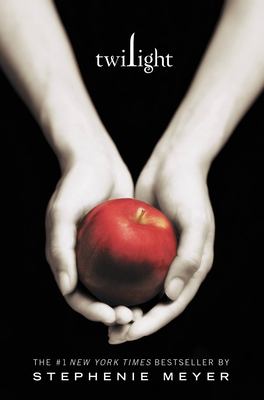
For me, there are very few. Maybe Twilight, which I’ve never read, but the minimalist color scheme and stark background make for immediate recognition. (And a fair number of copycats afterward.)

It becomes a fine line, really. We want readers to know what sort of book they’re picking up because it makes it easier for them to choose what to read – I’d expect something sexy for an erotic romance, for example. But we also want to have them stand on their own. (God, it’s almost like high school, isn’t it? “Be yourself…but don’t be so different that no one will have anything to do with you!”)

So what are your favorite covers? Most hated covers? What is it about a cover that leads you to buy or read a book? Do covers matter at all?


Note about the blogger (from Danielle!): Allison's second novel in her Abby Sinclair series, A Sliver of Shadow, hits shelves Tuesday, February 28th! The sequel to A Brush of Darkness, it's highly recommended! (You can also read the first chapter excerpt HERE.)

Comment on this post for a chance to receive a set of Abby Sinclair novel bookmarks..and a copy of the new release!

The recipient will be picked at random one week from today--Friday, February 17, at 3 p.m.!

Friday, February 3, 2012

Guest Blogger, Linnea West: "Swoon-worthy" Eugenides?


So many questions come to mind when I think about the author Jeffrey Eugenides, who recently published The Marriage Plot, won a Pulitzer Prize for his novel Middlesex, and has many fans familiar with at least the screen adaptation of The Virgin Suicides. For instance, why does he have a billboard in Times Square? Possible answers I tossed around include:
  • Because for a cult-like following, Eugenides is remarkably mainstream, and thus worth the promotional dollars.
  • Because the author is a bigger selling point than the book itself.
  • Because the book publishing industry is suddenly flush with cash.

I tend to think the correct answer is the first option. However, as I will come to later, the middle option has turned out to be true at least by my reading of things. The third answer is categorically incorrect, and reeks of wishful thinking.

I was very much looking forward to his newest book, The Marriage Plot, after finishing Middlesex (Note: I have not read The Virgin Suicides), which might be why it doesn’t nearly measure up. After all, it is COMPLETELY different. They both deal with coming-of-age but that is the only commonality. How does Eugenides manage to write novels that sound like they come from different people? [Answer: I have no idea. It’s remarkable.]

In case you aren’t familiar, Middlesex is the story of Cal, formerly Calliope, as he navigates growing up in Detroit and discovering that he is a hermaphrodite against the epic backdrop of his Greek origins and family lore. The Marriage Plot is a love triangle composed of three 1980s-era Brown University graduates—Madeleine, Mitchell, and Leonard—and follows them as they graduate and enter the real world.

The two books differ in some key respects:

Middlesex

The Marriage Plot

Exuberant and mannered narrative voice.

Matter-of-fact narrative voice, almost lack of style.

Unusual, strange, and epic story.

Common, relatable, and realistic story.

One protagonist, who the reader loses sight of at times amid family history and tangents.

Three protagonists always at the forefront and driving the plot


But in terms of reading experience, at least my personal reading experience, they also differed:


Middlesex

The Marriage Plot

Sympathetic and identifiable characters, even though much of the family the reader knows only superficially and, statistically, the reader is not likely to be a hermaphrodite.

Unimpressive-to-unlikeable characters, though the reader gets to know the three central characters ad naseum.

Interesting, despite long-winded descriptions and stories unrelated to the central plot.

Boring, despite more focused narrative (and not even because of the long philosophical excerpts from Barthes!)


Another remarkable thing is that for all intents and purposes, The Marriage Plot is the easy book of the two to write. He’s basically pulling together ordinary characters from his own life experiences and giving them a predictable narrative enacted by thousands of people. This could be your life; it could be mine. It could be a Lifetime Made-for-TV movie. But what Eugenides fails to do is take this raw material and transform it into something more, something that is art. How odd that Middlesex, a story about things he’d never experienced or even interviewed people about, came so trippingly off his tongue, and The Marriage Plot, for all its knowable ease, is such an unimaginative, unsuccessful quagmire of words in which the reader gets stuck again and again? Perhaps the fantastical is easier to write.

Another question that torments fans of the author’s work is the long lag time between books. Eugenides is no James Patterson. The Virgin Suicides came out in 1993, Middlesex was published in 2002, and it was only this October, 2011, that The Marriage Plot entered the world. Why does he take a decade to write one book? He’s probably not a lazy fat cat living off the wealth of movie rights, although I couldn’t say for sure. In the case of The Marriage Plot, this decade-long wait occurred at least in part because he was midway through a different novel before deciding he was writing the wrong story and beginning anew. I don’t know what he was working on, but this seems like an error in judgment.

For all the hoopla, Middlesex is the novel that deserves the billboard, less so the dull and lifeless Marriage Plot.


About the blogger: Linnea West writes about art and culture and a little bit of everything else on her blog Art Ravels. You can also follow her on twitter at @linnea_west.