Showing posts with label RIP. Show all posts

Wednesday, December 17, 2014

Clifford the Big Red Dog Creator, Norman Bridwell, Passes at 86

I don't know about y'all, but I always loved Clifford the Big Red Dog. He was awesome--the size of a house but the gentleness of a mouse! (Why, yes, I did just make that silly phrase up just now. :-p) The Clifford books were excellent books for me--and remain to be for others--to not only practice reading but to get me interested in the stories being told between the covers. That's why it saddens me today to hear that Norman Bridwell, the Clifford book illustrator and creator, has passed away at 86.

The Boston Globe posted a lovely article about Bridwell and his Clifford-driven endeavors online today:

To hear Norman Bridwell tell the story — and hundreds of millions of children around the world have read his tales for more than 50 years — Clifford the Big Red Dog almost never came to be. 
Mr. Bridwell was living in New York City in the early 1960s with his wife and their new baby, and money was short. He was working as a commercial artist when his wife, Norma, suggested he try his hand at illustrating children’s books. 
“I made some samples and took them to eight or 10 publishers and was rejected by every one,” he told the Globe in 2004. “One young editor said, ‘You’re not very good. No one’s going to buy your artwork. Why don’t you try a story, and if someone buys it, then you could do the art.’ She pointed to a sample painting, of a little girl and a big red dog, and said, ‘Maybe this could be a story.’ ” 
At home, he wrote the first Clifford story, making the title character even bigger. As for the dog’s color, “it was red because I happened to have red paint on the drawing table that night,” he said in 2004. 
After the manuscript sat for a while in the slush pile of one publisher, a freelance manuscript reader handed it off it to Scholastic books, which offered Mr. Bridwell a $1,000 advance for the story and $875 for the art. 
That first story grew into an empire of more than 150 titles, 129 million books in 13 languages, a popular PBS TV series, and an ever-expanding list of merchandise. Mr. Bridwell, so modest about his creation that he told the Globe he had “never been able to figure out why it was so popular,” died Friday in Martha’s Vineyard Hospital, after a fall in his Edgartown home, the Associated Press reported. He was 86. 
“A lot of people were Clifford fans, and that makes them Norman fans, too,” his wife told the AP. 
The late actor John Ritter lent his voice to the PBS “Clifford” series, which debuted in 2000. The Clifford character also has been featured in a movie, popup books, and coloring books, as plush toys and beverage napkins, in postcards and puzzles, and as dinnerware and underwear. 
The smallest in a litter of puppies, Clifford grows to more than 25 feet tall and is cared for by Emily Elizabeth, a character named for Mr. Bridwell’s daughter, who was an infant when he wrote the first book. The book version of Emily narrates the stories, in which she and Clifford go about rather ordinary family activities that are complicated by his size. 
“The magic of the character and stories Norman created with Clifford is that children can see themselves in this big dog who tries very hard to be good, but is somewhat clumsy and always bumping into things and making mistakes,” Dick Robinson, chairman, president, and chief executive of Scholastic, said in the company’s statement announcing Mr. Bridwell’s death. “What comforts the reader is that Clifford is always forgiven by Emily Elizabeth, who loves him unconditionally.” 
Mr. Bridwell thought Clifford’s mistakes made him all the more appealing and hoped the books would help young readers become more forgiving. Though he brushed off suggestions that he based Clifford on himself, his wife thought otherwise. 
“He’s never been able to recognize that,” she said in an interview with the AP a few years ago. “Clifford tries to do the right thing, Norman tries to do the right thing, and he makes a mess of it. But he’s the most lovable grown-up man. He’s just a nice guy.” 
Their daughter, Emily Elizabeth Bridwell Merz of Carlisle, told the Globe in 2004 that “the whole spirit of Clifford is born out of my father’s sense of humor, which I always appreciated while growing up. To me, Clifford is sort of an extension of my Dad, and for that I have a great deal of love for the character.” 
Born in Kokomo, Ind., Mr. Bridwell took to drawing at an early age. 
“I was not good at sports and my high school shop teacher, after a few days of class, took my tools away, telling me, ‘Here’s a pad of paper instead. You seem to like to draw: stick to that,’ ” he said for his biography on the Scholastic website. 
Aspiring to be a cartoonist for The New Yorker magazine, he studied at the John Herron Art Institute in Indianapolis before moving to New York City, where he took classes at Cooper Union. 
In New York, he met Norma Howard, who also was from Indiana, and they married. 
When Mr. Bridwell wrote the first Clifford story, he initially called the title character Tiny, a name his wife found too obvious for a 25-foot-tall dog. She suggested Clifford, “after an imaginary friend from her childhood,” Mr. Bridwell said in his Scholastic biography. 
Norma also bound the manuscript with a red gingham cover before they sent it to a publisher. 
“A lady called from Scholastic and said, ‘We have a book here called Clifford, and we’d like to publish it.’ I was completely stunned. It was a bad year, and we needed something. We had a new baby,” Mr. Bridwell recalled in 2004, adding that he “asked them, ‘If it doesn’t sell, do I have to give back the advance?’ ” 
He was so sure lightning might not strike twice that according to his Scholastic biography, he told his wife: “Now don’t count on there being any more. This one is just a fluke. I don’t know if there will ever be another one.’ ” 
Dozens of books and decades after that initial sale, Mr. Bridwell had not tired of finding new adventures for Clifford or of creating books for children. 
“I’m very thankful,” he said in the 2004 Globe interview. “I love the kids. You couldn’t think of a better audience to write for.” 
The Bridwell family moved to Martha’s Vineyard in 1969, keeping a place on Beacon Hill as well. 
In addition to his wife and daughter, Mr. Bridwell leaves a son, Timothy, and three grandchildren. Mr. Bridwell’s wife told the AP that a public service will be announced, probably next year. 
Scholastic announced that before his death, Mr. Bridwell completed two Clifford books that will be released in 2015: “Clifford Goes to Kindergarten” and “Clifford Celebrates Hanukkah.” 
When meeting with his young readers, Mr. Bridwell drew from his own experience of having manuscripts rejected to encourage children to persevere: “You might do a drawing today that you think is nice, and you show it to the other kids but they don’t like it, or the teacher won’t put it up. But don’t let that discourage you. That’s just today. You never know what you are going to do tomorrow.” 
Even after filling shelves around the world with Clifford books, Mr. Bridwell was matter-of-fact about how he wrote and illustrated each one. 
“A woman once asked me about my process in writing it,” he said in the 2004 Globe interview, “and I said, ‘No process at all. He just seems like the kind of dog it would be fun to own.’ ” 
Read the original piece HERE

Thank you, Mr. Bridwell for your inspiring tales and characters. Rest in peace. 

Wednesday, May 28, 2014

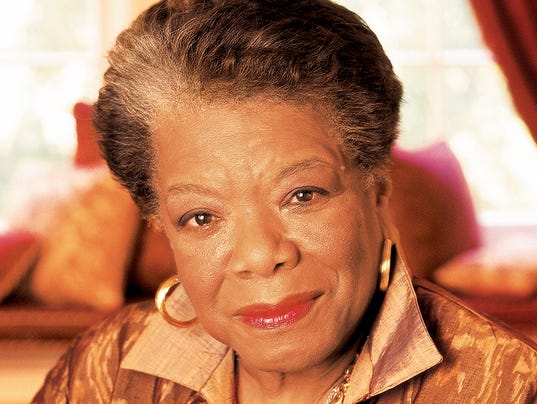
Maya Angelou Dies at 86

Photo: Dwight Carter; from USAToday.com post
Maya Angelou was more than a poet. She was a professor, a dancer, a cook, an actress, a civil rights activist, a mother--the list goes on and on. While I will admit to never having read much of her actual published work, I have found her to be an inspiration based on her life and actions alone. Often quoted, her thoughts on love and life and being true to oneself always spoke to a deep part of my soul.

CNN reports on her death (with a lovely tribute video, as well), though the cause has not yet been reported. A press conference will be held at 11:45 a.m. EST, according to Fox News.
(CNN) -- Maya Angelou, a renowned poet, novelist and actress, has died at age 86, her literary agent, Helen Brann, said Wednesday. 
She died at her home in Winston-Salem, North Carolina, Brann said. 
Also a professor, singer and dancer, Angelou's work spans several professions. In 2011, President Barack Obama awarded her with the Medal of Freedom, the country's highest civilian honor. 
One of Angelou's most revered books was "I Know Why the Caged Sings."
Writer Julian Mayfield is said to have described the autobiography as "a work of art which eludes description." 
Angelou spent her early years studying dance and drama in San Francisco but dropped out at age 14, instead becoming the city's first African-American female cable car conductor.
Angelou later returned to high school to finish her diploma and gave birth a few weeks after graduation. While the 17-year-old single mother waited tables to support her son, she acquired a passion for music and dance, and toured Europe in the mid-1950s in the opera production "Porgy and Bess." In 1957, she recorded her first album, "Calypso Lady." 
In 1958, Angelou become a part of the Harlem Writers Guild in New York and also played a queen in "The Blacks," an off-Broadway production by French dramatist Jean Genet. 
Affectionately referred to as Dr. Angelou, the professor never went to college. She has more than 30 honorary degrees and taught American studies for years at Wake Forest University in Winston-Salem. 
"I created myself," she has said. "I have taught myself so much." 
Angelou was born April 4, 1928, in St. Louis. She grew up between St. Louis and the then-racially segregated town of Stamps, Arkansas. 
The famous poet got into writing after a childhood tragedy that stunned her into silence for years. When she was 7, her mother's boyfriend raped her. He was later beaten to death by a mob after she testified against him. 
"My 7-and-a-half-year-old logic deduced that my voice had killed him, so I stopped speaking for almost six years," she said. 
From the silence, a louder voice was born. 
Her list of friends is as impressive as her illustrious career. Talk show queen Oprah Winfrey referred to her as "sister friend." She counted Martin Luther King Jr., with whom she worked during the civil rights movement, among her friends. King was assassinated on her birthday. 
Angelou spoke at least six languages and worked at one time as a newspaper editor in Egypt and Ghana. It was during that time that she wrote "I Know Why the Caged Bird Sings," which launched the first in a series of autobiographical books. 
"I want to write so well that a person is 30 or 40 pages in a book of mine ... before she realizes she's reading," Angelou said. 
She was also one of the first black women film directors. Her work on Broadway has been nominated for Tony Awards. 
Before making it big, the 6-foot-tall wordsmith also worked as a cook and sang with a traveling road show. 
"Look where we've all come from ... coming out of darkness, moving toward the light," she once said. "It is a long journey, but a sweet one, bittersweet." 
See the original post HERE 

While you will be missed, Maya, you will certainly live on in your words and in the inspiration you've provided for so many. Rest in peace.

Thursday, June 28, 2012

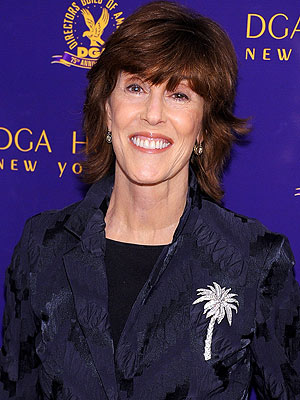
Guest Blogger, LG: Dear, Nora -- A Tribute to Author Nora Ephron


My husband heard from Michael D. that it's my fault you're here. I'm thrilled to hear it. And wish you all the very best ....

Nora Ephron

Nora Ephron is one of the reasons I moved to New York City in 2006. She wrote pragmatically yet dreamily about the city I’d fantasized over, and made movies that might as well have been love songs to that hot, crowded island. Nora, to me, was the quintessential New York City girl. Successful. Strong. Independent. Beautiful. Talented. Smart. Everything I wanted to be.

Dear Nora, it is all your fault that I moved to New York City.

I dreamed about being a writer my entire life. More to the point, I dreamed about being a writer in New York City. In my adolescent brain, there was no writer more New York than Nora Ephron: a feminine voice to my masculine reality, a woman who respected women and didn’t mock them, who created silly yet realistic female characters who were flawed in stereotypical girlish ways but strong and independent in ways I’d never observed in my sheltered Alaskan youth. Those were New York City girls.

Dear Nora, it is all your fault that I moved to New York City.

I didn’t move to New York City to find love. I moved to New York City to find adventure and stories. I moved to New York City to be the kind of strong, independent, and feminine woman who pounded the pavement in sensible flats by day and strutted in heels at night. I would write. I would work in my dream job(s). I would live on my own. I would be a Nora Ephron character, and I was sure I’d find love—or multiple loves—along the way. While I never reached the level of financial success (Sally Albright), I never fought against The Man (Karen Silkwood), or gained the notoriety (most recently the fictional versions of Julie Powell and Julia Child) that Nora’s characters did, there were days when I felt so amazing that I might as well have.

Oh Nora, it is all your fault that I moved to New York City.

One of Nora Ephron’s first jobs was in the mailroom at “Newsweek.” Even though she was the daughter of two prominent screenwriters, she worked. Sometime toward the end of my senior year of college, I made the firm decision not to return to Alaska for any amount of post-collegiate time, bound and determined to move straight to New York City. I’ve asked my mother why she let me go, and she replied, “Because I knew you were going to do it no matter what I said. And I supported you in that.”

Nevertheless, after having applied for what felt like 10,000 jobs in two months’ time without so much as a “thank you for applying but we went with someone else” email, I felt dejected and put out and started to question my decision to move to the city. If I didn’t find a job, I would blow through my savings in no time (and I did). Growling in frustration, I found myself one night reading one of Nora’s essays. In it, she described her job at “Newsweek.” A light bulb went off in my head. Hadn’t I just seen a mailroom job posted on the Weinstein Company’s website? Yes, I had. Nora Ephron, successful writer and filmmaker, strong, smart, independent woman, had worked in a mailroom.

Dammit, I thought to myself, I will work at Starbucks or the shoe department at Macy’s or some other crappy retail job if I have to. I was going to move to New York City. And nothing was going to stop me.

Luckily, I never had to work in retail—food, clothing, or otherwise. Even though I’d jokingly dressed up as a Starbucks barista at a theme party where we all had to dress up like our future selves, I’d gotten a call for an interview in one of my dream industries: book publishing. And then I got the job. It wasn’t glamorous but it everything I’d wanted…for the first month, anyway.

In the spring of 2008, still in publishing albeit in a different role altogether, I was working with an incredible (and some would say incredibly difficult) author (though I would disagree) who happened to be close friends with Nora’s husband, Goodfellas writer Nick Pileggi. The author asked me how and why I had made my way from Alaska to New York City. I told him the truth: I’d wanted to live there since I was eight years old. Then I told him what kicked me in the butt and made me do it: Nora Ephron.

Days later, he’d apparently gotten word to Nick and Nora and told them my story. The words at the top of this post are from an email Nora sent to me personally--it was one of the best days of my life. One of my idols had written to me! Though short and sweet (and yet very Nora), it kept my feet on the ground for longer than I’d expected, and pushed me to get out of the publishing job and into TV, where I was so sure I belonged.

Things have so drastically changed since then. I had my heart shattered. I discovered my dream jobs weren’t actually my dreams. I realized that New York City had become the tired old heels that needed to be retired from my life and passed down to the next bright-eyed girl to hit its streets. So, I left.

If it hadn’t been for the work of Nora Ephron and her strong female characters, would I have taken that step and gone straight to New York City? I have no idea. Probably. But having that female idol and reading her words meant the world to me.

Dear Nora, I will miss your work dearly. I’m devastated that I’ll never see your next film, never read your next essay. But I will always have what you have done, what has inspired me, what has helped keep me going.

Dear Nora, it is all your fault that I believe in myself. And I thank you.

In memory of Nora Ephron, 1941-2012.

Saturday, June 9, 2012

Ray Bradbury Remembered Through Quotes

Ever since I heard the news of Ray Bradbury's death earlier this week, I've been trying to figure out what I want to say about him. As one of my favorite authors, everything I come up with feels wrong, not good enough. So instead of trying and failing to do him justice, I've decided to share with you a compilation of my favorite Bradbury quotes.

 "Looking back over a lifetime, you see that love was the answer to everything."

"Don't think. Thinking is the enemy of creativity. It's self-conscious, and anything self-conscious is lousy. You can't try to do things. You simply must do things."

"There are worse crimes than burning books. One of them is not reading them."

"Living at risk is jumping off the cliff and building your wings on the way down."


"I just want someone to hear what I have to say. And maybe if I talk long enough, it'll make sense."


Rest in peace, Ray. The world will miss you.

Monday, March 5, 2012

Beloved Children's Book author Jan Berenstain Dies, 88

One of my favorite things to read as a kid were the Berenstain Bears books. Heck, I still like to read them as an adult. To my little sisters, of course, but still.

There is a book for nearly every life lesson and I found comfort in the pages whenever I was struggling--whether it be having a fight with my brother, getting in trouble sneaking too many sugar cubes, or not accepting the fact that I was going to have a sister and not be the baby anymore. The books were there.

Sadly, though, last week we lost one of the beloved authors of this timeless series. Jan Berenstain, 88, passed away a week ago last Friday (2/24) after suffering a stroke.

I know I'm a little late with this news, but I wanted to share it anyway, as I know I'm not the only one out there who was impacted by her contributions to children's literature.

The Associated Press reported on her death:

Jan Berenstain, who with her husband, Stan, wrote and illustrated the Berenstain Bears books that have charmed preschoolers and their parents for 50 years, has died. She was 88.

Berenstain, a longtime resident of Solebury in southeastern Pennsylvania, suffered a severe stroke on Thursday and died Friday without regaining consciousness, her son Mike Berenstain said.

The gentle tales of Mama Bear, Papa Bear, Brother Bear and Sister Bear were inspired by the Berenstain children, and later their grandchildren. The stories address children's common concerns and aim to offer guidance on subjects like dentist visits, peer pressure, a new sibling or summer camp.

The first Berenstain Bears book, "The Big Honey Hunt," was published in 1962. Over the years, more than 300 titles have been released in 23 languages — most recently in Arabic and Icelandic — and have become a rite of passage for generations of young readers.

"They say jokes don't travel well, but family humor does," said Jan Berenstain told The Associated Press in 2011. "Family values is what we're all about."

Stan and Jan Berenstain, both Philadelphia natives, were 18 when they met on their first day at art school in 1941.

They married in 1946, after Stan Berenstain returned home from serving as a medical illustrator at a stateside Army hospital during World War II. During that time, Jan Berenstain worked as a draftsman for the Army Corps of Engineers and as a riveter building Navy seaplanes.

Before their family of bear books was born, the young couple had already built a successful career in periodicals. A cartoon series they produced called "All in the Family" ran in McCall's and Good Housekeeping magazines for 35 years, and their art appeared in magazines including Collier's and The Saturday Evening Post.

Stan and Jan Berenstain created hundreds of books until Stan Berenstain's death in 2005 at the age of 82.

Mike Berenstain is an illustrator who collaborated on the books with his mother in recent years. His elder brother, writer Leo Berenstain, is involved with the business end of the family franchise.

The books in recent years have tackled modern subjects such as online safety and childhood obesity, and the bears (or their human helpers) answer children's emails and letters, but the goal is to tell enduring, universal stories. Perennial favorites cover challenges of getting kids to doing chores, defuse fears of the first day of school and teach values of kindness and generosity.

"It's wonderful to do something you love for so many years," Jan Berenstain told the AP in 2011. "Not everyone has that."

About 260 million copies of Berenstain Bears books have been held in the hands of children and their parents since the earliest books were published with the help of Theodor Geisel, a children's books editor at Random House better known as Dr. Seuss.

Mike Berenstain said his mother worked daily at her home studio in an idyllic part of Bucks County, north of Philadelphia, which served as inspiration for the books' setting. He said he will continue writing and illustrating future Berenstain books.

"Every day she was very productive," he said. "She was working on two books and had been doing illustrations until the day before she passed away."

Jan Berenstain is survived by her two sons and four grandchildren.

Read the re-posting in the SF Gate HERE


Rest in peace, Jan. We'll miss you.


What is YOUR favorite "Berenstain Bears" book?

(Mine is The Berenstain Bears and the Messy Room.

Yay for organizing!)

Tuesday, August 2, 2011

Author L.A. Banks Dies at 51

As some of you may have heard, sad news has swept the publishing industry today: Beloved bestselling author L.A. Banks (also known as Leslie Esdaile Banks) passed away this morning at age51.

Banks had been in many readers thoughts this summer as she fought to beat out the adrenal cancer that was tragically caught too late. Now, our thoughts and prayers are with her family and friends during this difficult time.

GalleyCat tells us more:

Leslie Esdaile wrote many novels under different pseudonyms, but published her popular Vampire Huntress Legend series and the Crimson Moon series under the name of L.A. Banks. The writer will be honored at a memorial event on August 6th.

Her fan club president posted this brief message on Facebook; add your thoughts and tributes there: “It is with profound sadness that I announce that Leslie Esdaile Banks, our Queen literary passed this morning. I will share details of funeral arrangements as soon as they become available.”

Her family and friends have established a fund to help her family cope with medical bills. Follow this link to donate.

See the original post HERE

Banks was a versatile author whose works touched the hearts of people all over the world. Writing in a variety of genres--romance, crime fiction, non-fiction, and more--her memory is sure to be remembered.

RIP.

Wednesday, June 8, 2011

Mystery Author Lilian Jackson Braun Dies at 97

Yesterday the book biz lost an innovative gem of a mystery writer--Lilian Jackson Braun, 97.

With her cozy mystery series featuring "The Cat Who" and his mortal sleuth companion Jim Qwillera, Braun won the hearts of millions.

The New York Times tells us more:
Lilian Jackson Braun, a mystery novelist whose best-selling “Cat Who” series repeatedly plumbed the hearts, minds and digestive tracts of her crime-solving feline heroes, died on Saturday in Landrum, S. C. She was 97.

Her death was announced by her publisher, G. P. Putnam’s Sons.

The series began in 1966 with “The Cat Who Could Read Backwards” and concluded in 2007 with “The Cat Who Had 60 Whiskers,” its 29th volume. In between were, among other titles, “The Cat Who Played Brahms”; “... Knew Shakespeare”; “... Sniffed Glue”; “... Said Cheese”; and “... Smelled a Rat.”

The novels, which have sold millions of copies and been translated into 16 languages, appeared regularly on The New York Times’s best-seller list.

Their human protagonist is Jim Qwilleran, a newspaperman, amateur sleuth and all-round sensitive guy who lives in an unspecified northerly state that seems to have a disproportionate share of homicide.

Qwilleran’s sidekick — in the opinion of many, the book’s real star — is his intrepid, preternaturally intelligent Siamese shamus, Koko. Koko’s sidekick is Yum Yum, also a Siamese. (Like her namesake of Gilbert and Sullivan fame, Yum Yum is dainty and not precisely a cognitive giant, but she proves useful throughout the series for her dexterous, conveniently larcenous paws.)

Critical response to the books was generally favorable, with many reviewers praising their essential warmth and cozy charm. Others, however, faulted what they saw as scanty plotting and an overreliance on formulaic set pieces.

But for cat lovers, those set pieces offered dependable pleasures. In book after book, readers could luxuriate in tenderly described scenes of cats purring, cats grooming, cats eating — Qwilleran fed them high-end fare like lobster and crabmeat — cats frolicking and, of course, cats sleeping.

At opportune moments, Qwilleran’s cats throw up clues, as when they pull highly significant books down from shelves. They also throw up hairballs, as cats are wont to do.

Lilian Jackson was born on June 20, 1913, in Willimansett, a village within the city of Chicopee, Mass. The Depression put a college education out of reach; as a young woman, she worked as an advertising copywriter and public-relations executive before spending many years as a lifestyle writer and editor at The Detroit Free Press.

Ms. Braun’s first husband, Louis Paul Braun, died before her. A longtime resident of Tryon, N.C., she is survived by her husband, Earl Bettinger.

After writing “The Cat Who Could Read Backwards,” Ms. Braun quickly followed the book with two more, “The Cat Who Ate Danish Modern” (1967) and “The Cat Who Turned On and Off” (Dutton, 1968).

Then, discouraged by the market’s seemingly insatiable demand for sex and violence in mystery novels — her books have little of either — she set the series aside for 18 years. After retiring from The Free Press, she resumed with “The Cat Who Saw Red,” which appeared in 1986 .

An indication of just how fully Ms. Braun’s series had insinuated itself into popular culture came in 2003 in the form of a satirical mystery novel by Robert Kaplow. Its title: “The Cat Who Killed Lilian Jackson Braun.”

Read the original post HERE

Tuesday, January 11, 2011

A Rough Week for the Book Biz

The week started off to a depressing start in book publishing with the death of editor Ruth Cavin, and today is no different. Another perennial publishing guru, Manie Baron, has passed as well, according to GalleyCat this morning:
Literary agent, editor, and bookseller Manie Barron (pictured) passed away on Saturday.

His friends sent this obituary: “Manie began his nearly three-decade career in publishing as a bookseller at the Doubleday bookstore at South Street Seaport in Manhattan. He became a buyer for Golden Lee book distributors, from where he was recruited as a founding member of the Random House telephone sales team. He transitioned from sales to editorial, laying the foundation for what would become the Striver’s Row imprint at Random House, before moving on to HarperCollins, where he was publishing manager of the Amistad imprint. He then spent three years as a literary agent with the William Morris Agency before partnering with Claudia Menza in the Menza Barron Agency.”

See the original post for memorial information and donations HERE

I didn't know Manie personally, but I've heard a great many things about him. My thoughts are with his loved ones during this time. RIP Manie...

To continue the sad trend further, these less-than-lovely headlines grace today's Publishers Lunch Automat:

Nigerian Novelist Okey Nidbe Arrested, Passport Seized at Nigerian Airport

Paulo Coelho Says Iran Has Banned His Books

Orson Scott Card Suffers Mild Stroke

Gulliver's Travels Books In Portsmouth, NH to Close

Hopefully Wednesday will get us over this sad hump and bring some good book news for a change...

Monday, January 10, 2011

RIP: Respected Editor Ruth Cavin, 92, Dies

Beloved Macmillan editor Ruth Cavin passed away yesterday at the ripe old age of 92. With her, the industry has certainly lost an optimistic and dedicated booklover, that's for sure.

When I worked at St. Martin's, I came across Ruth a number of times--I didn't know her well by any means, but she was always chipper, always eager to help, and always just there. I'd never seen anyone work so hard so late into his/her life. Her age showed in her body as, over the years, it deteriorated so she was bent at an almost-90-degree angle when she walked, but she seemed young at heart, with an attitude that was better than any young person I knew in the Flatiron building.

Like I said, I barely knew her--and it's been years now since I worked there and came across her--but when I heard the news this morning of her death, I had to stop and pause. She has certainly been getting appropriate tributes throughout the blogosphere, and I wanted to share a particularly moving one with you today, written by Mike Shatzkin over at The Idea Logical Company blog:

The title of “nicest person on the planet” is now open. The longtime incumbent, Ruth Cavin — also a veteran book editor who was known to many as the doyenne of mysteries — died early Sunday morning at the age of 92. She was still holding down a full time position as an editor with the Thomas Dunne Books imprint at St. Martin’s at her death.

What is unique about Ruth’s career is that she didn’t become an editor until she was past her 60th birthday and didn’t start her more than two decades at St. Martin’s until she was 70. She was sort of the Grandma Moses of mystery editors.

I had the very good fortune to have known Ruth all my life.

Ruth Brodie grew up in Pittsburgh where she first met my mother, Eleanor Oshry, when they went to kindergarten together. They were active together as schoolchildren in the YPSLs (Young People’s Socialist League, the youth arm of the political party that was led by Norman Thomas) and they both attended college locally at Carnegie Tech (now Carnegie-Mellon).

The story in the family is that when my father, Leonard Shatzkin, went out to Tech in 1938 to get his degree in printing, he had the phone number of two girls in his pocket: my Mom and Ruth. He called Mom first. She said she knew he had both numbers, so she kept him too busy from that point on to have time to call Ruth.

But they all became friends and worked together on the Carnegic Tartan, the school paper, on which Ruth was a columnist, Dad eventually the editor, and Mom the managing editor.

I realize as I write this that I never asked Ruth exactly how she ended up in New York after college. What I do know is that between when the war ended, during which my Dad had been exempted from service because he was working on the Manhattan Project, and when my arrival could be anticipated (which would have been late in 1946), they thought he would be drafted. My parents organized a going-away party for him for which the guests were all married couples except for two single friends: Ruth and a young Business Week writer named Bram Cavin.

The families remained close, personally and professionally. When Dad started the Dolphin Books imprint at Doubleday, he was able to hire Bram as an editor. In the early 1960s, the Cavins with their young children, son Tony and twin daughters Emily and Nora, moved to Pleasantville near where we lived in Croton and we saw them increasingly often. They moved to Cleveland in about 1964 when Bram took a job as an editor with World Publishing and Ruth’s home was my stop the first night I was driving across the country to go to UCLA in 1965.

Ruth was not working full time then but was active in anti-war politics. She was also interested in whatever you were interested in. I remember in the late 60s when bands starting putting out “concept” albums sitting with her for an hour with the Moody Blues’ “Days of Future Passed”, talking about what was “different” about all this, or whether anything really was.

In the early 1970s, my father started The Two Continents Publishing Group, setting up a trade book distributor on what is now the PGW-NBN model before there really any prototypes. Dad hired Ruth as his first employee to do the publicity. She also sold the subsidiary rights. I got the entirely-too-inflated title of Director of Marketing which meant that I got credit for a lot of what Ruth did.

Her output was prodigious. She wrote all the catalog copy, edited or wrote press releases, flap copy, and rep information for what grew into many dozens of books a year. She called on all the book clubs and all the senior book reviewers. Meanwhile, she had written a couple of books. One was called “Dinners for Beginners”. Another was on inter-urban rail transportation, mostly in the midwest, called “Trolleys.”

And, I must stress, it would be an understatement to say she had a smile on her face every day. Ruth had a smile on her face every minute. Nothing flustered or annoyed her. When you knew her well, you knew she had smiled her way through some pretty significant annoyances. She had a mastectomy in 1941. (She told me about two years ago that she now thinks she didn’t have cancer; that the diagnosis was a mistake.) She had a pacemaker installed in the late 1960s. I’ll bet that very few people who knew her had any idea about either of these things.

When the Shatzkins sold out of Two Continents in 1979, Ruth was 61 but definitely not done working. She was looking for new worlds to conquer. She managed to get a job at Walker and Company, a family-owned independent publisher that did a lot of mysteries. And thus did Ruth become a mystery editor.

Among the people she worked with at Walker were Philip Turner, who went on to work at Random House, Kodansha, and Sterling, and David Sobel, later at Wiley and Holt. I had an exchange with David yesterday in which he said, tongue only partly in cheek, that Ruth taught him everything he knows.

Ruth would teach you without it feeling like teaching. Every conversation was with an equal; every relationship was collegial. Her respect for other people was universal and deep and entirely genuine.

Tom Dunne was the man who “discovered” Ruth (when she was 70) for his imprint but he had support for the idea from then-CEO Tom McCormack. McCormack (another Doubleday alumnus originally recruited by my father) told me that he had a previous good experience with Joan Kahn, a mystery editor who had been retired by Harper at age 65 and then gave St. Martin’s ten great years.

Ruth started five years older and gave them more than 20!

The enormous productivity that my family and I saw in Ruth at Two Continents continued to be her reputation at St. Martin’s. I heard over the years that she routinely acquired, edited, and put into production more books than anybody. Since I pitched a few and sold her a couple over that time, I can tell you that she did all that without stinting on any part of the job from first contact through contract and editing and launch. Working with her was a positive experience for every author I know who did it.

With greater diligence since my Mom died in 2007, I’d see Ruth every few months outside the holiday season. We’d have lunch. She’d come along to see my nephew A.J. Shively in a play. I took her downtown a couple of times to get new hearing aids. I could see her decline. The scoliosis in her spine had her bent over so her back was nearly parallel to the ground. That meant she couldn’t breathe. We’d have to stop 3 times on the one block walk from her office to the restaurant she frequented.

Her memory, which, for names, had been sliding for years, started showing other lapses. I’d always ask her about her job. She always had a determination to keep it; the time she spent in the office with her colleagues was precious to her. A couple of years ago, she told me a bit abashedly that her company had insisted she stop taking the bus down from Grand Central to the office and provided her with a cab and then a car to take her back at the end of the day. (This was at the time that Bram was in a home near the White Plains train station, and Ruth stopped and saw him every evening on the way home.) A year or so ago, she said there was a plan afoot to have her work at home sometimes because the travel to the office was exhausting her. But she loved being with her colleagues. And she revered her boss, Tom Dunne, who really was the one who gave her this magnificent post-retirement-age career.

I had a conversation with St. Martin’s Publisher Sally Richardson (Dunne’s boss) about Ruth at a party for Al Silverman’s book three years ago. Sally was saying that she was working on making sure Ruth got a decent winter coat; she was so frugal and unconcerned with her own comfort that Sally had to, more or less, do it for her.

I told a few people at Macmillan that I wanted to acknowledge them publicly on Ruth’s behalf for the extraordinary sensitivity and generosity they showed her over the last months, perhaps even years, of her life. Although Tom McCormack made the point that they had learned that a “no age limit” policy made sense through their experience decades ago with Joan Kahn, that policy would not have obliged them to give her the extra support and reduced expectations that she must have required in the recent past.

They did that because they loved her, which was an inevitable consequence of knowing her well, so that isn’t extraordinary. But the fact that the company, particularly a company of the size of Macmillan, treated her better than many families would, is both rare and worthy of commendation. From this lifelong friend of Ruth’s, thanks very much.


See the original posting HERE


RIP Ruth...

Thursday, January 28, 2010

The Catcher in the Rye is gone: JD Salinger Dead at 91

News recap by Danielle, Guest Commentary by LG

BBC News reported today that beloved American novelist JD Salinger, 91, has died of natural causes:
The reclusive writer died of natural causes at his home in the state of New Hampshire, his son said.

The Catcher In The Rye, first published in 1951, is a tale of teenage angst. It has become one of the most influential American novels of the modern era.

Soon after its publication, Salinger shunned the fame it brought and became a recluse for the rest of his life.

Read the rest of the announcement HERE

BBC has also posted Salinger’s intriguing obituary.

I first read The Catcher in the Rye when I moved to New York. A boy I was dating touted it as his favorite book of all time. I stopped seeing him before I could return his worn, tattered copy, but it was a good acquisition for my shelf.

I haven’t touched the book since the summer of 2006, and even though I found Holden Caulfield to be an interesting character, I probably would have related much easier to him if I had a) been a boy or b) been much younger. Regardless, I enjoyed the novel, and it’s one I’ll probably read again someday.

More mythical than the novel, though, is the author himself. Salinger was a reclusive nut, to put it bluntly. He wrote one great novel and then disappeared into oblivion. But, I must say, I’m glad he’s taken actions to protect his name and his novel, effectively blocking the publication of 60 Years Later: Coming Through the Rye, a follow-up to the classic novel. He also refused to sell the film rights to Rye. Kudos to you, Salinger. I think a film adaptation of the book would be an atrocious rape of the text. It’s just one of those books I’d never want to see on the screen if only because it’s so iconic.

The last interview Salinger ever gave was in 1980—before I was even born. Nevertheless, the author lives on as a literary legend, a figure whose words have meant so much to untold numbers of adolescents around the country—and possibly the world.

Word has it that 15 manuscripts have been found in the deceased author’s home. I can only pray that heirs won’t violate his wishes and try to publish those books.

Though the author has passed, long live his text. Unpublished.

Have you read The Catcher in the Rye? Did it have an effect on you?

Wednesday, January 20, 2010

Erich Segal, 72, Dies of Heart Attack

"Love means never having to say you're sorry" is probably the most famous line Erich Segal ever wrote. I won't go on to give my opinion on the truth or lack thereof of that statement, but either way, it skyrocketed Segal's popularity. And that's how most people will remember the beloved Love Story author and screenwriter who died Sunday, January 17, 2010.


Erich Segal, best known as the author of Love Story, died on Sunday of a heart attack, his friend Ned Temko said today. He was 72.

Segal wrote the bestselling book about love and bereavement, which became a chart-topping film, in 1969 when he was 32 and a classics professor at Harvard. As its most famous line, "love means never having to say you're sorry", entered popular culture, Segal became a celebrity and regular on TV shows, as well as a commentator on the Olympic games for the ABC network.

However, he continued to write right up to his death, producing more than half a dozen novels, essays, literary criticism and, with his dear friend and comrade-in-comedy, Jack Rosenthal, a new English translation of the opening Friday-night Hebrew prayer for the West London Reform Synagogue. His last major work, in 2001, was a scholarly look at the history of comedy, and of dirty jokes, from the ancient Greeks through to Stanley Kubrick's Dr Strangelove.


Read the rest of the article HERE


I haven't read Love Story myself. In fact, I hadn't even known it was a book before it was a film (which I also haven't seen but is in my Netflix queue). But Segal has written many screenplays--including the Beatles' "Yellow Submarine"--that I have seen. He was a brilliant scholar and talented writer, with profound vision and an extraordinary life story (check out his impressive obituary HERE).

My thoughts are with Segal's family and friends at this difficult time. RIP Erich Segal.

Friday, August 28, 2009

RIP Reading Rainbow

PBS officials just announced the end of an era, according to bizjournals.com. Reading Rainbow (1983), the beloved children's reading program, will be airing its final episodes at noon on Monday, August 31 after nearly 30 years of encouraging children to read.

For most children of my generation, Reading Rainbow was an after-school staple like Handisnacks and juice boxes. I, for one, was ecstatic whenever the theme song would begin, my little face lit up in a smile as if someone just shoved Lite-Brite pegs in my mouth (another fantastic and sadly dying pastime).

"Butterfly in the sky, I can go twice as high,Take a look, it's in a book." — Reading Rainbow

You know the one I mean. That rainbow swept across the screen and made me feel normal for being such a bookworm, even at such a young age. LeVar's adventures gave me confidence to keep turning the pages, to beg my mother to take me to the library yet again, to go through the little Scholastic Book Fair catologs with such determination that you'd think I was taking the SATs. I'm sure I'm not the only one.

NPR's Ben Calhoun spoke with John Grant, the man in charge of programming content for Reading Rainbow's home station WNED Buffalo, to find out just what happened ('Reading Rainbow' Reaches Its Final Chapter').

In a nutshell, "PBS, CPB and the Department of Education put significant funding toward programming that would teach kids how to read — but that's not what Reading Rainbow was trying to do."

"Reading Rainbow taught kids why to read," Grant says. "You know, the love
of reading — [the show] encouraged kids to pick up a book and to read."


At least Reading Rainbow will still be available to educators, so the groundbreaking show won't be completely forgotten. But it's a sad day either way when encouraging children to read is no longer relevent enough to the media to keep a legendary, educational program on the air. It seems the mentality is to just teach them how and send them on their way. They never have to pick up a book again!

Just Reach for the Rainbow, my friends. Reach for the Rainbow.