Showing posts with label Huffington Post. Show all posts

Saturday, September 6, 2014

Classic Novels Had Inspiration Too

One of the questions I always ask authors is what inspired them to write their novels. All stories come from something, whether its the seed of a character, a plot, a theme.

I often wonder this same thing when reading the classics, with unfortunately no way to get that extra insight, that authorial intent. (That said, while I find it intriguing to know authorial intent, it doesn't mean I read the book that way personally, and that's totally okay.) And now, HuffPo Books posted an article yesterday about some of the true stories behind some of the great novels. Maybe not "inspiration" per se, but this more than whets my appetite:

According to Jack London, "You can't wait for inspiration, you have to go after it with a club." London himself took the inspiration for The Call of the Wild (1903) from his time spent living in Canada and Alaska during the Klondike Gold Rush when high-quality sled dogs -- like those that feature in the book -- were in impossibly high demand. The stories and inspirations behind fifteen more of literature's most memorable titles are explained here:  
Anna Karenina (1877), Leo Tolstoy In January 1872, the death of a 35-year-old woman was reported in the Russian press: smartly dressed and carrying a bag containing a change of clothes, the girl had thrown herself under a freight train at Yasenki Station outside Moscow. The woman was identified as Anna Pirogova, a distant relative of Leo Tolstoy's wife and the mistress of his good friend and neighbour, Alexander Bibikov. It soon transpired that Alexander had told Anna that he planned to leave her and marry his son's new governess, and, unable to cope, she had left him a brief note -- "You are my murderer; be happy, if an assassin can be happy" -- and fled. Tolstoy himself attended Anna's post-mortem the following day, and by all accounts the sight of the unrecognisable body of a woman he had known so well stayed with him long afterwards, so that when he came to begin a new novel more than a year later he already had its tragic conclusion in mind. 
The Birds (1952), Daphne Du Maurier Dame Daphne Du Maurier is well known for having taken inspiration for some of her most celebrated works from her adopted home county of Cornwall in the far southwest of England. Jamaica Inn (1936) was inspired by an overnight stay at the real-life Jamaica Inn, an isolated 18th century pub on Bodmin Moor, in 1930. Frenchman's Creek (1941) was inspired by Readymoney Cove, where Du Maurier owned a holiday home on the coast. And the imposing Manderley estate in Rebecca (1938) was at least partly based on Menabilly, a grand country house that Du Maurier herself moved into in 1943. It was while at Menabilly that she saw a flock of seagulls following a plow at a nearby farm and was struck by a simple yet unnerving thought -- what would happen if the birds attacked? The resulting story, The Birds, first appeared in Du Maurier's collection The Apple Tree in 1952. 
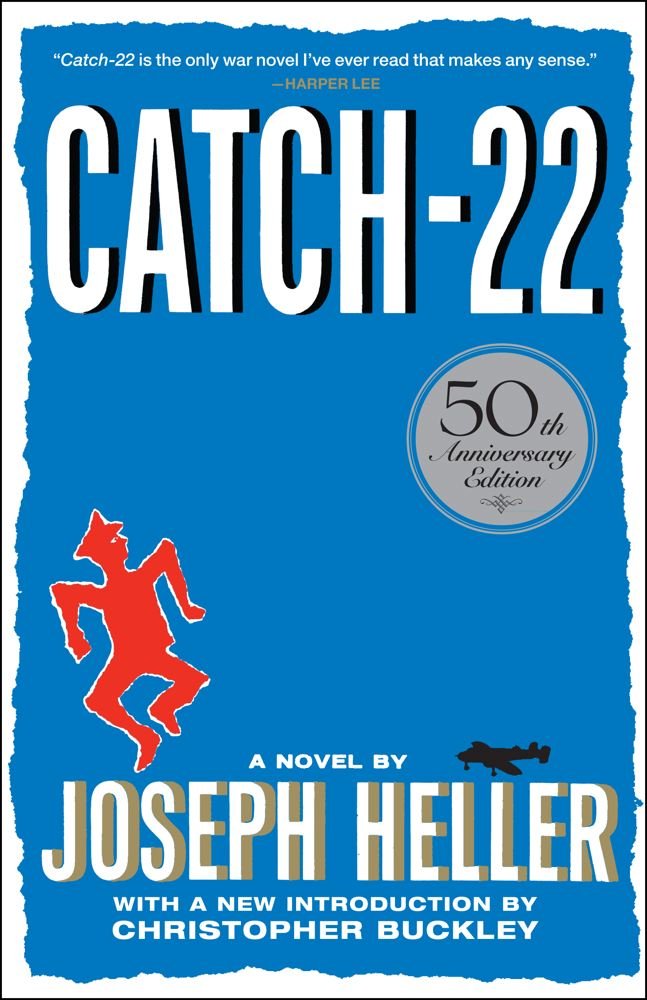
Catch-22 (1961), Joseph Heller Joseph Heller joined the US Army Air Corps in 1942 at
the age of 19, and went on to take part in more than 50 European bombing raids before the end of the Second World War. His military service affected him greatly -- he became an angst-ridden chronic nail-biter, with a habit for screaming in his sleep -- and it took him another eight years to begin dealing with his experiences in writing. After a few dreary post-war years working as a copywriter, one afternoon in 1953 a line simply popped into Heller's head: "It was love at first sight. The first time he saw the chaplain, Someone [he had yet to name Captain Yossarian] fell madly in love with him." Heller wrote the first twenty pages of what he presumed would merely be a short story over the next seven days, but it took him another eight years to complete what would eventually become Catch-22. 
Crime & Punishment (1866), Fyodor Dostoyevsky When he began writing it in the early 1860s, Dostoyevsky originally envisioned Crime & Punishment as a novella entitled "The Drunkard", in which he intended to explore the consequences of alcoholism on family life. That was until he discovered the writings of a French writer and murderer named Pierre François Lacenaire, who had been executed in Paris in 1836 for the brutal killing of a young man and his mother. While in prison, Lacenaire had written essays and poems, met with journalists and researchers, given interviews, speeches and press conferences, volunteered for psychological studies, and even offered to have a life mask made of his face, all on an apparent quest to become an icon of social injustice and guarantee his notoriety endured long after his death. It's unclear whether Dostoyevsky had already created the character of Raskolnikov by the time he heard of Lacenaire, but there are a number of striking similarities between his murder of the pawnbroker Alyona Ivanovna and her half-sister Lizaveta in Crime & Punishment and Lacenaire's own crimes 30 years earlier. 
Frankenstein (1818), Mary Shelley Frankenstein was famously written in response to Lord Byron's suggestion in the summer of 1816 that the guests at his villa on Lake Geneva -- including the poet Percy Bysshe Shelley and his future wife, Mary -- should each write a ghost story to pass the time. After initial reservations, 19-year-old Mary more than rose to the challenge by penning what is now considered masterpiece of gothic horror, inspired by a single terrifying image that popped into her mind as she lay in bed. "When I placed my head on my pillow..." she recalled in the introduction to her novel, "I saw -- with shut eyes, but acute mental vision -- the pale student of unhallowed arts kneeling beside the thing he had put together." The first edition of Frankenstein was published anonymously just two years later, followed by a second edition in 1822, a stage version in 1823, and finally a revised third edition in 1831 dedicated to Mary's then late husband, who had died nine years earlier. 
The Hound of the Baskervilles (1902), Arthur Conan Doyle In July 1900, Arthur Conan Doyle met an English journalist named Bertram Fletcher Robinson on board a ship returning to England from the Boer War. The pair quickly became friends and the following year Doyle agreed to visit Robinson at his home in Devon, southwest England, with an eye to collaborating on a new novel. Robinson took Doyle up onto Dartmoor, a vast ancient moorland (and now a National Park), and regaled him with an old folktale about a notorious local squire named Richard Cabell who had apparently sold his soul to the Devil -- when he died in 1677, local legend claims a monstrous pack of jet black hounds descended from the moors to escort his soul into Hell. Although Doyle had agreed to co-author a book with Robinson, after putting pen to paper the story quickly evolved into a new Sherlock Holmes mystery (his first in eight years) and Robinson's input was relegated, in his own words, to "assistant plot producer." 
Jude The Obscure (1895), Thomas Hardy It is unclear precisely who inspired Thomas Hardy's tale of a young working-class man's struggle to become a scholar, but it seems likely that the eponymous Jude Hawley was at least partly based on Hardy's tragic friend Horace Moule. Born in 1832, Moule earned a place at Oxford University in 1851, but failed to receive his degree. Moving to Cambridge University three years later, it took him another 14 years to finally complete his studies, during which time he battled alcoholism and severe depression until finally, in September 1873, he committed suicide by cutting his own throat as he lay in bed. He was just 41 years old. 
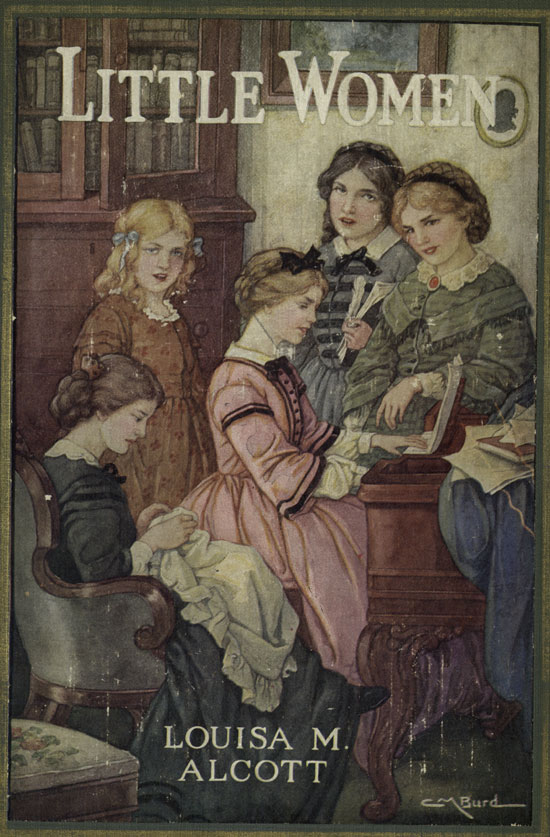
Little Women (1868-9), Louisa May Alcott The four eponymous March Sisters in Louisa May Alcott's Little Women were all based on the author and her three sisters. Louisa herself was the strong-willed protagonist Jo; her elder sister Anna was Meg; her youngest sister May was Amy; and her middle sister Elizabeth, who died at the age of 23, was Beth. The setting and the sisters may have been the alike, but the events and circumstances around them were not: the Marches were by no means rich, but the Alcotts lived in near abject poverty for many years during Louisa's childhood. What's more, the March family's father -- a philanthropic and scholarly Civil War hero -- was strikingly different from that of Alcott's own father, Bronson, a pacifist vegan schoolteacher and an early advocate of transcendentalism. 
Middlemarch (1872), George Eliot In January 1869, George Eliot wrote a list of tasks in her journal that she wanted to complete in the coming year, one of which was "a novel called Middlemarch." Although Eliot seemed determined to set to work, progress on the new novel was slow and when her son Thornie contracted a fatal case of tuberculosis later that year she ceased writing completely; by the time Thornie died in October, Eliot had produced just three chapters of what would eventually be an 86-chapter work, and she promptly shelved the project. By all accounts Eliot did not recommence writing until more than a year later, when, in November 1870, she began an entirely new work entitled Miss Brooke. This new story introduced an eponymous character named Dorothea, but sometime during Miss Brooke's development Eliot saw the opportunity to merge its narrative with that of the three chapters she had shelved the previous year, and Middlemarch was born. 
Moby-Dick (1851), Herman Melville Herman Melville's own experiences on board a Pacific Ocean whaling ship, the Acushnet, in the early 1840s provided the primary inspiration for his novel Moby-Dick, and later editors and commentators have since even been able to draw parallels between Melville's real-life fellow crewmembers and the characters in his book. The Acushnet was far from his only inspiration, however, as Melville was doubtless also influenced by the true story of a whaling ship named the Essex that was attacked and sunk by a sperm whale in the central Pacific in 1820. Melville later met the son of one of the Essex's eight surviving crewmembers during his time on the Acushnet, and after the publication of Moby-Dick in 1851 met with the ship's captain, George Pollard, whom he later described as "one of the most extraordinary men I have ever met." 
Robinson Crusoe (1719), Daniel Defoe It is widely believed that Daniel Defoe's Robinson Crusoe was based on the true story of real-life castaway Alexander Selkirk, but that's by no means guaranteed. In fact, there are such telling inconsistencies between the two tales -- Selkirk was voluntarily marooned in the Pacific, while Crusoe was shipwrecked in the Caribbean; he was stranded for just four years, compared to Crusoe's 28; and Selkirk was alone, while Crusoe's tale involves encounters with natives, cannibals and pirates -- that some editors have suggested Defoe likely had another story in mind. It may be that Crusoe's tale was based on the 17th century sea captain Robert Knox's 19-year imprisonment on Ceylon, which was published as An Historical Relation of the Island Ceylon (1681), or else on the British doctor Henry Pitman, who escaped from a British penal colony in the Caribbean before being shipwrecked on a nearby island. Alternatively, there could be some truth in Defoe's own claim that Robinson Crusoe was the true story of a man he knew personally, and for whom he simply served as memoirist. Whatever its true inspiration, there's no doubting the success or impact of Defoe's novel, which ran to four editions in its first year alone and has remained enduringly popular ever since. 
The Strange Case of Dr Jekyll and Mr Hyde (1886), Robert Louis Stevenson Robert Louis Stevenson had already written a play about Deacon Brodie -- an 18th century Edinburgh city councillor who led a double life as a burglar -- when in 1885 he had a dream about a mild-mannered man transforming into a monster. His wife Fanny later recalled how, "In the small hours of one morning... I was awakened by cries of horror from Louis. Thinking he had had a nightmare, I awakened him. He said angrily, 'Why did you wake me? I was dreaming a fine bogey-tale.'" She had woken him, she later discovered, at what would eventually become Jekyll's first transformation into Mr Hyde. 
The Thirty-Nine Steps (1915), John Buchan John Buchan was recovering from a stomach ulcer at a nursing home in Broadstairs on the far southeast coast of England he began work on what he referred to as his first "shocker" in 1914. Buchan reportedly took the title of the novel from a wooden staircase that once ran from the clifftops at Broadstairs down to the beach, although there are several conflicting accounts: one version of the story has Buchan's young daughter running down the stairs two at a time and announcing that there were "39 steps" down to the beach, while another claims that as there were actually 78 steps Buchan either halved the number simply to make a snappier title, or else changed it because he was 39 years old at the time. 
Three Men In A Boat (1889), Jerome K. Jerome In the mid 1880s, Jerome K Jerome came up with the idea of writing a straightforward travel guide to the River Thames, including descriptions of several historical sites along its course. As he began to compile it, however, Jerome's guide became increasingly filled with humorous anecdotes and bantering conversations recalled from boat trips he had taken along the river from London to Oxford with two of his friends, George Wingrave and Carl Henschel. Together, the three men became the eponymous Three Men In A Boat, with the addition of Montmorency the dog having, "as Jerome admits, developed out of that area of inner consciousness which, in all Englishmen, contains an element of the dog", according to Oxford World's Classics. 
To Kill A Mockingbird (1960), Harper Lee Harper Lee has long denied claims that To Kill A Mockingbird is an autobiographical work, but rather a reflection of an author simply writing about what he or she knows and has experienced first hand. Either way, it's hard not to see parallels between her Pulitzer Prize-winning classic and her childhood growing up in Monroeville, Alabama. Just like Scout, Lee's father practiced as a lawyer, and in 1919 was faced with defending two black men accused of the murder of a local white shopkeeper (both men - a father and son - were later hanged). Moreover, Lee, like Scout, was a tomboy in her youth, and her eldest brother Edwin, like Jem, was four years her senior. She wrote the book in the years following the death of her mother in 1951, and in the story Scout too has lost her mother. And even the character of Dill, who lives next door to the Finch family during the summer, is modelled on her childhood friend Truman Capote, who would spend the summer with his aunt in Alabama while his mother visited New York. 
See the original post HERE

Monday, August 18, 2014

Books to Film: An Emotional Process for Some Readers

Film adaptations can be difficult for some people. I have a friend who really struggles with watching a movie of a book she likes because she gets so frustrated with the changes made by the filmmakers. I used to be that way, too, actually. I remember very clearly going to see Harry Potter and the Prisoner of Azkaban and being so distraught over how the new director reimagined the world and changed things about the dementors and left out this and that and on and on I went. My poor boyfriend at the time. I was nearly in tears. 

Excessive, yes, I know. But it was that experience that forced me to change my mindset. I've always been intrigued by adaptations (despite the occasional what-did-you-do-to-this-book-I-love?! meltdown), and in time, I learned to separate the book from the movie, to focus on the heart of the story and how two different people can take that same essence and bring it to life in two totally different ways. It's those changes that now interest me the most, even when a book I loved was maybe not done in the way I would've done it.

I always wonder what it must be like for the author of a book, if the changes in a film adaptation are s so hard for some readers to accept. I'm sure it varies like anything else, but it was great to get some insight from two-time Newbery Medal winner Lois Lowry this morning on HuffPo as she writes about her experience with The Giver adaptation, which just opened in theaters across the country:

I've been watching The Giver movie project for many years and read a lot of scripts. After I'd gone to the set and sat in the editing room, it began to feel like a jigsaw puzzle. You have the blue pieces here, and the yellow pieces over there, and then it begins to all fit together. When I finally saw the final movie with the music in there, it was kind of overwhelming. It was a very gratifying experience to see that it was done with such regard for the book. It retains the essential ingredients of the book, while adding all of the visual stuff that a movie needs but that a book sadly cannot have. 
I think the film does what a film should. It takes a book -- the heart of the book and the integrity of the book -- and it adds to it what only a film can add: the visual stuff, the suspense, and the back and forth that the book doesn't do.  
I chose the images in the book carefully, but I think I didn't choose enough of them. The movie makers have taken my work and retained the questions I wanted to raise, but they expanded it and brought it to a new level -- a wonderfully visual level, at that. When I wrote the section of the book about the boy out on his journey with the baby, I felt restrained. As a writer, I had only one character really out there. I had a baby who didn't talk, so there could be no dialogue. There was description of landscape, but how many pages can you do that? And yet in the movie, you still have the boy, and the baby who doesn't talk, and therefore there's no dialogue, but you have that incredible landscape -- partly in South Africa -- and it almost becomes a character in the film. I was very moved by that. 
One of the things that particularly struck me were the wonderful memories that the boy is given. It seemed to me that they had incorporated every bit of the past world into such fleeting images, and each one was carefully chosen. Now having seen the movie, I'd love to go back, rewrite the book and incorporate some of those things that are in the movie. One of the things I wish I could beef up now are those memories -- the different religions, for example -- little flickers of a baptism, of an immersion, of a mosque. There is a section where the boy is going to flee and he goes to The Giver, who gives him some final memories so he'll have strength. It's that selection of memories that I found most gripping. In particular, the image of the boy in front of the tank in Tiananmen Square; that's not in the book, but wow is it powerful in the film.  
From the beginning, I felt as though the book was in good hands. The reason for my feeling that way was because both Nikki Silver, the producer, and Jeff Bridges, the producer and star, were so passionate about the book and dedicated to retaining its integrity. Although the chances of the film getting made fluctuated over the years, I never worried about how it would be made because I knew about their passion, and respected and trusted that. 
And the other night, there I sat in the theater. I knew the story. I had read the screenplay. I knew how it was going to end. So nothing was a surprise, except that everything was a surprise because of how overwhelming it was, how many shivers went up my spine and how terrific it felt to watch it. The movie is finally out there and is a vast, beautiful, finished piece. 
See the original post HERE
Wednesday, July 9, 2014

I'll Cheers to That

I haven't watched or read anything in the Song of Ice and Fire series by George R. R. Martin (or simply Game of Thrones to some), but this morning a related article on HuffPo caught my eye.

Of course, it had nothing to do with the books themselves, and everything to do with the wine:


All men must drink. 
If you're a "Game of Thrones" fan, you know that the only thing the characters like more than killing people and having sexy time is getting their drink on. Well, now you can join in on the fun with "Game of Thrones"-themed wines. 
Wines of Westeros is a project from the Australian company Common Ventures. The 12 different wine varieties include versions representing the Tyrell, Lannister, Stark, Greyjoy, Arryn, Martell, Baratheon and Targaryen families, as well as the Wildlings, White Walkers, Night's Watch and Dothraki. 
According to the company, “The reds are all associated with the houses that are head strong and robust. The whites on the other hand are more cunning, perceptive and mysterious." With this explanation, the Internet is a little perplexed as to why House Stark was given a white wine, but as long as none of it is that stuff Joffrey drank, it still sounds like a good deal. 
Bottles will run for around $20 and include varieties like Sauvignon Blanc, Chardonnay, Cabernet, Merlot, Pinot Noir and Shiraz. The "GoT"-inspired wines will be available in time for Season 5 of the HBO series next spring. 
It's like they say in Westeros, "When you play the 'Game of Thrones,' you wine or you die." 
See the original post HERE 

Wednesday, July 2, 2014

Hump Day Humor: How Finishing a Book Can Break Your Heart

Last week, Epic Reads posted a hilarious and so so true video about the experience of finishing a book, or the "book hangover" as they are calling it.

I don't know how I missed it when it came up, but thank goodness I took a look at HuffPo Books this morning and found it! It was exactly what I needed first thing on a Wednesday morning:


Happy Wednesday, all. I hope you read a book today that you never want to end!

Wednesday, June 18, 2014

The Beauty of Historical Fiction

I'm not going to lie: I've never been a fan of nonfiction, (narrative nonfiction and memoirs aside). There have been very few NF books I've read in my life that really grabbed me and kept my attention. I hate admitting it, but it's true. For me, the voice needs to be super engaging or I can't get through a book. And voice isn't usually top priority in most NF books, particularly when it comes to history-related NF, which I so wish I could enjoy.

Because I like history...I do. It's interesting and important to know so we don't continually repeat the mistakes of the past. But man, I just...can't...read it.

So, instead, I tend to turn to historical fiction to get my sense of the past. Tricky, yes, in that it is fiction so some liberties are sometimes taken, but with strong, accurate historical fiction, I can learn a lot in a way that keeps me turning pages. That's why I was so excited this morning when I saw a post on HuffPo Books this morning, listing some of the best historical fiction novels:

"It was the best of times, it was the worst of times..." 
So begins A Tale of Two Cities, with one of the most celebrated opening lines in literature. What's often forgotten is how the sentence ends. (It is, to be fair, an extremely long sentence.) Written in 1859, the novel is set during the French Revolution. Having described the extraordinary contrasts of that time, Dickens continues: "in short, the period was so far like the present" that the "noisiest authorities" seemed interested in it merely for comparison with their own age. 
This is the huge appeal of historical fiction. It transports the reader to another time -- dramatically different yet full of striking similarities. While researching The Devil in the Marshalsea [Mariner Books, $15.95] I spent half my time marvelling at how strange things were in 1720s London and the other half laughing at how familiar it all sounded. To steal Dickens's syntax: We have changed so much, we haven't changed at all. 
The following ten novels are listed in chronological order. They are impeccably researched -- rich with fascinating historical detail. More importantly, they are all damned good reads. And given that Doctor Who isn't real (as far as we know), they're also the best mode of time travel we have.  

Regeneration by Pat Barker
Set in 1917
I think this is the best modern novel about the First World War. The psychological depth is stunning. Suddenly, these soldiers are no longer distant, historical figures. They are absolutely real individuals. A compassionate, subtle and gripping novel. 

Every Man For Himself by Beryl Bainbridge
Set in 1912
This wonderful novel is set on the Titanic. It is a short, pitch-perfect depiction of the tragedy, so convincing and beautifully paced... and as a bonus doesn't have Celine Dion warbling all over it. 

Affinity by Sarah Waters
Set in 1874
I could have picked any of Sarah Waters' books -- as they are all historical and all exceptional. Affinity is set in a Victorian prison and has a creepy spiritualist element that plays out brilliantly. It's all incredibly tense and atmospheric. Waters always creates great characters, but Affinity's heroine, Margaret Prior, is the one I care about the most. 

English Passengers by Matthew Kneale
Set in 1857
A group of travellers (some of them truly vile) set out on a long voyage to Tasmania. Disaster ensues. It's hard to sum up the story but it manages to be both very serious and very, very funny. I don't often laugh out loud when I'm reading but there is a scene with a panicked wombat that made me laugh until I cried. 

Jamaica Inn by Daphne du Maurier
Set in 1821
Romance, adventure, dark deeds... and one of the most spirited and winning heroines in literature. Pure reading pleasure from start to finish. 

A Tale of Two Cities by Charles Dickens
Set 1775-1794
"It is a far, far better thing that I do, than I have ever done; it is a far, far better rest that I go to than I have ever known." Excuse me, I just have to go and weep in a corner for a little while. 

A Place of Greater Safety by Hilary Mantel
The French Revolution (again), so brilliantly evoked you feel you've lived through it yourself by the end. Quite simply, a masterpiece. Everyone is doomed from the start (that's not a spoiler, they're real characters, so we know how it ends). And still, when the end does come, it's completely devastating. Just don't mention Camille... oh, dear. I seem to be weeping again. 

An Instance of the Fingerpost by Iain Pears
Set in the 1660s
A smart, entertaining and satisfying mystery set in Oxford in the reign of Charles II. The structure is very clever (four unreliable narrators) and the setting feels absolutely authentic. The historical research is extraordinary, but is worn lightly. 

The Name of the Rose by Umberto Eco
Set in 1327
A playful, atmospheric crime novel that is also a profound meditation on language, tolerance and freedom of thought. I found it a deeply rewarding book and I'm sure it has influenced a lot of historical novelists. 

See the original post HERE
I've actually only heard of one of the books on this list--and you can guess which one pretty easily!--so it's great to get some new ideas!

Some of my personal fave historical novels, though, include Les Miserables by Victor Hugo, A Tree Grows in Brooklyn by Betty Smith, The Book Thief by Markus Zusak, Michelle Diener's Susanna Horenbout series, A Farewell to Arms by Ernest Hemingway, The Guernsey Literary and Potato Peel Pie Society by Mary Ann Shaffer and Annie Barrows, The Three Musketeers by Alexandre Dumas, and too many more to mention!

What is YOUR favorite historical fiction novel??


Thursday, June 12, 2014

In Defense of the Love of Reading

Today, I'm feeling overwhelmed with a love of reading. Probably because I'm not feeling well, physically or emotionally, and all I want to do is curl up on the couch with a good book (for pleasure! not to edit!). So it is quite apropos that the lead post on the HuffPo Books page this morning is titled "7 Ways Books Can Change Your Life."

I will let this one speak for itself:

Often times, during a dark hour or an idle point, a book has changed my life. There are countless books that have pointed me in a different direction, or taught me a lesson. There are also many books that have helped me articulate my own emotions or thoughts, helped me find a voice. If it weren't for the books I've read, I'd be a very different man today...I'd even argue I'd be less of a man. 
Books, especially good ones, have that sort of power. If you let them, they can change your life, serve as another compass or guide, or give you a lift when you need it most. I'm sure you can think of at least one book that fundamentally changed you as a human being.
For all of us who've felt this transformation, or for anybody who hopes to find that in a good book, this is for you. Here are some of the ways reading a book can change your life. 
Belonging 
At the very least, you will connect with the person at the other of the dialogue, the author. But you will likely connect with much more than that: the zeitgeist, the universe, a reality that exists somewhere else or that one day could be yours. Reading is a lifeline to all else that is. 
Think about it: the book you are reading may have been written decades ago, in another country, maybe even in another language by a person who lived a completely different life. Or it may have been written in New Jersey a few years ago by some guy you know. Either way, you are having a conversation with someone else, and, if you nod along enough while reading the book, you're also finding a new friend and a friendlier existence.
Reading reminds you that you are not alone. Your struggles and dreams are shared. Your life is a part of a larger ecosystem. The greatest books comfort you with this sense of belonging. 
Empathy 
As with any good conversation, when you read you do a lot of listening. You are on the receiving end of a wire transfer of knowledge (with no transaction fee). This other person, the writer, is imparting something, at the very least one thing, you didn't have before: a fact, a theory, a point of view, an emotion. They are letting you into a psyche (theirs, their alter ego's, their main character's) and letting you in on some secrets.
And they are hoping you care enough to truly listen. 
So reading flexes your empathy. It works your capacity to connect to another person and invest yourself in their story. Even if you vehemently disagree with them, you get to know them, and as any script writer will tell you, that is how you end up using that giving-a-damn muscle. 
Humility 
Give any book the opportunity and it will teach you something. It will at least teach you what not to do or say or believe in. But in order for anything to happen, you have to give it a chance, and to give it a chance you need to be humble. You need to think, OK, let me put down my ego and hear ya out.
Reading will very likely remind you that everybody else is smarter than you. In some way, everyone else has an edge on you. Every one of us knows at least one thing better than everyone else. Our life experiences, by themselves, give us a leg up on the competition; nobody has lived our life.
Once you embrace this truth, your humility deepens, because you know you don't have all the answers, you and your world are not all of it. 
It is like studying astronomy: you start with this world which encompasses everything you know; and then you move on to the planets, the awesome sun, the stars that dwarf the sun, the overwhelming constellations made of their own stars and planets, and on and on... 
This makes me feel tiny. My entire reality, that which has taken me over 30 years to put together, is an infinitesimal part of "all of it." 
But that's not where it ends. It also reminds me of how much more is out there. How much more is left to explore and know and live. My tininess is actually an invitation to let my imagination roam, let my eyes widen as much as possible to take more of it in. 
Same goes with the books we read. Each of them open up a new window of this universe, and we have the option of letting our eyes widen and start exploring. But first, check that "I know everything" ego at the door. 
Self-knowledge 
The most moving (and enduring) books you collect are those that become a mirror. This mirror is placed in front of you when you read something that has you nodding along and thinking, yes, that is how it is. You just found a part of yourself. 
You may cry, smile, or wince, because that's you you're reading. You feel like you've been searching this whole time for this moment, but never knew that. The author has perfectly described the world (your world), or reminded you of your past, shone a light on your core beliefs, or lit up that dim hope you carry. 
The words written by a likely stranger have helped you connect with the person you ought to know the best, yourself, thus reminding you that sometimes a stranger appears within, too. But the more read, the more you'll educate yourself on yourself by finding what rings true. 
Confidence 
Reading challenges you. Taking a book seriously means risking the chance of finding an adversary. A book may become a headwind. These challenging books push back on everything you hold true. They tell you human nature is inherently evil, or that the Church is at fault, or that America is not the greatest country in the world. It will essentially say you're wrong. 
A poorly constructed book that does this is easy to dismiss. But one that has been carefully crafted, one that shakes you at your core, you can't brush off. It will demand that you stand up and defend your truths. 
A challenging book will force you to re-think those flabby truths. What you considered true will be put to trial, and by defending them you will grow stronger, regardless of the outcome. 
Presence 
Reading helps you remain calm. It's as therapeutic as anything else. Once you start digging into a book that's caught your attention, time ceases to exist, your mind is completely immersed in what is in front of you. 
As with anything that fully engages your attention, reading makes you stop rushing or running from one point to the next. Instead, you are where you need to be, right here, doing this, and all other things are secondary. The worries, anguish, fears, and ambitions of a moment ago are boxed away in a container that read "for later." Your only worry is flipping to the next page to find out what's next. 
Joy 
Reading is a pleasure -- it ought to be. Nobody has any time to read books you don't like. 
These are not books you disagree with or challenging ones, but just those that cannot keep you interested. Whatever you choose to read should bring you pleasure at some level. The amount of time and space that you invest in these darlings should be an investment, not a cost. The return on this investment should be some sort of joy: a joy in having experienced it, a joy in having learned from it, or a joy in having found a new friend in it. 
If this joy does not come up, not even in the first few pages, then I'd ask you this: would you buy a DVD for a movie you didn't like? Would you go on a second date with a guy who made you wince? Then why would you invest more of yourself in a book that is on that same level? 
Life is too short to read books that don't bring you joy, or worse, that don't matter at all. Read what enriches your life, and your life will change because of it.  
See the original post HERE
This post definitely sums up most of my thoughts on the matter when it comes to pleasure reading.

What do YOU love about reading?


Wednesday, June 11, 2014

Hump Day Humor: Fairytale Heroines in the Slammer

When I was searching for today's Hump Day Humor piece, all I could find was super-serious news about the Big-5, Amazon, book sales, etc. All important, of course, but not quite what either you or me need on a rainy Wednesday morning.

But then I saw this on HuffPo and knew I hit the lighthearted jackpot:
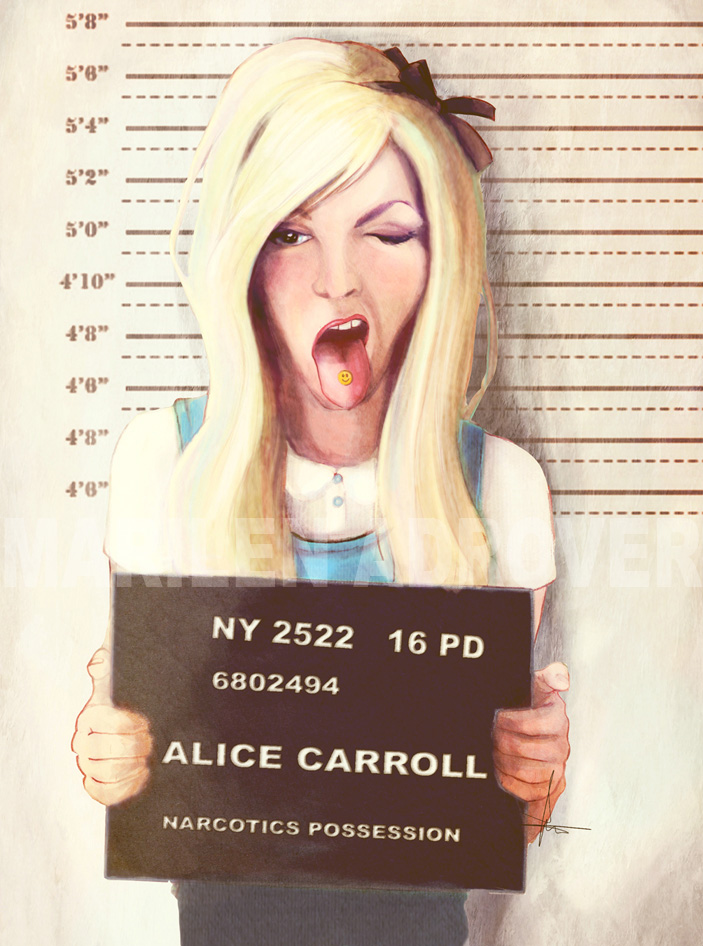
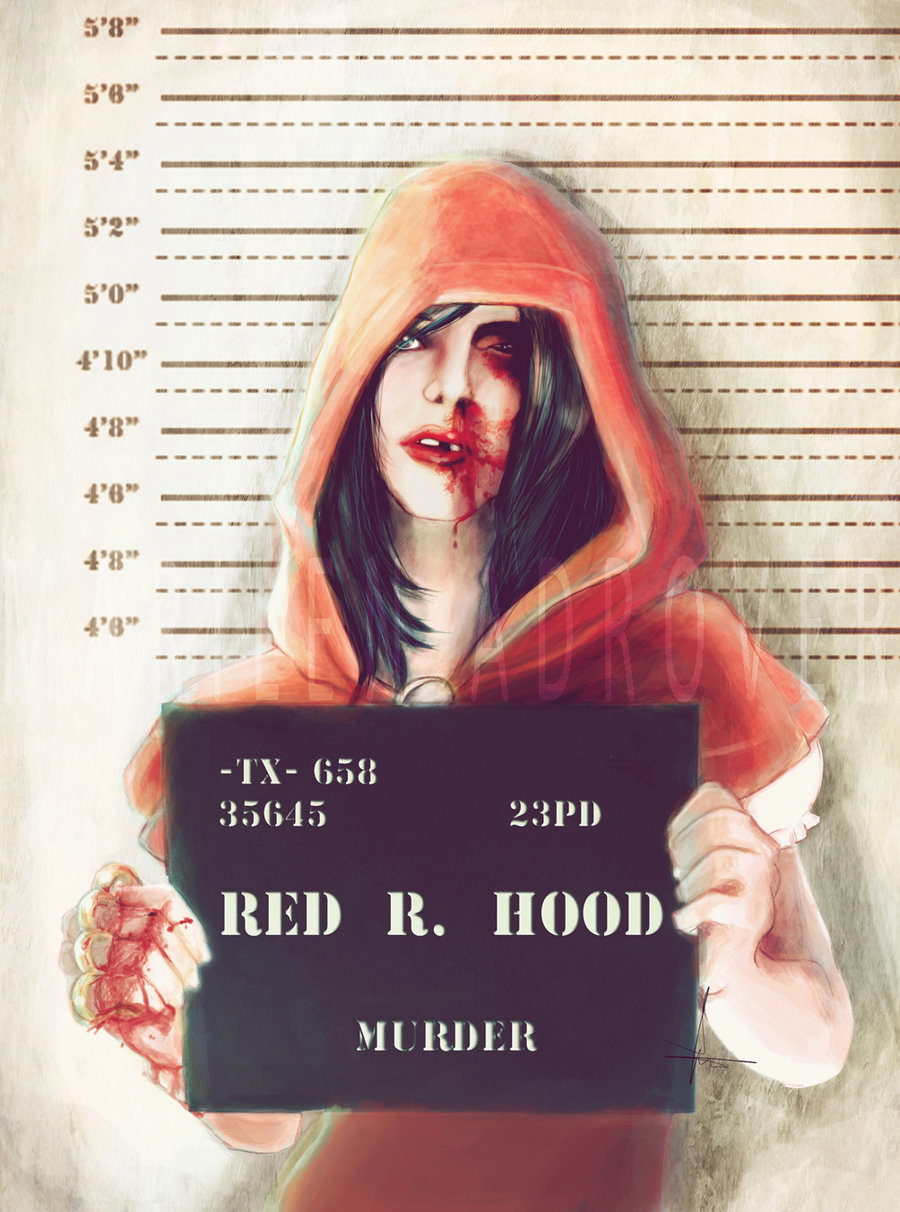
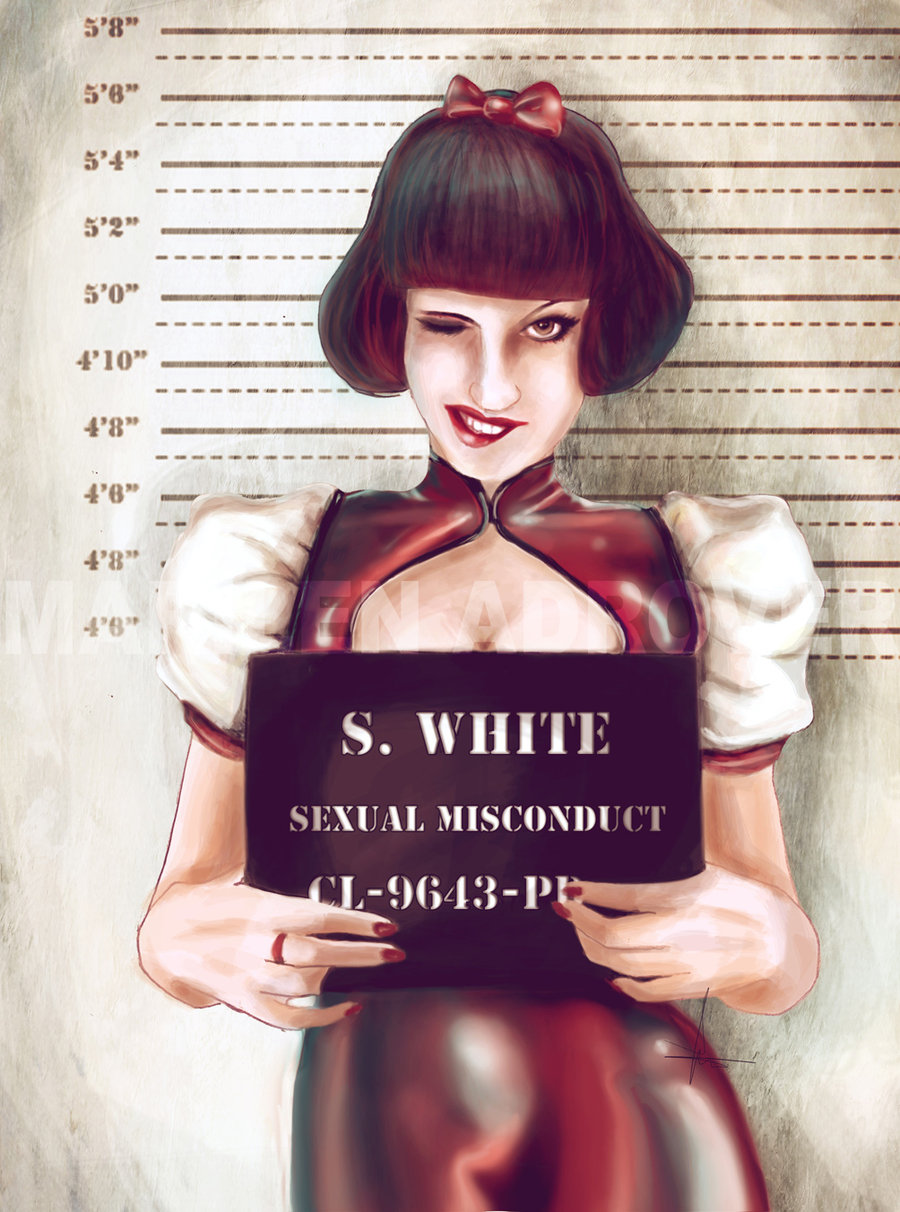
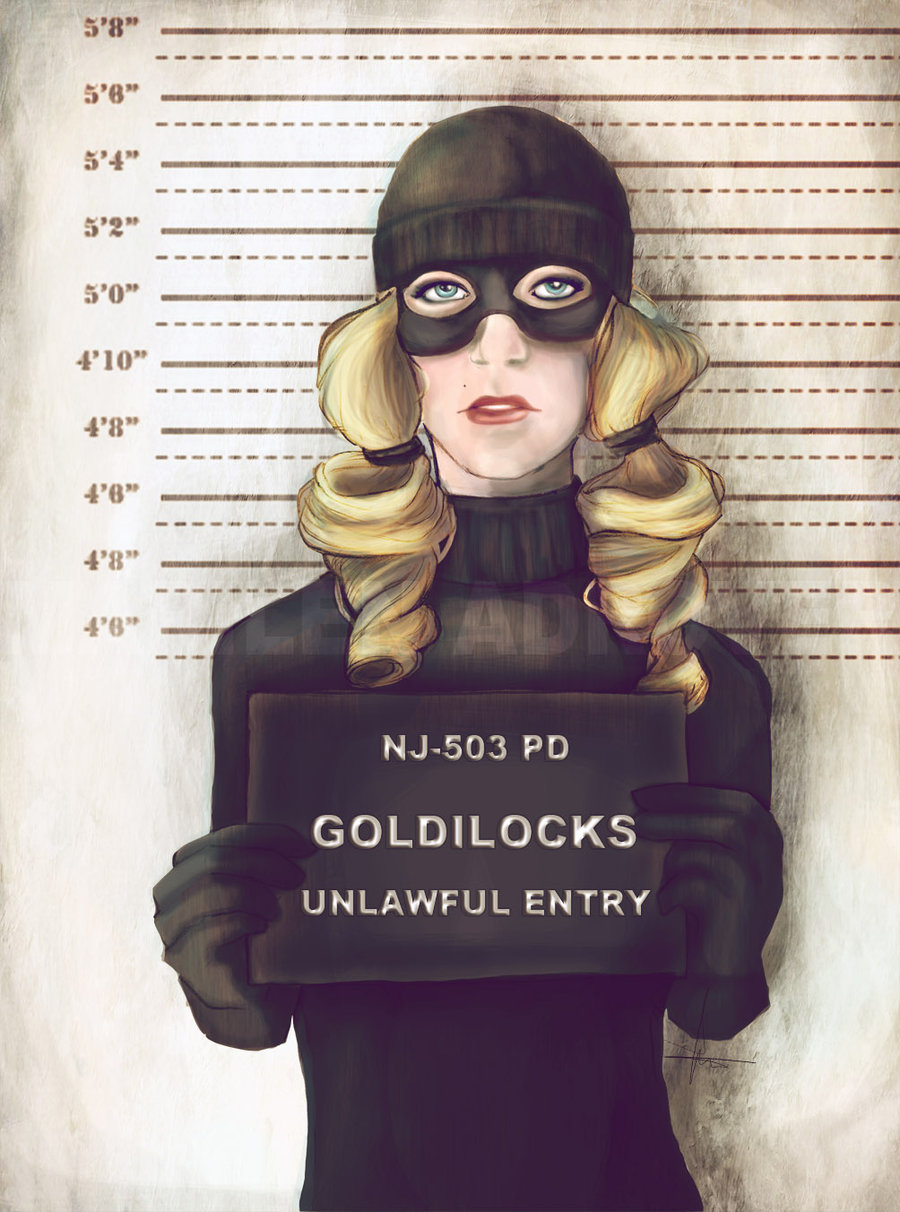
Show us one person who can't recite the story of Alice in Wonderland, Little Red Riding Hood, Snow White or Goldilocks by heart, and we'll show you a baby just born into this world. Because we all grew up learning of the dangerous scenarios these heroines had to endure -- from a wolf dressed as grandma to tumbling down holes deep enough for rabbits and finding unlikely roommates in three bears and seven dwarfs, these stories all paint a very pretty picture of girls lost and found. But what if our four princesses weren't so innocent?
Artist Marilen Adrover imagined just that, re-thinking the folklore as crime stories. Alice's hazy trips, Red's violent attempt at survival, Snow's seductress ways and Goldilocks' "misplaced" keys. How badass do they look now, eh?


See the original post HERE

Genius. You can even buy the above mugshots in various forms--as prints, as iPhone covers, and more.

Of course, this led me to ponder what other fairytale characters would have interesting mugshots... Puss in Boots? Cinderella? Jack (of "and the Beanstalk")? I can see a lot of possibilities for this kind of trend...

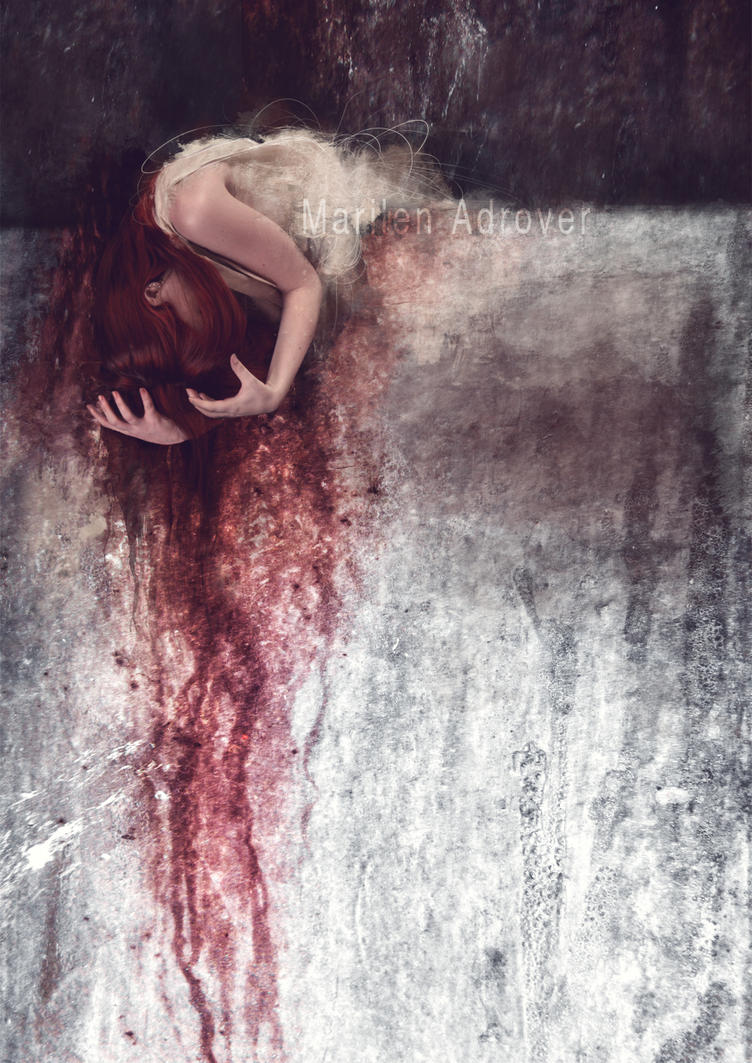
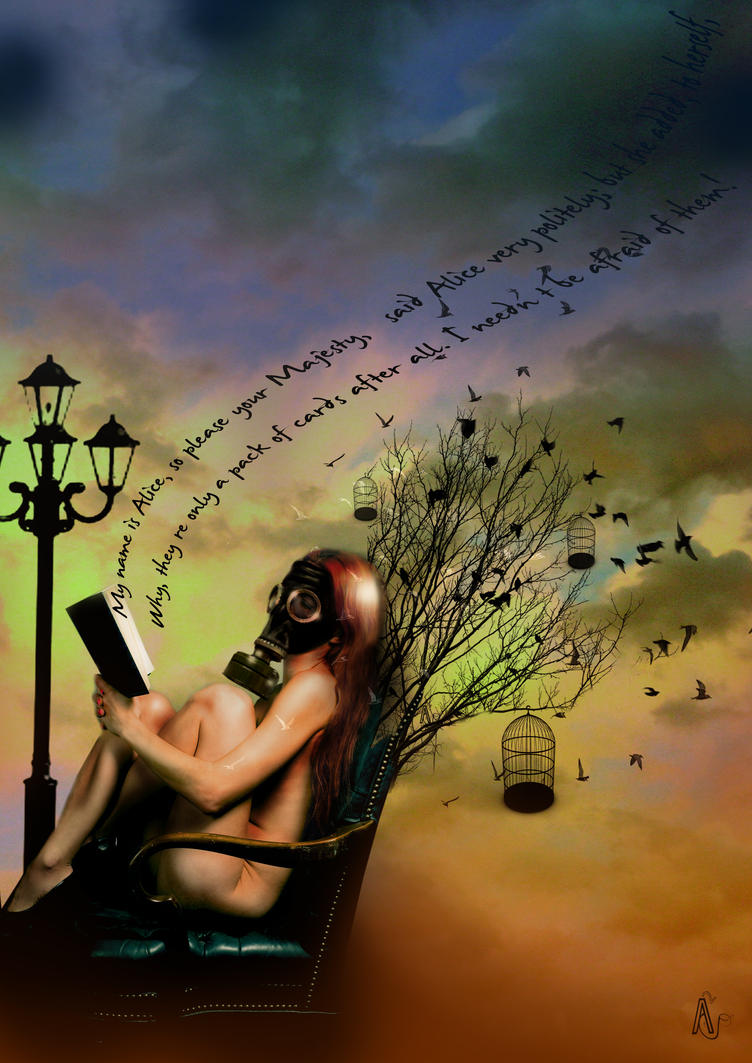
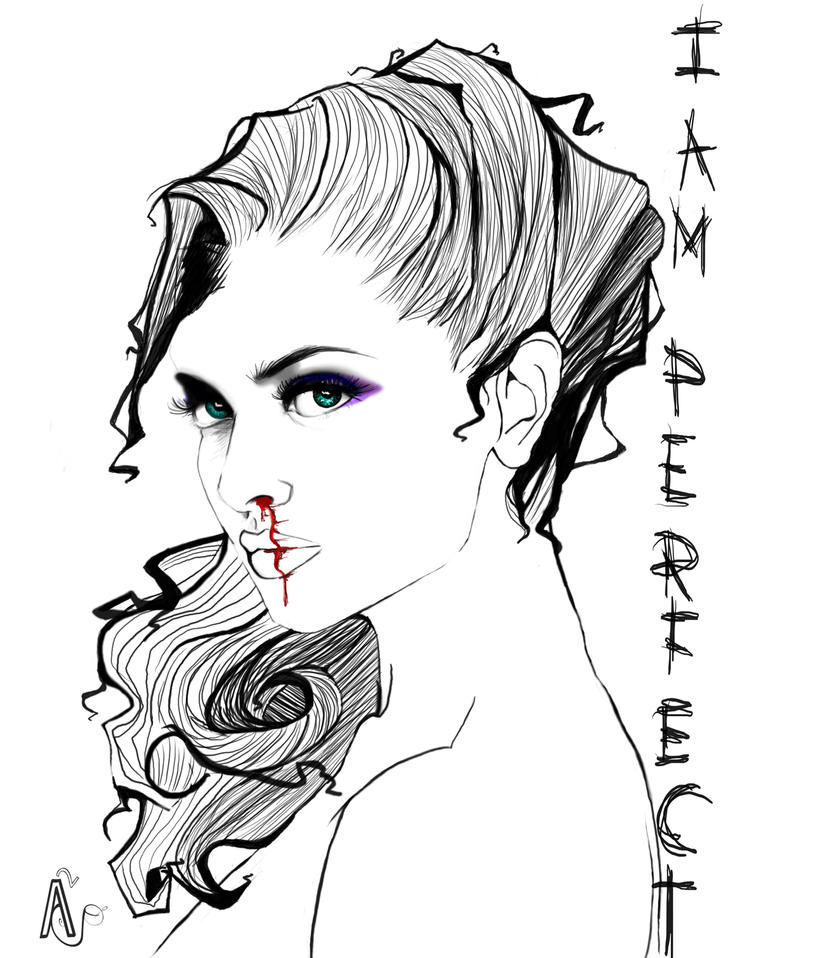
I also poked around Marilen's DeviantArt page to see what other kinds of work she does, only to find her range is incredibly impressive.

This haunting piece, for example:

"Anguish" by Marilen Adrover

Or this twist on a modern-day "Alice in Wonderland":


"Alice" by Marilen Adrover

And this powerful social commentary:

"I am Perfect" by Marilen Adrover

Thursday, August 8, 2013

HUNGER GAMES Summer Camp? Yep. It's Real.


When I first read The Hunger Games, I have to admit I was as disturbed by the concept as I was intrigued. Don't get me wrong, I'm a big fan of the series and Suzanne Collins's writing, and I do believe that her themes, while disturbing, are important commentary (and a cautionary tale) on today's society and its values.

As such, I was able to overlook the shivers the idea shot up my spine, though I did still carry some concern regarding how the books' young adult audience would take the lessons. And it seems there was some reason behind those shivers. According to the Huffington Post, there is now a Hunger Games themed camp open for children:

Ever dream of becoming Katniss Everdeen? Well, now you have a chance to be just like her in real life. Sort of. 
According to the Tampa Bay Times, kids at a "Hunger Games" camp in Logo, Fla., can now channel their inner tributes by participating in athletic and intellectual activities inspired by the hugely popular series.
[Watch the video news report HERE]
The camp, however, has raised concerns, as children were reportedly describing how they would "kill" and "stab" each other. Susan Toler, a clinical psychologist, called the camp "unthinkable," while Julie Miller of Vanity Fair described it as "disturbing."
After noting that the "violence the kids had expressed was off-putting," the camp announced a change to the rules: Instead of "killing" each other, campers would "collect" lives. Still, during a recent tournament, one crying 11-year-old claimed that he was kicked and "stepped on." 
"I’m not entirely sure that isn’t normal kid behavior," writes Rebecca Pahle at The Mary Sue. "All I really know about kids is that they’re little humans and that I used to be one. I never pushed anyone to the ground and stepped on them... " 
See the original post HERE
Over at The Mary Sue, Pahle also shared some exchanges between children at the camp:
“I don’t want to kill you,” [Rylee Miller, 12] told Julianna Pettey. Julianna, also 12, looked her in the eye. “I will probably kill you first,” she said. She put her hands on Rylee’s shoulders. “I might stab you.”
This story was also retold in Pahle's post:
Alyssa Stewart, 12; Alexis Quesada, 13; and Julianna formed an alliance. After nabbing a few flags, they paused in a safe zone, a green picnic bench under a tree, to get a drink in the shade. 
There, the girls added Andrés Kates, 11, to the alliance. But the second he left the safe zone, they grabbed his flag. “Hey!” he yelled, stumbling backward. 
The girls ran off, first across the basketball court, then through the grass, between buildings, by the water fountain, past the body lying on the ground . . . 
The body lying on the ground. CJ Hatzilias, 11, face-down, in the grass. He was crying. “They stepped on me,” he said. 
Someone went for help. “CJ, what happened?” Gillette asked. 
“They stepped on me,” he said. 
D’Alessio knelt down. “I’m sure it was an accident.” 
CJ shook his head. He said some boys had knocked him down and kicked him.D’Alessio got him up, wrapped an arm around him, walked him over to the camp offices.
I don't know about you all, but I shudder at the thought. I'd love to know what the owners of such a camp were thinking when they came up with this idea (if anything other than dollar signs). I'd also love to know Collins's opinion of the scenario. 
While the camp has been revamped to focus more on "gaining lives" than "killing" after all the backlash from parents and the media, the fact that it even began as modeled off the violent side of the book initially is beyond mind boggling. 

Friday, June 21, 2013

Friday Fun with Books and Booze

One of my favorite things to do in the summer is read outdoors, a cold drink in hand. Sometimes alcoholic, sometimes not. ;)

For those of you with a similar inclination, Kirkus has compiled a list of the "Best Summer Books and Their Corresponding Drinks" (article reposted by the Huffington Post) for 2013:
We don’t condone drinking while reading, no sir. Or at least not when our reviewers are reading. Summer, a good book, alcohol: They go together well. Here’s our guide to books that won’t disappoint and what you might want to imbibe while reading them. 
  • With a Mexican martini: Philipp Meyer's The Son
  • With an entire bottle of the hard liquor of your choice: Jon Wiederhorn and Katherine Turman's Louder than Hell

Cover art for THE CROCODILE
FICTION
Released: July 2, 2013

"In this crisply translated novel, de Giovanni explores Lojacono's loneliness and vulnerability while simultaneously revealing his brilliance as a detective."

A wonderfully suspenseful novel in which de Giovanni restores life to the cliché of the world-weary detective. Read full book review >
Cover art for CRAZY RICH ASIANS
FICTION
Released: June 11, 2013

"An elegant comedy and an auspicious debut."

Jane Austen, or maybe Edith Wharton, goes to Singapore, turning in this lively, entertaining novel of manners. Read full book review >
Cover art for THE WAY OF THE KNIFE
NONFICTION
Released: April 9, 2013

"A well-reported, smoothly written book for anyone who wants to understand contemporary American military might and the widespread hatred for the U.S. that has been the result."

Pulitzer Prize–winning New York Times national security correspondent Mazzetti demonstrates in horrifying, persuasive detail how the new-style warfare approved by both George W. Bush and Barack Obama has led to controversial assassinations by the U.S. government and blowback yielding new terrorists determined to harm American citizens.Read full book review >
Cover art for TO AMERICA WITH LOVE
NONFICTION
Released: July 9, 2013

"A stirring, funny, thought-provoking appreciation of the place, the idea, the experiment, the United States of America."

An ardent mash note to the vast, vital nation that confounds and beguiles its European cousins in equal measure. Read full book review > 

See the rest of the original post HERE
If you are dipping into some classics this summer, you might also like these recommendations from Flavorwire:

As the bookish among you are most likely aware, literature and liquor have gone hand in hand since time immemorial. But while we know which drinks our favorite authors liked to imbibe while creating, that’s not necessarily a good indication of which drinks are best to read their work by. We’ve already given you our suggestions on the cocktails you should pair with your favorite TV shows, but if you’re more likely to be curled up with a book than in front of the small screen this weekend, we have a few thoughts as to how to best keep the party going in your living room. Click through to read about the cocktails we would pair with ten of our favorite novels, and if you’ve found another winning combination, give us your own recommendations in the comments!

Lolita 
Amaretto Sour 
1 jigger amaretto almond liqueur
1 oz. lemon juice
maraschino cherries as desired
sugar to rim glass 
Though we were tempted to pick something bright red for our Lola, we think the Amaretto Sour might be her drink — sweet enough that she’d like it, serious enough that it would make her feel grown up. Not to mention the fact that that very tension between the playfully sweet and deadly serious also happens to be one of the joys of the novel — so why not indulge all the senses?


Alice’s Adventures in Wonderland 
Death in the Afternoon 
2 ounces absinthe
4 ounces Brut champagne 
We know this cocktail is a Hemingway classic, but come on — what better to fuel your trip down the rabbit hole than a hallucinogenic, celebratory mix of absinthe and champagne?


The Catcher in the Rye
Old Fashioned 
1 sugar cube
3 dashes Angostura bitters
dash of club soda
2 ounces rye whiskey
1 orange slice and/or 1 maraschino cherry 
We know Holden is a Scotch and Soda man himself, but it’s the Old Fashioned that most reminds us of existential angst and dark evenings in New York City in the fifties (or today, really). But don’t be a phony — only drink this if you’re a real whiskey fan.


The Great Gatsby 
French 75 
1 jigger dry gin
1 teaspoon simple syrup
the juice of 1/2 lemon
5 ounces Brut champagne 
While reading The Great Gatsby, you should really drink the cocktail that most lets you indulge in your own fancy 1920s fantasies — for us, it’s the oh-so-classy (and time period appropriate) French 75, which originated in 1915 at the New York Bar in Paris. Yes, it’s ever so chic, my darling. Plus, you can thrill in solidarity with Fitzgerald — whose favorite drink was gin (harder to smell on the breath, you see).
See the rest of the original post HERE

Here are some of my own more commercially driven recommendations--because, come on, let's face it, we don't always want to read literary fiction while we sit back in the summer sunshine!

Sugar Daddy by Lisa Kleypas -- Enjoy a nice Firefly vodka and lemonade concoction, or opt for some non-alcoholic sweet tea.

Bite Me by Christopher Moore -- With a Bloody Mary, of course! Or just some healthy V8. ;)

The Hobbit by J.R.R. Tolkien -- Some good old mead would make this family-friendly tale, much less child-focused.

Twenties Girl by Sophie Kinsella -- Try a classic '20s cocktail like the fun and flirty Mary Pickford.

Shake, Stir, Whatever. Just enjoy!