Showing posts with label classics. Show all posts

Friday, May 8, 2015

Does (Book) Length Really Matter?

It always surprises me when I poke around a bookstore and see super thick hardcover or even trade paperback bestsellers. I've noticed this particularly in the past year or so with books such as We are Not Ourselves, The Girl on the Train, The Forgotten Garden, and The Goldfinch. And quite frankly, it baffles me. I've read two of the aforementioned bestsellers, both of which I struggled to get through. Not because I have an issue in general with "long books," but because neither of them needed to be as long as they were.

As an editor, I am keenly aware of these things, and it makes me cringe when novels meander and go off on tangents that are entirely irrelevant to the story. In fact, when I was working at Simon and Schuster, I once was tasked with taking a 700+ page women's fiction novel from overseas and paring it down to 400 pages at the most. Crazy, right? But the craziest part is that I actually accomplished it. Not only could the language itself be tightened on a sentence level but whole paragraphs could come out because they didn't tie into anything or have any real purpose. What was really shocking, though, is that I kind of killed off a character. o_O There was entire plotline and POV that was unnecessary to the story. It didn't weave into the main plot or character arcs at all, other than that character being related to one of the other characters. While the character certainly still "existed" in the story, every section with her POV narrating lifted right out. It was interesting plotline in and of itself, don't get me wrong, but it was its own story, not the one this book was telling. That plotline alone took up about 200 pages long and it wasn't needed.

This is something I see a lot in early drafts of manuscripts and it's my job to address it, to make sure a reader is engaged from the first to the last page, that the pace is moving at a readable clip, and that the story is clear, tight, and moving along with each scene. So the fact that so many books go to publication with these sorts of issues--and do well sometimes--makes me kind of sit there and blink at the wall. My first question is always "what did the editor even do, then?" and second, "how on earth are all these readers getting through these books, especially in today's world of ADD?"
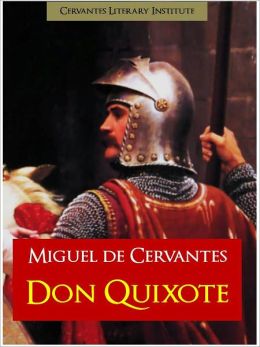
Of course, classic literature has always been on the longer side, so there's certainly a precedent of it. Just look at the unabridged versions of Les Miserables, The Count of Monte Cristo, and Don Quixote. They were all over 400,000 words. But note something I just said...these are unabridged versions. There are abridged version of all three of those classics. Meaning, if you think about it, that extra length...? Yeah, it wasn't necessary. It might have lovely language or a nice lesson or tangent behind it, but it wasn't telling the story the book was meant to tell.

Now, don't get me wrong, it is incredibly impressive when people can write such tomes and find a way to keep readers' attention. But why is this mini-trend happening right now? Is it something people really like or is it just happening because of good marketing and reviews that focus on only the strong points? Just because people buy the books doesn't mean they enjoy them. It doesn't mean they didn't skim over half the book to get to the good parts (what I did with both those novels I mentioned earlier).

A recent article by the BBC (and what do you know, like this blog post, it's a super long!) takes a look after hearing about the UK publication of  an 800+ page novel called Death and Mr. Pickwick by debut author Stephen Jarvis. (They also mention an upcoming book that is one million words long. Yes, one million words. That is not a typo.)

Debut novels don’t come more heavyweight than Stephen Jarvis’ Death and Mr Pickwick. Twelve years in the writing, it tells the story of the creation and afterlife of Charles Dickens’ own first novel, The Pickwick Papers, one of the world’s most written-about works of fiction. Pickwick was the book that made Dickens a celebrity, and it was published in monthly installments starting in March 1836, using his pen name, Boz. 
Out this month in the UK and next month in the US, Death and Mr Pickwick is a gloriously meandering tour of 19th Century London that has already been dubbed “a staggering accomplishment” by Publishers Weekly. 
Yet it’s heavyweight in another, more obvious sense too. Lug this book to the beach and back every day, and you’ll be getting a full-body workout. Drop it, and you risk breaking a toe. Weighing two-and-a-half pounds, it’s a whopping 802 pages long – an audacious claim on readers’ time in an age when our attention spans are supposedly being whittled away to nothing by ever-more insistent digital distractions. 
There is plenty of longer fiction, of course. Kelidar, Mahmoud Dowlatabadi’s Persian language novel following a Kurdish family in the wake of World War II, is 2,836 pages. The Son of Ponni, a historical novel written in Tamil by Kalki Krishnamurthy, and published in the 1950s, is barely any shorter at 2,400 pages. And then there’s Proust, whose In Search of Lost Time is 3,031 pages long. 
Don’t think it’s just a 20th Century phenomenon, either. Nothing compares to the 17th Century French novel Artamène. The tale of a shepherd’s son who’s really a Persian prince, its 2 million or so words (the average 280-pager contains just 80,000) fill 13,095 pages. Originally credited to Georges de Scudéry, these days it’s more commonly attributed to his sister, Madeleine. 
A bulky bedfellow 
Though it can’t quite compete in terms of pagination, Jarvis’ novel is part of a mini-trend that seems to be gathering momentum – and bulk. In the next few months alone, playwright Larry Kramer publishes the first of his two-volume fictionalised history, The American People, which comes in at 800 pages (he’s been working on it for 40 years and at one point the manuscript was 4,000 pages long), Amitav Ghosh completes his Ibis trilogy (the final installment is 624 pages), and review copies of Hannah Yanagihara's A Little Life have been sent out filled with Post-It notes attached to flag representative passages, presumably because the book’s girth is so daunting (at 736 pages, it’s really not so little at all). In July, you can expect to hear bookshelves groaning as William T Vollmann’s new novel, The Dying Grass, is published. Set in the Wild West during the 1870s, it totals 1,376 pages. And next year, British graphic novelist Alan Moore publishes his second non-graphic novel, Jerusalem, which is billed as a fantastical exploration of his hometown, Northampton. It’s said to be a million words long. 
Together, these bulky books call into doubt the received wisdom about our besieged attention spans. They might also make you wonder what editors are up to. And they question, too, the evolving role of the literary novel in the wider culture. Doesn’t there come a point at which the sheer scale of these works is so out of kilter with the reading time available to even the most dedicated bookworms, that they have to be seen as wilfully marginalising themselves? Think of this as well: every purchase of a novel over 600 long pages may well come at the expense of two or three others. 
If you wanted to pinpoint the start of all this, you could do worse that looking to 2013, when 28-year-old Eleanor Catton became not only the youngest author ever to win the Man Booker Prize, but did so with the longest book. The Luminaries is 832 pages long. Did the judges not deem its length problematic? Not according to their chair, author and academic Robert Macfarlane. 
“Length never poses a problem if it's a great novel”, he insisted. To prove his point, that same year, Donna Tartt’s The Goldfinch (760 pages) sold and sold. 
As a reader, you know what you’re in for when you begin a long book. It’s not that we necessarily expect more – after all, as much can be said in a poem, never mind a short story – but we do tend to indulge the author a little, allowing for the fact that in a longer work time can be taken establishing characters, and the subplots layered on with plenty of scope for resolution. It’s a different relationship. A novella may be read in a single sitting, making for a more intense reading experience. The bulky epic, meanwhile, inveigles its way into your life over a period of weeks or even months, becoming a travel buddy and bedfellow. 
Is bigger better? 
In genre fiction, big has never fallen out of fashion. Fantasy novels especially tend to run long, and plenty of airport paperbacks are so dense they look almost square. But then those tend to be vastly pacier affairs. In the US, too, there’s an expectation that a great literary work will also be physically imposing. Still, how many of even those wouldn’t be improved by a judicious nip and tuck here and there? The Goldfinch is one of my favourite novels of this century, but if I were forced to come up with a quibble, it would be that Tartt spends too long in Las Vegas in the middle section. 
“Very few really long novels earn their length. My fingers are always twitching for a blue pencil,” Ian McEwan told the BBC last year. He was speaking on publication of his own most recent novel, The Children Act, a work so slender it might almost be called a novella. The story of a high court judge who must decide whether to compel a young Jehovah’s Witness to receive a life-saving blood transfusion, it radiates brilliance, and yet weren’t there a couple of passages that felt too research-heavy? Sometimes, authors themselves simply become too big to cut. Remember how the Harry Potter books grew as JK Rowling’s fan-base exploded? 
In an age of 140-character tweets and six-second Vine videos, it’s hard not to view the abundance of fat books as a throwback trend. A tome so heavy it’s barely portable is, after all, the ultimate anti-e-book. Novelist Naomi Alderman is well placed to comment, as she also creates video games, most notably the top-selling Zombies, Run! 
“The trend towards long books is a fascinating counterpoint to the suggestion that we're all becoming iPhone-junkies, with minuscule attention spans, twitchily unable to concentrate on anything longer than a tweet,” she told BBC Culture. In fact, she suggests, technology might be making us more ready to sign over large chunks of time to a novel. As well as the oft-cited influence of TV binge-viewing, made possible by streaming, she points to the fact that AAA video games – those with the highest development and promotion budgets – frequently demand upwards of 100 hours of gameplay. 
“The death of the ‘attention span’ might have been declared prematurely,” she adds. “But at the same time, novels are competing with other entertainment forms that provide a lot of instant thrills. To start a long novel these days, I think the reader needs to feel certain that the tale will be worth the journey.” 
Of course, Stephen Jarvis, who’s 57 and lives in Maidenhead in the south of England began writing his novel in 2001, in a world before Facebook. It was influenced, he says, by reality TV’s Big Brother. ‘It strikes me that there are parallels between Big Brother and The Pickwick Papers – both of them are plotless things which just sort of ramble along. There’s an emphasis on character and you don’t really know what’s going to happen.’ 
At one point, Death and Mr Pickwick rambled to 800,000 words, but he cut it back by over half in order to have it fill 802 pages – the exact same number as Dickens’ novel.
Jarvis has no worries about readers being put off by the novel’s length, though he does admit this wife has vowed never to read it. “She has special dispensation – her excuse is she doesn’t need to read it because she’s had to live it,” he says. She supported him while he wrote, and so it seemed only fair that he let her type the letter ‘d’ of the ‘The End’ before they went off to the pub to celebrate. When finished copies arrived, however, the words had been cut. Turns out it’s not house style. 
See the original article HERE

So what do you think, dear readers? Would you pick up (and read in its entirety) an excessively long novel? If so, what would compel you to do so?

I am truly curious...

Thursday, May 7, 2015

Scholars Discover 150 Unpublished Stories by Mark Twain

Just when you thought classic American Literature couldn't get any better with the upcoming second novel from Harper Lee, scholars at the University of California, Berkley proved that thought wrong. Just this week the news broke that they discovered over 150 unpublished stories by Mark Twain.

The Guardian tells us more:

Scholars at the University of California, Berkeley have uncovered and authenticated a cache of stories written by Mark Twain when he was a 29-year-old newspaperman in San Francisco. Many of the stories are 150 years old. 
Twain wrote some of the letters and stories at the San Francisco Chronicle when it was called the San Francisco Dramatic Chronicle, where his job included writing a 2,000-word dispatch every day and sending it off by stagecoach for publication in the Territorial Enterprise newspaper in Virginia City, Nevada. 
His topics range from San Francisco police – who at one point attempted, unsuccessfully, to sue Twain for comparing their chief to a dog chasing its tail to impress its mistress – to mining accidents. 
Bob Hirst is editor of the UC Berkeley’s Mark Twain project, which unearthed the articles by combing through western newspaper archives and scrapbooks. The author’s characteristic style authenticated some of the unsigned letters. 
Hirst told the Guardian the digitisation of newspaper archives had been like “opening up a big box of candy”, allowing as it did Twain’s articles to be tracked down in a way that was not possible when archives were all on microfilm. 
The articles were written, Hirst said, at a time of great uncertainty in Twain’s life, when he was trying to decide in which direction to take his career. 
“It’s really a crisis time for him,” Hirst said. “He’s going to be 30 on 30 November 1865, and for someone not to have chosen a career by that time in this period was quite unusual.” 
Twain had been resisting becoming a humorist, according to Hirst, because at the time humor was considered a lower order of writing. He was in debt and drinking heavily, and even wrote to his brother that he was contemplating suicide, saying: “If I do not get out of debt in three months – pistols or poison for one – exit me.” 
Nonetheless, the articles, Hirst says, are brilliant examples of Twain’s inimitable style. 
“He knows the city, he’s a bohemian of a certain kind, he’s interested in what’s going on,” Hirst said. “He simply weaves that all together with the greatest clarity and the greatest humour that you could possibly imagine.” 
See the original article HERE

I don't know about you, but I'm itching to get a look at these stories. Here's hoping his estate allows for posthumous publication!


Saturday, September 6, 2014

Classic Novels Had Inspiration Too

One of the questions I always ask authors is what inspired them to write their novels. All stories come from something, whether its the seed of a character, a plot, a theme.

I often wonder this same thing when reading the classics, with unfortunately no way to get that extra insight, that authorial intent. (That said, while I find it intriguing to know authorial intent, it doesn't mean I read the book that way personally, and that's totally okay.) And now, HuffPo Books posted an article yesterday about some of the true stories behind some of the great novels. Maybe not "inspiration" per se, but this more than whets my appetite:

According to Jack London, "You can't wait for inspiration, you have to go after it with a club." London himself took the inspiration for The Call of the Wild (1903) from his time spent living in Canada and Alaska during the Klondike Gold Rush when high-quality sled dogs -- like those that feature in the book -- were in impossibly high demand. The stories and inspirations behind fifteen more of literature's most memorable titles are explained here:  
Anna Karenina (1877), Leo Tolstoy In January 1872, the death of a 35-year-old woman was reported in the Russian press: smartly dressed and carrying a bag containing a change of clothes, the girl had thrown herself under a freight train at Yasenki Station outside Moscow. The woman was identified as Anna Pirogova, a distant relative of Leo Tolstoy's wife and the mistress of his good friend and neighbour, Alexander Bibikov. It soon transpired that Alexander had told Anna that he planned to leave her and marry his son's new governess, and, unable to cope, she had left him a brief note -- "You are my murderer; be happy, if an assassin can be happy" -- and fled. Tolstoy himself attended Anna's post-mortem the following day, and by all accounts the sight of the unrecognisable body of a woman he had known so well stayed with him long afterwards, so that when he came to begin a new novel more than a year later he already had its tragic conclusion in mind. 
The Birds (1952), Daphne Du Maurier Dame Daphne Du Maurier is well known for having taken inspiration for some of her most celebrated works from her adopted home county of Cornwall in the far southwest of England. Jamaica Inn (1936) was inspired by an overnight stay at the real-life Jamaica Inn, an isolated 18th century pub on Bodmin Moor, in 1930. Frenchman's Creek (1941) was inspired by Readymoney Cove, where Du Maurier owned a holiday home on the coast. And the imposing Manderley estate in Rebecca (1938) was at least partly based on Menabilly, a grand country house that Du Maurier herself moved into in 1943. It was while at Menabilly that she saw a flock of seagulls following a plow at a nearby farm and was struck by a simple yet unnerving thought -- what would happen if the birds attacked? The resulting story, The Birds, first appeared in Du Maurier's collection The Apple Tree in 1952. 
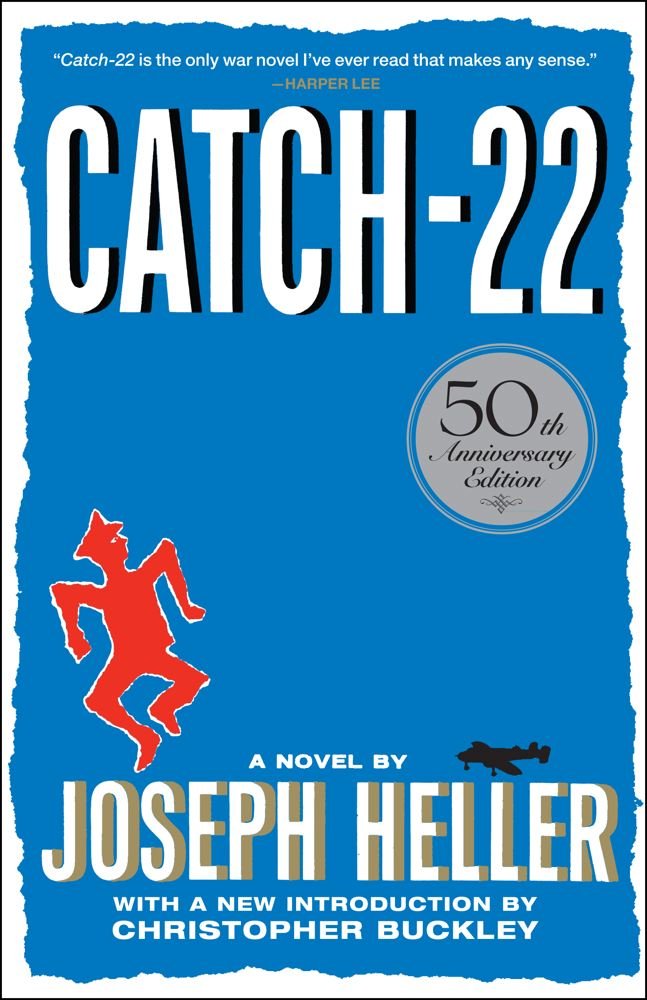
Catch-22 (1961), Joseph Heller Joseph Heller joined the US Army Air Corps in 1942 at
the age of 19, and went on to take part in more than 50 European bombing raids before the end of the Second World War. His military service affected him greatly -- he became an angst-ridden chronic nail-biter, with a habit for screaming in his sleep -- and it took him another eight years to begin dealing with his experiences in writing. After a few dreary post-war years working as a copywriter, one afternoon in 1953 a line simply popped into Heller's head: "It was love at first sight. The first time he saw the chaplain, Someone [he had yet to name Captain Yossarian] fell madly in love with him." Heller wrote the first twenty pages of what he presumed would merely be a short story over the next seven days, but it took him another eight years to complete what would eventually become Catch-22. 
Crime & Punishment (1866), Fyodor Dostoyevsky When he began writing it in the early 1860s, Dostoyevsky originally envisioned Crime & Punishment as a novella entitled "The Drunkard", in which he intended to explore the consequences of alcoholism on family life. That was until he discovered the writings of a French writer and murderer named Pierre François Lacenaire, who had been executed in Paris in 1836 for the brutal killing of a young man and his mother. While in prison, Lacenaire had written essays and poems, met with journalists and researchers, given interviews, speeches and press conferences, volunteered for psychological studies, and even offered to have a life mask made of his face, all on an apparent quest to become an icon of social injustice and guarantee his notoriety endured long after his death. It's unclear whether Dostoyevsky had already created the character of Raskolnikov by the time he heard of Lacenaire, but there are a number of striking similarities between his murder of the pawnbroker Alyona Ivanovna and her half-sister Lizaveta in Crime & Punishment and Lacenaire's own crimes 30 years earlier. 
Frankenstein (1818), Mary Shelley Frankenstein was famously written in response to Lord Byron's suggestion in the summer of 1816 that the guests at his villa on Lake Geneva -- including the poet Percy Bysshe Shelley and his future wife, Mary -- should each write a ghost story to pass the time. After initial reservations, 19-year-old Mary more than rose to the challenge by penning what is now considered masterpiece of gothic horror, inspired by a single terrifying image that popped into her mind as she lay in bed. "When I placed my head on my pillow..." she recalled in the introduction to her novel, "I saw -- with shut eyes, but acute mental vision -- the pale student of unhallowed arts kneeling beside the thing he had put together." The first edition of Frankenstein was published anonymously just two years later, followed by a second edition in 1822, a stage version in 1823, and finally a revised third edition in 1831 dedicated to Mary's then late husband, who had died nine years earlier. 
The Hound of the Baskervilles (1902), Arthur Conan Doyle In July 1900, Arthur Conan Doyle met an English journalist named Bertram Fletcher Robinson on board a ship returning to England from the Boer War. The pair quickly became friends and the following year Doyle agreed to visit Robinson at his home in Devon, southwest England, with an eye to collaborating on a new novel. Robinson took Doyle up onto Dartmoor, a vast ancient moorland (and now a National Park), and regaled him with an old folktale about a notorious local squire named Richard Cabell who had apparently sold his soul to the Devil -- when he died in 1677, local legend claims a monstrous pack of jet black hounds descended from the moors to escort his soul into Hell. Although Doyle had agreed to co-author a book with Robinson, after putting pen to paper the story quickly evolved into a new Sherlock Holmes mystery (his first in eight years) and Robinson's input was relegated, in his own words, to "assistant plot producer." 
Jude The Obscure (1895), Thomas Hardy It is unclear precisely who inspired Thomas Hardy's tale of a young working-class man's struggle to become a scholar, but it seems likely that the eponymous Jude Hawley was at least partly based on Hardy's tragic friend Horace Moule. Born in 1832, Moule earned a place at Oxford University in 1851, but failed to receive his degree. Moving to Cambridge University three years later, it took him another 14 years to finally complete his studies, during which time he battled alcoholism and severe depression until finally, in September 1873, he committed suicide by cutting his own throat as he lay in bed. He was just 41 years old. 
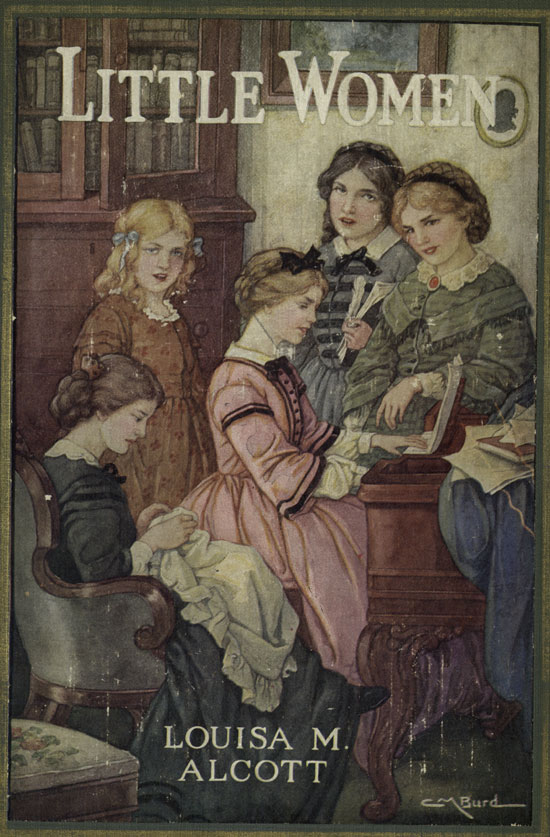
Little Women (1868-9), Louisa May Alcott The four eponymous March Sisters in Louisa May Alcott's Little Women were all based on the author and her three sisters. Louisa herself was the strong-willed protagonist Jo; her elder sister Anna was Meg; her youngest sister May was Amy; and her middle sister Elizabeth, who died at the age of 23, was Beth. The setting and the sisters may have been the alike, but the events and circumstances around them were not: the Marches were by no means rich, but the Alcotts lived in near abject poverty for many years during Louisa's childhood. What's more, the March family's father -- a philanthropic and scholarly Civil War hero -- was strikingly different from that of Alcott's own father, Bronson, a pacifist vegan schoolteacher and an early advocate of transcendentalism. 
Middlemarch (1872), George Eliot In January 1869, George Eliot wrote a list of tasks in her journal that she wanted to complete in the coming year, one of which was "a novel called Middlemarch." Although Eliot seemed determined to set to work, progress on the new novel was slow and when her son Thornie contracted a fatal case of tuberculosis later that year she ceased writing completely; by the time Thornie died in October, Eliot had produced just three chapters of what would eventually be an 86-chapter work, and she promptly shelved the project. By all accounts Eliot did not recommence writing until more than a year later, when, in November 1870, she began an entirely new work entitled Miss Brooke. This new story introduced an eponymous character named Dorothea, but sometime during Miss Brooke's development Eliot saw the opportunity to merge its narrative with that of the three chapters she had shelved the previous year, and Middlemarch was born. 
Moby-Dick (1851), Herman Melville Herman Melville's own experiences on board a Pacific Ocean whaling ship, the Acushnet, in the early 1840s provided the primary inspiration for his novel Moby-Dick, and later editors and commentators have since even been able to draw parallels between Melville's real-life fellow crewmembers and the characters in his book. The Acushnet was far from his only inspiration, however, as Melville was doubtless also influenced by the true story of a whaling ship named the Essex that was attacked and sunk by a sperm whale in the central Pacific in 1820. Melville later met the son of one of the Essex's eight surviving crewmembers during his time on the Acushnet, and after the publication of Moby-Dick in 1851 met with the ship's captain, George Pollard, whom he later described as "one of the most extraordinary men I have ever met." 
Robinson Crusoe (1719), Daniel Defoe It is widely believed that Daniel Defoe's Robinson Crusoe was based on the true story of real-life castaway Alexander Selkirk, but that's by no means guaranteed. In fact, there are such telling inconsistencies between the two tales -- Selkirk was voluntarily marooned in the Pacific, while Crusoe was shipwrecked in the Caribbean; he was stranded for just four years, compared to Crusoe's 28; and Selkirk was alone, while Crusoe's tale involves encounters with natives, cannibals and pirates -- that some editors have suggested Defoe likely had another story in mind. It may be that Crusoe's tale was based on the 17th century sea captain Robert Knox's 19-year imprisonment on Ceylon, which was published as An Historical Relation of the Island Ceylon (1681), or else on the British doctor Henry Pitman, who escaped from a British penal colony in the Caribbean before being shipwrecked on a nearby island. Alternatively, there could be some truth in Defoe's own claim that Robinson Crusoe was the true story of a man he knew personally, and for whom he simply served as memoirist. Whatever its true inspiration, there's no doubting the success or impact of Defoe's novel, which ran to four editions in its first year alone and has remained enduringly popular ever since. 
The Strange Case of Dr Jekyll and Mr Hyde (1886), Robert Louis Stevenson Robert Louis Stevenson had already written a play about Deacon Brodie -- an 18th century Edinburgh city councillor who led a double life as a burglar -- when in 1885 he had a dream about a mild-mannered man transforming into a monster. His wife Fanny later recalled how, "In the small hours of one morning... I was awakened by cries of horror from Louis. Thinking he had had a nightmare, I awakened him. He said angrily, 'Why did you wake me? I was dreaming a fine bogey-tale.'" She had woken him, she later discovered, at what would eventually become Jekyll's first transformation into Mr Hyde. 
The Thirty-Nine Steps (1915), John Buchan John Buchan was recovering from a stomach ulcer at a nursing home in Broadstairs on the far southeast coast of England he began work on what he referred to as his first "shocker" in 1914. Buchan reportedly took the title of the novel from a wooden staircase that once ran from the clifftops at Broadstairs down to the beach, although there are several conflicting accounts: one version of the story has Buchan's young daughter running down the stairs two at a time and announcing that there were "39 steps" down to the beach, while another claims that as there were actually 78 steps Buchan either halved the number simply to make a snappier title, or else changed it because he was 39 years old at the time. 
Three Men In A Boat (1889), Jerome K. Jerome In the mid 1880s, Jerome K Jerome came up with the idea of writing a straightforward travel guide to the River Thames, including descriptions of several historical sites along its course. As he began to compile it, however, Jerome's guide became increasingly filled with humorous anecdotes and bantering conversations recalled from boat trips he had taken along the river from London to Oxford with two of his friends, George Wingrave and Carl Henschel. Together, the three men became the eponymous Three Men In A Boat, with the addition of Montmorency the dog having, "as Jerome admits, developed out of that area of inner consciousness which, in all Englishmen, contains an element of the dog", according to Oxford World's Classics. 
To Kill A Mockingbird (1960), Harper Lee Harper Lee has long denied claims that To Kill A Mockingbird is an autobiographical work, but rather a reflection of an author simply writing about what he or she knows and has experienced first hand. Either way, it's hard not to see parallels between her Pulitzer Prize-winning classic and her childhood growing up in Monroeville, Alabama. Just like Scout, Lee's father practiced as a lawyer, and in 1919 was faced with defending two black men accused of the murder of a local white shopkeeper (both men - a father and son - were later hanged). Moreover, Lee, like Scout, was a tomboy in her youth, and her eldest brother Edwin, like Jem, was four years her senior. She wrote the book in the years following the death of her mother in 1951, and in the story Scout too has lost her mother. And even the character of Dill, who lives next door to the Finch family during the summer, is modelled on her childhood friend Truman Capote, who would spend the summer with his aunt in Alabama while his mother visited New York. 
See the original post HERE

Tuesday, June 18, 2013

An Inky Obsession Those Literary Tattoos

Dinner is in the oven, the wine has been poured, and all I can do is WATCH THIS VIDEO posted on YouTube by Buzzfeed:


A-MAZ-ING. My personal faves are the ones for Peter Pan and The Tempest.

But while Buzzfeed just posted this video yesterday, this isn't the first time they broached the subject of literary tattoos. In March 201, they shared a list of “20 Awesome Literary Tattoos.”

Among those on display are the following:

Samuel Beckett's The Unnamable

Shel Silverstein's The Giving Tree

Kurt Vonnegut's Slaughterhouse-Five

If only all tattoos were this meaningful...

(Mine are, but I've seen some doozies! :-p)


Thanks go out to GalleyCat for giving me the heads up on this one!

Monday, December 17, 2012

Monday Morning Pet Preview

So, it's Monday again. And while the office is filled with holiday cheer--gift-giving, cookies, and the like--I needed a little something extra to start off a week that promises to be a long one.

Lucky for me, Flavorwire recently posted  some awesome photos of famous authors with their pet--just the thing I needed:

A dog may be man’s best friend, but some men make better friends than others. To us, it’s always seemed as though pets attach themselves to artists (and vice versa, of course) in greater numbers than to regular folks — or at least that almost every artist we know needs a furry friend to talk to. Maybe it’s the pull of a constant, silent listener to bounce ideas against, maybe it’s because of the boundless soul of the writer, maybe it’s a coincidence. Either way, we think pictures of famous authors and their pets are pretty adorable, so we’ve collected a few of them here. See some of our favorite writers with their dogs and cats (and peacocks, guess who) after the jump, and if we missed your favorite literary pair of man and beast, add them in the comments.


Virginia Woolf and her dog Pinka.

“This you’ll call sentimental — perhaps — but then a dog somehow represents — no I can’t think of the word — the private side of life — the play side.”

 Photo by Gisele Freund, via.


John Steinbeck and Charley.

“I’ve seen a look in dogs’ eyes, a quickly vanishing look of amazed contempt, and I am convinced that basically dogs think humans are nuts.”

Image via.


Ernest Hemingway with one of his many cats.

“A cat has absolute emotional honesty: human beings, for one reason or another, may hide their feelings, but a cat does not.”


Edith Wharton with double pups.

“My little dog — a heartbeat at my feet.”

Image via.


Mark Twain and shoulder kitty.

“Some people scorn a cat and think it not an essential; but the Clemens tribe are not of these.”

Image via.


See the original and complete post HERE

Tuesday, December 11, 2012

Gone Google Gave a Giggle

It's Tuesday, and it feels like it should be Friday. Anyone with me?

Personally, I spent the morning running around my apartment in my bathrobe, knee-high boots on for protection and a broom in hand, while Cupcake played "catch and release" with an icky mouse. We spent an hour trying to get it to a point where I could dispose of the little sucker but by the time all the furniture was moved away from the walls of my bedroom, my "cat" had let him get away. I am a little afraid of what I'm going to come home to later.

Now, finally in the office with coffee in my belly, I can breathe. Or I could until my friend sent along this link: http://www.google.com/campaigns/gonegoogle/demos.html

And I cannot stop laughing.

It's probably a little extra funny since my day has been off to such a rough start, but it is pretty darn awesome.

What is it you ask?

Well, Google has created a place where companies can get a sense of all the great Apps Google has to offer once a company has "gone Google." The demo at the link above provides an example of how the collaboration process works in Google Docs in particular. Google has built the demo so that the user can write and collaborate with six famous dead authors--Charles Dickens, Edgar Allen Poe, Emily Dickinson, William Shakespeare, Fredrich Nietzsche, and Fyodor Dostoyevsky.

While there is a bit of repetitiveness that can occur as you use it, some of the changes these authors make to your document are quite hilarious.

My personal favorite: When Edgar Allen Poe popped in and wrote "I wish I could write as mysteriously as a cat."

'Nuff said.

Friday, November 9, 2012

Posthumous Publishing for Bradbury

Publishers Weekly spread the news today that two short pieces written by the classic science fiction writer Ray Bradbury will soon be available for public consumption.

As a huge Fahrenheit 451 fan, I'll admit to being pretty stoked about even just a few new pages from the literary icon.

Here's the scoop from the Associated Press (via Salon.com):

NEW YORK -- Ray Bradbury was in failing health during his final years, but he could still reminisce about his love for books or finish a brief and mysterious Christmas story.

Two pieces released this fall were written late in life by the science fiction/fantasy master, who died in June at age 91. He contributed “The Book and the Butterfly,” an introduction to this year’s edition of “The Best American Nonrequired Reading.” And he conceived a stark encounter between a young boy and a man he believes is Santa Claus in “Dear Santa,” which appears in the holiday issue of Strand Magazine, based in Birmingham, Mich.

The publication of each work was made possible, in part, by deep admiration for the author. Strand managing editor Andrew Gulli, who befriended Bradbury in 2009, has featured several Bradbury works and had an informal agreement with him for “Dear Santa.”

“I never heard anything back or received a contract for a couple of months,” Gulli wrote in a recent email, adding that final word did not arrive until the day of Bradbury’s death. “I was picking up my mail and opened up an envelope to find Ray’s signature on the contract.”

Dave Eggers, who edits the “Nonrequired” series, once contributed a story to a Bradbury tribute anthology and knows a close associate of Bradbury’s, the author and journalist Sam Weller. Based in San Francisco, Eggers helps a student committee compile the anthology and allows the students to choose a writer for the introduction.

“In the past they (the introducers) have ranged from Beck to Guillermo Del Toro to Judy Blume,” Eggers, a National Book Award finalist for his novel “A Hologram for the King,” wrote in an email Thursday.

“Last year the kids voted to ask Ray Bradbury, and because I knew Sam, and because I grew up a few towns from Bradbury’s native Waukegan, Ill., I thought we might have a shot. When Sam let us know he agreed, the students and I were flabbergasted. His intro was wonderful of course – so full of undiminished joy. He passed on a few weeks after sending it to us.”

“The Book and the Butterfly” is a three-page tribute to reading and how it nurtured Bradbury’s extraordinary imagination. He describes visiting his local library in Waukegan at age 7 and startling the librarian by borrowing 10 books a week. On “magnificent autumn nights,” he would hurry home and read about everything from Egypt to physiology.

“The books I brought home from the library caused me to think about the origins of life and the universe,” writes the author of “The Martian Chronicles,” “Fahrenheit 451″ and other classics. “How did it start? Where does it end? I recall Midwestern summer nights, standing on my grandparents’ hushed lawn, and looking up at the sky at the confetti field of stars. There were millions of suns out there, and millions of planets rotating around those suns. And I knew there was life out there, in the great vastness. We are just too far apart, separated by too great a distance to reach one another.”

His mind was a rocket ship, but “Dear Santa” is a written in a clipped, chilly style, as if Dashiell Hammett had been commissioned to write a sketch for The Radio City Christmas Spectacular. No names are given, except for Santa. The location is not identified. The mood is dreamlike and much of the action takes place through dialogue.

“Oddly enough the older Ray got, the less patience he had for adjectives and the more skeletal his style was, which for an editor is a dream,” Gulli wrote in his email. “Often times authors will slip into phases especially when they start getting on in years where they will pad a very simple story with a lot of things that should be edited out of the manuscript.”

The story begins with a boy standing in the back of a long and slow-moving line to meet Santa. A tall stranger stops the boy and asks his age.

“Twelve,” the boy says. The stranger warns he may well be older when he finally gets to Santa. As the boy approaches the front, he whispers his age to Santa, who insists the boy is lying and sends him away, complaining the boy is too heavy to sit on him, as if the boy himself might be turning into Santa.

Outside, the boy spots a tall, blue-cheeked man and they walk together. The boy is convinced the man is Santa, the man gives nothing away. The boy says he will write him during the next holiday season, and insists he knows where to address the letter. As they part, the boy has a final question.

“My dear Santa, sir, please tell me, do you believe in you?”

“Maybe right now I’m beginning to believe,” the man says. “I think I owe you thanks.”

See the original post HERE

Monday, October 22, 2012

The Hobbit is Almost Here! Kinda, Sorta...

Attention all movie lovers and fantasy fans: we have less than two months to go until J.R.R. Tolkien's The Hobbit, joins its Lord of the Rings successors on the silver screen!!!

I've always preferred the prequel to the trilogy, myself so I am particularly stoked for the film adaptation. I'm re-reading the novel in preparation, even, given how awesome the trailer looks:


I am, of course, not the only one anxious for the movie's release. Deirdre Donahue over at USAtoday.com posted a fun piece last week on the topic, 10 Reasons We Still love J.R.R. Tolkein's "The Hobbit":

America can be divided into two groups nowadays. Forget donkey vs. elephant. For untold millions, Dec. 14 marks a day of pop culture rapture. In breathless anticipation, devotees are counting down the hours and scanning the Web for signs. No, we're not talking about the Dec. 21 Mayan prophecy. We're talking about the opening of The Hobbit: An Unexpected Journey, Peter Jackson's film adaptation (Part 1) of J.R.R. Tolkien's classic novel.

One of most popular and beloved trilogies in film history, Jackson's Lord of the Rings movies – based on the three Tolkien titles that came after The Hobbit - have inspired a quasi-religious fervor in fans.

But perhaps you don't keep a cardboard Legolas in your bedroom. Maybe you read The Hobbit as a child and recall a little dude with furry feet and some fat dwarves.

To help you navigate the coming Middle-earth mania, here are 10 reasons we're still hooked on The Hobbit as it celebrates its 75th anniversary. Written by an Oxford professor for his children, it was published on Sept. 21, 1937, with a first printing of 1,500 copies. An immediate success, it has gone on to sell 100 million copies worldwide -- and burrow deep into the hearts of countless generations.

1. Action a-go-go. Dragons, trolls, danger, a child-sized sword call "Sting" -- The Hobbit is stuffed with precisely the kind of literary red meat that turns kids into book carnivores. (Just ask C.S. "Chronicles of Narnia" Lewis or J.K. "Harry Potter" Rowling.)

In fact, The Hobbit got its start with a thumb's up from a kid: a rave review from 10-year-old Rayner Unwin. In 1936, Rayner's father -- a British book publisher -- asked his son to read the manuscript. (He was paid a shilling.)

Here's the plot: Bilbo Baggins is a respectable hobbit -- think a half-sized human with a penchant for pipes and colorful waistcoats -- who hits the road with 13 dwarves and a wizard named Gandalf. The goal: retrieving treasure stolen by a dragon called Smaug. Bilbo encounters goblins, Wargs and a host of other creatures, including Gollum and his precious ring. The Hobbit sets up the story line for Tolkien's more complex Lord of the Rings, which stars Frodo Baggins, Bilbo's nephew.

2. Home sweet hobbit-hole. Fans just don't read The Hobbit, they yearn to be hobbits, or at least live like them. No creatures in fiction are such cozy comfort seekers with their snug hobbit-hole homes and obsessively tended gardens. They are also the original foodies long before the term was even invented, insisting that "Second breakfast is the best breakfast." In his new book, The Wisdom of the Shire: A Short Guide to a Long and Happy Life (St. Martin's), author Noble Smith notes that "Tolkien crafted Middle-earth in his mind, but the Hobbits sprang from his heart." Smith urges hobbit-wannabes to embrace the original small-is-beautiful lifestyle -- grow your own food, walk everywhere. And sing. ​Even to love Tolkien-style! The British writer met his wife of 54 years when he was 16 and she was 19.

3. The original show-me, don't tell me moralist. Bookstores groan with tedious and usually unsold tomes aimed at children written by earnest adults eager to instill moral virtue: Cruelty is wrong, courage and hope are crucial, riches won't make you happy. Without a whiff of finger wagging, The Hobbit has effortlessly imparted those messages for 75 years. Just listen to the dwarf Thorin's dying words to Bilbo: "If more of us valued food and cheer and song above hoarded gold, it would be a merrier world."

4. Little folk, big themes. "It is not just a simple story," says Corey Olsen, AKA "The Tolkien Professor" and author of Exploring J.R.R. Tolkien's The Hobbit (Houghton Mifflin Harcourt). Growing numbers of academics and theologians agree. In addition to hilarious scenes involving bickering dwarves stuffed into barrels and scary encounters with dragons, The Hobbit also illuminates how the journey transforms Bilbo, making him more compassionate and generous. According to the new The Hobbit and Philosophy: For When You've Lost Your Dwarves, Your Wizard, and Your Way (Wiley) edited by William Irwin, Gregory Bassham and Eric Bronson, there are parallels with Plato's "The Allegory of the Cave" as well as the writings of St.Thomas Aquinas, Ralph Waldo Emerson and Chinese Taoists.

5. Gateway drug for geeks. Did Tolkien linger in obscurity until Peter Jackson's movies? Not exactly. The Oxford Beowulf expert was inspiring obsessive adoration back when Jackson was a New Zealand schoolboy. Hippies in the 1960s embraced Tolkien while in 1971 Led Zeppelin released the song Misty Mountain Hop (referring to the gloomy mountain range Bilbo and company must cross).
The Complete Tolkien Companion by J.E.A. Tyler (St. Martin's) offers a 712-page A-to-Z guide to Middle-earth minutiae. First published in 1976, it has, no doubt, been saddening countless parents ever since who wish their teenagers pored over their SAT study guides with the same demented fervor. For many readers, Tolkien is the first author to introduce them to the joy of living in a magical alternative world (for which Tolkien, a self-taught artist, created the visuals). Once hooked on fantasy fiction, they devour writers like Robert "Wheel of Time" Jordan and George R.R. "Game of Thrones" Martin.

6. Friends with no benefits. Well, other than affection, companionship and plenty of belly laughs. For modern readers living in a sex-saturated society, The Hobbit is the asexual pause that refreshes. Friendship -- and only friendship -- is the name of the game in The Hobbit. Wizard with hobbit. Hobbit with dwarves. Even the bearish man Beorn and his beloved animal companions. Unmet sexual needs? Secret erotic tension? Not at this address! Friends were enormously important to the orphaned Tolkien. (His father died of rheumatic fever when Tolkien was 6 and his mother died of diabetes when he was 12.) Two of his closest school friends were killed in World War I. Later he became part of "The Inklings," a famed group of literary pals that included C.S. Lewis.

7. Rebel on a bike. If you don't believe the modern mantra of change is good, technology is great and we must all embrace the future or get left behind, you've got company with a certain nature-loving, progress-hating British contrarian. In 1944, Tolkien wrote to his son Christopher, "How I wish the 'infernal combustion' engine had never been invented!" The contrast between Bilbo's verdant Shire and the desolation of Smaug's mountain has hatched countless ecological warriors.

8. Ultimate mentor. Bilbo might be the hero, but the real love object in The Hobbit is the old man with the staff and pointy blue hat, Gandalf the wizard. It's not just his magical powers that make him a star, it's his humor, psychological insight. and, yes, occasional bouts of grumpiness. Like Merlin and Star Wars' Obi-Wan Kenobi, Gandalf is the wise sage we all wish stood at our side, guiding us through life.

9. "No Girls Allowed"? Not at this hobbit-hole. Seeing The Lord of the Rings: The Fellowship of the Ring had a major impact on Arwen Kester -- yes, Arwen as in LOTR (the character played by Liv Tyler). She went out and read all of Tolkien's books and later founded Middle-earth News, which tracks all things Tolkien. "Most of my staff are women," says the Raleigh, N.C., mother of two. "They love the lore." Kester, 31, doesn't need female characters to adore The Hobbit (although Jackson is adding some to the movie). "There's so much history! The language, the passion. It draws you in!"

10. The Anti-Arnie. A fussy 50-year-old bachelor who considers adventures to be "Nasty disturbing uncomfortable things! Make you late for dinner!" -- that's Bilbo Baggins, who lacks the usual alpha male DNA. Throughout The Hobbit, Bilbo is cold, hungry, terrified and painfully homesick. Yet by the end, Bilbo accesses his inner warrior and proves himself brave, loyal, wise and ingenious. Which is perhaps the novel's deepest appeal, since all of us - no matter what our age - secretly hope we too could be heroes, if called upon.

See the original post HERE

Monday, October 1, 2012

Fiction, Food, and Pho-tography

Because we all know how much I love books and food, I'm not surprised that the awesome Alex Christopher sent me a link to the NPR article, "Photographing Literature's Famous Food Scene." In the piece, NPR discusses the photographer Dinah Fried's "Fictitious Dishes" series:

A confession: I've read Jack Kerouac's On the Road, but I can't tell you much about it. Yes, I know he's on a road trip. But beyond that, I don't recall any of the characters or anything they do or what the point was. What I do remember is that he described some truly great food. In fact, I liked those sections of the book so much that when I read them, I apparently felt the need to scribble them down, word for word, in a notebook.

On the Road isn't the only example of this. I remember the hoecakes and the maple snow candy from Laura Ingalls Wilder's books. My favorite scene from Roald Dahl's Boy is in the candy shop. The details of meals and food and eating always stay with me long after the plotlines have faded.

So when I saw a series of photographs by Dinah Fried being passed around Tumblr, I knew I'd found a kindred spirit. Her "Fictitious Dishes" re-create the food scenes from a range of books, largely classics like Moby Dick and The Bell Jar.

Alice in Wonderland
"For me as a reader, and in life as well, I remember the eating scenes in books," Fried says on the phone. "They really bring me to an emotional place in the character and the book."

Fried has 10 photos in her collection so far, five of which she's sharing here on The Picture Show for the first time. Some of the scenes are of iconic literary meals — the gruel from Oliver Twist and the tea party from Alice in Wonderland.

Others, like the scene in The Girl With the Dragon Tattoo, are a bit less literal. The open-faced sandwiches pictured aren't actually described in the book. But, says Fried, that type of sandwich was mentioned so many times that she felt she had to re-create them somehow.

Catcher in the Rye
She does take some liberties with her photos. The layouts are of her own design, and not all of the details are 100 percent true to the text. Take, for instance, the cheese sandwich from The Catcher in the Rye. "I know it's a Swiss cheese sandwich," she says. "But I didn't use Swiss cheese because I wanted the color to pop. The designer in me wanted the cheese to be more orange."

The designer in her is also always on the hunt for the right props. Most of them are snagged from people's kitchens and found on visits to flea markets and thrift stores. Sometimes Fried has the food scene in mind but can't proceed until she has the right prop. That was the case with Moby Dick. She knew her dad had a pewter beer stein that she absolutely had to have. He'd long forgotten about it, but, until they found it, she couldn't take the photo.

Heidi
Sometimes a particularly good find will spark her creativity. The discovery of a three-pronged toasting fork reminded Fried of a scene in Heidi, and she felt compelled to re-create the meal of toasted cheese eaten by Heidi and her grandfather. And there are a few things in her collection that she hasn't yet used, like a 1960s coffee carafe with gold star bursts.

Often, the literary passages that Fried draws on don't have a description of a specific place or setting, so the goal with her photos is to create the atmosphere of a particular scene.

"I'm interested in creating something that evokes an emotional feeling for myself and others," she explains. "I wanted to see how other people who had read the books would connect on that level."

See the original post HERE

While this is a very cool series, I can't help but wish Fried had expanded the concept beyond only classic literature (also, speaking of...no Dickens other than the somewhat cliched Oliver Twist?? No Little Women??). I'd love to see something from The Secret Lives of Bees, the new novel The Night Circus, or even Fried Green Tomatoes. Scenes from children's literature would also be amazing--anything Roald Dahl, C.S. Lewis, Winnie the Pooh, and The Secret Garden.  I do, however, love her take on To Kill a Mockingbird:

To Kill a Mockingbird

Hopefully Fried will continue this series. If not, I may have to stage some things of my own! :)

Tuesday, August 21, 2012

Tom and Huck Get a Makeover

At home on my bookshelf sits an old, hardcover-bound copy of The Adventures of Huckleberry Finn by Mark Twain. Its pages are a bit yellowed as I've had the edition since I was a little girl, the margins and leading wide enough for easy reading and the illustrations floating prettily around the pages in blank ink. Soon after acquiring the edition, I became obsessed with the flick "Mark Twain and Me," watching in a loop on rainy days.

Now, that was how I was introduced to Mark Twain. But kids today might soon be experiencing a different kind of meet-cute. A steampunky one, according to GalleyCat:

Mark Twain‘s famous characters Tom Sawyer and Huckleberry Finn could star in a steampunk sequel to The Adventures of Huckleberry Finn. ABC has ordered a script for the possible show titled Finn & Sawyer.
 
The Hollywood Reporter has the scoop: “The drama hails from Detroit 1-8-7 duo Jason Richman and David Zabel and is described as an adventure-themed reinvention that revolves around the two famed literary characters who re-meet as young men in their 20s and form an investigative firm in a bustling and steampunk New Orleans.”

If you want to read Twain’s most famous novels, visit our Free eBook Flowchart to download free copies of the digital books. What is steampunk, you may ask? Follow this link to find out more about the genre. (E. W. Kemble illustration via the 1884 edition of Huckleberry Finn; link via i09)

See the original post HERE

The Hollywood Reporter goes on to share more details about the modernization:

Richman and Zabel (ER) will write and executive produce the project from ABC Studios and Temple Hill Entertainment.

Finn & Sawyer is the latest adaptation of the famed novel, which was first published in 1884. Coincidentally, ABC adapted the material for a 1975 TV movie that starred Happy Days duo Ron Howard and Donny Most as Huck and Tom, respectively, and again in 1985 with Drew Barrymore as Hucklemary Finn for another movie of the week.

See the original post HERE

I'll admit that this concept could be a very fun one, bringing together two of the most popular young characters in American literature. It reminds me a bit of Jim O'Brien's "The Young Indiana Jones Chronicles" in a way actually, and those are definitely fun. Yet, the fact that as a result of this new show, many kids will probably meet Tom and Huck in a twisted, steampunked version of the classic Twain novels, is sad to me. They will miss out on so much.

Monday, August 20, 2012

Best Novel of All Time? Cast Your Vote!

While New York Magazine is anticipating the best books come fall, the Huffington Post is exploring the best novel ever.

Using a bracket structure similar to the one popular for March Madness or the Super Bowl--or any other sporting event in the world, really--they have collected a number of novels and are currently voting on the first bracket of works:

The Best Novel of All Time? It's an impossible statement of course, but while we wait for the big titles of the fall to hit, and everyone is talking about voting on a bigger scale, we thought it would be a good opportunity to argue over some truly great books.

We scoured "Best of" lists from the past 10 years, and compiled a top 15 of incredible reads (we chose the ones that appeared the most number of times across the lists), with the final slot filled by our readers. Our only rules were that we were judging books either written in, or widely translated into the English language, and no more than one novel per author. A randomizing magic hat did the rest of the work.
So here is our first round of voting. The below graphic might be a little hard to see - click here for a larger version - but the voting should be pretty straightforward underneath.

Votes close at 9am EST on Wednesday. There are some HORRIBLE choices to make in this first round. "Gatsby" or "Mockingbird"? "Solomon" or "Bovary"? "Emma" or "Solitude"? You have to choose! Why? Because we say so. There can be only one winner, so help decide who makes it through to the next round of entirely spurious Novel Madness.

Arguments and verbal wrestling may commence in the comments... now.

See the original post HERE


It's a fun idea--having a bit of a showdown with some of the "best" novels ever written. But I've gotta say, I wish there would've been a voting system in the first place to collect the novels. (I also would've suggested clarifying that these are the best "classic" novels, not best novels.) Personally, only ONE of the books on this list would've been on my own personal "Best of" list, and that is To Kill a Mockingbird.

Other titles I would have included in a Best of the Classics list?

Fahrenheit 451 by Ray Bradbury.  
A Farewell to Arms by Ernest Hemingway.
The Picture of Dorian Gray by Oscar Wilde
The Catcher in the Rye by J.D. Salinger
Of Mice and Men by John Steinbeck

What would be on YOUR list?

Thursday, August 2, 2012

Mash-Ups Take a Turn For the Worse...I mean, for the Sexier

Once upon a time, not too long ago, writers began to fiddle with classic novels. They'd add vampires, sea monsters, and zombies galore to create the now commonly coined "literary mash-up." While this new genre didn't spark my personal attention, I wasn't wholly against them as they sky-rocketed to popularity just a few years ago.

In my mind, it was a fun and unique way to re-conceptualize classics and even encourage readers to explore classics that they may not have read. It moved the focus a bit from "Look at this brand new shiny story!" to "Look at the awesomeness that was our predecessors' writings!" Plus, I am always a sucker for seeing how people can reinterpret a story. Just as is done on a regular basis with film adaptations, these mash-ups were taking a piece of work and re-envisioning it.

But the newest subgenre to the "Mash-up" family has my feathers puffing out all in a million different directions (aka angrily). Now, writers are simply sexing-up the classic literature, adding erotic scenes to the sometimes sensual yet innocent classic stories so many of us adore. They aren't creating anything new, they aren't adding anything different and clever to the story; they are simply taking what was once innocent and making it foxy.

The Wall Street Journal tells us more:
Jane Austen would be turning Fifty Shades of Red.

As if being mashed up with zombies and transported to American high schools weren't enough, Ms. Austen and several of her fiction-writing peers are seeing their novels morphed into erotica.

As the steamy "Fifty Shades of Grey" and both of its sequels dominate best-seller lists, an enterprising electronic publishing house will publish on Monday a sadomasochistic version of Charlotte Brontë's "Jane Eyre," as well as sexed-up renderings of tales by Ms. Austen, Arthur Conan Doyle and Jules Verne.

In "Pride and Prejudice" Elizabeth Bennet and Mr. Darcy start groping any time they can slip away from their stuffy friends.

Sir Arthur's "A Study in Scarlet," Mr. Verne's "Twenty Thousand Leagues Under the Sea" (both with gay themes) and Ms. Austen's "Northanger Abbey" inaugurate the series, titled "Clandestine Classics."

Claire Siemaszkiewicz, chief executive of Total E-Bound, has been publishing erotic e-books for the last five years. She says the new series was planned before the "Shades of Grey" franchise exploded. But she's not denying it's likely to help.

Ms. Siemaszkiewicz hired five erotica writers from her stable of 250 authors to add racy sex scenes to the original texts, which are in the public domain and therefore not subject to copyright laws. The essential prose remains mostly unchanged, supplemented by 10,000 words or more which promise to take readers "behind the closed bedroom doors of our favourite, most-beloved British characters," the website states.

The books are priced based on how many new words have been added. "Jane Eyre" is $5.23; "Pride and Prejudice" is $4.36.

Attempts are made, with mixed success, to conform to the argot of the time. An excerpt from the updated "Pride and Prejudice" has Elizabeth referring to Darcy as "hot, spicy, and all man" as he "lifted her skirts quickly and removed her undergarments, then fumbled to free himself from the confines of his own clothing."
Desiree Holt, who penned the racy scenes to "Northanger Abbey" and shares a credit with Ms. Austen on the book's cover, says she worked hard to preserve Ms. Austen's sensibilities.

"I was careful to make sure that I kept to the same language and the same tone so that it didn't sound anachronistic or jarring to the rest of the book," says Ms. Holt, a retired music publicist who is 76 years old.
Austen scholar Devoney Looser, a University of Missouri professor, read website excerpts of Clandestine's hot new "Pride and Prejudice" and quickly found one improbability: Ms. Bennet and Mr. Darcy slip in and out of their clothes a bit too efficiently, which would have been virtually impossible given the extensive undergarments worn in the early 1800s.

The Clandestine line is Ms. Siemaszkiewicz's first foray into the literary canon. More typical are subgenres like "angels and demons", "paranormal" and "Rubenesque." About 95% of Total E-Bound's readership is female, and many readers buy a new e-book each week, she says. She publishes about six titles a week to keep up with demand.

"I like to think if the Brontë sisters were writing today, their books would be a lot racier," said Ms. Siemaszkiewicz. "But they were stifled by convention at the time."

See the original post HERE

With the recent explosion of the erotic romance genre with the popularity of 50 Shades of Grey, writers and publishers seem to be grasping at straws here, in my opinion. Not only has the erotic romance genre been around for years and YEARS before this new "fad" hit (I will not rant about 50 Shades of Grey. I will not rant about 50 Shades of Grey.), but if a classic wasn't sex-ified by the author in the first place, it wasn't meant to be, it wasn't the heart of the story, at least not on paper. Classics encourage imagination in that regard. Yes, maybe these author's would write something racier if they were in modern times, but there is no way to know that.  The fade-to-black mentality is even one still used in many novels today, and taking an author's choice in that respect and changing it because "being horny is in" and "modern" is disturbing to me on so many levels.


Friday, July 20, 2012

Hemingway Look-alike Contest Rocks My Socks

If you live in South Florida, do I have the literary event for you!

Sloppy Joe's 32nd Annual Papa Look-alike Contest in Key West!

Who is "Papa," you ask?

Why, Ernest Hemingway, of course! 
Sloppy Joe's Bar in Key West will host its 32nd Annual Hemingway Look-Alike contest July 19-21, 2012. The contest is one of many events in Key West to celebrate the birthday of Ernest Hemingway and honor his work as author and sportsman.

The competition starts with the first preliminary round on Thursday, July 19, second preliminary round on Friday, July 20, and finals on Saturday, July 21.

From each preliminary round finalists are chosen. Last year's competition had 121 Look-Alikes taking the stage with 12 contestants from Thursday night preliminary and 15 from Friday night preliminary going on to the final round.

Look-Alikes are everywhere, it's a load of fun! Come early, get a good seat and watch the competition.
After the finals, the party spills over into the streets, where the Street Fair on Duval continues with food, drinks, entertainment and fun for everyone!

The infamous Hemingway Look-Alike Society invites you to join the Society. They will be at Sloppy Joe's to sign-up new members. 
 See more details from Sloppy Joe's website HERE

Now that you know what it's all about, you may be wondering about previous winners...

Please do marvel at these findings:


Man, do I wish I were in Key West.

This is fabulous. 

Saturday, June 9, 2012

Ray Bradbury Remembered Through Quotes

Ever since I heard the news of Ray Bradbury's death earlier this week, I've been trying to figure out what I want to say about him. As one of my favorite authors, everything I come up with feels wrong, not good enough. So instead of trying and failing to do him justice, I've decided to share with you a compilation of my favorite Bradbury quotes.

 "Looking back over a lifetime, you see that love was the answer to everything."

"Don't think. Thinking is the enemy of creativity. It's self-conscious, and anything self-conscious is lousy. You can't try to do things. You simply must do things."

"There are worse crimes than burning books. One of them is not reading them."

"Living at risk is jumping off the cliff and building your wings on the way down."


"I just want someone to hear what I have to say. And maybe if I talk long enough, it'll make sense."


Rest in peace, Ray. The world will miss you.