Showing posts with label literary fiction. Show all posts

Tuesday, August 27, 2013

A Teeny-Tiny Library of Awesomeness

Last month while I was in the UK, my boyfriend David and I took a little visit to Windsor Castle. While I thoroughly enjoyed the day--watching some jousting and falconry, visiting the State apartments, seeing the beautiful blue silk wall papering in the dressing room, and Marie Antoinette's personal clock, there was one thing I wish I had gotten to take a closer look at: Queen Mary's amazing dollhouse.

I just hadn't known of that desire at the time... But this morning, I woke up to a link from David, telling me all about the doll house and its extraordinary construction:

Among the highlights of a visit to Windsor is Queen Mary’s Dolls’ House, the largest, most beautiful and most famous dolls’ house in the world. Built for Queen Mary by the leading British architect Sir Edwin Lutyens between 1921 and 1924, this most magical of residences is a perfect replica in miniature of an aristocratic home.  
The house is filled with thousands of objects made by leading artists, designers and craftsmen, nearly all on the tiny scale of 1:12.  From life below stairs to the high-society setting of the saloon and dining room, no detail was forgotten. Among the most striking features of Queen Mary’s Dolls’ House are the library, bursting with original works by the top literary names of the day, a fully stocked wine cellar and a garden created by Gertrude Jekyll. The Dolls’ House even includes electricity, running hot and cold water, working lifts and flushing lavatories. 
In the adjoining display two remarkable French dolls, France and Marianne, are shown with part of their extensive wardrobe of clothes and accessories. They were presented to King George VI and Queen Elizabeth for their daughters, the Princesses Elizabeth and Margaret Rose, by the French Government during the 1938 State Visit to France. The dolls’ clothes and accessories were designed and made by the leading Parisian fashion houses, including Worth, Lanvin, Cartier, Hermès and Vuitton. 
See the original post HERE


What I'd like to draw your attention to today is THE LIBRARY. Yes, it gets both caps and italics--it's that awesome.


Located on the second floor of the four-story masterpiece, the library has more teeny tiny books that I've ever seen. Over two hundred, in fact! Upon its shelves are real, original, handwritten books custom-authored by authors such as Thomas Hardy, Rudyard Kipling, W. Somerset Maugham, and Sir Arthur Conan Doyle.

There are even hand-illustrated books among the collection, one of which was even reproduced to a full-size, readable version for sale in April 2012, according to The Daily Mail:
 
A tiny children's book created for a royal doll's house is to be published in human scale. 
With pages scarcely bigger than a postage stamp and intricate drawings by a celebrated cartoonist, the miniature volume is a prized object in the Royal Collection.
But from next month youngsters everywhere will have the chance to read the story about a fairy called Joe Smith and his adventures when he falls out of fairyland and lands in London. 
The hand-written book measures just 1.6in by 1.4in and is one of 200 volumes in the miniature library of the dolls' house created for Queen Mary, consort of King George V, in 1922.  
See the original post  HERE

Bloggess Madame Guillotine gives a little more detail of the room:

This was Princess Marie Louise’s personal project when the house was being put together and she took great pleasure in commissioning books and art work from well known contemporary artists and writers for the room. There are three hundred tiny books in the library, all specially made and bound for the room and including a Koran, the complete works of Shakespeare, a dictionary and three Bibles as well as works by Sir James Barrie, Thomas Hardy, Sir Arthur Conan Doyle (who contributed a Sherlock Holmes short story), Rudyard Kipling, Hilaire Belloc, Siegfried Sassoon, M.R. James and H. Rider Haggard. In fact the only writer to refuse and ‘in a very rude manner’ to contribute his work was George Bernard Shaw. What a misery guts. 
The library also contains seven hundred tiny paintings by well known artists of the period, many of whom were members of the Royal Academy such as Dame Laura Knight, Sir William Nicholson, Munnings and Sir William Russell Flint, their works being stored in small folios in special cabinets. There are also musical scores by well known contemporary composers such as Gustav Holst with Elgar being the most notable exception – like Bernard Shaw he sent the committee a very rudely worded refusal to participate, claiming that the royal couple were ‘incapable of appreciating anything artistic’. 
Read the entire post HERE (It's great, btw!)

One word: WOW.


Friday, June 21, 2013

Friday Fun with Books and Booze

One of my favorite things to do in the summer is read outdoors, a cold drink in hand. Sometimes alcoholic, sometimes not. ;)

For those of you with a similar inclination, Kirkus has compiled a list of the "Best Summer Books and Their Corresponding Drinks" (article reposted by the Huffington Post) for 2013:
We don’t condone drinking while reading, no sir. Or at least not when our reviewers are reading. Summer, a good book, alcohol: They go together well. Here’s our guide to books that won’t disappoint and what you might want to imbibe while reading them. 
  • With a Mexican martini: Philipp Meyer's The Son
  • With an entire bottle of the hard liquor of your choice: Jon Wiederhorn and Katherine Turman's Louder than Hell

Cover art for THE CROCODILE
FICTION
Released: July 2, 2013

"In this crisply translated novel, de Giovanni explores Lojacono's loneliness and vulnerability while simultaneously revealing his brilliance as a detective."

A wonderfully suspenseful novel in which de Giovanni restores life to the cliché of the world-weary detective. Read full book review >
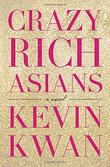
Cover art for CRAZY RICH ASIANS
FICTION
Released: June 11, 2013

"An elegant comedy and an auspicious debut."

Jane Austen, or maybe Edith Wharton, goes to Singapore, turning in this lively, entertaining novel of manners. Read full book review >
Cover art for THE WAY OF THE KNIFE
NONFICTION
Released: April 9, 2013

"A well-reported, smoothly written book for anyone who wants to understand contemporary American military might and the widespread hatred for the U.S. that has been the result."

Pulitzer Prize–winning New York Times national security correspondent Mazzetti demonstrates in horrifying, persuasive detail how the new-style warfare approved by both George W. Bush and Barack Obama has led to controversial assassinations by the U.S. government and blowback yielding new terrorists determined to harm American citizens.Read full book review >
Cover art for TO AMERICA WITH LOVE
NONFICTION
Released: July 9, 2013

"A stirring, funny, thought-provoking appreciation of the place, the idea, the experiment, the United States of America."

An ardent mash note to the vast, vital nation that confounds and beguiles its European cousins in equal measure. Read full book review > 

See the rest of the original post HERE

If you are dipping into some classics this summer, you might also like these recommendations from Flavorwire:

As the bookish among you are most likely aware, literature and liquor have gone hand in hand since time immemorial. But while we know which drinks our favorite authors liked to imbibe while creating, that’s not necessarily a good indication of which drinks are best to read their work by. We’ve already given you our suggestions on the cocktails you should pair with your favorite TV shows, but if you’re more likely to be curled up with a book than in front of the small screen this weekend, we have a few thoughts as to how to best keep the party going in your living room. Click through to read about the cocktails we would pair with ten of our favorite novels, and if you’ve found another winning combination, give us your own recommendations in the comments!

Lolita 
Amaretto Sour 
1 jigger amaretto almond liqueur
1 oz. lemon juice
maraschino cherries as desired
sugar to rim glass 
Though we were tempted to pick something bright red for our Lola, we think the Amaretto Sour might be her drink — sweet enough that she’d like it, serious enough that it would make her feel grown up. Not to mention the fact that that very tension between the playfully sweet and deadly serious also happens to be one of the joys of the novel — so why not indulge all the senses?


Alice’s Adventures in Wonderland 
Death in the Afternoon 
2 ounces absinthe
4 ounces Brut champagne 
We know this cocktail is a Hemingway classic, but come on — what better to fuel your trip down the rabbit hole than a hallucinogenic, celebratory mix of absinthe and champagne?


The Catcher in the Rye
Old Fashioned 
1 sugar cube
3 dashes Angostura bitters
dash of club soda
2 ounces rye whiskey
1 orange slice and/or 1 maraschino cherry 
We know Holden is a Scotch and Soda man himself, but it’s the Old Fashioned that most reminds us of existential angst and dark evenings in New York City in the fifties (or today, really). But don’t be a phony — only drink this if you’re a real whiskey fan.


The Great Gatsby 
French 75 
1 jigger dry gin
1 teaspoon simple syrup
the juice of 1/2 lemon
5 ounces Brut champagne 
While reading The Great Gatsby, you should really drink the cocktail that most lets you indulge in your own fancy 1920s fantasies — for us, it’s the oh-so-classy (and time period appropriate) French 75, which originated in 1915 at the New York Bar in Paris. Yes, it’s ever so chic, my darling. Plus, you can thrill in solidarity with Fitzgerald — whose favorite drink was gin (harder to smell on the breath, you see).
See the rest of the original post HERE

Here are some of my own more commercially driven recommendations--because, come on, let's face it, we don't always want to read literary fiction while we sit back in the summer sunshine!

Sugar Daddy by Lisa Kleypas -- Enjoy a nice Firefly vodka and lemonade concoction, or opt for some non-alcoholic sweet tea.

Bite Me by Christopher Moore -- With a Bloody Mary, of course! Or just some healthy V8. ;)

The Hobbit by J.R.R. Tolkien -- Some good old mead would make this family-friendly tale, much less child-focused.

Twenties Girl by Sophie Kinsella -- Try a classic '20s cocktail like the fun and flirty Mary Pickford.

Shake, Stir, Whatever. Just enjoy!

Tuesday, June 18, 2013

An Inky Obsession Those Literary Tattoos

Dinner is in the oven, the wine has been poured, and all I can do is WATCH THIS VIDEO posted on YouTube by Buzzfeed:


A-MAZ-ING. My personal faves are the ones for Peter Pan and The Tempest.

But while Buzzfeed just posted this video yesterday, this isn't the first time they broached the subject of literary tattoos. In March 201, they shared a list of “20 Awesome Literary Tattoos.”

Among those on display are the following:

Samuel Beckett's The Unnamable

Shel Silverstein's The Giving Tree

Kurt Vonnegut's Slaughterhouse-Five

If only all tattoos were this meaningful...

(Mine are, but I've seen some doozies! :-p)


Thanks go out to GalleyCat for giving me the heads up on this one!

Thursday, May 31, 2012

LES MISERABLES Film Trailer Officially Released!

The upcoming film adaptation of the musical of Les Miserables (based on the book  by Victor Hugo, of course) has been getting a lot of criticism regarding its casting. I'll admit that the producers and casting directors have made some interesting choices, ones that perhaps I would not have made, but I am thrilled nonetheless for it to hit theaters. Since I saw the very first glimpse of it months and months ago, I had a feeling that the cast would surprise us.

And now that I've seen the first official movie trailer, I've got to say.... 

I have a feeling the cast will surprise us.


Friday, April 13, 2012

Rowling Entering the Adult Fiction Realm

It's been nearly five years since J.K. Rowling's final "Harry Potter" book was released. Since then, there have been multiple film releases, Pottermore, and the HP eBooks were birthed. And now, Rowling's UK publisher Little, Brown announces her return to the shelves with her first foray into adult literature.

Here's more from the publisher's website:

The book will be published worldwide in the English language in hardback, ebook, unabridged audio download and on CD on Thursday 27th September 2012.

The Casual Vacancy

When Barry Fairweather dies unexpectedly in his early forties, the little town of Pagford is left in shock.

Pagford is, seemingly, an English idyll, with a cobbled market square and an ancient abbey, but what lies behind the pretty façade is a town at war.

Rich at war with poor, teenagers at war with their parents, wives at war with their husbands, teachers at war with their pupils...Pagford is not what it first seems.

And the empty seat left by Barry on the parish council soon becomes the catalyst for the biggest war the town has yet seen. Who will triumph in an election fraught with passion, duplicity and unexpected revelations?

Blackly comic, thought-provoking and constantly surprising, The Casual Vacancy is J.K. Rowling’s first novel for adults.

See the original post HERE

I've got to admit, I'm not convinced that this book with be a hit. I have a sneaking suspicion it will make that sad and painful belly-flop noise. The Rowling name is linked so closely with children's literature and the fantasy genre that a jump to a "blackly comic" literary adult novel seems too drastic to work. It's also such a vastly different style of writing and Rowling is so well-versed in her past technique/voice/etc. that I can't imagine her writing something so different. But I am eager to find out if she pulls it off and learn just how far her writing chops span.

Friday, March 16, 2012

Guest Blogger, Dan Cabrera: Book Review, "Underworld" by Don DeLillo

When considering America in the twentieth century, trash probably isn’t the first thing that comes to mind. By “trash” I mean garbage, refuse, or waste. The thrown away, tossed aside detritus of everyday life that, when assembled together, paints a complete portrait of who we are. This is what Don DeLillo does with his 1997 novel Underworld*. He takes the discarded, the peripheral, and brings it into full view. He looks at America in the second half of the twentieth century--and our own inner lives--by sifting through the remains. For DeLillo, one nation’s trash is his treasure.

Underworld is a grand tome that is deservedly called a “Great American Novel,” a “Masterpiece,” or just “Very Long.” At 827 pages, DeLillo packs his dense novel full of fascinating characters, richly detailed locations, and enough emotional heft to carry at least five books. DeLillo, along with Cormac McCarthy, is rightly considered one of the titans of late twentieth century American literature. His prose is straightforward and unadorned, yet his language is so evocative and descriptive that you can feel everything he writes. His brilliance lies in his ability to probe the psyche of a person, a nation, an event, or even an object. A master of aesthetics, DeLillo is a pointillist painter with words.

While DeLillo can hone in on a moment and extrapolate reams of data to understand that moment from all angles, he still manages to paint a sweeping picture of Cold War America. Told in reverse-chronological order, Underworld begins in the modern day (which was then the late 90’s) and goes backwards through the decades until 1951. The prologue, practically a novella, focuses on a fateful day in 1951 when “the shot heard round the world” took place. The “shot” refers to a baseball home run during a playoff game between the New York Dodgers and Giants, which, coincidentally--amazingly--took place the same day the Soviet Union exploded their first atomic bomb. Truth is stranger than fiction, but DeLillo uses the day to capture the grandeur, paranoia, and interconnectedness that follows in the rest of the novel.

The home run baseball from that 1951 game connects most of the players in the novel. DeLillo retraces the baseball’s ownership through the decades, going from a local Bronx man to a memorabilia collector to one of the protagonists, a man named Nick Shay. Nick, originally from the Bronx, lives in Arizona where he works for a waste management company, specializing in storing nuclear waste. A soul adrift in the American West, Nick is burdened with a tragic past, much like his country. And like America, he is also burdened with an existential crisis, unsure of the future and unsure how to define himself in this new, modern age.

It’s nearly impossible to summarize the plot, not only because there are many subplots, but because doing so would take so much time that you’d be better off just reading the book. The novel is composed of vignettes, snapshots in time that, when stitched together, tell the story of its characters. Each chapter could work as its own short story, which, for me, made reading the long novel breezy and refreshing. Rather than being taxed with remembering who’s who and what’s what, I was able to enjoy each chapter as its own pearl. In fact, what’s important isn’t necessarily plot points, but the truths behind the stories. On practically every page you could find DeLillo’s thesis statement and also a universal truth (sometimes they’re one in the same). In 827 pages, you would hope that some sentences jump out at you, but in Underworld you get more than you anticipate, and each gem snaps your head back with its profound wisdom.

What general truths, then, does the novel espouse? It’s easy to forget that the 1990s were an innocent age. America, emerging victorious from the Cold War, was the lone superpower. There were little or no threats looming over our heads, and the fear of total annihilation suddenly disappeared overnight. America was in a bubble, a still limbo where we didn’t know our place in the world. We had time to reflect back on the past fifty years, when nuclear bombs were the norm. In the 90s, as in today, with enough time and distance, the thought of a nuclear warhead raining down on us, destroying civilization, seemed preposterous. It was mad. It was also very real. But, despite the fear of global meltdown, people went on living their lives.

Underworld examines those unsung heroes of the Cold War: the everyday people. The men and women who scraped by, trying to make sense of their own purpose while trying to make sense of the hectic, chaotic world around them.

Now, though, in a post-9/11 world, we’re thrown into a different “Us vs. Them” mentality. The world is again in chaos (is it ever not?), and we’re slowly (hopefully) emerging from the terrible shadow of fear. So, while the idea of Underworld may seem quaint and dated now, we can still appreciate its message. In fact, by reading the chapters that take place in the 90s we can see both a prescience and a timelessness in the way DeLillo imagines a nation as eerily paranoid about the future. And today, with the prospect of a nuclear Iran, the novel regains its immediacy.

While DeLillo easily paints a maco picture, he specializes in the micro moments. Interior thoughts, small conversations, quiet reveries, even the minute description of a work of art: these moments make up the underworld of our existence. DeLillo captures them effortlessly, almost stream-of-consciousness, which made the novel flow quickly.

Though I don’t know for sure, parts (especially later parts of the novel) felt autobiographical to me. DeLillo was born and raised in the Bronx, in an Italian-American family, much like Nick Shay. The later chapters that take place primarily in the 1950s Bronx felt a bit removed from the rest of the novel. It was a little too specific, a little too much of a departure from the grand scheme of the rest of the book. Too much time was focused on certain characters while we lost track of others during these chapters, but it’s hard to complain given that the writing and the characterization were still top notch.

DeLillo brings his story back to the present at the very end, and he tries to tie everything (technology included) together in a way that does work, but it actually feels a little quaint given the age we live in now.

There is, of course, a lot more that can be said about Underworld. It’s long, but well worth your time (and I’m not just saying that to make myself feel better about the time I spent on it). It’s a big book and a Big Book, one deserving of all of the praise heaped on it (in 2006, a group of prominent writers named it the number two book in the past 25 years, behind Toni Morrison’s Beloved).

If you see a ragged copy of Underworld in a used bookstore or see the book littering a for sale rack, pick up a copy. Or order a new one and keep it on hand. The small stories that get tucked away shouldn’t be lost forever. Sometimes, they’re the stories that really matter.

*In case you were wondering, this has nothing to do with the vampire vs. werewolf movies of the same name.

Friday, February 3, 2012

Guest Blogger, Linnea West: "Swoon-worthy" Eugenides?


So many questions come to mind when I think about the author Jeffrey Eugenides, who recently published The Marriage Plot, won a Pulitzer Prize for his novel Middlesex, and has many fans familiar with at least the screen adaptation of The Virgin Suicides. For instance, why does he have a billboard in Times Square? Possible answers I tossed around include:
  • Because for a cult-like following, Eugenides is remarkably mainstream, and thus worth the promotional dollars.
  • Because the author is a bigger selling point than the book itself.
  • Because the book publishing industry is suddenly flush with cash.

I tend to think the correct answer is the first option. However, as I will come to later, the middle option has turned out to be true at least by my reading of things. The third answer is categorically incorrect, and reeks of wishful thinking.

I was very much looking forward to his newest book, The Marriage Plot, after finishing Middlesex (Note: I have not read The Virgin Suicides), which might be why it doesn’t nearly measure up. After all, it is COMPLETELY different. They both deal with coming-of-age but that is the only commonality. How does Eugenides manage to write novels that sound like they come from different people? [Answer: I have no idea. It’s remarkable.]

In case you aren’t familiar, Middlesex is the story of Cal, formerly Calliope, as he navigates growing up in Detroit and discovering that he is a hermaphrodite against the epic backdrop of his Greek origins and family lore. The Marriage Plot is a love triangle composed of three 1980s-era Brown University graduates—Madeleine, Mitchell, and Leonard—and follows them as they graduate and enter the real world.

The two books differ in some key respects:

Middlesex

The Marriage Plot

Exuberant and mannered narrative voice.

Matter-of-fact narrative voice, almost lack of style.

Unusual, strange, and epic story.

Common, relatable, and realistic story.

One protagonist, who the reader loses sight of at times amid family history and tangents.

Three protagonists always at the forefront and driving the plot


But in terms of reading experience, at least my personal reading experience, they also differed:


Middlesex

The Marriage Plot

Sympathetic and identifiable characters, even though much of the family the reader knows only superficially and, statistically, the reader is not likely to be a hermaphrodite.

Unimpressive-to-unlikeable characters, though the reader gets to know the three central characters ad naseum.

Interesting, despite long-winded descriptions and stories unrelated to the central plot.

Boring, despite more focused narrative (and not even because of the long philosophical excerpts from Barthes!)


Another remarkable thing is that for all intents and purposes, The Marriage Plot is the easy book of the two to write. He’s basically pulling together ordinary characters from his own life experiences and giving them a predictable narrative enacted by thousands of people. This could be your life; it could be mine. It could be a Lifetime Made-for-TV movie. But what Eugenides fails to do is take this raw material and transform it into something more, something that is art. How odd that Middlesex, a story about things he’d never experienced or even interviewed people about, came so trippingly off his tongue, and The Marriage Plot, for all its knowable ease, is such an unimaginative, unsuccessful quagmire of words in which the reader gets stuck again and again? Perhaps the fantastical is easier to write.

Another question that torments fans of the author’s work is the long lag time between books. Eugenides is no James Patterson. The Virgin Suicides came out in 1993, Middlesex was published in 2002, and it was only this October, 2011, that The Marriage Plot entered the world. Why does he take a decade to write one book? He’s probably not a lazy fat cat living off the wealth of movie rights, although I couldn’t say for sure. In the case of The Marriage Plot, this decade-long wait occurred at least in part because he was midway through a different novel before deciding he was writing the wrong story and beginning anew. I don’t know what he was working on, but this seems like an error in judgment.

For all the hoopla, Middlesex is the novel that deserves the billboard, less so the dull and lifeless Marriage Plot.


About the blogger: Linnea West writes about art and culture and a little bit of everything else on her blog Art Ravels. You can also follow her on twitter at @linnea_west.

Thursday, January 5, 2012

Love, Love, Love: Literature and Deconstructing our Emotions

With love on the brain (a new boyfriend will do that to a girl haha), my eyes were instantly drawn to this morning's Guardian UK article entitled "Romantic fantasy, fiction and reality." I'll admit it didn't turn me away that it had a film still from "Two Weeks Notice" as its featured photo either.

In the piece, Guardian writer Damien Walter discusses the different takes on love portrayed in three recent novels--Fated by SG Browne, The Thorn and the Blossom by Theodora Goss, and The Marriage Plot by Jeffrey Eugenides (RBtL's current book club pick, FYI!):

"People would never fall in love if they hadn't heard love talked about." Or read about it in books, we can assume. Which is all very well for Francois de La Rochefoucauld, French nobleman and writer of maxims, to say – but is much harder to live by. Yes, perhaps, in the postmodern sense love is just a construct, cobbled together from bits of old Arthurian romances and BBC Jane Austen adaptations. But try telling that to your New Year's Eve date and see how far it gets you. If love is just a fantasy, what does the fantasy of today say about love?

The thing about SG Browne is, he's a romantic – and his second novel, Fated, is a book for anyone who believes that love is destined. Browne takes up the grand tradition of writers from Ovid to Pratchett by casting personified facets of the human psyche among his central characters. Fate, nickname Fabio, is the kind of handsome 30-something go-getter you might expect to find running a tech company or investment fund. Instead, he's employed to assign fates to the 83% of humanity who will never amount to much, and after an eternity of watching over petty crooks, estate agents and career politicians, Fabio is bored. Worse yet, Destiny, his beautiful blonde co-worker and occasional non-contact sex partner, gets all the really high achievers: the artists and scientists and great intellectuals; all those with a true destiny to fulfil.

Love, Browne's novel tell us, lifts us up to achieve our destiny, and escape our fate. Fabio's own redeeming love arrives in the body of Sara Griffen who, as is so often the case with mortals who play among the gods, is on the path of destiny. Not that she's the first mortal Fabio has had a fling with: in fact, over the course of eternity, his tally has reached the low six figures. But there's something different about Sara. Of course there has to be, or this wouldn't be a romance at all, would it? In Fated, Browne has written the kind of funny, satirical, romantic novel that, were I a Hollywood producer seeking a new vehicle for the talents of Hugh Grant and Jennifer Aniston, would certainly attract my million-dollar pay cheque.

But what if true love is rare – so rare that we might only find it once every ten lifetimes? Would you suffer loneliness for eternity waiting for love, or would you settle for something less? Such is the theme of The Thorn and the Blossom by Theodora Goss, a novel almost as remarkable for its format as its writing (but only almost). Packaged as a slipcased, accordion fold book, read in one direction it tells the story of Evelyn, and in the other of Brendan, two star-crossed lovers whose lives intersect again and again, but never quite find romance.

Goss has written some of the most remarkable short fantasy fiction of recent years, shortlisted for the World Fantasy award for short fiction in 2005 for The Wings of Master Wilhelm, republished in her sole collection to date, 2006's In the Forest of Forgetting. The Thorn and the Blossom is Goss's longest work to date but even with its dual stories combined it numbers less than 100 pages. Nevertheless, it extends her fascination with postmodern revisions of myth and folktale, which has led to her being labelled among the emerging "mythpunk" movement in contemporary fantasy. The Thorn and the Blossom introduces the courtly Arthurian myth of Gawain and Elowen, and recasts it in modern garb, asking the reader to wonder if the values of courtly love could survive in the modern world.

Jeffrey Eugenides' The Marriage Plot, which opens with the words of Francois de la Rochefoucauld, is not itself a work of fantasy, but rather asks if love itself is a fantasy we cling to. The novel follows the coming of age of three Ivy League students in the early 1980s, from Brown University to Cape Cod to Calcutta. By contrasting the intensity of their emotions with the intellectual detachment of the French philosophy they debate, at perhaps a little too much length, The Marriage Plot is unapologetic in its treatment of love as a construct; an idea we build from parts scavenged from thousands of stories. The Marriage Plot is also, as Eugenides discusses in his recent Guardian interview, a novel that tackles big questions of the human spirit, faith, and even God. In the end, all spiritual paths arrive at the same demand: to abandon fantasy in favour of reality. Love may be the most difficult illusion of all to let go.

Love. A truth we are destined to discover. Something rare that only comes to those willing to suffer without it. An illusion spun from works of fantasy and fiction. Whichever of the three you choose to believe, you'll certainly find a book out there to support your theory.

Read the original post HERE

It's always been interesting to me how nothing we feel, even something as universal as love, is ever straightforward. There are various interpretations of every emotion we feel, different "reasons" and motivations. There's no real way to know what is the right perception. All you can do is open your heart to all the possibilities and then let yourself believe what you believe.

And then love, of course. =)

Monday, August 22, 2011

Decemberists Meet David Foster Wallace

Some of you may not know this about me, but I love The Decemberists. I've seen them in concert twice (not a lot, I know, but for me that's a big deal!) and have a guitar pick of theirs that I caught at one of said concerts. I saw them as recently as this past June.

So when I saw them pop up on GalleyCat today, naturally I was intrigued. Their lyrics in themselves are poetic and powerful--maybe they're doing a book? I thought at first. But no. No, they have put out a video of one of their hits...and based it off Infinite Jest by David Foster Wallace.

GalleyCat tells us more:

The new video for “Calamity Song” by The Decemberists reenacts a scene from David Foster Wallace‘s masterpiece, Infinite Jest. We’ve embedded the video above–what do you think?

In the video, a group of teenagers play Wallace’s imaginary Eschaton game, a combination of tennis match and computer simulation for nuclear war. Follow this link if you want to play the game in real life. Singer and novelist Colin Meloy told NPR he had just finished reading Infinite Jest and wanted the video to be a tribute to the late novelist.

Check it out: “I had this funny idea that a good video for the song would be a re-creation of the Enfield Tennis Academy’s round of Eschaton — basically, a global thermonuclear crisis re-created on a tennis court — that’s played about a third of the way into the book. Thankfully, after having a good many people balk at the idea, I found a kindred spirit in Michael Schur, a man with an even greater enthusiasm for Wallace’s work than my own. With much adoration and respect to this seminal, genius book, this is what we’ve come up with. I can only hope DFW would be proud.”


See the original post HERE

I'm not going to lie: I've never read David Foster Wallace. Thus I don't have much of an opinion on this, but I thought it was cool anyway. ;)

Sunday, May 15, 2011

"To Kill a Mockingbird" Gets Some New Buzz From Documentary

Growing up, I read a lot of horrible books. Most of them in school. Sometimes they were "classics" that I just didn't find very interesting; other times I had no idea why I was reading it. (Take Interstellar Pig, for example. Still no clue why we were assigned that.)

But then there were still more times when we'd read a book and it would just click. I'd know exactly why it was significant to society and why it was enjoyable to individuals. One such book remains a favorite of mine to this day: To Kill a Mockingbird by Harper Lee.

I had always hoped to read more from Lee but she never wrote a second book. No one really knows why. Perhaps it was because she tried and failed in private, or maybe she was never inspired to write another, or maybe, maybe it was intentional. Maybe it's the singularity of her amazing work that draws it so much well-deserved attention.

I bring this up because the L.A. Times wrote a great piece last week on the book and the recent documentary "Hey, Boo" by filmmaker Mary McDonagh Murphy. It's definitely one worth sharing:
Harper Lee was working as an airline reservations agent in New York City, struggling to write a novel tentatively titled "Atticus," when a close friend gave her enough money to take time off and finish her book. Published in 1960 with an initial print run of just 5,000 copies, "To Kill a Mockingbird" became an instant phenomenon: a critically acclaimed bestseller and Pulitzer Prize winner, followed by a multiple-Oscar-winning 1962 film featuring the iconic performance of Gregory Peck as courageous Southern lawyer Atticus Finch.

Fifty years and more than 30 million copies of the book later, it's hard to find any American who doesn't know the names Scout, Boo Radley and Atticus. Lee's one and only novel has been translated into 40 languages and is the most widely read book in American high schools. The novel and film are so familiar, in fact, that last month, when the U.S. Postal Service issued a commemorative stamp honoring Peck, it featured him as he appeared in that Oscar-winning role.

"I can't name another novel that has these kinds of indelible characters, a social statement without being preachy, and good prose," says filmmaker Mary McDonagh Murphy, whose documentary, "Hey, Boo: Harper Lee and To Kill a Mockingbird," opens Friday. "It's a book that many people can relate to in many different ways."

Lee "creates a believable fictional landscape that you can go into," adds Charles J. Shields, author of "Mockingbird: A Portrait of Harper Lee." "The book asks one of the most important questions facing humans — how to get along with people different from us. It was couched in racial terms back then, but today I believe it's about people who don't believe the same as you — different religious beliefs, gays, straights. There are a lot of things that can be discussed."

And that discussion has meaning no matter the age of the reader. In fact, Murphy, an independent writer-producer who had an Emmy Award-winning career at CBS News, decided to pursue a film about Lee and her book after rereading it as an adult.

That experience, she says, "made a greater impression on me than my adolescent reading. I went exploring to see what I could find out about the novel, the novelist and its impact. And I explored the context in which it was published. The book spoke to me more about conscience and integrity this time than it had before. I began to see the story [for the film] was the novel, the novel was the phenomenon. The novel could be the story, not the novelist."

[...]

Read the rest of the piece HERE

Wednesday, January 5, 2011

Dual Purpose: 2011 Must-Reads & RBtL's First Giveaway!

It's that time again, the time when everyone publishes lists of their most anticipated books of 2011--The Telegraph, The Daily Beast, The Millions...the list goes on.

Personally, I still haven't read most of the books I liked from last years' most anticipated lists, but I'm always up to see what's new and exciting. Just for kicks, here are some of the ones I find exciting/interesting for the first quarter of the year from the various lists (because that's of course all you readers care about :-p):

Give Me Your Heart by Joyce Carol Oates (January, from The Telegraph list) - I will admit it: I love JCO. I'm not sure what it is about her, but she's brilliant. I wrote a college paper on her famed novel Firefox--a comparative study of the book versus the film adaptation--but I haven't read many of her short stories. This collection is sure to be a thought-provoking one!

The Illumination: A Novel by Kevin Brockmeier (February, from The Millions list) -I've never heard of Brockmeier but his premise sounds intriguing as he "asks the question: What if our pain is the most beautiful thing about us?" (themillions.com). This idea is actually one that I ponder frequently. I even have a drawing framed on my living room wall by my favorite Etsy artist (The Black Apple) that interweaves a sketch of a sad girl and the words "I love everything in you that hurts." I just find it immensely beautiful. Obviously, Brockmeier's second novel has now piqued my interest for similar reasons.

Sing You Home by Jodi Piccoult (March, from The Telegraph list) - I've read a number of Piccoult's books, though certainly not every one in her massive arsenal. Her writing is strong, her voice is engaging, and her stories are always intriguing. This one, about homosexuality and parenthood, has "controversial bestseller" written all over it.

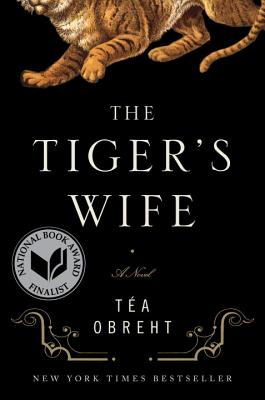
The Tiger’s Wife by Tea Obreht (March, from The Daily Beast list) - A debut novel by one of The New Yorker’s twenty best American fiction writers under forty, this one caught my eye pretty instantly. With a synopsis--and even cover--that promises family, lies, beauty, and love painted on a cultural canvas in the Balkans, it sounds immensely powerful and perhaps even painful to read.

With those four very different works now on my to-read list, I am compelled to shift gears over to commercial fiction and tell you about my very own most anticipated book of 2011.

Most of you have already heard me ooh-and-ahh, but allow me to refresh your memory: debut urban fantasy novel A Brush of Darkness by Allison Pang.

Yes, I have a close relationship with this one--not only was it the first book I acquired (jointly, but still) and I edited it, but the author and I are good friends. But even if I hated her guts (love you, AP! :-p) I would still love her book. Hilarious, powerful, sexy, and imaginative, Brush has it all. And with just 20 days until it hits shelves, I can barely sit still.

The gorgeous bookmarks Allison sent me yesterday do not make it any easier to be patient. What they do make easier though is helping spread the excitement.

Soooooo, in honor of my most anticipated release of the season, I'm giving away a bookmark from my stash to each of the first three people to comment on this post and share with us his/her most anticipated book of 2011!

Come on now, folks. Don't be shy. And don't let my first giveaway (albeit it's a mini-one) be a total bust!!

Thursday, September 2, 2010

Suburbia: Not All It's Cracked Up To Be

If you live in a city and are anything like me, it starts to wear on you fast. Especially on those hot summer days where the city grime basically seeps into your skin and you pool sweat at your feet on the subway platform.

You quickly begin to long for the open fields, fresh air, and sparkling night sky of the country. Hell, you'd even settle for suburbia!

But, as the folks over at Flavorwire point out, the suburbs have their own brand of drama. In honor of the ups and downs of non-city life--and of the recent release of Freedom by Jonathan Franzen--they've compiled the perfect top-ten list: 10 Classic Stories of Suburban Ennui

Forget summer in the city. This year, the heat is on in the suburbs. Whether in music — Arcade Fire’s third album is an extended rock homage to the burbs — or on television — Mad Men is back for its fourth season and still toggling back and forth from the leafy mid-century hamlets of upstate New York to the cutthroat world of Madison Avenue — or in books — Jonathan Franzen’s breathlessly awaited follow up to The Corrections, Freedom, centers on life and its discontents in suburban St. Paul — the vast sprawl is having its moment in the cultural spotlight.

In anticipation of Franzen’s book (due in stores on August 31), we found ourselves thinking about the literary tradition of the suburban novel — the fictive portraits of damaged domesticity, day drinking, and disillusion. As an American invention, novels of suburban ennui are only as old as their subject, but we’ve polled the last half-century (and beyond) to bring you these ten essential novels of suburbia and its displeasures.

1. Revolutionary Road by Richard Yates

The mother of all suburban novels, this harrowing tale of April and Frank Wheeler is haunted by the specter of lives unlived and paths not taken. Though the book will be turning 50 next year, its insights into boredom, escapism, and class are as relevant today as ever. The 2008 film was faithful to the book, but lacked the power and precision of Yates’s perfect prose. Read it rather than rent it.

2. Couples by John Updike

American suburbs, meet bed hopping. Want to know how sexual liberation plays out in the suburbs? This is book for you. Deemed scandalous and risqué at the time of its release in 1968, Couples — which tells the story of five twosomes in fictional Tarbox, Massachusetts — propelled Updike onto the cover of Time magazine under the headline “The Adulterous Society.” Celebrated as a poet of suburban angst, Updike famously pushed boundaries by peering into American bedrooms.

3. The Stories of John Cheever

Like Updike, Cheever made a career of training his astute eye on inner conflict and dualism (perhaps a reflection of the author’s own struggle with his sexuality), and most of his work would be at home on this list. So perhaps it’s disingenuous to include this Pulitzer-prize winning collection of short stories on a list comprised chiefly of novels, but Cheever excelled in this format, and these masterfully crafted tales testify to why critics dubbed him the Chekhov of the suburbs. “The Swimmer” may be one of Cheever’s most anthologized stories, but read it once and you’ll agree it deserves the acclaim.

4. The Ice Storm by Rick Moody

Set in the affluent suburbs of Connecticut in 1973, Moody’s atmospheric novel centers on neighboring families — the Hoods and the Williams — in parallel states of decline. Redolent with the spirit and pop culture of the era, The Ice Storm is a bleak look at human failure, tragedy, and sex. Its detachment and distance evokes the disassociation of its subjects.

5. The Virgin Suicides by Jeffrey Eugenides

The tale of the deaths of the five Lisbon sisters is told in flashback from the perspective of the curious neighborhood boys who used to lust after them, a narrative trick that too renders the reader an astonished, helpless observer. Set in the Michigan suburbs of the early ’70s, The Virgin Suicides asks how much we can ever know about anyone else and forces us to confront the power of the talismanic artifacts of tragedy and infatuation. Eugenides’s precise descriptions will haunt you long after the last page.

[...]

See the original post HERE

The other books on Flavorpill's list? White Noise by Don Delillo, Little Children by Tom Perotta, Music for Torching by A.M. Homes, The Sportswriter by Richard Ford, and Madame Bovary by Gustave Flaubert.

Sadly, the only one of these I've personally read is Madame Bovary...and boy, was it BORING!

What about you? Are any of these tales from Suburbia on your have-read list??

Wednesday, August 4, 2010

Classic Characters and Their Literary Style

I'm sorry for being a bit MIA this week, my fellow book lovers. I've been up to my ears in work, including moderating and troubleshooting the new Pocket After Dark website. It may be Wednesday, but it sure feels like, you know, September.

Anyway, in an attempt to make it up to you, allow me to share today's Boldtype post on literary fashion, featuring "Literature's Top-10 Best-Dressed Characters" EVER:

If you’re the kind of person who’s into transformational mid-life journeys told with self-deprecating charisma, the you’re probably pretty psyched about the forthcoming film version of Eat Pray Love. And you may also have some of the film’s myriad product tie-ins on your shopping list: The adaptation of Elizabeth Gilbert’s wildly popular memoir has been franchised into everything from candles to tea to perfume. Designer Sue Wong has even launched a line of Eat Pray Love-branded clothing. But since her costume-y designs are leaving us a bit cold, we couldn’t help but thinking about which of our favorite literary characters might provide better sartorial inspiration. After the jump, peruse our list of literature’s best-dressed figures and leave your own suggestions in the comments.

Lily Bart, The House of Mirth
This aging society girl was always a vision in beautiful dresses and jewels. But because she wasn’t as wealthy as her friends, she was always running up dress-maker debt.

Edith Wharton writes: “The remaining dresses, though they had lost their freshness, still kept the long unerring lines, the sweep and amplitude of the great artist’s stroke, and as she spread them out on the bed the scenes in which they had been worn rose vividly before her. An association lurked in every fold: each fall of lace and gleam of embroidery was like a letter in the record of her past.”

Dorian Gray, The Picture of Dorian Gray
This fin-de-siècle dandy hides a dark secret: While his face stays young and beautiful, a hidden portrait shows his true, festering and debauched, soul.

Oscar Wilde writes: “That evening, at eight-thirty, exquisitely dressed, and wearing a large button-hole of Parma violets, Dorian Gray was ushered into Lady Narborough’s drawing-room by bowing servants.”

Holly Golightly, Breakfast at Tiffany’s
Like Lily Bart decades earlier, Holly Golightly is a New York socialite who seemed to appear out of nowhere, shrouded in glamorous mythology.

Truman Capote writes: “She was still on the stairs, now she reached the landing, and the ragbag colors of her boy’s hair, tawny streaks, strands of albino blond and yellowcaught the hall light. It was a warm evening, nearly summer, and she wore a slim, cool black dress, black sandals, a pearl choker. For all her chic thinness, she had an almost breakfast-cereal air of health, a soap and lemon cleanness, a rough pink darkening in the cheeks. Her mouth was large, her nose upturned. A pair of dark glasses blotted out her eyes. It was a face beyond childhood, yet this side of belonging to a woman. I thought her anywhere between sixteen and thirty; as it turned out, she was shy two months of her nineteenth birthday.”

See the remaining seven of Boldtype's top-10 HERE
including Scarlett O'Hara from Gone with the Wind, Lady Bret Ashley from The Sun Also Rises, and many
more!

I'm torn between Emma Bovary and Holly Golightly as my fave...

Who do YOU think is the best dressed of the bunch??

P.S. I promise to write a more legitimate post very soon! I have a review of The Diary of a Young Girl by Anne Frank to write! Keep a lookout!