Showing posts with label banned books. Show all posts

Tuesday, July 1, 2014

The Miseducation of the Cape Henlopen School Board

This morning I awoke to find tweets from two of my favorite people in the world about the banning of a YA novel we all read years ago for the RBtL book club. I immediately knew I had to write about it today.

Almost every member voted for The Miseducation of Cameron Post that month, and I for one read it ravenously. When we met, we all had enjoyed it (in fact, looking at the former members GoodReads lists, we all voted to 4 or 5 stars), and we were all provoked by it to think and feel and challenge ourselves. Which is exactly what a book should do, regardless of its genre, to some extent. The author of the book, Emily M. Danforth, was even so kind as to join our meeting via video chat, to answer our members' questions and discuss the issues brought up in the novel. We had a great time talking to her and getting to know her and her characters on a new level.

Now why would such an awesome book by such an awesome person be banned by the Cape Henlopen school district? The local Delaware paper, The Cape Gazette, tells us about the school board's decision:
LEWES — Citing language deemed inappropriate for entering freshmen, Cape Henlopen school board has removed "The Miseducation of Cameron Post" from the district’s summer reading list. 
The book was part of a 10-book list given to district middle school students entering high school in the fall and taking college prep and honors classes. The list, called the Blue Hen List, is a collection of books deemed age-appropriate by state librarians from across the state. 
The board voted 6-1 in favor of removing the book from the list during its June 12 meeting. The issue was raised after parents examined the reading list and brought concerns to the board. 
Cape Henlopen school board President Spencer Brittingham said after some research he came to the conclusion that the book was not appropriate for the targeted age group. The incoming freshmen are the most impressionable group at the high school, he said. 
“It’s for a more mature level of student. A sophomore or junior,” said Brittingham. 
Brittingham said no parent would want children of that age, 13 to 14, to be walking around the house using the language used in the book. He said he hadn’t read the book, but in passages found online the F-word was used four or five times, and that didn’t sit well. 
“I knew in less than three minutes that this wasn’t a book I wanted on the list,” he said. 
Written by Emily M. Danforth, the book is set in rural Montana in the early 1990s. The parents of the main character, a teenage girl named Cameron Post, die in a car accident before finding out she’s gay. Orphaned, the girl moves in with her old-fashioned grandmother and ultraconservative aunt Ruth; she falls in love with her best friend – a girl. 
When Post is eventually outed, her aunt sends her to God’s Promise, a religious conversion camp the aunt believes will cure her homosexuality. At the camp, she comes face to face with the cost of denying her identity. 
According to an Amazon.com review “the book is a powerful and widely acclaimed YA [young  adult] coming-of-age novel in the tradition of the classic, "Annie on My Mind."” 
The book was a 2013 finalist for the William C. Morris Young Adult Debut Award, which honors a book by a first-time author writing for teens and celebrating impressive new voices in young adult literature. 
The book also made the 2013 Best Fiction for Young Adults list put out by the Young Adult Library Services Association. According to the association’s website “the books, recommended for ages 12-18, meet the criteria of both good quality literature and appealing reading for teens.” 
The summer assignment calls for college prep students to choose one book and honors students two books from the list, find an article in the news that makes a connection to the story and then write an essay linking the two. The task accounts for 10 percent of the first marking period grade. 
The other books to choose from include "The Fault in Our Stars" by John Green, "Butter" by Erin Jade Lange, "Daughter of Smoke & Bone" by Laini Taylor, "The Scorpio Races" by Maggie Stiefvater, "March" by John Lewis, "If You Find Me" by Emily Murdoch, "More Than This" by Patrick Ness, "Eleanor and Park" by Rainbow Powell and "Boxers" by Gene Luen Yang and Lark Pien. 
Margie Cyr, Dover Public Library director and Delaware Library Association's Intellectual Freedom Committee chair, said the DLA is discouraged the book has been removed from the list. There were other choices; that book was simply one of the options, she said.
Cyr said the DLA encourages parents to participate, and it is appropriate for them to do so, but family choices are based on family values, and it is not appropriate for one family's values to dictate what's on the list and what isn't. 
"It's a concern when other people dictate what should and should not be read," she said.
Cyr said the Blue Hen List is compiled of popular children's literature that's designed to encourage kids to read through the summer to maintain their skill level. 
Board member Sandi Minard said language is the sole reason she voted in favor of removing the book from the list. She said she sat down with the parents who brought the issue to light and went over the parts of the book that were concerning. 
Minard, who read passages from the book, but not the whole thing, said the book is full of the F-word. There are pages and pages, she said, of the F-word being used. 
“It’s all throughout the book,” she said. “We’re asking students to refrain from that language when they’re in school, but there it is, right in front of them. That word is just offensive to a lot of people.” 
Board Vice-President Roni Posner was the lone vote to keep the book on the list. She said she didn’t believe she had enough 21st century curriculum knowledge to judge what should or shouldn’t be on a reading list created by the state’s school librarians.
Posner hadn't read the book either; she said she read "Annie on My Mind" years ago. It's a coming of age novel, she said. 
Brittingham and Minard made clear that the book was not banned from the high school’s library shelves, but they didn’t think having it on a summer reading list endorsed by the district was a good idea. 
Brittingham said the intent is not to censor, but it’s the school board’s job to remain informed of the district’s programs and to make decisions in the best interest of the students when issues garner their attention. In this case, he said, the board didn’t feel it was a good idea to have the book on a list that it was indirectly supporting. 
“The board gets the blame for all the good and the bad, mainly the bad, no matter what happens,” he said. 
Cyr said she was aware of some parent concern over the book being on the list, but she was surprised to hear the school board took action. A lot of the time, said Cyr, when an action like this is taken, it blows up in a board's face. 
"Now, I'm reading it, and I imagine a lot of people are going to be reading it to see what the issue is all about," she said. 
See the original post HERE
Now, I'm not sure about you, but the fact that the F-word is used "four or five times" doesn't seem like a legit reason to me. And given the book tackles topics that make some ignorant people uncomfortable, I have a feeling there's more lurking behind this decision.

But here's the truth of the matter:

The Miseducation of Cameron Post is a novel about finding yourself, being true to who you find, growing up, and loving not only others but yourself. Yes, it has some mature language. Yes, it deals with mature topics. But these days, almost all YA novels do. The world is full of mature things and teens are confronted by them every day, they are dealing with them every day as they navigate the difficult waters of figuring out and accepting who they are. While that process can last much longer than one's teen years, it's certainly where the process starts. And that is certainly not something to be banned.

To me, it seems the Cape Henlopen school board are the ones who need a little education here.

Monday, June 9, 2014

Pensacola Principal Cancels Summer Reading Program

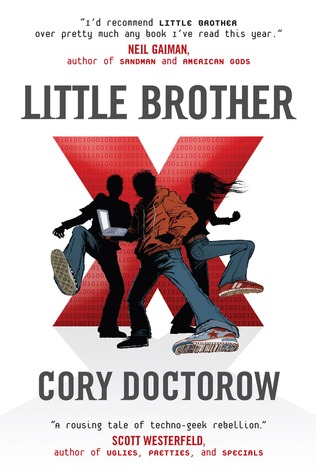
A Florida principal has been making waves in the book world the past few days, having cancelled the summer reading program in his high school. Why? Because he doesn't want kids reading Cory Doctorow's  Little Brother and starting to question authority.

Because, you know, kids don't do that already or anything. Good plan, principal. Good plan. Let's see how well that works for you.

Techdirt tells us more:
Welcome to the modern equivalent of a book burning. The principal of Booker T Washington High in Pensacola Florida has apparently cancelled the school's "One School/One Book" summer reading program all in an effort to block students from reading Cory Doctorow's (absolutely fantastic) book Little Brother. It appears he may be against the fact that one of the messages of the book is the importance of "questioning authority," and has decided to show the school what true, obnoxious authoritarianism looks like. 
Little Brother had been selected and approved as the school's summer One School/One Book reading pick, and the school librarian Betsy Woolley had worked with Mary Kate Griffith from the English department to develop an excellent educational supplement for the students to use to launch their critical discussions in the fall. The whole project had been signed off on by the school administration and it was ready to go out to the students when the principal intervened and ordered them to change the title.   
In an email conversation with Ms Griffith, the principal cited reviews that emphasized the book's positive view of questioning authority, lauding "hacker culture", and discussing sex and sexuality in passing. He mentioned that a parent had complained about profanity (there's no profanity in the book, though there's a reference to a swear word). In short, he made it clear that the book was being challenged because of its politics and its content.
Ultimately, the entire schoolwide One Book/One School program was cancelled. 
In an attempt to... er... question that authority, Doctorow and his publisher, Tor, are sending 200 free copies of the book to the school. A school trying to ban books is almost always a stupid idea, but it seems particularly stupid in this day and age with this particular book. In the end, all it is likely to do is cause more people to actually read the book and to, you know, question authority. 
Read the original post HERE

The rest of Doctorow's response to this ordeal sums it up kind of perfectly:

I don't think this is a problem because my book is the greatest novel ever written and the kids will all miss out by not reading it, but because I think that the role of an educator is to encourage critical thinking and debate, and that this is a totally inappropriate way to address "controversial" material in schools. Little Brother is recommended by the Florida Library Association for use in schools, and has been chosen as a One School/One Book title in other schools -- it's even been a One City/One Book choice for all of San Francisco. I've visited dozens -- if not hundreds -- of high-school groups around the world to talk about it. 
The school faculty who worked so hard on this asked for our help fighting back against censorship, so my publisher, Tor, has agreed to send 200 copies to the school. For my part, I'm sending them two of these Litographs posters that have the full text of the book, and a copy of the UK-only, slipcased, limited edition Little Brother for their annual charity auction. 
And I'm still doing that videoconference this fall, with as many students as want to read and talk about the book -- even (and especially) if they disagree with its message.
I'd like to thank Ms Woolley and Ms Griffith for their tireless work to promote intellectual liberty; as well as Joan Bertin from The National Coalition Against Censorship for all her help (and thanks, too, to Charles from the Comic Book Legal Defense Fund for introducing me to Joan!). 
Read Doctorow's entire blog post HERE

Personally, I think Doctorow and Tor are handling this entire thing admirably, fighting back for the sake of not only the young people of Pensacola but of books as a whole. As bestselling author Neil Gaiman commented on Twitter this morning, "It's useful to remind people what books are for." All books teach us something (whether intended or not), they help shape who we are and what we believe by making us think and challenge and even just enjoy. Trying to take that away from high school students because one man's ego is too big and too scared is ludicrous. I'm not one to wish ill will on people, but honestly, that man should not be a principal--he clearly doesn't have the kids' best interests at heart--and I hope something good comes of this. Preferably in the form of him getting sacked. *halo*


Wednesday, March 26, 2014

The Importance of Books for the "Bad Guys"

Over the past year or so, I've watched a lot of TV shows and films about prisons. Yes, that might sound a little weird, but it seems to be a trend, particularly with the popularity of shows like "Prison Break" and "Orange is the New Black," as well as classic films like "The Shawshank Redemption" and "Malcolm X." And while watching these shows and movies, it always made me happy when the scenes took place in the prison library, seeing the inmates get the opportunity to read and learn and grow from books, the way I believe books are meant to teach. Heck, it's been proven that
 books can help mental health patients, and there's an organization in the UK focused solely on that task. That's gotta mean something, right?

So, when I saw a headline on GalleyCat yesterday that stated "Authors Fight Ban on Books in UK Prisons," you can imagine my upset:

British authors Phillip Pullman and Mark Haddon are among many that have spoken out to stop new rules that restrict access to books among prisoners in the UK. 
“Any government worth having would countermand this loathsome and revolting decision at once, sack the man responsible, and withdraw the whip from him,” Pullman told The Guardian. 
Mary Sweeney launched a Change.org petition [yesterday] urging Rt. Hon. Chris Grayling MP to “review and amend” the new rules. The petition has already generated more than 5,000 signatures. Here is an excerpt from the petition: “Access to books can be crucial for education and rehabilitation. Access to family items are important for continued family connection, and should not additionally punish children of prisoners who need contact.” (Via The Guardian).
See the original post HERE

I don't know about you, but I immediately went over to Change.org to sign the petition. To take away something like reading, even from those who have committed crimes and are imprisoned, you take away the potential for personal growth, compassion, and possibly rehabilitation. Not only are these new rules keeping inmate from exploring the healing power of reading, but they are also keeping inmates from any family-related items and even their children, an issue that reaches far beyond the book. It makes me want to cry to think that now the children are also being punished by not being able to  have relationships with their parents, just because said parent(s) may be incarcerated. There are so many things wrong with this picture.


So, if you believe in reading and of family as powerful motivators and inspirations to heal and change one's life, get your butt over to change.org and add your name to the petition. At the writing of this blog, more than 6500 signatures are still needed, so don't hesitate. Just help.

Tuesday, August 2, 2011

The Nonsensical Nature of Banned Books

This isn't the first time I've posted about the concept of banned books, and I'm sure it won't be the last. In an industry where writers are constantly pushing boundaries, sparking controversy, and being, well, true to life, there are always some people who aren't going to like it.

And last week, in the town of Republic, Missouri, the school board approved the banning of Sarah Ockler's Twenty Boy Summer and Kurt Vonnegut's Slaughterhouse-Five from its high school library.

My reaction to this choice? In a word: shocking.

I've read Twenty Boy Summer and while it certainly tackles the hormonal challenges of teens in a candid way, it most certainly is not a book deserving of censorship. There are five books I can think of off the top of my head that would be more understandably banned. (No, I'm not going to list them here.) And Slaughterhouse-Five, which I'm chagrined to say I have not read despite my BA in English, is a classic novel taught in most high schools or colleges (but clearly not mine!). It's a controversial and at times gruesome book from what I know, but again, not so much so that this ruling rings reasonable.

I'm not one for banning books in the first place, but if you're going to do it, at least do it sensibly.

It seems I'm not the only one with an opinion on this matter though, according to GalleyCat. Ockler herself whipped up a blog post in response last week, admitting to her book's risque material but chastising the choice to ban it from the library.

This passage sums up her take nicely, though the entire post is definitely worth a read:

Look, I’ve said it before and I’ll say it a million times more. I get that my book isn’t appropriate for all teens, and that some parents are opposed to the content. That’s fine. Read it and decide for your own family. I wish more parents would do that — get involved in their kids’ reading and discuss the issues the books portray. But don’t make that decision for everyone else’s family by limiting a book’s availability and burying the issue under guise of a “curriculum discussion.”

But you all know my views on banning books — any books. What I really want to say today is this (close your eyes, Dr. Scroggins, as you’ll likely find this content alarming):

Not every teen who has sex or experiments with drinking feels remorseful about it. Not every teen who has sex gets pregnant, gets someone pregnant, or contracts an STD. Not every teen who has sex does so while in a serious relationship. Not every teen who has sex outside of a relationship feels guilty, shameful, or regretful later on. And you can ban my books from every damn district in the country — I’m still not going to write to send messages or make teens feel guilty because they’ve made choices that some people want to pretend don’t exist.

That’s my choice. And I’ll never be ashamed of my choice to write about real issues.

See the original post HERE

When I read this, I gave a little cheer in my chair.

Go, Sarah.

Sunday, October 3, 2010

Banned Books Week, Jeffe Kennedy Style

Banned books week has come and gone, my head definitely not in the pleasure reading or blogging game. But fellow blogger, writer, friend, and cupcake connoisseur Jeffe Kennedy wrote up a nice homage to the annual event over on her website, Love, Power & Fairytale Endings:
I waited until today to do my own tribute to Banned Books Week.

Seemed right to me, to let everyone have their say and make their plugs. Not that I don't care, but maybe because I care so much.

I'm a believer in reading. In asking questions. I believe there's nothing you can read or encounter that will taint or stain anyone beyond repair. We are elastic beings. More, we deserve the opportunity to decide for ourselves what ideas to keep and which to reject.

That's the foundation of Free Will.

I remember finding out that there were periods in human history when people were to read only the Bible and nothing else. To keep their thoughts pure. As if people aren't capable of culling the garbage for themselves. One man's garbage is another man's treasure.

You don't get to decide for me.

So, in honor of Banned Books Week, I'll take on the red-headed stepchild on the list of the
Top Ten Most Frequently Challenged Books of 2009: Twilight.

Yeah, I know.
Twilight?? The megaseller everyone seems to love to hate? But yes. The series is Number Five on the list for: Sexually Explicit, Religious Viewpoint, Unsuited to Age Group.

I first learned about Twilight when my friend RoseMarie London sent me a note from an editor-friend in New York City. The friend said she'd spent the weekend under the spell of this new book and how could she be so in love with a completely chaste hero? Knowing I was interested in such things, RM sent me the email and said maybe I should read it.

I did. And fell in love, too.

It's easy to hurl stones at the massively successful. To find the cracks and pick fun at the giants. But I can vouch that, before it was THE THING, Twilight seduced me. Creating sexual tension where there is no actual sex is no mean feat. And if anyone thinks that being a teenager isn't just like that, well then... no one can help you.

More, I know a teenage brother and sister. The older sister is a bookworm, the younger brother a budding jock and social butterfly. They both stayed in all weekend to read the newest installment on the Twilight series. Only the boy asked his mother to lie to his friends that called and say he was doing chores.

He didn't want them to know what he was really doing.

Any book, or series of books, so compelling as to make a social teenager duck the peer pressure of his friends is a book that prevents more robots.

Fight the good fight. Buy a banned or challenged book.

Our children will thank you for what you gave them, not what you kept them from.

Check out the post--and her blog--HERE

Friday, April 16, 2010

ALA's Most Challenged Books of 2009

Every spring, the American Library Association (ALA) releases a list of the year's most challenged books. Just released this week, the 2009 report has some classic mainstays, but some sort of surprising newbies:
Stephenie Meyer, the hottest author for young people since J.K. Rowling, has a new link to the creator of "Harry Potter": a place high on the list of books most complained about by parents and educators.

Meyer's multimillion-selling "Twilight" series was ranked No. 5 on the annual report of "challenged books" released Wednesday by the American Library Association. Meyer's stories of vampires and teen romance have been criticized for sexual content; a library association official also thinks that the "Twilight" series reflects general unease about supernatural stories.

"Vampire novels have been a target for years and the `Twilight' books are so immensely popular that a lot of the concerns people have had about vampires are focused on her books," says Barbara Jones, director of the association's Office for Intellectual Freedom.

Christian groups for years have protested the themes of wizardry in Rowling's books, which don't appear on the current top 10.

Topping the 2009 chart was Lauren Myracle's "IM" series, novels told through instant messages that have been criticized for nudity, language and drug references. Last year's No. 1 book, "And Tango Makes Three," by Peter Parnell and Justin Richardson, is now No. 2, cited again for its story about two male penguins adopting a baby. Third was Stephen Chbosky's "The Perks of Being a Wallflower," for which the many reasons include drugs, suicide, homosexuality and being antifamily.

Also cited were such perennials as J.D. Salinger's "The Catcher in the Rye" (sexual content, language), Harper Lee's "To Kill a Mockingbird" (language, racism), Alice Walker's "The Color Purple" (sexual content, language) and Robert Cormier's "The Chocolate War" (nudity, language, sexual content).

Read the whole Associated Press article HERE

This ALA report is compiled by taking all of the complaints each day--from newspapers and individuals--collected by the ALA's Office of Intellectual Freedom (OIF), dropping them into a database, and then basically just seeing what pops out after 365 days. (Learn more about the OIF and how books are banned and challenged HERE.)

In 2009, 460 books were challenged--56 less than last year's number. Out of those 460, 81 books were banned and literally pulled off the shelves in public and school libraries around the country. The ALA claims though that 70-80 percent of complaints aren't even officially reported.

Honestly, I'm not shocked by that statistic. People have very strong opinions when it comes to what we let children read, but many of those people--and people in general, I'm learning--lack the initiative and proactivity to do anything about their beliefs.

I'm not one of those people, though. I'm neither a proponent of book censorship nor of passivity. I'm of the mind that parents are the only ones who should be able to "censor" what their children read--it's paBlockquotert of their job to teach and guide their kids in growing up, whether it's through frank conversation, books, film, etc. etc.

As such, while I think the annual ALA reports are important to be aware of for any reader, I support The Kids' Right to Read Project myself. The group is "a collaboration of the American Booksellers Foundation for Free Expression (ABFFE) and the National Coalition Against Censorship (NCAC), which offers support, education, and advocacy to people facing book challenges or bans and engages local activists in promoting the freedom to read" (NCAC.org).

Books can be excellent growth tools for kids--and adults--and controversial and thought-provoking books are perhaps the best ones of all.

So, rather than shying away from the books on the ALA's list, I think we should all go out and grab a copy!