Showing posts with label Top-# lists. Show all posts

Friday, July 25, 2014

Friday Fun: "The Simpsons" Go Literary

I would never describe myself as a "Simpsons fan," but once and a while, it gives me a good chuckle. And I will say that I can relate more than I'd like to admit to Lisa... So this morning, when Book Riot pointed me in the direction of something I wouldn't have noticed about the show(ya know, not being a "Simpsons fan" and all :-p) I knew I'd found something I wanted to share with you all (and some new episodes I wanted to watch).

So, for today's Friday Fun, I give you....*drumroll please* eight of the best Simpsons literary references (courtesy of CBC books)!
Leon Uris 
The influential American novelist was known for his extensively researched, compelling but dense historical novels like Exodus and Mila 18. During one episode of The Simpsons, local hillbilly stereotype Cletus Delroy Spuckler can be seen in the library holding a copy of Uris’s acclaimed novel about Irish nationalism Trinity. But Cletus isn’t a literature fan – he's about to use the nearly 900-page book to crush a turtle for his lunch because “nothing cracks a turtle like Leon Uris.”

Bart the Raven 
Who could forget [this] amazing, epic adaptation of The Raven by Edgar Allan Poe in the very first “Treehouse of Horror” Halloween special? The bit receives a boost of gravitas thanks to the baritone narration of actor James Earl Jones. The show would also reference Poe’s short story The Tell-Tale Heart in a later episode in which Lisa competes against a schoolmate rival in a diorama competition. 
The Bread Loaf Writers' Conference 
In a famous season 18 episode, Lisa and aspiring poet Moe attends the “Word Loaf” conference, a parody of the Bread Loaf festival, which is considered the oldest and most prestigious annual writers’ summit in the U.S. This episode featured four literary heavyweight guests, including Michael Chabon, Jonathan Franzen, Tom Wolfe and Gore Vidal. However, in a room full of literary egos, tensions will rise. One of the hilarious highlights of the episode is when Michael Chabon shouts “That’s it, Franzen! I think your nose needs some Corrections!” before the two get into a fist fight. 
A Tale of Two Cities 
Fans of the show will remember the time when the writers turned the indelible opening lines of Charles Dickens’s classic novel about the French revolution (“It was the best of times, it was the worst of times …”) into a joke involving the infinite monkey theorem. The infinite monkey theorem basically suggests that an infinite number of monkeys hitting random keys on typewriters will eventually type out a given text, such as a Dickens’s novel. During an episode in the fourth season, Homer finds himself leading a union battle with his power plant Mr. Burns. The irascible Burns, in a show of the absurd power and resources he commands, takes a Homer on a tour and shows him “1000 monkeys working at a 1000 typewriters. Soon they’ll have written the greatest novel known to man!” Except Burns randomly pulls out a page from one of his monkey writers, which reads: “It was the best of times… it was the blurst of times?!!” Suffice to say, that monkey was probably fired. 
Thomas Pynchon 
Only an iconic show like The Simpsons could entice reclusive writer Thomas Pynchon to satirize himself, not once, but twice! The Gravity’s Rainbow author, known for avoiding interviews and public appearances, contributed two speaking parts throughout the years. Our favourite: when Marge becomes a novelist and asks Pynchon for a blurb, he responds: "Here's your quote: Thomas Pynchon loved this book, almost as much as he loves cameras!" The paper bag Pynchon also appeared briefly, in an unspoken cameo, in the World Loaf episode. 
Amy Tan at the Springfield Festival of Books 
This episode featured an appearance from The Joy Luck Club author Amy Tan and took a humourous jab at literary criticism. When Lisa gets the chance to address one of her literary heroes, Tan immediately crushes the girl’s interpretation of her writing. “No, that’s not what I meant at all. I can’t believe how wrong you got it. Just sit down, I’m embarrassed for both of us.”  
Goodnight Moon, Walken-style 
Who doesn’t remember reading this classic children’s book? Well, The Simpsons writers
took that nostalgia and gave it a Christopher Walken edge. Walken himself doesn’t appear in the episode (he’s impersonated by actor Jay Mohr), but one of the funniest literary references is when Marge points out Walken reading Goodnight Moon with his intense, signature delivery to a bunch of terrified kids. 
The Ghost of Pippi Longstocking 
While on summer holiday, Lisa meets a group of cool kids and takes the chance to re-
invent herself as a laid-back beach bum. But she one day passes a library and her love of reading and learning becomes hard to repress. In one memorable scene, a spectre of Pippi Longstocking appears amidst the bookstacks and begs Lisa: "Read about my adventures in the South Seas! Make me live again!" 
See the original post HERE

Wednesday, July 3, 2013

Self-Publishing Strategy: HAVE ONE.

As the self-publishing world grows and grows there is more and more research to be done before taking the leap. What self-pub platform to use, what retailers to target, if you should use a distributor, print and eBook or eBook-only--the list of non-editorial decisions is longer than I am tall. Then there are the editorial ones--the cover, the blurb, the content itself. So. Many. THINGS.

While some self-published authors are doing fabulously, though, a lot of them don't get the reception they were hoping for in this crazy market. Kristen Lamb over at Warrior Writers today took a look at some of the reasons why in her post "Freedom isn’t Free—5 Common Tactical Errors in Self-Publishing." Her thoughts are insightful (and true, if you ask me) and can help any author thinking about self-publishing determine if they are prepared, even with just the basics:

[...] 
Tactical Error #1 Publishing Too Soon
The problem with the ease of self-publishing is that it is, well, too easy. When we are new, frankly, most of us are too dumb to know what we don’t know. Just because we made As in English, does not automatically qualify us to write a work spanning 60-100,000 words.
Too many new writers do not properly understand the antagonist. They don’t grasp three-act structure, and most don’t have any idea what I mean when I mention POV, Jungian archetypes, or the phrase, “scene and sequel.” 
[...] I see a lot of new writers who believe their story is the exception, that the rules make for “formulaic” writing. No, rules are there for a reason, and, if the writing is too formulaic, it has more to do with execution than the rules. 
Three-act structure has been around since Aristotle, and there is a lot of evidence in neuroscience that suggests that three-act structure is actually hard-wired into the human brain. Thus, when we deviate too far from three-act structure, it confuses and frustrates readers. 
Stories have clear beginnings, middles and ends. 
Yes, we are artists, but we need to understand the fundamentals. I played clarinet for years, and yes it was an art. But this didn’t excuse me from having to learn to read music, the finger positions and proper embouchure (the way to position the mouth to play). 
The better we are at the basics, the better we know the rules, the more we become true artists. 
I’ve received contest winners whose first pages were filled with newbie errors. Yet, when I sent them my critique filled with pages of corrections, I would then receive a reply telling me that the book had already been self-published. 
OUCH. 
Sometimes there are reasons we are being rejected and we need to take a hard look and be honest. Self-publishing is suffering a stigma from too many writers publishing before they’re ready. If you really want to self-publish, I’m here to support you and cheer you all the way, but remember, we have to write better than the traditional authors. 
Tactical Error #2 No Prepared Platform 
The day we decide to do this writing thing for real is the day we need to start creating a platform and brand. Even traditional authors goof this up. I cannot count how many times I get a message saying, “Hey, I have a book coming out next month. I need to do social media. Can you help?” 
Seriously? O_o 
I’m Kristen Lamb, not Harry Potter. 
Tactical Error #3 Believing that, “If We Write it They Will Come” 
There are a lot of writers who mistakenly believe that self-publishing is an easier and faster way to fame and success. Yeah, um no. And those magic beans are really just beans. 
Sorry. I was bummed, too. 
Self-publishing is A LOT of work, especially if we are starting out this way. I know Bob Mayer and Joe Konrath lecture writers to do less social media and more writing. To an extent I agree, but here is the thing. These guys were branded traditional authors who could slap New York Times Best-Selling in front of their names when they decided to go it alone. 
If you can’t slap New York Times Best-Selling in front of your name and upload a NY vetted backlist longer than your arm? Prepare for a ton of work. 
Tactical Error #4 Misusing FREE! 
There are a lot of problems with giving books away for FREE! We shouldn’t be giving away our work unless it serves some kind of a strategic advantage. There are ways to effectively harness they power of FREE! but too few writers understand how to do this and they just end up giving away their art for no tangible gain. 
Tactical Error #5 Shopping One Book to DEATH 
One of the BIGGEST problems I see with self-published writers is that they publish one book and then they focus every bit of energy on selling THAT book. 
They fill up #MyWANA and all the writing hashtags with link spam promoting their books. They keep futzing with the cover, the web site, the promotions. They do blog tours until they drop, and they do everything except what is going to help that book sell a ton of copies…write more books. 
Here’s the thing. Self-publishing, in many ways, just allows us to accelerate the career path of the author. Even in traditional publishing, it usually takes about three books to gain traction. In traditional publishing, this takes three years because we are dealing with a publisher’s schedule. 
In self-publishing, we can make our own schedule, but it still takes THREE BOOKS MINIMUM. I know there are exceptions, but most self-published successes hit at about book three. The ability to offer multiple titles is a huge part of why John Locke became successful. 
This is why it is critical to keep writing. Not only will writing more books make you a better writer, but once people discover they love your writing, they have a number of titles to purchase. Being able to offer multiple titles is how we make money at self-publishing. It also helps us maximize the whole FREE! tactic. 
Yesterday, I bought six books (1,500 pages) of research. I just published my latest book five days ago…and I’m starting on my next book. Goal is to have the first draft completed by August. I don’t tell you guys to do anything that, I myself, am unwilling to do. 
Remember Why We Do This 
Self-publishing is a wonderful alternative. Just because we self-publish doesn’t mean we cannot publish other ways, too. I feel the author of the future will actually be a hybrid author, and I do believe that the ability to self-publish is challenging all of us to come up higher. We are striving to be better writers, to be better entrepreneurs, to get better at organization and time-management and to write more books and better books. If we can learn from these mistakes and grow, then the future is ours for the taking. 
See the complete original post HERE


Kristen's site is a great place for writers to get some handy tips (and a good laugh--she's a funny one!), so be sure to check it out. Her newest book, Rise of the Machines--Human Authors in a Digital World, is on sale for $7.04 at the moment to celebrate Independence Day.

Friday, November 30, 2012

Making It Up With a Publishing Round Up

I've been a little out of the loop lately, dear readers--my apologies. With vacation and the Thanksgiving holiday (and an intense work week playing catch up!), I have been a bit preoccupied and lax about posting. I am truly sorry--I know how much you must miss me. ;)

But boy, oh, boy, are there things going on in this crazy publishing biz!

Allow me to share with you some of my personal "favorite" highlights in a quick round-up:


Best of 2012 Lists Posted
That's right. It's that time of year again. The New York Times, Kirkus, and Slate have all posted their big lists of most notable/best books of 2012. As per usual, I only have ever even heard of a few of them, and I  haven't read any of them. Sometimes I wonder where they come up with most of these things...or maybe I am just not as "in the know" as I should be.


Facebook Launching New Social Reading Site
Yup. Another Goodreads-style website is on its way. I received notification from the folks over at Facebook about Riffle, which Forbes magazine describes as "a new kind of Pintrest", and have been invited as an early member (I also can pass along invites to others, if anyone is interested). I've signed up and am awaiting my login information--a review will be forthcoming!


HOBBIT Film Producers Being Sued
The J.R.R. Tolkien estate isn't letting HOBBIT producers off easy for what they claim is a breach of merchandising contracts. The estate wants $80 million to make up for it. As the Hollywood Reporter tells us, "The crux of the suit is the estate's contention that a decades-old rights agreement entitles the studio to create only "tangible" merchandise based on the books, not an "online slot machine" or other digital exploitations that the estate calls highly offensive."


High Fidelity Author Writing Script for Wild Adaptation
Reese Witherspoon's production company, Pacific Standard, is set to adapt Wild, Cheryl Strayed's memoir about her solo 1100-mile trek through California and Oregon to Washington State. Bestselling author Nick Hornby has signed on to write the screenplay. I, myself, hadn't heard of the memoir before, and quite frankly, I'm not seeing the film adaptation potential here. Seems to me like the makings of a slowly paced, somewhat boring flick, but I guess we'll see what the talented Horby comes up with.


E.L. James Given High Publishing Honor
Every year, Publishers Weekly names a "publishing person of the year." Past winners have been the likes of Penguin CEO David Shanks, Barnes and Noble chairman Len Riggio, and Google settlement "architect" Richard Sarnoff. But this year? This year's winner comes as a shocker to myself and other members of the industry: Fifty Shades of Grey author E.L. James. Bad choices, PW, bad choices.

Monday, August 20, 2012

Best Novel of All Time? Cast Your Vote!

While New York Magazine is anticipating the best books come fall, the Huffington Post is exploring the best novel ever.

Using a bracket structure similar to the one popular for March Madness or the Super Bowl--or any other sporting event in the world, really--they have collected a number of novels and are currently voting on the first bracket of works:

The Best Novel of All Time? It's an impossible statement of course, but while we wait for the big titles of the fall to hit, and everyone is talking about voting on a bigger scale, we thought it would be a good opportunity to argue over some truly great books.

We scoured "Best of" lists from the past 10 years, and compiled a top 15 of incredible reads (we chose the ones that appeared the most number of times across the lists), with the final slot filled by our readers. Our only rules were that we were judging books either written in, or widely translated into the English language, and no more than one novel per author. A randomizing magic hat did the rest of the work.
So here is our first round of voting. The below graphic might be a little hard to see - click here for a larger version - but the voting should be pretty straightforward underneath.

Votes close at 9am EST on Wednesday. There are some HORRIBLE choices to make in this first round. "Gatsby" or "Mockingbird"? "Solomon" or "Bovary"? "Emma" or "Solitude"? You have to choose! Why? Because we say so. There can be only one winner, so help decide who makes it through to the next round of entirely spurious Novel Madness.

Arguments and verbal wrestling may commence in the comments... now.

See the original post HERE


It's a fun idea--having a bit of a showdown with some of the "best" novels ever written. But I've gotta say, I wish there would've been a voting system in the first place to collect the novels. (I also would've suggested clarifying that these are the best "classic" novels, not best novels.) Personally, only ONE of the books on this list would've been on my own personal "Best of" list, and that is To Kill a Mockingbird.

Other titles I would have included in a Best of the Classics list?

Fahrenheit 451 by Ray Bradbury.  
A Farewell to Arms by Ernest Hemingway.
The Picture of Dorian Gray by Oscar Wilde
The Catcher in the Rye by J.D. Salinger
Of Mice and Men by John Steinbeck

What would be on YOUR list?

Wednesday, August 31, 2011

NPR Shares Audience Top Picks for SF/F

As fantasy novels get more and more attention these days through film and TV adaptations (Lord of the Rings, Harry Potter, and Game of Thrones to name a few), people seem more inclined to admit liking fantasy novels in general.

The stigma of "geekiness" or "dorkdom" that seems attached to the genre is fading and the 28-year-old football fan who secretly enjoys Robert Jordan doesn't flush so red when sharing that morsel of information.

I'm loving this new-found confidence, and the fact that NPR released the top 100 audience picks for their favorite science fiction and fantasy novels just buttresses the notion that things are changing. It's not to say that lists like this don't already exist from popular websites/magazines/newspapers/etc, but it's nice to see it front and center like this. (The New York Times actually wrote an interesting piece recently on the topic too.)

That said, let's see what NPR found out:

More than 5,000 of you nominated. More than 60,000 of you voted. And now the results are in. The winners of NPR's Top 100 Science-Fiction and Fantasy survey are an intriguing mix of classic and contemporary titles. Over on NPR's pop culture blog, Monkey See, you can find one fan's thoughts on how the list shaped up, get our experts' take, and have the chance to share your own.

A quick word about what's here, and what's not: Our panel of experts reviewed hundreds of the most popular nominations and tossed out those that didn't fit the survey's criteria (after — we assure you — much passionate, thoughtful, gleefully nerdy discussion). You'll notice there are no young adult or horror books on this list, but sit tight, dear reader, we're saving those genres for summers yet to come.

So, at last, here are your favorite science-fiction and fantasy novels. (And a printable version, to take with you to the bookstore.)

1. The Lord Of The Rings by J.R.R. Tolkien

Tolkien's seminal three-volume epic chronicles the War of the Ring, in which Frodo the hobbit and his companions set out to destroy the evil Ring of Power and restore peace to Middle-earth. The beloved trilogy still casts a long shadow, having established some of the most familiar and enduring tropes in fantasy literature.

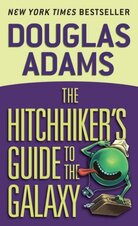
2. The Hitchhiker's Guide To The Galaxy by Douglas Adams

In the first, hilarious volume of Adams' Hitchhiker's series, reluctant galactic traveler Arthur Dent gets swept up in some literally Earth-shattering events involving aliens, sperm whales, a depressed robot, mice who are more than they seem, and some really, really bad poetry.

3. Ender's Game by Orson Scott Card

Young Andrew "Ender" Wiggin, bred to be a genius, is drafted to Battle School where he trains to lead the century-long fight against the alien Buggers.
4. The Dune Chronicles by Frank Herbert

Follows the adventures of Paul Atreides, the son of a betrayed duke given up for dead on a treacherous desert planet and adopted by its fierce, nomadic people, who help him unravel his most unexpected destiny.

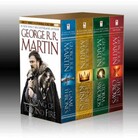
5. A Song Of Ice And Fire Series by George R.R. Martin

As the Seven Kingdoms face a generation-long winter, the royal Stark family confronts the poisonous plots of the rival Lannisters, the emergence of the Neverborn demons, the arrival of barbarian hordes, and other threats.

[...]

10. American Gods by Neil Gaiman

On the plane home to attend the funerals of his wife and best friend, Shadow, an ex-con, encounters an enigmatic stranger who seems to know a lot about him. When Shadow accepts the stranger's job offer, he finds himself plunged into a perilous game with the highest of stakes: the soul of America itself.

11. The Princess Bride by William Goldman

This tale of a handsome farm boy who, aided by a drunken swordsman and a gentle giant, rescues a beautiful princess named Buttercup comes with a slyly humorous, metafictional edge: Goldman claims to have merely abridged an earlier text by one "S. Morgenstern" (actually a pseudonym) and peppers his text with clever commentary.

12. The Wheel Of Time Series by Robert Jordan

At 13 volumes and counting, this sweeping — some would say sprawling – richly imagined epic chronicles the struggle between servants of the Dark One and those of the champion of light known as the Dragon Reborn.

13. Animal Farm by George Orwell

Farm animals overthrow their human owners and set up their own deeply (and familiarly) flawed government. Orwell's mordant satire of totalitarianism is still a mainstay of ninth-grade reading lists.

14. Neuromancer by William Gibson

Gibson's groundbreaking debut novel follows Case, a burned-out computer whiz, who is asked to steal a security code that is locked in the most heavily guarded databank in the solar system. A seminal work in the genre that would come to be known as cyberpunk.

[...]

16. I, Robot by Isaac Asimov

Isaac Asimov changed our perception of robots forever when he formulated the laws governing their behavior. In I, Robot, Asimov chronicles the development of the robot through a series of interlinked stories: from its primitive origins in the present to its ultimate perfection in the not-so-distant future — a future in which humanity itself may be rendered obsolete.


Check out the complete list HERE

Other authors on the list? Robert A. Heinlein, Anne McCaffery, Patrick Rothfuss, Ray Bradbury, Neal Stephenson, Roger Zelazny, and Brandon Sanderson.

What is YOUR favorite science fiction/fantasy novel??

Saturday, December 11, 2010

Celebs, Celebs, Everywhere

This week, Boldtype and Flavorwire just had too many hilarious and/or interesting articles to choose from! But after much deliberation, I've decided to share with you a little something called "The Year in Disturbing Celebrity Book Deals."

As the year winds down, I can think of several celeb memoirs or novels that lack literary merit, if you will. I can also think of another dozen-plus number of celeb proposals that were nixed by the editorial board at my last job. Weekly meetings at publishing houses all throughout New York get the frequent proposal claiming to be the next celeb bestseller.

Some of these ideas percolate in-house where an editor then reaches out to a manager or an agent, and some come from the celeb directly. Some are hits, some are massive bombs. And some, you just can't believe ever made it through the grueling acquisitions process.

Boldtype/Flavorwire present what they deem the worst celeb books of 2010:

Celebrity book deals practically exist to piss us off. While there are certainly exceptions to the rule (such as the recent, glowingly reviewed tomes by Jay-Z and Steve Martin, as well as Patti Smith’s National Book Award-winning memoir), most stars just aren’t writers. And few things are more annoying — especially for those of us who write for a living, or have aspirations of doing so — than the news that a functionally illiterate reality TV star is preparing to “write” a memoir, children’s book, or novel. After the jump, we take a look at the year’s most irritating examples, from the Salahis to Snooki.

Susan Boyle

Curious about what Boyle, who rose to fame as the frumpy 47-year-old virgin with a beautiful voice, has been doing all her life? We aren’t, but that didn’t stop British publisher Transworld from handing the singer a deal to write the memoir The Woman I Was Born to Be about the making of an unlikely diva. As she said in a statement, “When I strutted on to the stage for that audition, I was a scared wee lassie, still grieving for my mother, not caring how I looked. I think I’ve grown up a lot in the last year, become more of a lady, and I’m not so frightened anymore.” Okay, we stopped reading after “wee lassie,” but — “wee lassie”! There is someone in the world who actually talks like this! Sold.


Tyra Banks

Because she thinks she’s Oprah, Tyra Banks is trying to conquer all spheres of media as quickly as possible. So, back in May, she signed a deal with Random House to write a trilogy of YA books, beginning with Modelland, about “a fantastical place you’ve never seen, or heard about, or read about before … Where dreams come true and life can change in the blink of a smoky eye.” This sounds like it’s going to be really great for teen girls’ self esteem!


Michaele and Tareq Salahi

Apparently, being stupid enough to crash a state dinner at the White House will now win you a book deal. In June, we learned that the pair would be writing a memoir about the stunt — because that will surely provide hundreds of pages worth of material — with the help of investigative reporter Diane Diamond. The resulting book, Cirque du Salahi, came out in September and was credited solely to Dimond. It currently has a whopping 1.5 out of 5 stars on Amazon.


The Situation

You might ask, “How is it possible to write a book when you’ve never read a book?” It’s a good question, and one that Sitch’s “co-author” Chris Millis might be in the best position to answer. Back in July, welearned about the book deal, and less than four months later, publisher Gotham crapped out Here’s the Situation: A Guide to Creeping on Chicks, Avoiding Grenades, and Getting in Your GTL on the Jersey Shore. If nothing else, it would make a good Christmas present for someone you secretly hate.


Paul the Octopus

Yes, the octopus who accurately predicted the outcome of every single German World Cup game landed a book deal for his trouble. Unfortunately, the two-and-a-half-year-old sea creature died back in October. Perhaps he’ll be releasing material posthumously, like Biggie and Tupac?


Snooki

Not only is TV’s favorite pickle-loving Oompah-Loompah the second Jersey Shore cast member to break into publishing, but she’s writing what she might call “a friggin’ novel.” Titled A Shore Thing, the book, which was announced in September, is supposedly coming out in January and “will revolve around a girl looking for love on the boardwalk (one full of big hair, dark tans, and fights galore).” Hey, write what you know, right?


Christine O’Donnell

The year’s final insult is one of its worst: instead of disappearing forever after losing the election, the tea party Senate candidate from Delaware is going to write a book. According to Politico, the book will recount her experience in the 2010 election — because, you know, we didn’t hear enough about it while it was happening. “I plan on making my book one of the revolution’s catalysts,” O’Donnell said. So… goody. Look for it in August of next year. Or, you know, don’t.

See the original piece HERE


I'm pleased to see the two, why-the-heck-are-they-famous-they're-so-freakin-annoying "Jersey Shore" disasters on there, I must admit. Those were the first two I thought of when I saw the headline for the piece.


What do YOU think are the biggest celeb book mistakes of the year?

Sunday, December 5, 2010

Steal from Your Child's Bookshelf? Why you should DO IT

When my friends Lisa and Fia came over for girls' night yesterday, the last thing I thought we'd do is discuss fantasy and dystopian YA. But it turns out that my friends had just experienced their first real crossover-YA novels with the Hunger Games series and were lamenting finishing up the trilogy and having no other series to read.

"What?!" I said in dismay. "Come to my bookshelf. I will show you the way."

So, after I thrust book after book in their faces, talking to them about plot synopsis, tones, and which ones are must-reads, they were both optimistic about diving further into the crossover-YA pool. With my lesson successfully taught, I was ready to get back to our girls' night plan (vino, beef bourguignon, the movie "Julie & Julia," and chocolate chip cookies), but then Fia announced that she had gotten the Hunger Games suggestion from Oprah's list of books to steal from your teenager. The tables had turned--I had never heard of this list!

This morning, of course, I scoured the internet for said list. I was saddened to find it only has four books on it--and to find it's not really "Oprah's" picks but those of a guest writer for O Magazine, YA author Lizzie Skurnick:
The Lost Conspiracy
By Frances Hardinge
HarperCollins

J.R.R. Tolkien has nothing on fantasist Hardinge, who creates a complex universe of tribes and lands and codes of conduct, into which he then drops two very different sisters out to save their world.

The Hunger Games
By Suzanne Collins
Scholastic

Reading Collins's massively popular thriller/survival narrative/romance is like enjoying a blockbuster movie you didn't think you wanted to see. This one stars surly loner Katniss Everdeen, a courageous, cranky, and accomplished heroine who also happens to look great in a dress.

I, Robot
By Isaac Asimov
Spectra

Don't laugh! If you think Asimov is meant only for 13-year-old boys obsessed with computer games, it's time to look at this classic collection of brilliantly plotted gems t
hat anticipate not only our completely gadget-dependent world but also the philosophical implications of turning our lives over to smartphones.

The Witch of Blackbird Pond
By Elizabeth George Speare
Laurel Leaf

When her grandfather dies, proud but penniless Kit Tyler must abandon her Caribbean plantation to bunk with cousins in a drab Connecticut colony where her brilliant silks and haughty manner go over like a bowl of corn gruel. Living in 1687, amid Royalist clashes and timeless romances, a persecuted Kit eventually finds the sweet spot between strength and will.

See the article HERE

All good reads, Skurnick's list is solid. But there are some I personally would've added to this baby:

The Uglies by Scott Westerfeld (Simon Pulse) - An amazing futuristic trilogy jam-packed with adventure, emotion, and thought-provoking ideals. I couldn't put it down and have shoved it at the majority of my friends...and my book club.

Speak by Laurie Halse Anderson (Speak) - Powerful and heart-wrenching, this dark contemporary novel is told from the perspective of a mute teen who suffered some serious trauma. One of my all-time favorite crossover-YA's. The film adaptation actually is pretty good too!

The Golden Compass by Philip Pullman (Knopf Books for Young Readers) - A clever and creative trilogy that "attacks" the Catholic church and serves as a spiritual allegory, all while providing readers with an exciting and fantastical
story. Definitely a must-read for anyone new to the genre.

The Book Thief by Markus Zusak (Knopf Books for Young Readers) - Taking you back to the dark days of the Holocaust, Zusak's incredible tale of a young girl with a penchant for stealing books. It made me laugh and cry and just run the gamut of emotions as I savored each page.

I could probably continue this list for hours, but seeing as I have a bunch of stuff to do before I head off to a hockey game (Go Sens Go!), I should probably cut myself off.

What are YOUR must-read crossover-YA novel recommendations?

Thursday, June 3, 2010

New Yorker Announces This Year's "20 Under 40"

This week, the New Yorker announced its list of 20-authors-to-watch-under-40, something the magazine hasn't done in over a decade. The last time they published their "20 Under 40" though, it included international bestsellers like Jhumpa Lahiri and Junot Diaz, as well as authors like Michael Chabon and David Foster Wallace.

Naturally, the current list--recreated by The New York Times--is a little less recognizable...for now:

There are 10 women and 10 men, satirists and modernists, from Miami and Ethiopia and Peru and Chicago. And none of them were born before 1970.

The New Yorker has chosen its “20 Under 40” list of fiction writers worth watching, a group assembled by the magazine’s editors in a lengthy, secretive process that has provoked considerable anxiety among young literary types. The list will be published in the double fiction issue of The New Yorker that arrives on newsstands Monday. All of the writers were told two weeks ago that they had made the cut.

They are Chimamanda Ngozi Adichie, 32; Chris Adrian, 39; Daniel Alarcón, 33; David Bezmozgis, 37; Sarah Shun-lien Bynum, 38; Joshua Ferris, 35; Jonathan Safran Foer, 33; Nell Freudenberger, 35; Rivka Galchen, 34; Nicole Krauss, 35; Yiyun Li, 37; Dinaw Mengestu, 31; Philipp Meyer, 36; C. E. Morgan, 33; Téa Obreht, 24; Z Z Packer, 37; Karen Russell, 28; Salvatore Scibona, 35; Gary Shteyngart, 37; and Wells Tower, 37.

[...]

Beyond their age, the writers on the list have nothing in common, said David Remnick, the editor of The New Yorker.

“If they had too much in common, it would be really boring,” he said in an interview. “This is not an aesthetic grouping. The group is a group of promise, enormous promise. There are people in there that are very conventional in their narrative approach, and there are people who have a big emphasis on voice. There are people who are in some way bringing you the news from another culture.”

It is no secret that publishing these kinds of lists can be tricky. Whatever the intention, they sometimes resemble a publicity stunt. The age cutoff, whether 25 or 35 or 40, can feel capricious. After a list is made public, there is the inevitable sniping that some writers on it were too famous to have been included and that others were unfairly excluded.

[...]

Bill Buford, a former fiction editor at The New Yorker who led the compilation of the list in 1999, said he had no regrets about who was chosen for it.

“By gathering up these writers and gathering them up with some authority and some panache, and saying, with all the stuff that’s out there, you’re saying, here are 20 you should pay attention to,” Mr. Buford said, “it’s a way of getting those authors to a bigger audience.”

Read the full article HERE


I've gotta say I agree with Mr. Buford. These lists aren't saying these are the only promising authors out there. Just like any list of its kind--10 summer movies to watch, top 10 beach reads, etc. etc.--it's clearly subjective and not all-inclusive.

I personally like these lists. It's a great way to discover new artists of all kinds and to give someone whose talent really moves you some recognition. That's all. It's not meant as a slight to those who didn't make the list, though I can, of course, understand that it may feel that way to the artist in question. But just as we all have to sometimes, you gotta just let it roll off your back and realize it's in no way a criticism. Besides, there is likely someone out there singing your praises as you cry in the corner.