Showing posts with label GalleyCat. Show all posts

Thursday, November 6, 2014

Some Hunger Games Silliness

Hello, dear readers. I have returned! Well, sort of. I'll be in and out, as my recovery from spine surgery has been rougher than anticipated. :( But I thought I'd poke my head out this morning with something silly and Hunger Games related to bring us back full circle to when I went on hiatus.

What I'm about to show you is not a trailer. It is not an interview. Instead, it is a silly parody. Or three, to be exact. According to GalleyCat, the sketch comedy group Studio C has created three HG song parodies to help create buzz for the upcoming film release of Mockingjay: Part I.

First, we have my personal favorite..."Peeta's song."


Then of course, "Katniss' Song"... (I really want to correct that possessive soooo bad. *holds back editing fingers*)


And finally, "Gale's Song."


While all three of these parodies are funny in their own ways, I've got to say the I'm not a fan of "Gale's Song" really at all. I also won't lie--I didn't even listen to the whole thing. That might be because I don't really like Gale, but who knows. :-p 

The one about Katniss cracked me up at first, and I was like, Oooh this is going to be good, but then it bummed me out that Studio C only focused on the love triangle part of the character's journey. There is so much other stuff in there to play off, too! Though, maybe it's not kosher to parody children massacring one another... Hmmm... LOL 

"Peeta's Song," however, I adored. Everything about it made me laugh on a day where laughter was much needed. I hope these videos do the same for you!

What do YOU think of these videos? 

Leave a comment and share your thoughts!

Thursday, July 17, 2014

Grammar Is For Musicians, Too

Ahh, Weird Al. You have always had a special place in my heart. You even were there for my brother on his wedding day when his groomsman walked into the reception to "White and Nerdy." And now, you are here for me and my editing career with your newest parody, "Word Crimes."

Much love to ya, buddy.

GalleyCat gives us the official scoop:
What are your grammar pet peeves? Grammy Award-winning musician and picture book author Weird Al Yankovic has released a new music video for his song “Word Crimes” (a parody of Robin Thicke’s “Blurred Lines”). 
The video (embedded above), the second of eight being released from July 14th to July 21st, was unleashed earlier this afternoon and has already attracted more than 7,900 “thumbs ups” on YouTube. An announcement on Facebook has drawn more than 11,000 “likes.” 
In an interview with NPR, Yankovic explained that he wrote this parody partly because of his personal obsession with grammar. The song itself discusses conjugation, contractions, spelling, homophones, proper word usage, and more. It can be found on Yankovic’s 14th studio album, “Mandatory Fun.” Follow this link to check out the lyrics. 
See the original post HERE


Wednesday, June 25, 2014

Teen Reading Statistic Ridiculousness

This morning I was wishing (again) that I could just curl up with a good book and read all day, just for fun. I remember doing that so often in the summer when I was a kid. I had one of those miniature Jennifer Convertibles in my room, and I'd sit there all day long, squished up between the arms, a stack of novels next to me, and just read and read and read. Sometimes I'd go sit outside, stretched out on a towel, but wherever I was, there was a back.


Sure, back then, we had video games, television, all that jazz, and yes, I'd go play outside, too, but most days, I could be found huddled right in that spot. I was a little book nerd then and still am today, and while it wasn't super common for kids to do that in the summer, it wasn't nearly as uncommon as it is now. According to a new study by the Labor Department, teens only read an average of 4.2 minutes in a weekend nowadays.

o_O

GalleyCat tells us more:
Americans between the ages of 15 and 19 spend an average of 4.2 minutes of their weekends and holidays reading, according to new research from the Labor Department. 
The research revealed that 20 to 24 year olds spend an average of 10.2 minutes reading on weekends and 55 to 64 year olds spend a whopping 26.4 minutes on weekend days reading. For the most part, the average time spent reading goes up with age, except among 25 to 34 year olds who only spend an average 7.8 minutes reading on weekends. 
Vox Media has more: “The oldest Americans, meanwhile, read for more than an hour a day. These data only include reading for fun, however, which may be why the count for the student-age population is strangely low.” 
See the original post HERE

My mind boggles.


Tuesday, June 17, 2014

A Crazy--and Deadly--2014 for Amazon So Far

Amazon is in the news again, this week, and not just for the Hachette conflict, or even their new Prime music-streaming capabilities, or even their new AT&T-carried smartphone. No, this time it's about something a little more morbid.

According to GalleyCat, Amazon's warehouses are under investigation by the U.S. Department of Labor following two worker deaths since December:
The U.S. Department of Labor is investigating the deaths of two temporary workers at Amazon warehouses since December 2013. The U.S. Department of Labor’s Occupational Safety and Health Administration has cited five companies for violations including: the contractor responsible for operating the facility and four temporary staffing agencies. 
One man died after he was crushed when he got caught in a conveyor system while sorting items at an Amazon fulfillment center in New Jersey. Another person died this month at an Amazon Fulfillment Center in Pennsylvania. 
“Temporary staffing agencies and host employers are jointly responsible for the safety and health of temporary employees. These employers must assess the work site to ensure that workers are adequately protected from potential hazards,” stated Patricia Jones, director of OSHA’s Avenel Area Office in a press release. “It is essential that employers protect all workers from job hazards — both temporary and permanent workers.” 
See the original post HERE

Oh, Amazon. It is not the year to be you. Seems 2014 is kicking more butts than just mine!

Monday, June 16, 2014

Monday Funday: Star Wars for the Little Ones

From Darth Vader and Son

This weekend, my wonderful nephew turned two years old. Naturally, what did I get him? Books, books, and more books. (Well, that and an awesome Pound Puppy stuff animal that makes "happy puppy noises" because he is obsessed with dogs.) Given that my brother is kind of a huge nerd (in the best way possible, of course. :-p He works for Google), I thought the Star Wars-themed Darth Vader and Son would be appropriate.

Unfortunately, they already had it. Buuuuut that roadblock did allow me to do a little hunting to find that a new story in the series of board books will be coming out later this summer, Goodnight Darth Vader.

Pre-ordering for the win!
The latest book is a bedtime story in which Darth Vader has to sooth many Star Wars characters to sleep. Check it out: “In this Episode, the Sith Lord must soothe his rambunctious twins, Luke and Leia—who are not ready to sleep and who insist on a story. As Vader reads, the book looks in on favorite creatures, droids, and characters, such as Yoda, R2-D2, Han Solo, Chewbacca, Darth Maul, Admiral Ackbar, Boba Fett, and many others as they tuck in, yawn, and settle down to dream.” 
The book comes out on July 22nd in advance of San Diego Comic-Con where Brown will be signing books. (via GalleyCat)
It seems Chronicle Books has also posted a trailer of this fun-filled intergalactic board book, so for a little silliness this Monday, let's give it a watch:


*giggle*

Friday, April 11, 2014

New Trend: Reading Alone Together

Apparently there is a growing fad in the literary world. No, I am not talking about New Adult fiction. I am talking about silent reading parties. The trend first started out in Seattle, with the Sorrento Hotel hosting the event on the first Wednesday of every month. Now, a Brooklyn bar called Muchmore is following suit, according to GalleyCat:
A group of readers in New York have formed Silent Reading Party NYC, a once a month event in New York in which readers gather in a bar to silently read in a group setting. 
The next one will take place this Sunday April 13th at Muchmore’s in Brooklyn from 7-9pm. Brandee Younger will play harp music to set the mood. 
Check it out: “Silent Reading Party NYC is a free monthly event that offers people the chance to drink together and read to themselves in the comfort of a quiet bar with cozy couches and good lighting.” 
See the original post HERE

While my initial reaction to the trend was "o_O" I have always enjoyed reading quietly with others around. It's part of why I like going to coffee shops, restaurants, or bars and just sitting there with a book, letting the day move along around me. While this behavior sometimes makes me feel self-conscious, garnering looks from my fellow patrons to the effect of "what a loser" or "umm okay," it's still nice to be lost in my little fictitious world within the real one. So why not do it with a bunch of people who feel the same? If I still lived in NYC, I'd be all over this monthly get-together (even if I would have to trek to Brooklyn).

If anyone out there has taken part in one of these silent reading parties, I'd love to get your thoughts on the experience! I imagine it would be lovely...

Wednesday, April 9, 2014

Hump Day Humor: Celebrity Slam Poetry, "Boy Meets World," and "Full House"

I have no words.

Except....AWESOME.

GalleyCat explains:

Just in time for National Poetry Month, Django Unchained actor Samuel L. Jackson recently appeared on The Tonight Show with Jimmy Fallon and performed slam poetry about the 90′s American sitcom, Boy Meets World. 
In the video embedded above, Jackson makes references to the Corey-Topanga love story, theCorey-Shawn bromance, and Eric’s infamous “Feeny” call. 
According to Mental Floss, Fallon later asked Jackson whether or not he was a fan of Boy Meets World; Jackson admitted that it’s probable he had never even “seen one episode.” 
Back in 2012, Forrest Gump actor Tom Hanks came on Late Night with Jimmy Fallon to deliver a similar-stylized slam poetry performance about another iconic TV show, Full House.


See the original post HERE

Wednesday, March 26, 2014

The Importance of Books for the "Bad Guys"

Over the past year or so, I've watched a lot of TV shows and films about prisons. Yes, that might sound a little weird, but it seems to be a trend, particularly with the popularity of shows like "Prison Break" and "Orange is the New Black," as well as classic films like "The Shawshank Redemption" and "Malcolm X." And while watching these shows and movies, it always made me happy when the scenes took place in the prison library, seeing the inmates get the opportunity to read and learn and grow from books, the way I believe books are meant to teach. Heck, it's been proven that
 books can help mental health patients, and there's an organization in the UK focused solely on that task. That's gotta mean something, right?

So, when I saw a headline on GalleyCat yesterday that stated "Authors Fight Ban on Books in UK Prisons," you can imagine my upset:

British authors Phillip Pullman and Mark Haddon are among many that have spoken out to stop new rules that restrict access to books among prisoners in the UK. 
“Any government worth having would countermand this loathsome and revolting decision at once, sack the man responsible, and withdraw the whip from him,” Pullman told The Guardian. 
Mary Sweeney launched a Change.org petition [yesterday] urging Rt. Hon. Chris Grayling MP to “review and amend” the new rules. The petition has already generated more than 5,000 signatures. Here is an excerpt from the petition: “Access to books can be crucial for education and rehabilitation. Access to family items are important for continued family connection, and should not additionally punish children of prisoners who need contact.” (Via The Guardian).
See the original post HERE

I don't know about you, but I immediately went over to Change.org to sign the petition. To take away something like reading, even from those who have committed crimes and are imprisoned, you take away the potential for personal growth, compassion, and possibly rehabilitation. Not only are these new rules keeping inmate from exploring the healing power of reading, but they are also keeping inmates from any family-related items and even their children, an issue that reaches far beyond the book. It makes me want to cry to think that now the children are also being punished by not being able to  have relationships with their parents, just because said parent(s) may be incarcerated. There are so many things wrong with this picture.


So, if you believe in reading and of family as powerful motivators and inspirations to heal and change one's life, get your butt over to change.org and add your name to the petition. At the writing of this blog, more than 6500 signatures are still needed, so don't hesitate. Just help.

Tuesday, August 13, 2013

Kickstarting a New Adventure

When I was a kid, I used to love reading the Choose Your Own Adventure series. It was such a great way for a budding writer and editor to learn about storytelling, story structure, and more, all while having a blast. The interactive element of the series made reading a fun and different experience for someone like me who devoured "normal books" left and right. It was all the rage...

But now, in 2013, my little sisters have never even heard of Choose Your Own Adventure. And it makes me kind of want to cry.

I'm not the only one, it seems, who wants this concept back in front of the childlike eyes of this new generation. According to GalleyCat, CYOA's publisher, Chooseco, is launching a Kickstarter campaign to try their hand at a new endeavor--Choose Toons:

Chooseco, the official publisher of Choose Your Own Adventure books, hopes to raise $130,000 on Kickstarter to finance a new cartoon app. 
CEO R.A. Montgomery and publisher Shannon Gilligan launched the campaign for “Choose Toons,” a project that would adapt Choose Your Own Adventure books for 5 to 7 year old readers in a new format. Here’s more about the project: 
Our first episode is based on the title Your Very Own Robot, where YOU put together a robot named Gus out of discarded parts from your parents’ robot lab. Gus gets you into a lot of trouble. This first episode has 20 story branches with11 possible endings, with more than 30 minutes total of animation … $130,000 will fully fund one 32-minute app in what we plan to eventually develop into a series of cartoons. This amount funds the animation, voice acting, and programming of the choice points within the app. The script is already complete. We developed the demo seen in our video ourselves and our Vermont-based team has experience writing scripts, working on film projects, and developing software. 
See the original post HERE

Chooseco also released a video about the project:


If you like what they're doing, head on over to their Kickstarter page and pledge a little something to get Choose Toons up and running. The campaign ends September 12, 2013.

Tuesday, June 18, 2013

An Inky Obsession Those Literary Tattoos

Dinner is in the oven, the wine has been poured, and all I can do is WATCH THIS VIDEO posted on YouTube by Buzzfeed:


A-MAZ-ING. My personal faves are the ones for Peter Pan and The Tempest.

But while Buzzfeed just posted this video yesterday, this isn't the first time they broached the subject of literary tattoos. In March 201, they shared a list of “20 Awesome Literary Tattoos.”

Among those on display are the following:

Samuel Beckett's The Unnamable

Shel Silverstein's The Giving Tree

Kurt Vonnegut's Slaughterhouse-Five

If only all tattoos were this meaningful...

(Mine are, but I've seen some doozies! :-p)


Thanks go out to GalleyCat for giving me the heads up on this one!

Thursday, June 6, 2013

Penguin Gives BEA-Goers Sneak Peek at Book Truck

Last week, Penguin introduced the public to a very fun new concept at BEA. As a way of selling books to the masses in a manner similar to the ever-popular food trucks, Penguin will be launching their brand-new book truck on a cross-country journey.


GalleyCat tells us more:

The 27-foot-long Book Truck contains two bookshelves with 96 feet of shelf space, LED lighting, awnings and café tables and chairs. The Book Pushcart was “inspired by the design of the classic New York City hotdog cart.”  The mobile booksellers will travel the country, you can track them at the Penguin Book Truck site. Here’s more from the release:
The Penguin Book Pushcart will be at the Delecorte Theater in New York City’s Central Park for performances at the 2013 season of Shakespeare in the Park.  The Penguin Book Truck and Pushcart will also visit the American Library Association Conference in Chicago, “Tom Sawyer Day” at the Mark Twain house in Hartford, CT and numerous other bookstores, festivals, library events and author signings throughout the year.  In October, in conjunction with the National Steinbeck Center’s kickoff of the 75th Anniversary of the publication of John Steinbeck’s Pulitzer Prize-winning The Grapes of Wrath, (published by Penguin) the Penguin Book Truck will travel West on Route 66 from Oklahoma to California, following the route of the fictional Joad Family and stopping at numerous museums, universities and historical sites along the way.   
See the original post HERE 
I've gotta say, I'm pretty stoked about this idea (though it's not the first time the concept has been employed. Book Riot has a fun post about the history HERE).

It reminds me of the good ole days when the Scholastic Book Fair came to town. A bookmobile like this can be not only a great marketing tool with the buzz and build-up of excitement as people await the truck's arrival in their hometown, but it's a way to hand-sell books again, to get people excited about reading (and reading in print).

Of course, the idea does pose a few concerns in terms of getting the truck stocked and with a varied enough inventory, but those kinks can be worked out. ;)

I just hope they take the book truck to the beach!

Tuesday, March 19, 2013

Dictionary Drama: "Literally" a Bad Idea

While I am certainly not an innocent when it comes to using the word "literally" in its common slang form, I must say I'm not super thrilled at its new spot in the dictionary.

I do my best not to use literally in every day speech unless doing so correctly, and I think that's what bothers me the most. Adding words to the dictionary gives them validity, tells people it's okay to use this word in the ridiculous way that you do. But really...really...it's not.

GalleyCat tells us more:

For years, readers and writers have debated a common informal use of the word “literally.” 
In conversation, some people use the word to provide exaggerated emphasis for a statement: “I love Haruki Murakami so much I literally read South of the Border, West of the Sun one hundred times.” Back in 2011, we even published a grammar PSA about the word 
Reddit reader "andtheniansaid" shared three separate dictionary definitions that include this informal usage, arguing that “it is okay to use the word ‘literally’ for emphasis.” 
Here are three major dictionaries that mention the exaggerated “literally” usage… 
Merriam-Webster Dictionary added a second “virtually” sense for the word, explaining with this note: “Since some people take sense 2 to be the opposite of sense 1, it has been frequently criticized as a misuse. Instead, the use is pure hyperbole intended to gain emphasis, but it often appears in contexts where no additional emphasis is necessary.” 
Cambridge Dictionaries Online added this informal usage to its definition: “used to emphasize what you are saying: He missed that kick literally by miles. I was literally bowled over by the news.” 
Oxford Dictionaries begrudgingly admitted the shift: “In recent years an extended use of literally (and also literal) has become very common, where literally (or literal) is used deliberately in non-literal contexts, for added effect, as in they bought the car and literally ran it into the ground. This use can lead to unintentional humorous effects (we were literally killing ourselves laughing) and is not acceptable in formal contexts, though it is widespread.” 
UPDATE: Reader Ann Glaviano added this note on Twitter: “‘Literally’ Creeping Since 1914. cf. usage in the opening line of ‘The Dead.’ She passed along an annotated link showing how James Joyce used the word literally in his famous short story. 
(Literal dead end photograph via MorrowLess) 
See the original post HERE

Wednesday, November 21, 2012

New Adult Fiction On the Rise

New Adult Fiction.

These three words have been consistently tossed around the publishing industry for over a month now, but even I, someone deeply entrenched in the industry, is unclear exactly what it means. Until now, I had never even heard of the term, despite it first being coined in 2009. It seems that what is now "New Adult Fiction" is very similar to what I've always deemed "YA Crossover," with some differences.

To give us a better look at exactly what this "new" genre is though, GalleyCat has posted a cheat-sheet article, complete with free book samples:

Our Self-Published Bestseller List has been packed with books labeled as “new adult fiction,” a relatively new literary genre. To help GalleyCat readers, we’ve created a quick primer on new adult fiction, complete with free samples of books by leading adult fiction writers. 
The label was first used in 2009 when St. Martin’s Press hosted a contest looking for stories that could be marketed to both YA readers and adult readers. The contest described for new adult fiction as books “with protagonists who are slightly older than YA and can appeal to an adult audience.” 
Last week, new adult fiction author Cora Carmack landed a three-book deal, bringing the term into a New York Times headline. 
To get a definition beyond that simple description, YALitChat.org founder Georgia McBride interviewed JJ, an editorial assistant who worked on the St. Martin’s writing contest. 
Here’s an excerpt:
there is a gap in the current adult market–the literary fiction market–for fiction about twentysomethings. You never stop growing up, I think, but little in the market seems to address the coming-of-age that also happens in your 20s. This is the time of life when you are an actual, legal adult, but just because you’re able to vote (in the US, anyway) that doesn’t mean you know HOW to be one. This is the first time when you are building a life that is your OWN, away from your parents and the family that raised you. It’s a strange and scary place to be. Just as YA is fiction about discovering who you are as a person, I think NA is fiction about building your own life. (Very generalised, of course.) I hope that the creation of this category will allow the adult market to develop and expand in similar ways the children’s market did. 
Free Samples of New Adult Fiction Authors Who Landed Book Deals 
Losing It by Cora Carmack 
Because of Low by Abbi Glines 
Slammed by Colleen Hoover 
Beautiful Disaster by Jamie McGuire 
Easy by Tammara Webber 
 Read the original post HERE

Wednesday, November 7, 2012

A Flashback for Obama's Future

I haven't been providing much public chatter regarding the U.S. Presidential election this year, but now that it's over and done with, I figured it was time to do something election related on the blog. I will admit, too, that I am personally very happy over the announcement that Barack Obama will be serving another four years as our top dawg. (Yes, I just wrote "dawg." No, I don't know why.)

In the spirit of yesterday's "power of reading" blog post as well, I thought it appropriate to share with you all a flashback to a 2009 New York Times article by Michiko Kakutani outlining Obama's reading  habits (Thanks for the idea, GalleyCat!). Specifically, the article focuses on what books have inspired our 44th president. The New York Times article first appeared in print on January 19, 2009:
In college, as he was getting involved in protests against the apartheid government in South Africa, Barack Obama noticed, he has written, “that people had begun to listen to my opinions.” Words, the young Mr. Obama realized, had the power “to transform”: “with the right words everything could change -— South Africa, the lives of ghetto kids just a few miles away, my own tenuous place in the world.”

 Much has been made of Mr. Obama’s eloquence — his ability to use words in his speeches to persuade and uplift and inspire. But his appreciation of the magic of language and his ardent love of reading have not only endowed him with a rare ability to communicate his ideas to millions of Americans while contextualizing complex ideas about race and religion, they have also shaped his sense of who he is and his apprehension of the world.

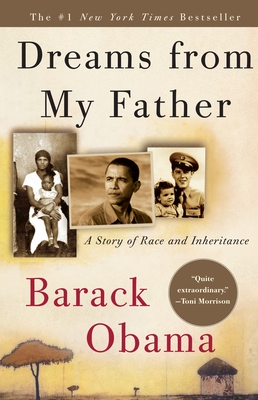
Mr. Obama’s first book, “Dreams From My Father” (which surely stands as the most evocative, lyrical and candid autobiography written by a future president), suggests that throughout his life he has turned to books as a way of acquiring insights and information from others — as a means of breaking out of the bubble of self-hood and, more recently, the bubble of power and fame. He recalls that he read James Baldwin, Ralph Ellison, Langston Hughes, Richard Wright and W. E. B. Du Bois when he was an adolescent in an effort to come to terms with his racial identity and that later, during an ascetic phase in college, he immersed himself in the works of thinkers like Nietzsche and St. Augustine in a spiritual-intellectual search to figure out what he truly believed.

As a boy growing up in Indonesia, Mr. Obama learned about the American civil rights movement through books his mother gave him. Later, after a stint as a fledgling community organizer in Chicago, he found inspiration in “Parting the Waters,” the first installment of Taylor Branch’s multivolume biography of the Rev. Dr. Martin Luther King Jr.

More recently, books have supplied Mr. Obama with some concrete ideas about governance: it’s been widely reported that “Team of Rivals,” Doris Kearns Goodwin’s book about Abraham Lincoln’s decision to include former opponents in his cabinet, informed Mr. Obama’s decision to name his chief Democratic rival, Hillary Rodham Clinton, as Secretary of State. In other cases, books about F. D. R.’s first hundred days in office and Steve Coll’s “Ghost Wars,“ about Afghanistan and the C.I.A., have provided useful background material on some of the myriad challenges Mr. Obama will face upon taking office.

Mr. Obama tends to take a magpie approach to reading — ruminating upon writers’ ideas and picking and choosing those that flesh out his vision of the world or open promising new avenues of inquiry.

His predecessor, George W. Bush, in contrast, tended to race through books in competitions with Karl Rove (who recently boasted that he beat the president by reading 110 books to Mr. Bush’s 95 in 2006), or passionately embrace an author’s thesis as an idée fixe. Mr. Bush and many of his aides favored prescriptive books — Natan Sharansky’s “Case for Democracy,” which pressed the case for promoting democracy around the world, say, or Eliot A. Cohen’s “Supreme Command,” which argued that political strategy should drive military strategy. Mr. Obama, on the other hand, has tended to look to non-ideological histories and philosophical works that address complex problems without any easy solutions, like Reinhold Niebuhr’s writings, which emphasize the ambivalent nature of human beings and the dangers of willful innocence and infallibility.

What’s more, Mr. Obama’s love of fiction and poetry — Shakespeare’s plays, Herman Melville’s “Moby-Dick” and Marilynne Robinson‘s “Gilead” are mentioned on his Facebook page, along with the Bible, Lincoln’s collected writings and Emerson’s “Self Reliance“ — has not only given him a heightened awareness of language. It has also imbued him with a tragic sense of history and a sense of the ambiguities of the human condition quite unlike the Manichean view of the world so often invoked by Mr. Bush.

Mr. Obama has said that he wrote “very bad poetry” in college and his biographer David Mendell suggests that he once “harbored some thoughts of writing fiction as an avocation.” For that matter, “Dreams From My Father” evinces an instinctive storytelling talent (which would later serve the author well on the campaign trail) and that odd combination of empathy and detachment gifted novelists possess. In that memoir, Mr. Obama seamlessly managed to convey points of view different from his own (a harbinger, perhaps, of his promises to bridge partisan divides and his ability to channel voters’ hopes and dreams) while conjuring the many places he lived during his peripatetic childhood. He is at once the solitary outsider who learns to stop pressing his nose to the glass and the coolly omniscient observer providing us with a choral view of his past.

As Baldwin once observed, language is both “a political instrument, means, and proof of power,” and “the most vivid and crucial key to identity: it reveals the private identity, and connects one with, or divorces one from, the larger, public, or communal identity.”

For Mr. Obama, whose improbable life story many voters regard as the embodiment of the American Dream, identity and the relationship between the personal and the public remain crucial issues. Indeed, “Dreams From My Father,” written before he entered politics, was both a searching bildungsroman and an autobiographical quest to understand his roots — a quest in which he cast himself as both a Telemachus in search of his father and an Odysseus in search of a home.

Like “Dreams From My Father,” many of the novels Mr. Obama reportedly admires deal with the question of identity: Toni Morrison’s “Song of Solomon” concerns a man’s efforts to discover his origins and come to terms with his roots; Doris Lessing’s “Golden Notebook” recounts a woman’s struggles to articulate her own sense of self; and Ellison’s “Invisible Man” grapples with the difficulty of self-definition in a race-conscious America and the possibility of transcendence. The poems of Elizabeth Alexander, whom Mr. Obama chose as his inaugural poet, probe the intersection between the private and the political, time present and time past, while the verse of Derek Walcott (a copy of whose collected poems was recently glimpsed in Mr. Obama’s hands) explores what it means to be a “divided child,” caught on the margins of different cultures, dislocated and rootless perhaps, but free to invent a new self.

This notion of self-creation is a deeply American one — a founding principle of this country, and a trope addressed by such classic works as “The Great Gatsby” — and it seems to exert a strong hold on Mr. Obama’s imagination.

In a 2005 essay in Time magazine, he wrote of the humble beginnings that he and Lincoln shared, adding that the 16th president reminded him of “a larger, fundamental element of American life — the enduring belief that we can constantly remake ourselves to fit our larger dreams.”

Though some critics have taken Mr. Obama to task for self-consciously italicizing parallels between himself and Lincoln, there are in fact a host of uncanny correspondences between these two former Illinois state legislators who had short stints in Congress under their belts before coming to national prominence with speeches showcasing their eloquence: two cool, self-contained men, who managed to stay calm and graceful under pressure; two stoics embracing the virtues of moderation and balance; two relatively new politicians who were initially criticized for their lack of experience and for questioning an invasion of a country that, in Lincoln’s words, was “in no way molesting, or menacing the U.S.”

As Fred Kaplan’s illuminating new biography (“Lincoln: The Biography of a Writer”) makes clear, Lincoln, like Mr. Obama, was a lifelong lover of books, indelibly shaped by his reading — most notably, in his case, the Bible and Shakespeare — which honed his poetic sense of language and his philosophical view of the world. Both men employ a densely allusive prose, richly embedded with the fruit of their reading, and both use language as a tool by which to explore and define themselves. Eventually in Lincoln’s case, Mr. Kaplan notes, “the tool, the toolmaker, and the tool user became inseparably one. He became what his language made him.”

The incandescent power of Lincoln’s language, its resonance and rhythmic cadences, as well as his ability to shift gears between the magisterial and the down-to-earth, has been a model for Mr. Obama — who has said he frequently rereads Lincoln for inspiration — and so, too, have been the uses to which Lincoln put his superior language skills: to goad Americans to complete the unfinished work of the founders, and to galvanize a nation reeling from hard times with a new vision of reconciliation and hope.

This article has been revised to reflect the following correction:

Correction: January 26, 2009

An article last Monday about literary influences on Barack Obama misstated the time frame during which he found inspiration in “Parting the Waters,” the first installment of Taylor Branch’s multivolume biography of the Rev. Dr. Martin Luther King Jr. It was after Mr. Obama worked as a community organizer in Chicago, not during that period.

 See the original post HERE

 GalleyCat also took the liberty today to share a list of free eBooks for five of Obama's favorite inspirational tomes:
 5 Free eBooks That Inspired Barack Obama
1. Self-Reliance by Ralph Waldo Emerson (contained in this volume of essays)
2. Complete Project Gutenberg Abraham Lincoln Writings by Abraham Lincoln
3. Moby-Dick by Herman Melville
4. The Complete Works by William Shakespeare
5. The Bible, Old and New Testaments, King James Version

Congratulations, Mr. President. Happy to have you aboard for another four years!