Showing posts with label science fiction. Show all posts

Friday, November 9, 2012

Posthumous Publishing for Bradbury

Publishers Weekly spread the news today that two short pieces written by the classic science fiction writer Ray Bradbury will soon be available for public consumption.

As a huge Fahrenheit 451 fan, I'll admit to being pretty stoked about even just a few new pages from the literary icon.

Here's the scoop from the Associated Press (via Salon.com):

NEW YORK -- Ray Bradbury was in failing health during his final years, but he could still reminisce about his love for books or finish a brief and mysterious Christmas story.

Two pieces released this fall were written late in life by the science fiction/fantasy master, who died in June at age 91. He contributed “The Book and the Butterfly,” an introduction to this year’s edition of “The Best American Nonrequired Reading.” And he conceived a stark encounter between a young boy and a man he believes is Santa Claus in “Dear Santa,” which appears in the holiday issue of Strand Magazine, based in Birmingham, Mich.

The publication of each work was made possible, in part, by deep admiration for the author. Strand managing editor Andrew Gulli, who befriended Bradbury in 2009, has featured several Bradbury works and had an informal agreement with him for “Dear Santa.”

“I never heard anything back or received a contract for a couple of months,” Gulli wrote in a recent email, adding that final word did not arrive until the day of Bradbury’s death. “I was picking up my mail and opened up an envelope to find Ray’s signature on the contract.”

Dave Eggers, who edits the “Nonrequired” series, once contributed a story to a Bradbury tribute anthology and knows a close associate of Bradbury’s, the author and journalist Sam Weller. Based in San Francisco, Eggers helps a student committee compile the anthology and allows the students to choose a writer for the introduction.

“In the past they (the introducers) have ranged from Beck to Guillermo Del Toro to Judy Blume,” Eggers, a National Book Award finalist for his novel “A Hologram for the King,” wrote in an email Thursday.

“Last year the kids voted to ask Ray Bradbury, and because I knew Sam, and because I grew up a few towns from Bradbury’s native Waukegan, Ill., I thought we might have a shot. When Sam let us know he agreed, the students and I were flabbergasted. His intro was wonderful of course – so full of undiminished joy. He passed on a few weeks after sending it to us.”

“The Book and the Butterfly” is a three-page tribute to reading and how it nurtured Bradbury’s extraordinary imagination. He describes visiting his local library in Waukegan at age 7 and startling the librarian by borrowing 10 books a week. On “magnificent autumn nights,” he would hurry home and read about everything from Egypt to physiology.

“The books I brought home from the library caused me to think about the origins of life and the universe,” writes the author of “The Martian Chronicles,” “Fahrenheit 451″ and other classics. “How did it start? Where does it end? I recall Midwestern summer nights, standing on my grandparents’ hushed lawn, and looking up at the sky at the confetti field of stars. There were millions of suns out there, and millions of planets rotating around those suns. And I knew there was life out there, in the great vastness. We are just too far apart, separated by too great a distance to reach one another.”

His mind was a rocket ship, but “Dear Santa” is a written in a clipped, chilly style, as if Dashiell Hammett had been commissioned to write a sketch for The Radio City Christmas Spectacular. No names are given, except for Santa. The location is not identified. The mood is dreamlike and much of the action takes place through dialogue.

“Oddly enough the older Ray got, the less patience he had for adjectives and the more skeletal his style was, which for an editor is a dream,” Gulli wrote in his email. “Often times authors will slip into phases especially when they start getting on in years where they will pad a very simple story with a lot of things that should be edited out of the manuscript.”

The story begins with a boy standing in the back of a long and slow-moving line to meet Santa. A tall stranger stops the boy and asks his age.

“Twelve,” the boy says. The stranger warns he may well be older when he finally gets to Santa. As the boy approaches the front, he whispers his age to Santa, who insists the boy is lying and sends him away, complaining the boy is too heavy to sit on him, as if the boy himself might be turning into Santa.

Outside, the boy spots a tall, blue-cheeked man and they walk together. The boy is convinced the man is Santa, the man gives nothing away. The boy says he will write him during the next holiday season, and insists he knows where to address the letter. As they part, the boy has a final question.

“My dear Santa, sir, please tell me, do you believe in you?”

“Maybe right now I’m beginning to believe,” the man says. “I think I owe you thanks.”

See the original post HERE

Tuesday, October 2, 2012

Release Day: WINTER OMENS by Trisha Leigh

Tuesdays mean release day, and today that means the second book in Trisha Leigh's "Last Year" series, Winter Omens!

Picking up where Whispers in Autumn left off, Althea has even more at stake this season as the Others get closer and closer to tracking her down:
Althea and Lucas barely escaped the Others’ clutches in the autumn, and were separated in the process. Alone and on the run from the cruel alien race determined to exterminate her, Althea struggles to adapt and survive in a world she never imagined.

When a boy named Pax appears out of nowhere, he quickly recognizes Althea for what she is – a human/Other hybrid just like him. Althea begs him to help her find Lucas, but Pax refuses, intent on following his own mysterious agenda.

The Others’ presence continues to devour the planet’s resources, and if history is an indication, they won’t leave until Earth is destroyed beyond repair. Althea and Pax sense the only way to save themselves – and maybe their home – is to understand the powers simmering inside them.

Together they push the limits of their capabilities in the quiet Wilds, but are soon confronted with a terrifying fact: no place is safe from the relentless pursuit of the Others.

We sat down with author Trisha Leigh to get a little inside scoop on her and her series:

RBtL: Congratulations on the release of WINTER OMENS, Trisha! What inspired you to write this YA sci-fi series?

TL: The original idea came from a tweet – someone’s daughter had woken up terrified she didn’t exist. I wrote it down and tossed it on my desk, and Althea showed up soon after. She’s kind of a hard nut to crack, but once she told me why she was so terrified she didn’t exist, the rest of the story kind of fell into place.

RBtL: Even though you didn’t go the traditional publishing route, you seem to have hit all your bases self-publishing. What made you decide to self-publish? What was your process in doing so?

TL: Honestly, three years ago when I wrote this book, the possibility of self-publishing wasn’t even on my radar. I had an agent for about a year and we worked on the book but never went on submission to editors. After she and I parted ways, I queried the ms again but found agents much more gun shy about taking on what would be pitched as a dystopian YA because of the overcrowded market. For a while I stuck it in a drawer, but as I watched more and more people find success with strong manuscripts in self-publishing, I thought I owed it to the story to put it out there and see what happens. I’m really happy that I did.

I will say that one of the best decisions I made was hiring a professional cover designer, developmental editor, copy editor, and formatters to make the book as professional as possible. Some authors who self-publish overlook the importance of each of those steps, and their readers are the ones who suffer for it.

RBtL: The Last Year series is full of strong and interesting characters—Althea, Pax, Lucas, Greer, Griffin, the whole crew. Who is your favorite to write and why?

TL: Oh, gosh, that’s a hard question. It changes, honestly, from book to book. In Whispers in Autumn, definitely Althea. I really love exploring the strange balance of ferocity and vulnerability. I loved writing Pax in Winter Omens, and Griffin was a welcome bit of humor. In Betrayals in Spring [the next book in the series] Greer helped get me through some tough scenes, but Lucas has become the easiest for me to connect with – so yeah, I guess all of them at one time or another.

RBtL: It must be tough juggling writing, marketing, and all of the other aspects of self-publishing...and your family, both human and canine. :-p Tell us a little about your writing routine—how do you find the time and energy?

TL: It is tough, and I don’t think many writers would tell you differently. I’m single, which helps, but I do take the time to spend time with my family when an opportunity comes up – it’s never even a question in my mind. I write whenever I have a minute, during breaks and lunches at the day job, after work, etc. My sleeping patterns leave much to be desired, however, and I’m afraid I’m going to remain single until I can find a magical way to erase the bags beneath my eyes!

Seriously, it’s a lot of coffee and chocolate and making the time to do it. We can all find something else to do, but if you set deadlines for yourself and want to meet them, it’s almost always possible.

RBtL: With two books left in the series after Winter Omens, what can readers look forward to? Can we have a little sneak peek?

TL: Hmm. I’m someone who hates spoilers, BUT I think it’s fair to say that in Betrayals in Spring, Althea’s romantic life will become, shall we say, untangled a bit. We’ll finally meet the real Deshi, and our cast of characters grows quite a bit (and not all of the new members are human or Other).

Available in print and eBook, don't miss this exciting installment in this engaging new YA science fiction series!

Tuesday, July 24, 2012

New Release: WHISPERS IN AUTUMN by Trisha Leigh

Every so often a story comes around that you just fall in love with. It's become rarer and rarer for me these days, though, and I'm not entirely sure why. But not too long ago, I was able to feel that feeling again. And lucky for me, the author wanted me to edit the book and the others in the series. I was thrilled that she wanted me to be a part of it! "Yay," I squealed!

On now the first book in the series, Whispers in Autumn by Trisha Leigh, has hit the virtual shelves:

In 2015, a race of alien Others conquered Earth. They enslaved humanity not by force, but through an aggressive mind control that turned people into contented, unquestioning robots.

Except sixteen-year-old Althea isn’t content at all, and she doesn’t need the mysterious note inside her locket to tell her she’s Something Else. It also warns her to trust no one, so she hides the pieces that make her different, even though it means being alone.

The autumn she meets Lucas, everything changes.

Althea and Lucas are immune to the alien mind control, and together they search for the reason why. What they uncover is a stunning truth the Others never anticipated, one with the potential to free the brainwashed human race.

It’s not who they are that makes them special, but what.

And what they are is a threat. One the Others are determined to eliminate for good.

It's been fantastic working with Trisha the past few months to hone and polish her already awesome book. I'm excited to see what she has in store for us next...

So, if you're looking for a fun YA read, order yourself a copy and enjoy! :)

You can find a print edition of Whispers in Autumn on Amazon.com. Electronic versions are available on Kindle, Nook, Kobo, and iBooks.

You can even order an autographed copy from Trisha herself via her website.

Congratulations on the release, Trisha!

Monday, January 30, 2012

Second Time's the Charm for "A Wrinkle in Time"

I first read Madeleine L’Engle’s A Wrinkle in Time in my fifth grade English class. And I hated it. No matter what I did, I couldn't get into it. I didn't care about the heroine Meg Murry. I was bored with the writing. I also hated pink, so the edition we read made my head hurt like whoa.

I don't know what my deal was. I devoured books at that time in my life. (Well, I've always devoured books, really.) But for some reason, A Wrinkle in Time was not my cup of tea.

About five years ago, though, I decided I needed to read it again. Give it another try with fresh eyes and an open mind. And, of course, I adored it the second time around. Maybe as a kid I had been subconsciously rebelling against the fact that I totally related to Meg, that I wasn't one of the "cool kids," and didn't feel like I fit into my reality. Maybe I just wasn't ready to start liking science fiction--I had been so wrapped up in contemporary novels about babysitters and high schoolers and the like. At the time, maybe I just couldn't see it.

But whatever the reason, my mind was changed. Which is quite handy given that it means when I saw an article on NYtimes.com about the novel, I was actually interested in reading it. (It's awesome, by the way, though lengthier than I usually post)

And you know what that means...I can now share it with you:
Bookish girls tend to mark phases of their lives by periods of intense literary character identification. Schoolgirls of the ’70s had their Deenie and Sally J. Freedman and Margaret moments, muddling through adolescence in the guise of one Judy Blume heroine or another. And for almost a century and a half, girls have fluctuated between seasons of Amy and Meg and Jo March, imagining themselves alternately with blond corkscrew curls, eldest sister wisdom or writerly ambitions.

But for those who came of age anytime during the past half-century, the most startling transformation occurred upon reading Madeleine L’Engle’s Newbery Medal-winning classic, “A Wrinkle in Time,” which celebrates its 50th anniversary this year. It was under L’Engle’s influence that we willed ourselves to be like Meg Murry, the awkward girl who suffered through flyaway hair, braces and glasses but who was also and to a much greater degree concerned with the extent of her own intelligence, the whereabouts of her missing scientist father, the looming threat of conformity and, ultimately, the fate of the universe.

Meg Murry, in short, was a departure from the typical “girls’ book” protagonist — as wonderful as many of those varied characters are. Meg was a heroine of science fiction.

In 1962, when “A Wrinkle in Time,” after 26 rejections, was acquired by John Farrar at Farrar, Straus & Giroux, science fiction by women and aimed at female readers was a rarity. The genre was thought to be down-market and not up to the standards of children’s literature — the stuff of pulp and comic books for errant schoolboys. Even today, girls and grown women are not generally fans. Half of 18- to 24-year-old men say that science fiction is their favorite type of book, compared with only one-fourth of young women, according to a 2010 study by the Codex Group, a consulting firm to the publishing industry. And while a sizable portion of men continue to read science fiction throughout their lives, women don’t. Thirty-two percent of adult male book buyers are science-fiction fans compared with only 12 percent of women. When Joanna Russ, one of the few successful female science-fiction writers, died last year, her obituary in The New York Times referred to her as a writer who helped “deliver science fiction into the hands of the most alien creatures the genre had yet seen — women.”

“A Wrinkle in Time,” the first in a trilogy that was later extended to include two more books, also defied the norm. Though a major crossover success with boys as well (with more than 10 million copies sold to date), the book has especially won over young girls. And it usually reaches them at a particularly pivotal moment of pre-adolescence when they are actively seeking to define themselves, their ambitions and place in the world.

“Part of what made it seem so liberating to so many girls is that it allowed those with an analytic mind and an interest in the pursuit of science to read about a subject that at the time was not perceived of as a suitable course of study for girls,” said Leonard Marcus, author of a biography of L’Engle, “Searching for Madeleine,” to be published this fall. “At the same time, at its core it’s about a girl’s love for her father, and that emotional level transcends the genre aspect of the book.”

[...]

Perhaps it is this softer element that distinguishes “Wrinkle” from its rocketry and light-saber brethren. But that doesn’t make the book any less weighty or challenging. In her introduction to a 2007 edition, Anna Quindlen, an enthusiast since childhood, confessed, “The truth is, I’m not a fan of science fiction, and my math and physics gene has always been weak.”

L’Engle’s book shies away from neither topic. On meeting Meg, we learn she can perform square root functions in her head — a mark, not of wallflower status, but of moral distinction. Still, Meg harbors doubts about her own intellectual abilities, and her exacting expectations rub off on the reader. If anything, the book enchants readers who might not entirely grasp its concepts with the delight in not knowing; the realization that even the most know-it-all kids do not, in fact, have all the answers and that certain questions are worth asking.

“I loved Mrs Who’s cryptic quotations, and the math that went right over my head and the fact that Charles Wallace had powers I was always struggling to understand,” said Rebecca Stead, whose Newbery Medal-winning novel, “When You Reach Me,” was in great part a homage to “A Wrinkle in Time.”

L’Engle, who was born in 1918 and grew up a child of privilege in New York City, struggled academically at her private school, though she later graduated cum laude from Smith. She first got the idea for “A Wrinkle in Time” after reading Einstein’s writings on relativity. “I used a lot of those principles to make a universe that was creative and yet believable,” she said in an interview with her publisher before her death in 2007.

Of course, science fiction is not only about science; it is also often deeply informed by politics, and can be a vehicle for commentary on the complex effects of progress in all its permutations — medical, political, technological. Russ, for example, a graduate of Yale, wrote books infused with feminist messages and digressions on philosophy. “A Wrinkle in Time” can be read as a warning against communism. L’Engle, an active liberal Episcopalian who spent many of her later years as a writer in residence at the Church of St. John the Divine in New York, tended to write allegorical works in which, as in the books of C. S. Lewis, good inevitably triumphs over evil, a message as likely to appeal to girls as it is to boys.

What is it then that makes girls averse to science fiction? Could it be the pronounced boyness of the covers — the same signal that deters girls from switching to Superman after their Betty and Veronica days have passed? Science-fiction books, whether technologically elaborate, intergalactic stories by the likes of Arthur C. Clarke and Hal Clement or the so-called “soft” science fiction of Ray Bradbury and Philip K. Dick, often wear dark washes of black and navy blue with 3-D fonts and brutal images of fire and destruction.

Yet there isn’t anything inherently unfeminine about science fiction. Some might say the dystopic fantasy, apocalyptic tales and paranormal romance so popular with today’s teenage girls are actually couched “girl-friendly” variants of science fiction. Perhaps. But why should science fiction proper be any less welcoming to girls? It may be simplistic to suggest that reading science fiction will lead women to pursue careers in chemistry and quantum physics and information technology. But then, how many female authors say they were inspired to become writers because of Jo from “Little Women”?

Surely we don’t mean to imply that science fiction, or science, is really just for boys. It is, after all, Meg’s microbiologist mother, Katherine Murry, rather than her rescued father, who later in the series wins the Nobel Prize.

Read the entire article HERE

Wednesday, November 30, 2011

HUGO Actor to Star in Adaptation of SF Classic "Ender's Game"

I don't have to be shocked anymore that there isn't a film adaptation of Orson Scott Card's Ender's Game even in the works. Because now there is! GalleyCat tells us the film is currently being cast.

Asa Butterfield, who flawlessly plays Hugo Cabret in the current adaptation of The Invention of Hugo Cabret seems to have accepted the role of Ender, according to the cast list on IMBD. And after seeing the skilled young actor's performance in "Hugo," I can definitely buy him as the brilliant child protagonist Ender Wiggin.

Deadline New York tells us a bit more about the plan for the film:
Asa Butterfield, the 14-year old title star of Martin Scorsese’s 3D film Hugo, has been offered the title role in Ender’s Game, the Odd Lot Entertainment adaptation of the Orson Scott Card science fiction novel. Summit Entertainment will release the film March 15, 2013. Gavin Hood, who helmed Tsotsi and Wolverine, is directing. Ender’s Game is a seminal futuristic novel that Card originated as a short story in 1977 and then turned into a 1985 book that won both the Hugo and Nebula Awards and spawned a series. The storyline begins on Earth after a devastating alien attack, when gifted children are recruited by a government desperate to fight back. The kids train to fight the seemingly invincible, ruthless aliens on a hyper-realistic spaceflight/combat simulator referred to as the game. A young boy emerges as a genius strategist and the planet’s best hope to destroy the alien Formic race.

Roberto Orci and Alex Kurtzman are producing through their K/O Paper Products banner, along with Odd Lot’s Gigi Pritzker and Linda McDonough, the author and Lynn Hendee. Digital Domain is also an equity partner.

Read the original post HERE
And check out the clip below of Card himself discussing the film during a lecture at Christopher Newport University.

Wednesday, August 31, 2011

NPR Shares Audience Top Picks for SF/F

As fantasy novels get more and more attention these days through film and TV adaptations (Lord of the Rings, Harry Potter, and Game of Thrones to name a few), people seem more inclined to admit liking fantasy novels in general.

The stigma of "geekiness" or "dorkdom" that seems attached to the genre is fading and the 28-year-old football fan who secretly enjoys Robert Jordan doesn't flush so red when sharing that morsel of information.

I'm loving this new-found confidence, and the fact that NPR released the top 100 audience picks for their favorite science fiction and fantasy novels just buttresses the notion that things are changing. It's not to say that lists like this don't already exist from popular websites/magazines/newspapers/etc, but it's nice to see it front and center like this. (The New York Times actually wrote an interesting piece recently on the topic too.)

That said, let's see what NPR found out:

More than 5,000 of you nominated. More than 60,000 of you voted. And now the results are in. The winners of NPR's Top 100 Science-Fiction and Fantasy survey are an intriguing mix of classic and contemporary titles. Over on NPR's pop culture blog, Monkey See, you can find one fan's thoughts on how the list shaped up, get our experts' take, and have the chance to share your own.

A quick word about what's here, and what's not: Our panel of experts reviewed hundreds of the most popular nominations and tossed out those that didn't fit the survey's criteria (after — we assure you — much passionate, thoughtful, gleefully nerdy discussion). You'll notice there are no young adult or horror books on this list, but sit tight, dear reader, we're saving those genres for summers yet to come.

So, at last, here are your favorite science-fiction and fantasy novels. (And a printable version, to take with you to the bookstore.)

1. The Lord Of The Rings by J.R.R. Tolkien

Tolkien's seminal three-volume epic chronicles the War of the Ring, in which Frodo the hobbit and his companions set out to destroy the evil Ring of Power and restore peace to Middle-earth. The beloved trilogy still casts a long shadow, having established some of the most familiar and enduring tropes in fantasy literature.

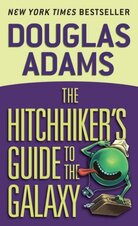
2. The Hitchhiker's Guide To The Galaxy by Douglas Adams

In the first, hilarious volume of Adams' Hitchhiker's series, reluctant galactic traveler Arthur Dent gets swept up in some literally Earth-shattering events involving aliens, sperm whales, a depressed robot, mice who are more than they seem, and some really, really bad poetry.

3. Ender's Game by Orson Scott Card

Young Andrew "Ender" Wiggin, bred to be a genius, is drafted to Battle School where he trains to lead the century-long fight against the alien Buggers.
4. The Dune Chronicles by Frank Herbert

Follows the adventures of Paul Atreides, the son of a betrayed duke given up for dead on a treacherous desert planet and adopted by its fierce, nomadic people, who help him unravel his most unexpected destiny.

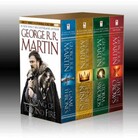
5. A Song Of Ice And Fire Series by George R.R. Martin

As the Seven Kingdoms face a generation-long winter, the royal Stark family confronts the poisonous plots of the rival Lannisters, the emergence of the Neverborn demons, the arrival of barbarian hordes, and other threats.

[...]

10. American Gods by Neil Gaiman

On the plane home to attend the funerals of his wife and best friend, Shadow, an ex-con, encounters an enigmatic stranger who seems to know a lot about him. When Shadow accepts the stranger's job offer, he finds himself plunged into a perilous game with the highest of stakes: the soul of America itself.

11. The Princess Bride by William Goldman

This tale of a handsome farm boy who, aided by a drunken swordsman and a gentle giant, rescues a beautiful princess named Buttercup comes with a slyly humorous, metafictional edge: Goldman claims to have merely abridged an earlier text by one "S. Morgenstern" (actually a pseudonym) and peppers his text with clever commentary.

12. The Wheel Of Time Series by Robert Jordan

At 13 volumes and counting, this sweeping — some would say sprawling – richly imagined epic chronicles the struggle between servants of the Dark One and those of the champion of light known as the Dragon Reborn.

13. Animal Farm by George Orwell

Farm animals overthrow their human owners and set up their own deeply (and familiarly) flawed government. Orwell's mordant satire of totalitarianism is still a mainstay of ninth-grade reading lists.

14. Neuromancer by William Gibson

Gibson's groundbreaking debut novel follows Case, a burned-out computer whiz, who is asked to steal a security code that is locked in the most heavily guarded databank in the solar system. A seminal work in the genre that would come to be known as cyberpunk.

[...]

16. I, Robot by Isaac Asimov

Isaac Asimov changed our perception of robots forever when he formulated the laws governing their behavior. In I, Robot, Asimov chronicles the development of the robot through a series of interlinked stories: from its primitive origins in the present to its ultimate perfection in the not-so-distant future — a future in which humanity itself may be rendered obsolete.


Check out the complete list HERE

Other authors on the list? Robert A. Heinlein, Anne McCaffery, Patrick Rothfuss, Ray Bradbury, Neal Stephenson, Roger Zelazny, and Brandon Sanderson.

What is YOUR favorite science fiction/fantasy novel??