Showing posts with label op-ed. Show all posts

Friday, May 8, 2015

Does (Book) Length Really Matter?

It always surprises me when I poke around a bookstore and see super thick hardcover or even trade paperback bestsellers. I've noticed this particularly in the past year or so with books such as We are Not Ourselves, The Girl on the Train, The Forgotten Garden, and The Goldfinch. And quite frankly, it baffles me. I've read two of the aforementioned bestsellers, both of which I struggled to get through. Not because I have an issue in general with "long books," but because neither of them needed to be as long as they were.

As an editor, I am keenly aware of these things, and it makes me cringe when novels meander and go off on tangents that are entirely irrelevant to the story. In fact, when I was working at Simon and Schuster, I once was tasked with taking a 700+ page women's fiction novel from overseas and paring it down to 400 pages at the most. Crazy, right? But the craziest part is that I actually accomplished it. Not only could the language itself be tightened on a sentence level but whole paragraphs could come out because they didn't tie into anything or have any real purpose. What was really shocking, though, is that I kind of killed off a character. o_O There was entire plotline and POV that was unnecessary to the story. It didn't weave into the main plot or character arcs at all, other than that character being related to one of the other characters. While the character certainly still "existed" in the story, every section with her POV narrating lifted right out. It was interesting plotline in and of itself, don't get me wrong, but it was its own story, not the one this book was telling. That plotline alone took up about 200 pages long and it wasn't needed.

This is something I see a lot in early drafts of manuscripts and it's my job to address it, to make sure a reader is engaged from the first to the last page, that the pace is moving at a readable clip, and that the story is clear, tight, and moving along with each scene. So the fact that so many books go to publication with these sorts of issues--and do well sometimes--makes me kind of sit there and blink at the wall. My first question is always "what did the editor even do, then?" and second, "how on earth are all these readers getting through these books, especially in today's world of ADD?"
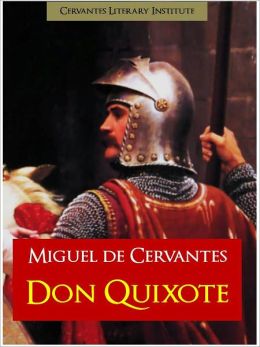
Of course, classic literature has always been on the longer side, so there's certainly a precedent of it. Just look at the unabridged versions of Les Miserables, The Count of Monte Cristo, and Don Quixote. They were all over 400,000 words. But note something I just said...these are unabridged versions. There are abridged version of all three of those classics. Meaning, if you think about it, that extra length...? Yeah, it wasn't necessary. It might have lovely language or a nice lesson or tangent behind it, but it wasn't telling the story the book was meant to tell.

Now, don't get me wrong, it is incredibly impressive when people can write such tomes and find a way to keep readers' attention. But why is this mini-trend happening right now? Is it something people really like or is it just happening because of good marketing and reviews that focus on only the strong points? Just because people buy the books doesn't mean they enjoy them. It doesn't mean they didn't skim over half the book to get to the good parts (what I did with both those novels I mentioned earlier).

A recent article by the BBC (and what do you know, like this blog post, it's a super long!) takes a look after hearing about the UK publication of  an 800+ page novel called Death and Mr. Pickwick by debut author Stephen Jarvis. (They also mention an upcoming book that is one million words long. Yes, one million words. That is not a typo.)

Debut novels don’t come more heavyweight than Stephen Jarvis’ Death and Mr Pickwick. Twelve years in the writing, it tells the story of the creation and afterlife of Charles Dickens’ own first novel, The Pickwick Papers, one of the world’s most written-about works of fiction. Pickwick was the book that made Dickens a celebrity, and it was published in monthly installments starting in March 1836, using his pen name, Boz. 
Out this month in the UK and next month in the US, Death and Mr Pickwick is a gloriously meandering tour of 19th Century London that has already been dubbed “a staggering accomplishment” by Publishers Weekly. 
Yet it’s heavyweight in another, more obvious sense too. Lug this book to the beach and back every day, and you’ll be getting a full-body workout. Drop it, and you risk breaking a toe. Weighing two-and-a-half pounds, it’s a whopping 802 pages long – an audacious claim on readers’ time in an age when our attention spans are supposedly being whittled away to nothing by ever-more insistent digital distractions. 
There is plenty of longer fiction, of course. Kelidar, Mahmoud Dowlatabadi’s Persian language novel following a Kurdish family in the wake of World War II, is 2,836 pages. The Son of Ponni, a historical novel written in Tamil by Kalki Krishnamurthy, and published in the 1950s, is barely any shorter at 2,400 pages. And then there’s Proust, whose In Search of Lost Time is 3,031 pages long. 
Don’t think it’s just a 20th Century phenomenon, either. Nothing compares to the 17th Century French novel Artamène. The tale of a shepherd’s son who’s really a Persian prince, its 2 million or so words (the average 280-pager contains just 80,000) fill 13,095 pages. Originally credited to Georges de Scudéry, these days it’s more commonly attributed to his sister, Madeleine. 
A bulky bedfellow 
Though it can’t quite compete in terms of pagination, Jarvis’ novel is part of a mini-trend that seems to be gathering momentum – and bulk. In the next few months alone, playwright Larry Kramer publishes the first of his two-volume fictionalised history, The American People, which comes in at 800 pages (he’s been working on it for 40 years and at one point the manuscript was 4,000 pages long), Amitav Ghosh completes his Ibis trilogy (the final installment is 624 pages), and review copies of Hannah Yanagihara's A Little Life have been sent out filled with Post-It notes attached to flag representative passages, presumably because the book’s girth is so daunting (at 736 pages, it’s really not so little at all). In July, you can expect to hear bookshelves groaning as William T Vollmann’s new novel, The Dying Grass, is published. Set in the Wild West during the 1870s, it totals 1,376 pages. And next year, British graphic novelist Alan Moore publishes his second non-graphic novel, Jerusalem, which is billed as a fantastical exploration of his hometown, Northampton. It’s said to be a million words long. 
Together, these bulky books call into doubt the received wisdom about our besieged attention spans. They might also make you wonder what editors are up to. And they question, too, the evolving role of the literary novel in the wider culture. Doesn’t there come a point at which the sheer scale of these works is so out of kilter with the reading time available to even the most dedicated bookworms, that they have to be seen as wilfully marginalising themselves? Think of this as well: every purchase of a novel over 600 long pages may well come at the expense of two or three others. 
If you wanted to pinpoint the start of all this, you could do worse that looking to 2013, when 28-year-old Eleanor Catton became not only the youngest author ever to win the Man Booker Prize, but did so with the longest book. The Luminaries is 832 pages long. Did the judges not deem its length problematic? Not according to their chair, author and academic Robert Macfarlane. 
“Length never poses a problem if it's a great novel”, he insisted. To prove his point, that same year, Donna Tartt’s The Goldfinch (760 pages) sold and sold. 
As a reader, you know what you’re in for when you begin a long book. It’s not that we necessarily expect more – after all, as much can be said in a poem, never mind a short story – but we do tend to indulge the author a little, allowing for the fact that in a longer work time can be taken establishing characters, and the subplots layered on with plenty of scope for resolution. It’s a different relationship. A novella may be read in a single sitting, making for a more intense reading experience. The bulky epic, meanwhile, inveigles its way into your life over a period of weeks or even months, becoming a travel buddy and bedfellow. 
Is bigger better? 
In genre fiction, big has never fallen out of fashion. Fantasy novels especially tend to run long, and plenty of airport paperbacks are so dense they look almost square. But then those tend to be vastly pacier affairs. In the US, too, there’s an expectation that a great literary work will also be physically imposing. Still, how many of even those wouldn’t be improved by a judicious nip and tuck here and there? The Goldfinch is one of my favourite novels of this century, but if I were forced to come up with a quibble, it would be that Tartt spends too long in Las Vegas in the middle section. 
“Very few really long novels earn their length. My fingers are always twitching for a blue pencil,” Ian McEwan told the BBC last year. He was speaking on publication of his own most recent novel, The Children Act, a work so slender it might almost be called a novella. The story of a high court judge who must decide whether to compel a young Jehovah’s Witness to receive a life-saving blood transfusion, it radiates brilliance, and yet weren’t there a couple of passages that felt too research-heavy? Sometimes, authors themselves simply become too big to cut. Remember how the Harry Potter books grew as JK Rowling’s fan-base exploded? 
In an age of 140-character tweets and six-second Vine videos, it’s hard not to view the abundance of fat books as a throwback trend. A tome so heavy it’s barely portable is, after all, the ultimate anti-e-book. Novelist Naomi Alderman is well placed to comment, as she also creates video games, most notably the top-selling Zombies, Run! 
“The trend towards long books is a fascinating counterpoint to the suggestion that we're all becoming iPhone-junkies, with minuscule attention spans, twitchily unable to concentrate on anything longer than a tweet,” she told BBC Culture. In fact, she suggests, technology might be making us more ready to sign over large chunks of time to a novel. As well as the oft-cited influence of TV binge-viewing, made possible by streaming, she points to the fact that AAA video games – those with the highest development and promotion budgets – frequently demand upwards of 100 hours of gameplay. 
“The death of the ‘attention span’ might have been declared prematurely,” she adds. “But at the same time, novels are competing with other entertainment forms that provide a lot of instant thrills. To start a long novel these days, I think the reader needs to feel certain that the tale will be worth the journey.” 
Of course, Stephen Jarvis, who’s 57 and lives in Maidenhead in the south of England began writing his novel in 2001, in a world before Facebook. It was influenced, he says, by reality TV’s Big Brother. ‘It strikes me that there are parallels between Big Brother and The Pickwick Papers – both of them are plotless things which just sort of ramble along. There’s an emphasis on character and you don’t really know what’s going to happen.’ 
At one point, Death and Mr Pickwick rambled to 800,000 words, but he cut it back by over half in order to have it fill 802 pages – the exact same number as Dickens’ novel.
Jarvis has no worries about readers being put off by the novel’s length, though he does admit this wife has vowed never to read it. “She has special dispensation – her excuse is she doesn’t need to read it because she’s had to live it,” he says. She supported him while he wrote, and so it seemed only fair that he let her type the letter ‘d’ of the ‘The End’ before they went off to the pub to celebrate. When finished copies arrived, however, the words had been cut. Turns out it’s not house style. 
See the original article HERE

So what do you think, dear readers? Would you pick up (and read in its entirety) an excessively long novel? If so, what would compel you to do so?

I am truly curious...

Thursday, August 2, 2012

Mash-Ups Take a Turn For the Worse...I mean, for the Sexier

Once upon a time, not too long ago, writers began to fiddle with classic novels. They'd add vampires, sea monsters, and zombies galore to create the now commonly coined "literary mash-up." While this new genre didn't spark my personal attention, I wasn't wholly against them as they sky-rocketed to popularity just a few years ago.

In my mind, it was a fun and unique way to re-conceptualize classics and even encourage readers to explore classics that they may not have read. It moved the focus a bit from "Look at this brand new shiny story!" to "Look at the awesomeness that was our predecessors' writings!" Plus, I am always a sucker for seeing how people can reinterpret a story. Just as is done on a regular basis with film adaptations, these mash-ups were taking a piece of work and re-envisioning it.

But the newest subgenre to the "Mash-up" family has my feathers puffing out all in a million different directions (aka angrily). Now, writers are simply sexing-up the classic literature, adding erotic scenes to the sometimes sensual yet innocent classic stories so many of us adore. They aren't creating anything new, they aren't adding anything different and clever to the story; they are simply taking what was once innocent and making it foxy.

The Wall Street Journal tells us more:
Jane Austen would be turning Fifty Shades of Red.

As if being mashed up with zombies and transported to American high schools weren't enough, Ms. Austen and several of her fiction-writing peers are seeing their novels morphed into erotica.

As the steamy "Fifty Shades of Grey" and both of its sequels dominate best-seller lists, an enterprising electronic publishing house will publish on Monday a sadomasochistic version of Charlotte Brontë's "Jane Eyre," as well as sexed-up renderings of tales by Ms. Austen, Arthur Conan Doyle and Jules Verne.

In "Pride and Prejudice" Elizabeth Bennet and Mr. Darcy start groping any time they can slip away from their stuffy friends.

Sir Arthur's "A Study in Scarlet," Mr. Verne's "Twenty Thousand Leagues Under the Sea" (both with gay themes) and Ms. Austen's "Northanger Abbey" inaugurate the series, titled "Clandestine Classics."

Claire Siemaszkiewicz, chief executive of Total E-Bound, has been publishing erotic e-books for the last five years. She says the new series was planned before the "Shades of Grey" franchise exploded. But she's not denying it's likely to help.

Ms. Siemaszkiewicz hired five erotica writers from her stable of 250 authors to add racy sex scenes to the original texts, which are in the public domain and therefore not subject to copyright laws. The essential prose remains mostly unchanged, supplemented by 10,000 words or more which promise to take readers "behind the closed bedroom doors of our favourite, most-beloved British characters," the website states.

The books are priced based on how many new words have been added. "Jane Eyre" is $5.23; "Pride and Prejudice" is $4.36.

Attempts are made, with mixed success, to conform to the argot of the time. An excerpt from the updated "Pride and Prejudice" has Elizabeth referring to Darcy as "hot, spicy, and all man" as he "lifted her skirts quickly and removed her undergarments, then fumbled to free himself from the confines of his own clothing."
Desiree Holt, who penned the racy scenes to "Northanger Abbey" and shares a credit with Ms. Austen on the book's cover, says she worked hard to preserve Ms. Austen's sensibilities.

"I was careful to make sure that I kept to the same language and the same tone so that it didn't sound anachronistic or jarring to the rest of the book," says Ms. Holt, a retired music publicist who is 76 years old.
Austen scholar Devoney Looser, a University of Missouri professor, read website excerpts of Clandestine's hot new "Pride and Prejudice" and quickly found one improbability: Ms. Bennet and Mr. Darcy slip in and out of their clothes a bit too efficiently, which would have been virtually impossible given the extensive undergarments worn in the early 1800s.

The Clandestine line is Ms. Siemaszkiewicz's first foray into the literary canon. More typical are subgenres like "angels and demons", "paranormal" and "Rubenesque." About 95% of Total E-Bound's readership is female, and many readers buy a new e-book each week, she says. She publishes about six titles a week to keep up with demand.

"I like to think if the Brontë sisters were writing today, their books would be a lot racier," said Ms. Siemaszkiewicz. "But they were stifled by convention at the time."

See the original post HERE

With the recent explosion of the erotic romance genre with the popularity of 50 Shades of Grey, writers and publishers seem to be grasping at straws here, in my opinion. Not only has the erotic romance genre been around for years and YEARS before this new "fad" hit (I will not rant about 50 Shades of Grey. I will not rant about 50 Shades of Grey.), but if a classic wasn't sex-ified by the author in the first place, it wasn't meant to be, it wasn't the heart of the story, at least not on paper. Classics encourage imagination in that regard. Yes, maybe these author's would write something racier if they were in modern times, but there is no way to know that.  The fade-to-black mentality is even one still used in many novels today, and taking an author's choice in that respect and changing it because "being horny is in" and "modern" is disturbing to me on so many levels.


Monday, September 26, 2011

Unfair Judgment of PNR Get Under My Skin

Earlier this year when book reviewer Paul Goat Allen posted an article on BarnesandNoble.com about the worst sex scenes in paranormal romance I tried to brush it off. Allen's ignorance about the genre was clear to me in the fact that he'd even write such a piece in the first place, taking one of the best-selling commercial fiction categories and mocking it publicly. PNR fans certainly wouldn't find it as amusing as he.

It was also seemingly apparent that he just flipped through some books, found some lines he found funny, and just wrote them down to make fun of them. Yes, some of the excerpts he pulls might make you cringe and giggle, but he's taken them out of context and completely disregarded the fact that some of the authors may not have even meant those lines seriously. I know more than one author who landed on that list and it's not uncommon in some snarky and spunky PNR for sex scenes to be written tongue-in-cheek, with the purpose of taking a common convention and pushing it beyond its limits intentionally for a laugh of its own. In addition, some of the quotes Allen pulls here aren't even from sex scenes. For example, Nicole Peeler's quote about "seaweed pubes" (yes, gross sounding haha) was actually describing an underwater character's hair. It had nothing to do with sex.

All that to say that Allen was not winning any points in my book. Even when confronted by an author about his misuse of her work, he recognized that he took it out of context and shrugged it off, not caring that he's characterizing her in an unfair negative light knowingly. For that, my respect for him dwindled even further.

Then, last week, I see that his oh-so-hilarious (*insert sarcasm here*) article has made it into the Huffington Post. Good, just what we need--his obnoxious opinion to be put in front of more viewers. Yay.

I was upset, to say the least. Not only for my friends, whose talent is immense, but for how this man was being made out to be a credible source for this kind of thing when he surely doesn't deserve the role. It did offer some solace to know that any PNR fan probably doesn't take his opinions to heart, that anyone with a head on her shoulders would see that you can't judge a book, or even a sex scene, by a sentence or two. The only people who would really find this amusing in the first place are the ones who don't read the genre, so at least it wasn't deterring sales for readers who actually are interested. In fact, for me, it made me more curious to read these books he highlights, to see for myself if he's just being an unfair jerk (I know. I'm *awesome* with the insults haha) or if there is truth in his commentary. I'll admit that I know there are instances of both on this list. And I will also say that, in general, Allen makes some good and accurate points about writing a sex scene in general. But my opinion definitely isn't stemming from what Allen chooses is "a cheesy sex scene." I'll be using my own legitimate judgment, thankyouverymuch. I hope you will too!

Tuesday, March 8, 2011

Hocking Speaks Out

As you know, self-published author Amanda Hocking has been getting a lot of press lately. Hocking herself, however, hasn't shared many of her own opinions on the matter. Until this week, that is.

Hocking wrote a fantastic post on her blog, explaining her own reaction to the media frenzy her success has caused and why. It's honest, down-to-earth, and smart--check it out:
Oh, the internet is saying so many things about me. I don't understand why the internet suddenly picked up on me this past week, but it definitely did. My inbox has been flooded and I jumped up over 1,000 followers on twitter. Which was just in time for all my Charlie Sheen retweets.

The past few days have mostly been spent with me answering emails (and not writing - which makes me sad).

Meanwhile, I've been reading things written about me here and there, and hearing what everybody thinks this all means. I've been thinking about what I wanted to say about everything. Well, I've come up with it, and I have a feeling it will be a very long post.

I am not going to rehash things I've already talked about. Like how this happened. If you actually read back in my old blog posts, I was blogging as everything happened. I've publicly written down exactly what I've done. So if you're really curious about all that, check out my FAQs and scroll through some older blogs. I've got it all laid out.

What I'm about to say next is something I've been debating how to say. I think it needs to be said, but I know that I need to word it carefully. I want you all to know that I don't think I'm super awesome special or anything like that.

Everybody seems really excited about what I'm doing and how I've been so successful, and from what I've been able to understand, it's because a lot of people think that they can replicate my success and what I've done. And while I do think I will not be the only one to do this - others will be as successful as I've been, some even more so - I don't think it will happen that often.

Traditional publishing and indie publishing aren't all that different, and I don't think people realize that. Some books and authors are best sellers, but most aren't. It may be easier to self-publish than it is to traditionally publish, but in all honesty, it's harder to be a best seller self-publishing than it is with a house.

I don't think people really grasp how much work I do. I think there is this very big misconception that I was like, "Hey, paranormal is pretty hot right now," and then I spent a weekend smashing out some words, threw it up online, and woke up the next day with a million dollars in my bank account.[...]

Read the rest of the article HERE

Tuesday, September 7, 2010

Why "Must Love Books" loves BOOKS

You all know how I feel about e-books (and if you don't, you'll understand quickly if you check out all my tagged RBtL posts ), how I crave the physicality of the book when reading. I've even been struggling lately reading submissions on my e-reader. Yes, that's right. Word documents are difficult for me to even read on screen. I know, I know. It's very sad.

But I'm not the only one who feels this way, as pathetic as I personally may be about it.

Exhibit A: a new post from one of our guest bloggers, T.S. Ferguson, over at his blog Must Love Books:

For a few months now, my mother has been asking me about e-readers, what kind I would recommend (the Sony or the nook, but I have a personal one-man boycott against Amazon especially with e-books, so I’m biased), whatthey’re like to use, and more specifically, what brand I would want if shewere to get me one. Every time she asked I would tell her the same thing.

“Honestly mom, I don’t really want or need an e-reader. I wouldn’t use it so please don’t waste your money on buying me one. I could use some bookshelves though.”

Well she bought me one anyway (yes I said thank you) and many of the friends that I’ve told seem shocked that I’m not more excited about my new “toy.” They don’t understand why I’m not buying thousands of e-books and taking it everywhere with me. Many of them have told me “just wait…you’ll get used to it and then you’ll be addicted.” But I know I won’t and here’s why.

I love books. I don’t just mean reading. I love physical books. So much of the pleasure I derive from the reading process comes from the actual physical book. Maybe that’s a comfort thing from growing up as a reader, but so be it. Let’s start with the purchase. While it’s nice to be able to order a book offline and have it shipped, there’s no substitute in my mind for going to the brick-and-mortar bookstore and browsing the shelves. Some people find it soothing to shop for clothes, I shop for books. I love scanning the shelves, pulling out books that look interesting, reading the copy, judging books by their covers, and ultimately walking away with at least a few books to buy. If I go looking for a specific book and it’s not there, I will almost always say no when the clerk asks if I’d like to special order it. It gives me an excuse to go to the next closest bookstore and repeat the whole process again.

E-books, being digital, cannot be bought at a bookstore. All you have to do is go online or on your reader and click a few buttons. It sounds easy but to me, that’s boring. And unlike my fashion-loving friends, who can order something and then get to try it on when it arrives, I don’t even get something solid I can hold in my hands.

Once I’ve bought my books, I love to look at the covers and read the copy again. Covers are very important to me. There have been times when a cover will make or break a book for me. In fact, you could probably hand me my favorite book and if it had a horrible cover, I would probably not enjoy the reading experience as much as I would if it had a cover I loved. I could still enjoy the book, but part of the experience wouldbe ruined for me. And unfortunately e-books don’t really come with covers.Even the companies that include their covers in the e-book can’t duplicatesome of their most amazing covers on the grayscale e-readers. I downloaded afree sample of Jennifer Brown’s Hate List (which, you’ll recall, was my first acquisition) just to see what it would look like as an e-book, andwhile the cover was included, even that cover, which was incredibly beautiful, simple and only two-colors (black and gray-blue) just didn’t do it for me on the e-reader....

Read the rest of T.S.'s fantastic post HERE

Tuesday, August 24, 2010

Guest Blogger, Dan Cabrera: Books Not Bombs: Can Reading Bring Peace To Afghanistan?

Yesterday a friend of mine posed an interesting question: If you could translate one and only one book into Pashto, the official language of Afghanistan, what book would you choose?

It so happens that a friend of mine—who is currently serving in the Military Intelligence Corps of the United States Army—was asked by one of his superiors for a recommendation of a novel to translate.

This got me thinking, naturally, as to which novel I would choose (more on that later). But I also thought, perhaps more importantly, why is the Army translating whole novels for the Afghani population? Aren’t there more pressing issues at hand over there?

Bibliophiles like to believe that books make a difference in the world. Reading enlightens, educates, and connects us all through a shared experience—or so it can be argued. Sure, some books and documents have unquestionably changed the course of human history, from The Communist Manifesto to The Jungle to Harry Potter, among others. And let’s not forget that little missive called the Bible.

There’s no question that books can shock, delight, and make readers see the world from a different viewpoint. If a book neglects to move the reader in one way or another then that book has failed. But is the U.S. Army hoping to move the Taliban to tears after reading Sophie’s Choice? Do they hope insurgents will see the error of their ways and the frailty of human life after reading All Quiet on the Western Front?

No matter what book the Army chooses to translate, they may have to deal with a bigger problem than subjective taste to confront. It turns out that most of the Afghani population has the reading comprehension of an American Kindergartener. According to a recent Wired blog post, Afghani police officers and soldiers can’t even read their bank statements or the serial numbers on their weapons. Soldiers who believe they’re not getting paid won’t be soldiers for long, and even if they do stick around they can’t keep track of their weapons?

Realizing this, and recognizing that reading comprehension is just a good thing to have in general, NATO forces in Afghanistan have decided to give all soldiers, police officers, and recruits some homework.

This war on illiteracy may prove just as tough as the real war, especially after considering that smoking heroin and opium—made from the abundant poppy plant found in Afghanistan— is a way of life for soldiers. U.S. generals would rather have Afghanis hooked on phonics than on drugs and are hopeful they are hopeful they can create some bookworms within a year.

So it makes sense that if Afghanis are going to be reading we might as well provide them with some good books. Unless, of course, our intentions aren’t as benevolent as they seem (are they ever?). Books are information, after all, and it wouldn’t be a war without some good, old-fashioned propaganda. Not that I’m suggesting the military is planning something insidious with their translations—though perhaps some publishers, agents, and authors who are losing out on foreign and translation money may think so—nor am I getting ready to don my tinfoil hat and break out conspiracy theories.

After all, propaganda comes in many forms. We love dropping pro-American leaflets on our enemies almost as much as we love dropping some BLU-82 Daisy Cutters or GBU-43 MOABs. And while some may argue that Military Intelligence is an oxymoron, spreading pro-American sentiment through radio and TV broadcasts, websites, and pamphlets can help win the hearts and minds of civilians and, in the best case scenario, change the minds of some bad guys.

So, is the Army using books to help spread the word that we’re the good guys, then? It’s a little far-fetched, considering what we already know about the reading level of the majority of Afghanis. Add to that the fact that novels can take a heck of a long time to read.

Then again, maybe that’s the point: sit everyone down with a good book and fighting will stop. Both sides can form book clubs, discussing which characters were their favorites, which endings surprised them the most, and who would play whom in the inevitably movie adaptation.

One can only hope.

My friend who brought up the subject suggested the Lord of the Rings trilogy (okay, it’s three books—four if you count The Hobbit—but really it’s like one big, long book). A good choice, I think, since 1) it’s a great read, and 2) the story captures the universal themes of good versus evil, bravery versus cowardice, greed versus selflessness. Another friend of mine suggested To Kill a Mockingbird. Atticus Finch is the embodiment of justice; Scout the embodiment of childhood innocence. Both books should be read by everyone, no matter where he or she is from, in my opinion, but I’m not certain they would be top picks for the Army.

Someone else I know suggested The Kite Runner, but that might be a little too raw and harrowing for a newly minted reader. Three Cups of Tea? Sure, definitely, but not exactly the lay-down-your-arms and support your local G.I. book the brass in the Pentagon might be hoping for (plus, it’s non-fiction, which deserves another list).

What novel would you choose as your one book to be translated to Pashto?

Would it be an anti-war book like Catch-22, Slaughterhouse Five, or Johnny Get Your Gun? Maybe some flag-waving novels like The Red Badge of Courage or most anything by W.E.B. Griffin or Tom Clancy?

Or would you choose something timeless and profound, a book that exposes the best and worst of humanity, something that cuts right to the core of our beings, something so devastating that one cannot put down the book without being moved to tears and filled with an overwhelming sense of compassion?

Or maybe you’d pick something fun and frivolous to give the war-ravaged citizens some levity and a brief respite from their troubles? After all, it’s the least a book can, and should, do.

My pick? The Giving Tree.


About the Blogger: Dan Cabrera is currently a peon in the world of book publishing. He enjoys reading all kinds of books, particularly any that involve animals, mysterious diseases, or bittersweet endings. You can read his blog at deartheonion.tumblr.com.

Welcome to Reading Between the Lines, Dan! We're happy to have you aboard!

Friday, August 6, 2010

The Cranky Critic, Gloria Loman: Dorchester's Foot is Bleeding

Hey there, Booklanders! So, word on the street is that Dorchester Publishing is reorganizing their entire publishing program.

DearAuthor.com rounds-up the publisher's main changes--and they're big ones:

A source from Dorchester informed me that Dorchester will be revamping its publishing house to focus on trade paperback originals and digital publishing. Digital releases will be forthcoming as scheduled but the print publications will be delayed 6 to 8 months.

In 6 to 8 months, Dorchester will begin releasing the print editions in trade paperback form.
Now, let me just say, this is a terrible idea.

The romance genre, for one thing, is such a huge chunk of Dorchester's business and romances just don't work in trade. The market doesn't want them! Big accounts won't take them! Airports, supermarkets, Walmart, Target, etc. etc. want mass market. Common sense, people.

And these trade paperbacks will hit shelves 6-8 months after an e-book edition is released? Does Dorchester even want to make a profit? Romance readers are avid. They want their books the second they can get their hands on them. No way are they going to wait 6-8 months for a printed edition when they can buy an ebook sooner and for less...

I'm not sure what what you're thinking, dear Dorchester big wigs...

Oh and by the way, your foot is bleeding. You might want to remove that bullet. And maybe while you're at it you can disinfect the gaping wound with that everclear you're drinking.

Because, clearly, you are drunk off your ass.

Monday, July 19, 2010

The Cranky Critic, Gloria Loman: S&S Needs R&R After Karp Sets Up Firing Squad

Hey Booklanders -- There's a shit-storm brewing over at Simon & Schuster.

Approximately 50 measly days after John Karp replaced David Rosenthal as publisher of Simon & Schuster, the original imprint of the CBS-owned publishing house of the same name, Karp is already earning himself a bad rep, both in house and out.

Rumor has it that Karp, the previous head of Warner's Twelve imprint, was brought in to revitalize S&S after some stagnant profit margins. President and CEO of S&S, Carolyn Reidy told the New York Times of Karp back in June:

Jonathan Karp is one of the most versatile, talented and creative publishers working today [...] At every stage of his career he has shown a true gift for finding and making bestsellers of quality. Having competed against him to acquire books in which we were keenly interested, and then watching as he published them with great flair, I’m delighted that he will now bring his abundant editorial and publishing skills to the Simon & Schuster imprint.

While Karp certainly has a solid resume, his expertise doesn't quite fit S&S's hardcover trade titles and an extensive paperback list. As a result, this "changing of the guard," as the New York Observer calls it, took many by surprise and left them feeling wary and somewhat off-kilter.

And apparently for good reason!

According to Publishers Marketplace's announcement of the switch on June 3, Karp told the Associated Press, "I'm going to take a cue from one of Simon & Schuster's most successful authors, Hillary Clinton, and I'm going to go on a listening tour for a very long time and listen to what people at S & S think and we'll figure out the next step together."

He is also quoted as saying, "I'm definitely not coming the[re] to clean house. I'm coming there to build upon a foundation." On the fiction publishing program in particular, as raised above, "I hope that we will broaden the sweep and impact of the S&S fiction program."

But word on the street is that cleaning house is exactly what Karp is doing, breaking his word only one month in.

Early last week, Publishers Weekly announced the hiring of two new editors, Ben Loehnen and Jofie Ferrari-Adler, both of whom are well-versed in nonfiction, but not as fluent in trade fiction, S&S's most lucrative genre.

Then, just last Thursday, The Observer reported the firing of long-time S&S editor Amanda Murray, who worked with a number of bestselling authors including Mary Higgins Clark and Sandra Brown.

And people are pissed about Murray's dismissal. I hear she was a beloved presence at S&S, not to mention significant. While new acquisitions were not Murray's main focus, her plate was chock-full, making her an integral member of the editorial team. So, while Murray's absence won't change the acquisitions at S&S, she’ll be missed, and Karp will now need to hire a fiction expert to fill her very big figurative shoes. Word has it that someone has already been lassoed for the job.

But that's not all. More pink slips are expected to be handed out at S&S in the coming weeks, indicating that "cleaning house" was on Karp’s agenda from the get-go, despite his bullshit (pardonnez mon français) claim that he’d be "build[ing] upon the foundation."

Karp had also told the AP, "I think that a big publisher can be focused and passionate, especially if the editors have the latitude to do their best work and champion the authors they believe in. S&S has a culture of great editors."

"Great editors" who Karp is now firing.

It looks like bringing Karp in may not be working out exactly as planned—or as claimed. With employees who now struggle with trusting their publisher and a huge disconnect between what the imprint stood for and what it's now morphing into, perhaps the decision to set Rosenthal free may not have been a good one.

Maybe it would have been more productive to deal with the rumored issues of a disappearing marketing department, a somewhat strained publicity department, and overpaying for projects, rather than replacing a well-respected publisher who Reidy herself calls, "A truly original thinker [who] brought a wealth of creative and inspired ideas to the entire publishing process, and [who] has been a trusted and valued colleague who made many contributions to the overall success of our company."

No one knows how it will all shake out, but one thing's for certain: Karp hasn't started off at S&S on the right foot. And people are not happy about it.

I wonder what the Ethics Police would think about this one...

Tuesday, July 6, 2010

The Cranky Critic: A New Column from Guest Blogger Gloria Loman

Alright, Booklanders: What dumbass editor bought Jon Gosselin's memoir?

I was stunned to pieces when our RBtL matriarch blogged that people were surprised Rob Lowe was actually writing his own memoir. What is it with the publishing industry sucking off the fame teet of every F-lister out there?

Granted, Lowe has had an actual career, and his past is rife with all kinds of juicy stories, but we're all shocked that he's writing his own book. I mean, the man knows how to read. Surely the man knows how to write...at least the basics. And I'm pretty sure a decent editor and a decent copyeditor could make the book readable. ... Oh God, I'm exhausted already.

Back to my point: Gosselin is no Lowe.

Not only has he not had the career--or any career for that matter--but he doesn't have the looks or the business savvy, and certainly doesn't have the mega super-star power team behind him that Lowe does.

According to RadarOnline.com, Jon Gosselin and his "life coach" Sylvia Lafair will be writing the book together. (Translation: Lafair will do all the work while Gosselin's off getting more stupid tattoos.) The book will be called A Slice of Life: Jon Gosselin's Story:

[The book] will tell Jon’s journey from being a relative unknown to reality TV patriarch and regular tabloid fodder.

Co-author Lafair, who takes Jon on soul searching missions into the mountains of Pennsylvania for $10,000, tells RadarOnline.com: “The book is about having eight kids all at once when he was under the age of 30.”
Now, allow me to translate...or maybe elaborate:

GOSSELIN: I got married too young. My wife wanted babies. We did the unnatural thing. We wound up with too many. We got on TV. It helped pay the bills. I have a bad attitude. I resented my wife. I can't handle my kids. I realized that I was suddenly famous. Young girls wanted to date me. My douchery came out. And I was proud of it. Now people hate me. And I'm trying to pretend that I've gotten my douchery under wraps in the hopes of regaining some level of notoriety again, other than being leveled with Michael Lohan. Now my reputation is in the proverbial shitter so I'm attempting to do what any other F-lister would do: write a book.

Barf, Booklanders. Barf!

I can't wait to see the intial Bookscan numbers on this bad boy...if it ever comes out!

I say it's damn time the book publishing industry stops buying and attempting to sell these pseudo-celebrity tabloid-fodder "memoirs." It's no wonder the industry is dying.

Ten bucks that says this book will hardly make back its production costs let alone its advance. Then again, people's sick fascinations might kick in. But will they buy it? Could Jon Gosselin have the Palin Going Rogue effect? Time will tell.


Now give us the Juice:

Do you know if or who bought this pitch? Or how much it went for? Tell us!

Are you the agent for this pitch? Defend it!

Got an opinion of your own? Preach it!


The Cranky Critic is Gloria Loman, a freelance writer who once worked in publishing. With her finger still firmly on the industry's pulse, she plans to bring you the juice as often as possible as well as all the opinions unfit to print. You can send tips to Gloria's attention at readingbtwthelines@gmail.com.