Showing posts with label Alex Christopher. Show all posts

Monday, October 1, 2012

Fiction, Food, and Pho-tography

Because we all know how much I love books and food, I'm not surprised that the awesome Alex Christopher sent me a link to the NPR article, "Photographing Literature's Famous Food Scene." In the piece, NPR discusses the photographer Dinah Fried's "Fictitious Dishes" series:

A confession: I've read Jack Kerouac's On the Road, but I can't tell you much about it. Yes, I know he's on a road trip. But beyond that, I don't recall any of the characters or anything they do or what the point was. What I do remember is that he described some truly great food. In fact, I liked those sections of the book so much that when I read them, I apparently felt the need to scribble them down, word for word, in a notebook.

On the Road isn't the only example of this. I remember the hoecakes and the maple snow candy from Laura Ingalls Wilder's books. My favorite scene from Roald Dahl's Boy is in the candy shop. The details of meals and food and eating always stay with me long after the plotlines have faded.

So when I saw a series of photographs by Dinah Fried being passed around Tumblr, I knew I'd found a kindred spirit. Her "Fictitious Dishes" re-create the food scenes from a range of books, largely classics like Moby Dick and The Bell Jar.

Alice in Wonderland
"For me as a reader, and in life as well, I remember the eating scenes in books," Fried says on the phone. "They really bring me to an emotional place in the character and the book."

Fried has 10 photos in her collection so far, five of which she's sharing here on The Picture Show for the first time. Some of the scenes are of iconic literary meals — the gruel from Oliver Twist and the tea party from Alice in Wonderland.

Others, like the scene in The Girl With the Dragon Tattoo, are a bit less literal. The open-faced sandwiches pictured aren't actually described in the book. But, says Fried, that type of sandwich was mentioned so many times that she felt she had to re-create them somehow.

Catcher in the Rye
She does take some liberties with her photos. The layouts are of her own design, and not all of the details are 100 percent true to the text. Take, for instance, the cheese sandwich from The Catcher in the Rye. "I know it's a Swiss cheese sandwich," she says. "But I didn't use Swiss cheese because I wanted the color to pop. The designer in me wanted the cheese to be more orange."

The designer in her is also always on the hunt for the right props. Most of them are snagged from people's kitchens and found on visits to flea markets and thrift stores. Sometimes Fried has the food scene in mind but can't proceed until she has the right prop. That was the case with Moby Dick. She knew her dad had a pewter beer stein that she absolutely had to have. He'd long forgotten about it, but, until they found it, she couldn't take the photo.

Heidi
Sometimes a particularly good find will spark her creativity. The discovery of a three-pronged toasting fork reminded Fried of a scene in Heidi, and she felt compelled to re-create the meal of toasted cheese eaten by Heidi and her grandfather. And there are a few things in her collection that she hasn't yet used, like a 1960s coffee carafe with gold star bursts.

Often, the literary passages that Fried draws on don't have a description of a specific place or setting, so the goal with her photos is to create the atmosphere of a particular scene.

"I'm interested in creating something that evokes an emotional feeling for myself and others," she explains. "I wanted to see how other people who had read the books would connect on that level."

See the original post HERE

While this is a very cool series, I can't help but wish Fried had expanded the concept beyond only classic literature (also, speaking of...no Dickens other than the somewhat cliched Oliver Twist?? No Little Women??). I'd love to see something from The Secret Lives of Bees, the new novel The Night Circus, or even Fried Green Tomatoes. Scenes from children's literature would also be amazing--anything Roald Dahl, C.S. Lewis, Winnie the Pooh, and The Secret Garden.  I do, however, love her take on To Kill a Mockingbird:

To Kill a Mockingbird

Hopefully Fried will continue this series. If not, I may have to stage some things of my own! :)

Friday, January 27, 2012

Guest Blogger, Alex Christopher: The Artists’ Book - Beauty Between the Bindings

As a new resident of New York City, I have spent the past several months enchanted with the sensory overload the metropolis offers. Some of the greatest experiences have come from simply seeing something for the first time: the towering skyscrapers, the arguing taxi driver, the old woman feeding pigeons (sorry for mentioning those awful creatures, Danielle!), the expanse of culture and creativity.

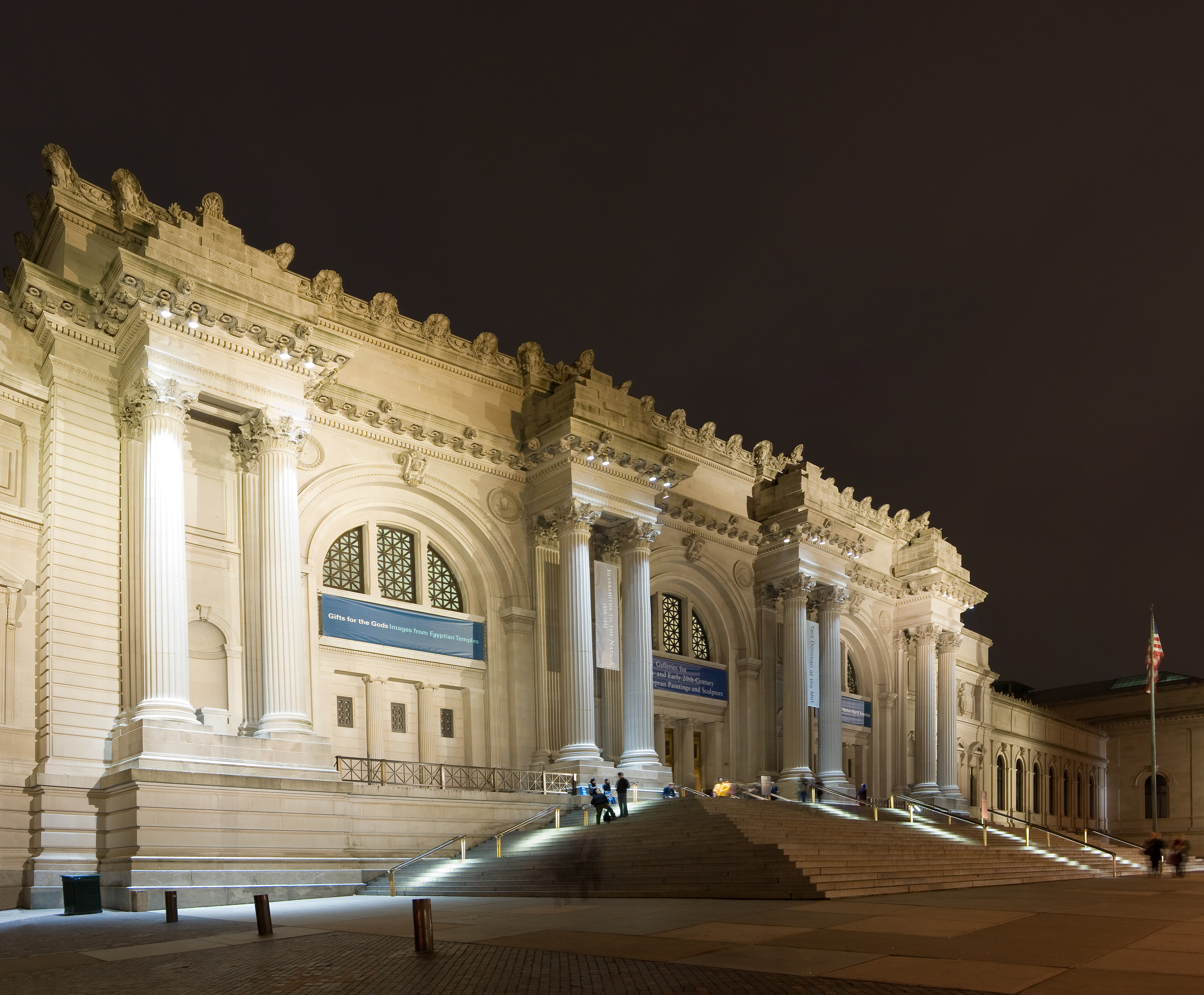
Like most newcomers, I have made an effort to visit museums to view the many pieces of fine art that I had only seen in books or on blogs. Viewing a piece of art for the first time is a breathtaking experience, particularly for an artist like myself. People can be brought to tears simply by looking at a painting. In a new city, with new things to see everyday, I can experience this over and over again. But eventually, you become immune to the stunning landmarks and the sweeping canvases. That’s the saddest thing about art. It’s the risk you take when purchasing an incredible painting or living in a city like New York--the lack of constant appreciation. Eventually, you get accustomed to striding right by it on your daily routine.

This is when the artists’ book offers more. The turning (or in many cases, unfolding) of a page reinforces what is called the “First View.” The discovery of what lies on the next page is an experience in itself, no matter how many times you go through it.

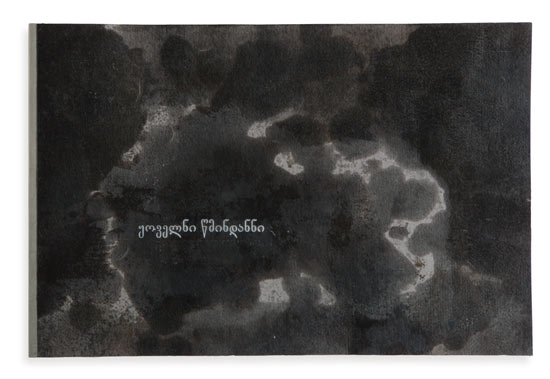
Of course, writing itself is an art form, and writers are in fact artists, but I’m not guest blogging to discuss that. The artists’ book is a developing genre of art that is gaining global recognition. The audience can see and touch every step of the process—the handmade paper, the letterpress printing, the threading that holds the pages together. Anyone viewing the artists’ book can comprehend its well-executed craft and concept.

Oftentimes, the book’s price point reflects the artistry of a book—you won’t find artists’ books for $24.95 at Barnes and Noble! An artist makes a specified quantity of an original book, called an edition. Editions can be anywhere from ten to hundreds of copies, and it is usually noted somewhere what number each book is (such as 36/250). The quantity produced (and of course the reputation of the artist) is a huge factor in the pricing of an artists’ book, which can sometimes reach the $10,000s and higher.

As book art is a developing field, many of the pieces are incredibly innovative. A standard beginning point is the eight-fold book. It’s actually a great activity to do with kids. With just a cut down the middle of the page and a series of folds, you have a book! (Check out the Brown Paper Bag 8-fold Activity.) While it would be easy to make this post a how-to guide for fun homemade books, I’d like to share with you a professional example.

I turn to a favorite artist of mine, Clemens Tobias-Lange. His stunning book, Ohne Wolken (Without Clouds), was the impetus for my own interest in the field. Each fragile page is made of fine Japanese handmade paper. It was intended to recreate the action of flying in a plane: take-off through landing, and the horizons along the way. The center spread is the most breathtaking, with a striking gradient from clear/white to bright blue. Each cover flap bound around the pages is made of spinnaker cloth (yes—like the kind used for boat sails). The only text within the book is in the very front and very back—a poem by Qu Yuan called “Li Sao” and is included in German and Chinese. This is incredibly fragile, and as many artists’ books do, it comes in a case; it is custom-designed plexiglass that the book can slide into. Tobias-Lange made only 30 copies of this book, and it is highly valued among collectors and libraries.

I recommend looking further into this field of art, as it really challenges the audience to approach a piece intellectually and to see the value of the First View. One great resource would be to look through the exhibitors (or attend an event if you can!) for the Codex Foundation.

Just think of all the possibilities books can hold for you!

About the blogger: Alex Christopher is a Californian transplant to New York City, where she works as a book publicist (quite near the cube of the lovely Danielle). Through double majoring in Global Studies and Art Studio, she became well versed in the practices of relief printing on letterpress, papermaking, and book arts. She can be found on Twitter: @alexthelady.