Showing posts with label lists. Show all posts

Thursday, May 2, 2019

Book Clubs, Summer Reads, and the Motor Vehicle Commission (Oh my!)

Yesterday ran away with me. Or rather, drove away with me. I ended up realizing I missed my car inspection (thanks, surgery!), so I hurried over after a doctor's appointment and got it checked out. Then I realized my registration said it was expired in April 2019, too...

Except I renewed it online in August when I put in my address change... So I had to go over to the actual Motor Vehicle Agency and talk to someone there. Turns out, my payment/renewal doesn't show up in the system for some reason. So I had to renew it again. And now I have to apply for a refund once I pull together the documentation of my August payment. Is your head spinning yet? Mine sure is!

And naturally, I left my book at home because I didn't think I'd be waiting in so many lines... Instead, I browsed GoodReads, looking for potential book selections for RBtL Book Club 2.0, which I'm very excited to be rebooting. I think I came up with some pretty good options, but I sure could've used this awesome list of the best summer reads from the staff over at Publishers Weekly
Looking for the perfect book to throw in the suitcase or take to the beach? Let us help. We've polled our staff for their personal recommendations, and PW's reviews editors have put together some stellar picks in fiction, mysteries and thrillers, romance, sci-fi, graphic novels, nonfiction, and YA and children’s books. Whether you want something breezy, laugh-out-loud funny, terrifying, thought-provoking, or anything else, really, we've got you covered. Enjoy!
Aurora Rising by Amie Kaufman and Jay Kristoff (Knopf Books for Young Readers)
My favorite reads from last year were the bestselling Illuminae series, which Kaufman and Kristoff cowrote. When I learned that they were collaborating on a new trilogy, well, I don’t think I can accurately describe my excitement. An SF YA with an ensemble cast of misfits, blistering sarcasm, and characters who are really good at what they do but terrible when interacting with other people? Sign me up, please! —Drucilla Shultz, assistant editor
The October Man by Ben Aaronovitch (Subterranean) 
It’s lucky that Aaronovitch turns out new additions in his Rivers of London supernatural police procedural series so often, since their deadpan humor and sexy river gods make them perfect diversions in any season. The latest entry is a spin-off, introducing a new protagonist, magic-practicing cop Tobias Winter, in a new setting: Germany. It’s a wine-related mystery I can’t wait to uncork. —Hannah Kushnick, reviews editor 
The Paper Wasp by Lauren Acampora (Grove) 
That feeling when you know things are about to go horribly wrong, but you’re not sure exactly how and you can’t look away? That’s the sensation of reading Acampora’s debut novel, which opens with Abby, an artistic near recluse in a dead-end job, on her way to visit Elise, a promising Hollywood actress, after they’ve reconnected at their high school reunion. Because here’s the thing about rekindling a friendship—it just might end in ashes. —Carolyn Juris, features editor 
The Perfect Fraud by Ellen LaCorte (Harper) 
What is a beach read exactly? For me, it’s a perfect page-turner that adds to the bliss of summer. This one hits all the marks with two women, one a reluctant fourth-generation commitment-phobic faux psychic, the other a brash single mother with a very mysteriously sick child. The tension rises as the women’s lives collide in the red rocks of Sedona. —Louisa Ermelino, editor-at-large 
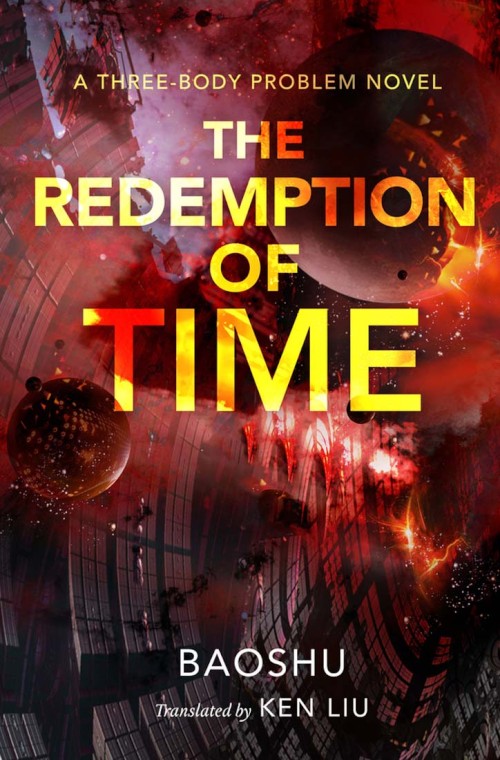
The Redemption of Time: A Three-Body Problem Novel (Remembrance of Earth’s Past) by Baoshu, trans. from the Chinese by Ken Liu (Tor) 
Nine years ago, science fiction novelist Cixin Liu published Death’s End in China, finishing his 1,500-page Remembrance of Earth’s Past trilogy. “No matter how many posts we wrote, the magnificent, grand arc of the trilogy was at an end,” Baoshu writes, describing the “melancholy” that inspired him to write a fanfiction tribute. This cosmic Romeo and Juliet story takes a welcome journey back to Liu’s fictional universe (with the master’s blessing). —Jason Boog, West Coast correspondent 
And the list goes on... 
Read the original post with the FULL list HERE

What's on YOUR summer reading list?

Friday, July 25, 2014

Friday Fun: "The Simpsons" Go Literary

I would never describe myself as a "Simpsons fan," but once and a while, it gives me a good chuckle. And I will say that I can relate more than I'd like to admit to Lisa... So this morning, when Book Riot pointed me in the direction of something I wouldn't have noticed about the show(ya know, not being a "Simpsons fan" and all :-p) I knew I'd found something I wanted to share with you all (and some new episodes I wanted to watch).

So, for today's Friday Fun, I give you....*drumroll please* eight of the best Simpsons literary references (courtesy of CBC books)!
Leon Uris 
The influential American novelist was known for his extensively researched, compelling but dense historical novels like Exodus and Mila 18. During one episode of The Simpsons, local hillbilly stereotype Cletus Delroy Spuckler can be seen in the library holding a copy of Uris’s acclaimed novel about Irish nationalism Trinity. But Cletus isn’t a literature fan – he's about to use the nearly 900-page book to crush a turtle for his lunch because “nothing cracks a turtle like Leon Uris.”

Bart the Raven 
Who could forget [this] amazing, epic adaptation of The Raven by Edgar Allan Poe in the very first “Treehouse of Horror” Halloween special? The bit receives a boost of gravitas thanks to the baritone narration of actor James Earl Jones. The show would also reference Poe’s short story The Tell-Tale Heart in a later episode in which Lisa competes against a schoolmate rival in a diorama competition. 
The Bread Loaf Writers' Conference 
In a famous season 18 episode, Lisa and aspiring poet Moe attends the “Word Loaf” conference, a parody of the Bread Loaf festival, which is considered the oldest and most prestigious annual writers’ summit in the U.S. This episode featured four literary heavyweight guests, including Michael Chabon, Jonathan Franzen, Tom Wolfe and Gore Vidal. However, in a room full of literary egos, tensions will rise. One of the hilarious highlights of the episode is when Michael Chabon shouts “That’s it, Franzen! I think your nose needs some Corrections!” before the two get into a fist fight. 
A Tale of Two Cities 
Fans of the show will remember the time when the writers turned the indelible opening lines of Charles Dickens’s classic novel about the French revolution (“It was the best of times, it was the worst of times …”) into a joke involving the infinite monkey theorem. The infinite monkey theorem basically suggests that an infinite number of monkeys hitting random keys on typewriters will eventually type out a given text, such as a Dickens’s novel. During an episode in the fourth season, Homer finds himself leading a union battle with his power plant Mr. Burns. The irascible Burns, in a show of the absurd power and resources he commands, takes a Homer on a tour and shows him “1000 monkeys working at a 1000 typewriters. Soon they’ll have written the greatest novel known to man!” Except Burns randomly pulls out a page from one of his monkey writers, which reads: “It was the best of times… it was the blurst of times?!!” Suffice to say, that monkey was probably fired. 
Thomas Pynchon 
Only an iconic show like The Simpsons could entice reclusive writer Thomas Pynchon to satirize himself, not once, but twice! The Gravity’s Rainbow author, known for avoiding interviews and public appearances, contributed two speaking parts throughout the years. Our favourite: when Marge becomes a novelist and asks Pynchon for a blurb, he responds: "Here's your quote: Thomas Pynchon loved this book, almost as much as he loves cameras!" The paper bag Pynchon also appeared briefly, in an unspoken cameo, in the World Loaf episode. 
Amy Tan at the Springfield Festival of Books 
This episode featured an appearance from The Joy Luck Club author Amy Tan and took a humourous jab at literary criticism. When Lisa gets the chance to address one of her literary heroes, Tan immediately crushes the girl’s interpretation of her writing. “No, that’s not what I meant at all. I can’t believe how wrong you got it. Just sit down, I’m embarrassed for both of us.”  
Goodnight Moon, Walken-style 
Who doesn’t remember reading this classic children’s book? Well, The Simpsons writers
took that nostalgia and gave it a Christopher Walken edge. Walken himself doesn’t appear in the episode (he’s impersonated by actor Jay Mohr), but one of the funniest literary references is when Marge points out Walken reading Goodnight Moon with his intense, signature delivery to a bunch of terrified kids. 
The Ghost of Pippi Longstocking 
While on summer holiday, Lisa meets a group of cool kids and takes the chance to re-
invent herself as a laid-back beach bum. But she one day passes a library and her love of reading and learning becomes hard to repress. In one memorable scene, a spectre of Pippi Longstocking appears amidst the bookstacks and begs Lisa: "Read about my adventures in the South Seas! Make me live again!" 
See the original post HERE

Monday, July 21, 2014

Famous Non-Mystery Literary Characters Turn Sleuth

I've always enjoyed a good mystery novel. When done right, it can keep you on the edge of your seat, keep you guessing and exercising that good ole brain. So I was intrigued to learn of some upcoming books that feature famous literary characters.

Now, I struggle sometimes with books that use either real people from the past as fictional characters or characters that have been pried away from their actual creators. It can feel a little disingenuous or unoriginal, if not done perfectly (Think of the film Midnight in Paris. Nailed it.), but nonetheless this list from the Toast is an interesting one:
I recently stumbled upon a new novel – the first of a projected series – starring Eliza Doolittle and Henry Higgins. Solving murders. Here are some other upcoming releases featuring famous literary heroes and heroines.  
1. The Hunny Killer, featuring Rabbit (from A.A. Milne’s Winnie-the-Pooh novels.) A.A. Milne’s Hundred Acre wood may be a symbol for enduring childlike innocence, but we all knew it had to have a darker side. When Owl is found strangled in his tree, Rabbit discovers that what he thought was his peaceful, close-knit community is actually a hotbed of crime and perversion. We’ve always known Tigger was a speed addict, but have we ever asked ourselves who his dealer is? The answer may shock you. But Rabbit’s own demons may get in the way of his quest to bring Owl’s killer to justice when Kanga starts to blackmail him about their illicit affair. 
2. Charlotte Bartlett and the Mystery of the Slightly but Unacceptably Delayed Train, featuring Charlotte Bartlett (from E.M. Forster’s A Room with a View.) This demure, rather sour Edwardian lady finds crime in the unlikeliest of places! In between glowering disapproval at all and sundry and cockblocking Lucy Honeychurch, Miss Bartlett finds plenty of time to solve mysteries. Perfect for Downton Abbey aficionados, the Charlotte Bartlett mysteries will explore the seedier side of genteel British life – the indomitable Charlotte can investigate bamboozled dowagers, jilted parlormaids, and the appalling crime of crumpet theft, with her unmatched censorious flair.
3. Stranger Danger, featuring Meursault (from Albert Camus’s L’Étranger.) Imprisoned after committing a senseless murder, Camus’s disaffected hero grasps the meaningless of a random universe – and his unemotional outlook gives him a unique insight into murder. After his execution is stayed when Meursault successfully solves the unexplained death of a fellow inmate, he becomes a highly sought-after consultant to the colonial police force in Algeria. 
4. The Hell Jar, featuring Esther Greenwood (from Sylvia Plath’s The Bell Jar.) Who, in their difficult teenage years, didn’t relate to Plath’s angst-ridden, tortured heroine? But maybe all Esther needs is a little purpose and mental stimulation, and what is more purposeful and stimulating than solving a juicy murder? Esther’s first adventure happens during her stay in the mental hospital, when a fellow patient is drowned in his bath. Esther’s keen mind zeroes in on the most likely suspects. Her brassy friend Doreen proves a worthy Watson, and soon Esther’s blues are dispelled in the thrill of hunting a ruthless killer.  
5. Get Death to a Nunnery, featuring Hamlet (from Shakespare’s Hamlet.) What if Hamlet didn’t die? That’s the question this edgy historical series poses. Revived moments after curtain fall, Hamlet suddenly finds himself king. Yet, ennui sets in as he ponders endlessly which nation to enter into an alliance with and which advisor to promote. When the ghost of his father returns with new revelations, Hamlet finds himself drawn into yet another murder, this one in a convent. He doesn’t want to get involved, yet when a troubled young novice asks him for help, he is irresistibly reminded of his lost love Ophelia. 
6. Bump the Hostess, featuring George and Martha (from Edward Albee’s Who’s Afraid of Virginia Woolf?) Albee’s famous couple is set to join the ranks of our most memorable crime-solving spouses, from Tommy and Tuppence to Lord Peter Wimsey and Harriet Vane. When a fellow professor is strangled after being invited to one of their drinks parties, George and Martha find themselves prime suspects in a murder investigation. Could they have killed to conceal their terrible secret? Eager to clear their names, George and Martha find themselves embroiled in a web of deceit and hate.  
See the original post HERE

I've gotta say, it is likely I will snag a copy of The Hell Jar, and re-read The Bell Jar before cracking the new book's spine. The Hunny Killer I might check out, too, just for kicks. ;)

Ah, the intrigue!

Thursday, September 6, 2012

Say "Happy Roald Dahl Month" with Literery-themed Recipes

I learned today that September is Roald Dahl Month. A bit of a strange coincidence too given how often I've talked about Roald Dahl lately with not only by cubemate, but also with random people coming by to troll the free book shelf, my father, my six-year-old sister, and many others. He just keeps popping up!

And when I saw that the Huffington Post did a post about foods from children's books, it reminded me immediately of Roald Dahl and the crazy cookbooks based on his stories.


I owned both of these cookbooks once upon a time. I'd flip through the pages, giggling at the ridiculousness, but I'll admit that I never once made anything from them.

I kind of wish now that I still had these gems so I could make something with my sisters, yet in the hustle and bustle that is growing up, the books seem to have vanished. At least HuffPo has given me some new literary dishes to give a whirl (and they've thrown in some Roald Dahl-related treats too!):

Harry Potter: Butterbeer


Alice in Wonderland: Jam-filled "Eat Me" Cupcakes

The Hunger Games: Lamb Stew with Dried Plums

James and the Giant Peach: Peach Juice
Oliver Twist: Gruel
 See the complete article and slideshow HERE


Tuesday, June 26, 2012

A Book-loving Camper's Paradise

The countdown to my vacation continues--just a few more days and I'll be in a plane on my way to Alaska! As you know from previous postings, I have the outdoors and camping on the brain, as a result. So it was kind of perfect when I saw this post from Abe Books on "Campire Reading: Vintage Camping & Hiking":

During the Industrial Revolution, people flocked from the countryside to the cities to seek work and wealth. As urban areas expanded, city folk began to hanker for the countryside their fathers and grandfathers had left behind, and camping as a form of leisure was born.

But it wasn’t as simple as that. At the end of the 19th century, public transport was limited, camping equipment was rudimentary and not everyone was convinced that camping was actually fun.

The leisure aspect was to really evolve much later. Several key figures and some social movements believed camping was more than sitting around a fire and roasting marshmallows.  It was encouraged as a healthy pastime that would build character and well-being. Socialists, naturists, militarists, pagans and the Nazis have all valued camping, hiking, woodcraft and the outdoor lifestyle at one time or another.

Camping books poured out from publishers – how to camp, where to camp, what to take, what to cook.  Cycling and car camping evolved followed by caravanning. In the 1950s, the Americans began sending their kids to summer camps while the British created holiday camps. By the 1970s, campers were looking to push themselves to the limit by hiking to the world’s most remote places.

Fiction writers embraced the subject too. Camping plays an important role in Jerome K. Jerome’s Three Men in a Boat, Enid Blyton’s Famous Five were often pitching a tent before discovering smugglers, and many juvenile books were published in the first three decades of the 20th century where camping was the key theme.

Robert Baden-Powell, who founded the Scouting movement, saw camping as a method of toughening up young men for when their country needed them in military uniform.  Henry Ford saw cars and camping going hand-in-hand, and staged high-profile camping trips to show how automobiles could ferry Americans in and out of the wilderness.

There are many books dedicated to camping from the past 120 years. Significant writers include Baden Powell, Ernest Seton Thompson, who founded the League of Woodcraft Indians, George W. Sears (known as Nessmuk and the author of Woodcraft), and Thomas Hiram Holding who wrote The Camper's Handbook and founded the Camping and Caravanning Club.

See the original post HERE

Some of the featured titles in the post, for your title-reading and viewing pleasure (they can be HILARIOUS):


Pretty amusing, I must admit!

I need to start making myself a list of books of my own to take with me on vacation, potentially to be read while camping.

Any and all recommendations are welcome!

Monday, June 6, 2011

Seasons of Books

Holy long time since I've blogged, Batman...I've been off having a Texas adventure!

Sorry, y'all. :)

But now I'm back and planning my Spring reading round-up of mini-reviews for you. In the meantime, though, here's a great list of books from NPR for your summer reading list, if you want to get away from the stress of today and be transported to another time:

Summer, when I was a kid, meant weekend road-trips in our family Rambler to sites of historical interest. We'd pack up deviled-ham sandwiches and Cokes and make pilgrimages from our apartment in Queens to Teddy Roosevelt's house on Long Island or Washington Irving's house in Westchester. Sometimes there were longer expeditions to Valley Forge and, once, Williamsburg. I'm not sure how much history I absorbed; I mostly remember a lot of candle-making demonstrations. But, forever after, summer, to me, has been the season for traveling back in time, either by hitting the road or, happily, hitting the books.

The Greater Journey: Americans In Paris By David McCullough, hardcover, 576 pages, Simon & Schuster, list price: $37.50

David McCullough is about as dependable as they come if you're in the mood for a narrative history that sweeps you, through luscious detail and anecdote, into a bygone age. His beguiling new book is called The Greater Journey and it departs from works like 1776 and John Adams in that it digs deep, not into a historical event or personage, but, rather, into a cultural trend. Between 1830 and 1900, scores of young Americans with ambitions to be painters, architects, doctors and scientists sailed to the Old World to soak up the education the New World couldn't offer.

Or, as McCullough puts it: "Not all pioneers went west." Specifically they traveled to Paris. Some, like Mary Cassatt and Oliver Wendell Holmes, are familiar names; others, like the educator Emma Willard and Mary Putnam — the first American woman to graduate from a French medical school — are revelations. McCullough evokes a vision of early 19th-century Paris crowded with restaurants and gambling houses, but his greatest achievement is the realization he gives readers of how new America still was back then, sans medical schools and serious art academies. He writes of American travelers in the 1830s seeing their first glimpse of the medieval cathedral at Rouen. The Americans were agog, McCullough notes, because:

The largest building in the United States at the time was the Capitol in Washington. ... Even the most venerable houses and churches at home ... dated back only to the mid-17th century. So historic a landmark as Philadelphia's Independence Hall was not yet a hundred years old.

The Final Storm: A Novel Of The War In The Pacific By Jeff Shaara, paperback, 480 pages, Ballantine Books, list price: $28

McCullough's book is essentially about building civilization; Jeff Shaara's novel, The Final Storm, is about destruction on an almost unfathomable scale. The Final Storm chronicles the Pacific campaign during World War II; it's the fourth in Shaara's series about the war and works both as a standalone novel and as the conclusion to that series. There are no post-modern literary tricks here; instead, Shaara is a master — in the Herman Wouk, Kenneth Roberts mode — of the kind of character-driven, plot-heavy page-turner that most of us think of when we think "historical novel."

In his introduction, Shaara reminds us of some of the staggering numbers of the Pacific Campaign: the two-week assault on Saipan resulted in 14,000 American deaths; Iwo Jima, 26,000 American casualties and only 300 Japanese prisoners taken alive out of the 20,000 defending the island. The Final Storm is a vivid literary addition to films like Letters from Iwo Jima and Flags of Our Fathers — all of which underscore the peculiar brutalities and sometimes under-recognized sacrifices of the War in the Pacific.

Nothing Daunted: The Unexpected Education Of Two Society Girls In The West By Dorothy Wickenden, hardcover, 304 pages, Simon & Schuster Adult, list price: $26, pub. date: June 21

My last recommendation is a potentially annoying one because readers will have to sit tight for a couple of weeks before they get their hands on Dorothy Wickenden's "alternative Western" called Nothing Daunted. But, I promise you, it's worth the wait. Wickenden, who is the executive editor of The New Yorker magazine, has written a superb biography that charts the adventures of her grandmother and her grandmother's best friend — society girls and Smith College graduates — who, in the summer of 1916, set out to become schoolteachers in the isolated settlement of Elkhead, Colo. Relying on photographs and letters that the women sent back to their anxious parents in Auburn, N.Y., Wickenden summons up the last moments of frontier life, where books were a luxury and, when blizzards hit, homesteader's children would ski miles to school on curved barrel staves. David McCullough may tell us that "Not all pioneers went west," but some unlikely ones sure did, and Nothing Daunted also reminds us that different strains of courage can be found, not just on the battlefield, but on the home front, too.

See the original post or listen to the story HERE

Wednesday, January 26, 2011

"Literary Tune-Ups" Just in Time for GoG Release

Given my cousin's fantastic EP release this week--Ghost of Gloria, Trial + Virtue--I thought it was very apropos of Boldtype/Flavorwire to send along a list of musicians turned authors today.

And we're not dealing with celebrity music memoirs here; we're talking straight-up literary endeavors--poetry and short story collections, and novels.
Animated celebrity and noted philosopher Homer Simpson once mused, “Rock stars. Is there anything they don’t know?” Although many musicians parlay their stage success onto the printed page with memoirs, few make the foray into fiction. Last week, news broke that Bob Dylan signed a six-book deal, set to include two follow up volumes to his 2004 autobiography Chronicles as well as three other books of undetermined content. Dylan crossed over early in his career with the experimental novel/stream-of-consciousness liner notes/poem Tarantula in 1966, placing him among a small group of musical chameleons who — like their academia-inclined and thespian colleagues — have jumped artistic genres. While we wait to see if Tarantula 2 is among Dylan’s new literary offerings, here’s a list of stand-out works of fiction by other rock stars.

Wildwood by Colin Meloy - As the ship’s captain at the helm of the Decemberists, Colin Meloy is best known for writing songs about whales and other esoterica. But for his first literary foray, he’ll publish a series of books aimed at a young adult audience. Wildwood, which will debut in the fall, is a collaboration between Meloy and his illustrator wife, Carson Ellis, whose art adorns the covers of several Decemberists records. Last year, Meloy told NPR the books were “a classic tale of adventure, magic, and danger, set in an alternate version of modern-day Portland, Oregon.” Isn’t that what Fred Armisen and Carrie Brownstein are up to on the IFC Channel?

Doghouse Roses by Steve Earle - Long celebrated for his songwriting, cult country rebel Steve Earle put down his guitar in 2001 and picked up a pen to try his hand at short-story writing. The result is Doghouse Roses, a collection of tales that sounded, well, a lot like his songs. The stories take us to many of the places Earle has traveled — lonely hotel rooms, smoky bars — and introduce us to characters, who, like the author, have made bad choices or been unlucky in love. Here we meet drug addicts, Vietnam vets, and hitchhikers. A decade on, Earle’s still best known for his music (and perhaps his guest stints on The Wire), but the tales of Doghouse Roses remain a testament to his immense talent as a storyteller, whether in song or on the page.

Auguries of Innocence by Patti Smith - The Godmother of punk stunned the literary world in 2010 when her loving chronicle of her long friendship with artist Robert Mapplethorpe, Just Kids, won the National Book Award. The disjointed and dreamy narrative of passion, ambition, and eventual success was poetic and musical, and celebrated, above all else, her love of language and literature. Patti Smith has been writing poetry for decades, and this collection, which was published in 2005, wears the influence of William Blake in its title (and owes a little to Rimbaud, too). Beloved and barrier-breaking, Smith has found success in literature, music, visual art, and performance, but this collection shows why she’s so enduring.

Hard Ground by Tom Waits - Tom Waits once claimed: “I don’t like the stigma that comes with being called a poet.” But this spring, that’s exactly what he’ll be called, when Hard Ground, a collaboration with photojournalist Michael O’Brien, debuts in March. A searing portrayal of homelessness, the book combines portraits and poems to chronicle the lives of outsiders and castoffs — themes that Waits has revisited throughout his four decade songwriting career. By asking us to look at those from whom we’d rather turn away, Waits makes the invisible visible and, like his music, deepens our understanding of what it means to be human.

See the unabridged list and original post HERE

I have to admit, a bunch of these surprised me, particularly the news of Patti Smith winning a National Book Award. It's one of those things I should have known but had no clue about. Perhaps I'll have to tack Auguries of Innocence onto my to-read list...

Wednesday, January 5, 2011

Dual Purpose: 2011 Must-Reads & RBtL's First Giveaway!

It's that time again, the time when everyone publishes lists of their most anticipated books of 2011--The Telegraph, The Daily Beast, The Millions...the list goes on.

Personally, I still haven't read most of the books I liked from last years' most anticipated lists, but I'm always up to see what's new and exciting. Just for kicks, here are some of the ones I find exciting/interesting for the first quarter of the year from the various lists (because that's of course all you readers care about :-p):

Give Me Your Heart by Joyce Carol Oates (January, from The Telegraph list) - I will admit it: I love JCO. I'm not sure what it is about her, but she's brilliant. I wrote a college paper on her famed novel Firefox--a comparative study of the book versus the film adaptation--but I haven't read many of her short stories. This collection is sure to be a thought-provoking one!

The Illumination: A Novel by Kevin Brockmeier (February, from The Millions list) -I've never heard of Brockmeier but his premise sounds intriguing as he "asks the question: What if our pain is the most beautiful thing about us?" (themillions.com). This idea is actually one that I ponder frequently. I even have a drawing framed on my living room wall by my favorite Etsy artist (The Black Apple) that interweaves a sketch of a sad girl and the words "I love everything in you that hurts." I just find it immensely beautiful. Obviously, Brockmeier's second novel has now piqued my interest for similar reasons.

Sing You Home by Jodi Piccoult (March, from The Telegraph list) - I've read a number of Piccoult's books, though certainly not every one in her massive arsenal. Her writing is strong, her voice is engaging, and her stories are always intriguing. This one, about homosexuality and parenthood, has "controversial bestseller" written all over it.

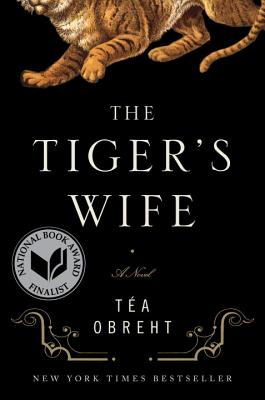
The Tiger’s Wife by Tea Obreht (March, from The Daily Beast list) - A debut novel by one of The New Yorker’s twenty best American fiction writers under forty, this one caught my eye pretty instantly. With a synopsis--and even cover--that promises family, lies, beauty, and love painted on a cultural canvas in the Balkans, it sounds immensely powerful and perhaps even painful to read.

With those four very different works now on my to-read list, I am compelled to shift gears over to commercial fiction and tell you about my very own most anticipated book of 2011.

Most of you have already heard me ooh-and-ahh, but allow me to refresh your memory: debut urban fantasy novel A Brush of Darkness by Allison Pang.

Yes, I have a close relationship with this one--not only was it the first book I acquired (jointly, but still) and I edited it, but the author and I are good friends. But even if I hated her guts (love you, AP! :-p) I would still love her book. Hilarious, powerful, sexy, and imaginative, Brush has it all. And with just 20 days until it hits shelves, I can barely sit still.

The gorgeous bookmarks Allison sent me yesterday do not make it any easier to be patient. What they do make easier though is helping spread the excitement.

Soooooo, in honor of my most anticipated release of the season, I'm giving away a bookmark from my stash to each of the first three people to comment on this post and share with us his/her most anticipated book of 2011!

Come on now, folks. Don't be shy. And don't let my first giveaway (albeit it's a mini-one) be a total bust!!