Showing posts with label future. Show all posts

Friday, July 13, 2012

My Old College Spot--Trident Booksellers & Cafe--Expanding

When I went to college in Boston, you could often find me in one of three places: Boston Billiards, Jamba Juice in the student union, or Trident Booksellers & Cafe on Newbury Street.

My friend Jasmine and I would sit in the back corner of the cafe with our books, studying and chatting, chowing down on homemade pasta dishes and berry cobbler and sipping delicious herbal teas. There was also a teeny tiny little mouse we'd spot occasionally. He wasn't a gross mouse, surprisingly--not like the one that lives behind my kitchen cabinet and won't fall for my traps *shudder*--he was actually quite cute. I named him Hermon. Anyway, when I needed a break from my studies (or from writing an angry email to an ex/boyfriend, which happened twice at that back booth) I would comb the stacks of the bookstore, looking for  nothing in particular, just enjoying the shelves and the bindings they held.

So, when I saw Trident in a headline on Publishers Marketplace today (catching up on my publishing news!), I was terrified that the shop was closing its doors. I was ready to cry. But upon reading the entire headline, I was happy to find that it is, in fact, doing the opposite--the store is expanding, according to the Boston Herald:

Boston’s last independent new bookseller is growing at a time when other neighborhood bookstores and even large chains have succumbed to online book sales and e-readers.

Trident Booksellers & Cafe, an eclectic fixture on Newbury Street since 1984, will be 50 percent larger when it spreads out into the second floor of its Back Bay building by September.

“We just want to expand seating, expand retail — just make everything bigger here,” said manager Courtney Flynn, daughter of founders Bernie and Gail Flynn. “We’re going to be moving sections around, expanding some book sections and also adding a lot of gifts and games.”

The Flynns settled on a bookstore-cafe back in ’84 because there were few places to sit down with a cup of coffee or linger over a conversation or book. And that combination has helped Trident withstand industry changes that have forced the likes of Borders out of business.

Trident’s expansion, which will add 1,500 square feet to its 3,000-square-foot operation, is fueled by a brisk weekend brunch business in its 80-seat cafe. New seats with a Newbury Street view, and a bar with beer and wine taps, will be added upstairs.

“Brunch, especially when the students are here, is very busy,” Courtney Flynn said. “We have long waits, and the whole store is packed, so we’re kind of aiming to relieve that.”

There’s a symbiotic relationship between the bookstore and cafe parts of Trident’s business. “We wouldn’t have one without the other. Books really create the atmosphere here ... and we do sell a fair amount,” Flynn said.

“It’s definitely a dying industry in a certain way, but there’s still a lot of people who enjoy reading real books instead of e-readers, and people who like to browse and discover something new,” she said. “Just touching new books and experiencing that is something we have to offer.”

Bookstores that serve as a broader destination seem to be faring well, said Steve Fischer, executive director of the New England Independent Booksellers Association in Cambridge.

“There’s a lot of stores ... across the country that would kill for room or a license to have a cafe or have a wine bar,” he said.

Still, Fischer views Trident more as a cafe that sells books. “If you go in, you don’t go, ‘Aha, what a great bookstore,’ ” he said.

James Hill, chairman of the Neighborhood Association of the Back Bay, called Trident a “wonderful” neighborhood resource. “It’s great to see they’re surviving in the bookstore world,” he said.

Read the original article HERE

Next time I visit my old stomping ground, you know where to find me.

Monday, July 4, 2011

Borders Announces Next Move

Nearly everyone in the publishing industry has been waiting to find out what's going to happen to Borders since it declared bankruptcy months ago. And now, they've announced their next step.

According to GalleyCat, Borders and the company Direct Brands will be making an "asset purchase agreement":

Borders Group announced last night that it has entered into an asset purchase agreement with Direct Brands, a portfolio company of Najafi Companies.

Under the terms of the agreement, Direct Brands would purchase substantially all of Borders’ assets for $215.1 million, as well as assume $220 million of liabilities, subject to the auction and Bankruptcy Court approval.

If the deal goes through, Borders would operate as a wholly owned subsidiary of Direct Brands, which also owns the Book-of-the-Month Club as well as Columbia House. Hilco and Gordon Brothers have agreed to acquire any store locations that are ultimately not included in the sale and will close those stores in an orderly manner.

The deal is expected to go through by late July.

See the original post HERE

I'm still bummed about the whole Borders situation and how it's impacted the industry, but I must say I'm somehow glad to hear they'll at least be operating in some capacity. I don't like the idea of them closing all the store not involved in the deal, but I guess it could be worse. We'll just have to wait and see what happens, as per usual!

Wednesday, June 22, 2011

Bella Andre Navigates the Evolving World of Self-Publishing

My friend and former colleague, Nyree Belleville (published under the name Bella Andre) sent me an article this morning from the Washington Post, featuring her experience with self-publishing. I am thrilled that she's have such great success with it so I was eager to read the piece.

And then after I read it, I couldn't sit still. The article goes in-depth into the constantly evolving nature of the self-publishing world and, quite frankly, I find it very exciting. Especially since I'm on the forefront of a new self-publishing endeavor with Book Country. There's so much that can happen in this new frontier and if it's done right, authors can not only make a larger profit for themselves but we can also get higher quality work out there.

Yes, self-publishing certainly opens itself up for some less-than-stellar work to be shared, but with the decreasing stigma and all of the great critiquing/writing communities that have cropped up (yes, shameless Book Country plug :-p), the talent that is out there and just hasn't been discovered yet has a better chance to surface. Not only that, but previously traditionally published authors like Bella Andre--who are extremely talented but just not working well enough in the market for a Big 6 publisher to continue taking on with their bottom lines--can still share their writing with the world and still make money doing it.

Sonoma, Calif. — In the winter of 2010, the cheerfully effervescent romance novelist Nyree Belleville suffered the same fate as many a scribe — she was dropped by her publisher. The most any of her 12 spicy romances, penned under the name Bella Andre, had earned was $21,000.

She was, in her Cali-girl vocabulary, “bummed.” She was 36. She had two young children, a husband and a little house in the hills above this picturesque wine-making region.

A thin, pretty brunette who majored in economics at Stanford, Belleville had been a singer in her 20s, but that career died, and now her writing career was so flat line that one of her old publishers had even given her the rights to her first two novels.

So, out of sorts and feeling blue, she sat down one morning and figured out how to self-publish one of those novels, “Authors in Ecstasy,” on Amazon’s e-reader, the Kindle, just to see what would happen. It was a pain. She had zero graphic-arts skills. She had to create a cover, write her jacket copy, figure out formatting and set a price. She did it and forgot about it.

A few weeks later, she checked her account. She had sold 161 copies. She’d made $281. She was astonished.

She rushed to a lunch with three writer friends, with the numbers scrawled on a sheet of yellow paper, and slapped it down on the table. “That moment is burned in everybody’s mind now,” she says. “It was not a tipping point. It was a turning point.”

She put her other old book online and figured out how to place both on other e-readers — the Nook, the Sony Reader, the iPad, Kobo. The next month, her royalties bumped to $474. Giddy, she self-published a new e-book in July. She made a jaw-dropping $3,539. It was like the best thing ever!

“Every day, as the numbers ticked by, my husband and I were floored,” she says.

She got the rights to two more old novels. She feverishly wrote another e-novel, “Game for Love,” about a bad-boy pro football player and his unexpected marriage. She popped it online Dec. 15.

Earnings for that month? $19,315.

In January and February, she e-published a trilogy of young-adult novels she’d written years earlier. She called the first one “Seattle Girl” and chose a new author name, Lucy Kevin, to distinguish it from the sexually explicit Andre books.

Here’s what her first quarter looked like: 56,008 books sold; income, $116,264.

Perched on the edge of a couch in her tiny writing office, which doubles as a playroom for her kids, Belleville says: “Isn’t this just awesome?!”

Self-publishing frontier

There is no good comparison for what’s happening in the frontier world of self-published e-books, because there has never been anything like it in publishing history.

Since Johannes Gutenberg developed the printing press in the 15th century, publishers have pretty much owned the presses, the means of mass production and, therefore, of distribution. Save for tiny “vanity” printings, for the intervening 500 years or so publishing houses have controlled who was able to publish, how many copies were printed, the price and the percentage of profits paid to writers (in modern America, usually about 10 to 15 percent of the list price.)

But riding the crest of the digital revolution, powered by blogs and tweets and social media, and delivered by the explosive sales of e-readers in the past two years, some authors are sidestepping that business model.

They can write, publish, advertise, create covers, set and change prices — and haul in up to 70 percent of the sale price. It is possible for writers marketing a $4.99 self-published e-book to make more per copy than authors with a $24.95 hardcover.

It’s gold-rush crazy, and it has exploded in the past 12 months, the past six months. It’s happening right now. You hear wild stories about novelists — who are supposed to be enduring lives of artistic gratification but monetary penury — blowing past your tax bracket.
[...]

Read the rest of the article HERE

(P.S. it's worth it!)

Bella also just released her newest title, THE LOOK OF LOVE, (it's the first book in a new series) so be sure to check it out!

Friday, June 10, 2011

A Blast from the Past: Encyclopedias

I'd been thinking recently about encyclopedias.

Strange topic to randomly consider, I know. But when I saw my nearly 7-year-old sister this past weekend and how big she's getting, how much she's learning in school, how well she's reading, etc. it also hit me that she's going to start doing research projects soon. Oof.

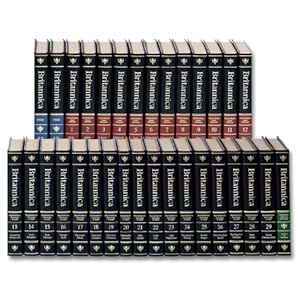
Not sure why that "hit" me like that--I guess because I always enjoyed doing them and learning about something new. I loved flipping through our set of Encyclopedia Britannicas searching for something specific but finding a thousand other random facts in the process. And it made me realize how different the process will be for her than it was for me.

Where I had to dig through thick, hardcover books and scour library shelves for the right tome, she'll be using search engines and finding things at the click of a button. Personally, it struck me as somewhat sad. Yes, there is an abundance of knowledge to be gained out there in this new digital world but you really only find what you're looking for. You don't randomly come across new topics or weird exotic animals to learn semi-useless facts about.

But then I saw a link to an article in the San Francisco Chronicle titled "Britannica Published E-Books for Schools, Libraries."

You can imagine my delight.

Students in elementary school through college can easily access hundreds of high-quality books on the subjects they're studying through a new Web-based e-books service available to schools and libraries from Britannica Digital Learning.

The new service, at ebooks.eb.com, makes it easier than ever to use Britannica's expert-written single-volume titles for research, papers, homework and projects. More than 300 non-fiction digital books are now available. They cover the full range of curriculum, including math, science, language arts, social studies and health.

Each e-book contains the entire text of the print edition and illustrations - many of which are striking, high-definition and full-color. Tables of contents, indexes and glossaries are hyperlinked and fully searchable.

"These books are extremely valuable in digital form. They can be searched by several students at once, making them more accessible and useful than a single bound book," said Michael Ross, senior vice president and general manager of Britannica Digital Learning.

E-books are whiteboard ready, making them ideal for use both in small classrooms and large lecture halls. Schools do not have to spend additional funds on reading devices; these e-books can be accessed 24/7 by students, teachers, and library patrons through any Web connection. All titles in a school's or library's holdings can be searched with a single keyword. Password-protected notes can be saved and the material can be printed.

Britannica plans to add hundreds of additional e-book titles in the next few years. The first 15 pages of each title are available free at ebooks.eb.com. Pricing, titles and more are available at 1-800-621-3900.

Read the original article HERE

I just hope that at least SOME kids use them the "old-fashioned" way.

Wednesday, February 16, 2011

Borders Declares Bankruptcy

Industry insiders have been biting their nails this week waiting for Borders to declare bankruptcy. And this morning, it happened. And just like the death of a sick relative or the inevitability of a dreaded presentation, no matter how prepared for it we are, it still hits us hard.

Publishers Lunch sent out a special email this morning with the details:
Borders formally filed for Chapter 11 bankruptcy protection in a Manhattan Federal Court, listing total debt of $1.29 billion and supposed assets of $1.275 billion. Among the top 30 unsecured creditors listed in the filing, book publishers and distributors are owed roughly $230 million (see below for the full list).

The bookseller says in an announcement that it "has received commitments for $505 million in Debtor-in-Possession (DIP) financing led by GE Capital, Restructuring Finance. This financing should enable Borders to meet its obligations going forward so that our stores continue to be competitive for customers in terms of goods, services and the shopping experience." For customers, they expect to honor the Borders Rewards program, gift cards and other customer programs and they expect "to make employee payroll and continue its benefits programs for its employees."

The company says they had 642 stores open as of January 29. In their press release, they say they expect to close "approximately 30 percent" of those stores, or roughly 200 locations, "in the next several weeks."

Ken Hiltz has been named senior vice president - restructuring of the company. Named advisory firms include Jefferies & Company for financial and restructuring services; DJM Property Management for lease and real estate advisory services; and consultants AP Services for interim management and restructuring services. The company intends to "finalize and implement a store closure, store liquidation and lease modification plan" as already discussed and approved by their board.

President Mike Edwards addresses the obvious in the release, "It has become increasingly clear that in light of the environment of curtailed customer spending, our ongoing discussions with publishers and other vendor related parties, and the company's lack of liquidity, Borders Group does not have the capital resources it needs to be a viable competitor and which are essential for it to move forward with its business strategy to reposition itself successfully for the long term." Elsewhere, the announcement perpetuates the company's illusion that they are but one more step away from a turnaround into "a stronger and more vibrant book seller."

The publisher creditor list comprises:

Penguin $41.1 million
Hachette Book Group $36.9 million
Simon & Schuster $33.75 million
Random House $33.5 million
HarperCollins $25.8 million
Macmillan $11.4 million
Wiley $11.2 million
Perseus $7.8 million
F+W Media $4.6 million
Houghton Mifflin Harcourt $4.4 million
Workman $4 million
McGraw-Hill $3.1 million
Pearson Education $2.8 million
NBN $2 million
Norton $2 million
Zondervan $1.9 million
Hay House $1.7 million
Elsevier Science $1.6 million
Publications Intl. $1.1 million

Readers will recall that we recently tried to frame the coming Borders bankruptcy in the context of the AMS bankruptcy from late 2006. In that filing, the 40 largest publisher creditors were owed $220 million, topped by Random House, which was owed $43.3 million.

See the post on Publishers Marketplace HERE

Now, that's A LOT of dough.

It's intriguing (and a little funny in a sad way) to me how no one outside of the book biz knew this was going on. Inside, we've all been watching Borders steadily decline for years, their debt piling up exponentially, but they've still been a significant part of our business. Somehow they were able to cover it up for the public, a big secret that I wouldn't have expected to be kept so quiet for so long. But under wraps it is no longer.

Borders put out some extra details today too, claiming that "business operations continue as normal." But while their rewards program remains in effect, stores are staying open, online orders are still being processed, etc., nothing is really "normal" about this occurrence. And I can't help but think that this will go one of two ways: either shocked consumers will be motivated by their upset and rush to Borders, trying to help pick up the slack and get the company out of the red zone, or they will be outraged that Borders let it all get so out of control and pull their loyalty completely.

I'm hoping for the former, but I guess my cynical nature is expecting more of the latter...

What effects do YOU think this big news will have on the industry?
RBtL wants to know!

Thursday, January 20, 2011

B&N Lays Off 40+ Book Buyers and More

It's no surprise that in this extremely volatile market, major publishing and bookselling corporations have been struggling. Indies closing, Borders unable to pay its bills, houses reorganizing imprints and laying off employees, etc. The one book biz staple we hadn't heard much from was Barnes and Noble.

Until yesterday, that is, when the news that Barnes & Noble was "restructuring" their office environment by laying off more than 100 staffers spread like wildfire yesterday.

Readers and industry insiders alike are up-in-arms about this new development, not only because of the firings themselves but also because of B&N's cavalier attitude toward the matter.

Here's the skinny from Publishers Weekly:
Barnes & Noble has confirmed what it is calling “a small number of organizational changes this week” that the retailer said were “designed to better align our resources with our business.” The changes appear to be mostly in the buying group. B&N wouldn’t confirm the number or names of people let go, but PW has learned that Bob Wietrak, the well-known v-p of merchandising, and Marcella Smith, director of small press and vendor relations, have left the along with a number of buyers, including cookbook buyer Lee Stern. Reports say about 45 to 50 positions in the buying group were eliminated.

A B&N spokesperson stressed that the company is reallocating resources to areas that are expanding, such as its digital operations, but had no comment on how duties of the departed buyers and others would be divided up. Publishers were shook by the news with the larger publishers wondering who would oversee merchandising, while smaller presses questioned who would be looking out for their interests. The growth in digital is great, one publisher noted, but added "someone has to be in charge of getting books into the stores."

See the article HERE
The news certainly hit home for a lot of people I know, with many of them closely acquainted with some of the laid-off employees. While I don't have any personal relationships with the buyers and other staffers that were let go, it's a sad state of affairs in publishing these days. It's upsetting not only on an individual level but for the future of the industry as a whole...

Thursday, October 7, 2010

Guest Blogger, Dan Cabrera: Don’t Be Spooked by Scary Book News

Halloween is just around the corner, and if that doesn’t raise the hairs on the back of your neck then maybe the constant stream of terrifying news about the publishing industry will chill you to the bone. Just look around. You can’t miss stories bemoaning the sad state of book affairs. Borders appears on the verge of annihilation, Barnes & Noble is in constant turmoil, and eBooks aren’t even safe! It’s enough to give you the heebie-jeebies.

While publishing insiders have been forecasting doom and gloom for some time (and to be fair, everyone—not just the book industry—has been in dire straits recently), there is always some good news to be had. Sure, maybe the news isn’t as sweet as a candy apple, but it’s good news nonetheless. Borders is opening temporary stores for the holidays! Book sales are up overall from last year! And for even more hope, just check out this article that ran in USA Today this week.

The article lists five myths leading people to believe that traditional books, especially big publishing houses, are in their death throes. Most of the fallacies focus on the surging popularity of eBooks and their supposed inevitable dominance over print books. Even self e-publishing is “threatening” to take down print. However, USA Today's Myth No. 1 explains why this isn’t at all true:

Myth No. 1. Publishers are merely printers. That would be news to companies like ours, which don't even operate their own printing presses. Publishers today are in the content business. We develop it; we design it; and we deliver it however our readers want it.

Ah, yes. Content is king. Publishers and editors not only make the books, they make sure those books are worth reading, that they illuminate, educate, entertain. One of the novelties of eBooks means that now anyone can be an author. In fact, Barnes & Noble just introduced a new program that allows anyone with an Internet connection to upload their latest masterpiece, as the Amazon Kindle store currently does. But just because you can write a book doesn’t mean you should.

Publishing houses help filter through all of the noise to bring readers the best of the best. And yes, this may change in the future as self-publishing becomes more sophisticated. And sure, not all books released by publishing companies are exactly “high art.” But as the USA Today article points out, “At every stage of the editorial process, publishers partner with their authors as creative consultants, editors and designers.” After all, they’re professionals for a reason.

So fear not, faithful reader. We may not be out of the woods just yet, but that’s no reason to cower and let the ghouls and goblins run amok. We can do with a scare every now and then, especially when in the end of the day, we always get to go home and curl up with a piece of candy and a good book. Well, unless you’re diabetic.

Thursday, July 8, 2010

E-books, E-books, Everywhere

E-books are everywhere this week.

Borders opened their first eBook Store yesterday with a flourish. They not only offer more than one million titles but also discounted their stock of Sony E-Readers, provided $20 gift cards with the purchase of a Kobo E-Reader, and accepted (and continue to accept) pre-orders for the upcoming low-priced Aluratek Libre eBook Reader Pro (on sale 7/20). In honor of the new online store and e-book application, store locations also handed out free coffee with the presentation of your downloaded Borders app.

It's incentive-tastic.

The Borders eBook Store hook--in addition to all the free goodies and discounts--is the "any device" angle. According to the online store:

With Borders eBooks, you're not tied to reading on a particular device. Our eBook store offers more than one million titles (including lots of free ones!) that you can read on your computer, iPad, and many popular smartphones, as well as on eReaders — devices dedicated to eBook reading.

[...]

Borders offers several free eReader apps so you can browse, buy, and read Borders eBooks on multiple devices.

Our desktop app works with both Macs and PCs. We also have free apps for the iPad, iPhone, and iPod Touch as well as the BlackBerry and Android devices. Each mobile app is specifically designed to work with the unique features of the device on which it is used.
It's surprising to me that it took Borders quite so long to hop on the e-book bandwagon. Barnes and Noble came out with the Nook, and thus launching an e-book store, in late October 2009. Amazon's Kindle and the Sony E-Reader were, of course, already established at that point, but one would think that B&N's swan dive into the e-book biz would've made Borders kick it into high gear, especially with the hits their stores have been taking lately (they closed 200 locations in January, if you recall).

But now that Borders finally has caught up, it'll be interesting to see what happens in the e-book rat race. With two of the major chain stores on board, it's only a matter of time before smaller, indies and specialty stores start creeping into the lead.
The Idea Logical company projects that these specialty stores are truly the future of e-books, not the superstores B&N and Borders have launched. Mike Shatzkin, a blogger for The Idea Logical, wrote an interesting piece on the subject earlier this week:

[...]

It has been a long-established “fact” (although I question if it is still true, as we’ll explain later) that the larger is the selection of books available in a single location, the more powerful is the magnet to attract customers. My father found this out when he was in charge of the Brentano’s chain in the 1960s. Their Short Hills, New Jersey store was the worse-performing store in the chain until they doubled its title selection. And then, like magic, it became the best-performing store in the chain.

[...]

So to that point — one could say to this point — the largest possible selection in one place has been as important to the success of an ebook retailer (obviously: online) as it was historically to a print book retailer with a physical store.

[...]

But there’s another thread of bookselling history on- and offline that I believe will soon become the dominant paradigm for ebook retailing. And, of course (just so you are reminded what blog you’re reading), it fits into the concept of “verticality”.

Publishers have known for a long time that good deals can be made and large sales can be registered through what we call “specialty retailers”. (The label for these sales in a publishing house, and others such as sales to catalogers or premium sales, is “Special Sales.”) The store that sells the tools and materials to refinish your floors can sell you a book to explain how to do it. The store that sells computers and paper and ink can also effectively sell resume or how-to computer books. The garden supply store can sell books on how to make your roses bloom.

[...] [T]he guess from here is that this is about to change and that the change we’ll see in the next few years will obliterate the notion that “all subjects in one place” is a significant marketing advantage, online or in a store. Many book sales, and particularly ebook sales, will move to “contextual” resellers. Your accountant’s web site will sell you the book(s) that help you understand a new tax law or how to ready your business for sale. Your favorite sports web site will sell you the new biography of Alex Rodriguez. And your favorite “Literary Review” newsletter and website will take care of your needs to acquire fiction directly and without your having to shop the vaster stacks of an online superstore.

That is: curated ebook offerings (a click away from the ability to buy lots more content beyond the curated selection) will be featured on every web site with any significant traffic. Delivering purchaseable content — books right now, but ulimately magazines, shorter articles, and relevant audio- and video-content as well — will become a standard expectation of any site (or web community) that aspires to a true mutual embrace with its site visitors. “What I’ve read lately and liked, and why” is a legitimate offering to anticipate from every blogger or commentator with a following.

Read the full article HERE

Shatzkin makes some very compelling arguments here, and his knowledge of publishing history is pretty impressive, I must say. It's certainly a possibility that his prediction turn into a reality.

As always, only time will tell.

In other e-book news...

Amazon was just granted a dual-screen e-reader patent. This new e-book development could cause trouble for B&N's nook, as well as other e-readers on the market. Engadget.com reports:

Looks like the battle for e-reader dominance between Amazon and Barnes & Noble could soon expand beyond the recent spate of price drops and into the courtroom as well: the USPTO just granted a 2006 Amazon patent on e-readers with secondary LCD displays (like the original Kindle's scroller-navigation panel), and several of the claims are potentially broad enough to cover the Nook and many other devices with both electronic paper and LCD displays. What's more, Amazon agreed not to file for any corresponding foreign patents during the four-year approval process and thus wasn't required to publish the patent application -- meaning this is likely a complete surprise to the entire industry. Yeah, it's juicy. Here's one of the claims that could cause problems for Barnes & Noble -- in plain English, it potentially covers any device with both an electronic paper display and a second smaller LCD display next to it.

Learn more HERE

Wednesday, April 7, 2010

The iPad is iN Stores

Yesterday on the subway home, a 10-year-old boy asked me if I was using an iPad. I looked down at my bright red e-reader with the word SONY emblazoned upon it and explained it to him. It only later occurred to me that the iPad is actually on sale to the public now. (I've been a bit of a space cadet lately with too much working and not enough sleeping.)

On sale since midnight on April 3, the iPad has been selling left and right at the low-low price of $499 (yes, that's sarcasm). The PR Newswire released the official sales stats from Apple this week:

Apple® [...] announced that it sold over 300,000 iPads in the US as of midnight Saturday, April 3. These sales included deliveries of pre-ordered iPads to customers, deliveries to channel partners and sales at Apple Retail Stores. Apple also announced that iPad users downloaded over one million apps from Apple's App Store and over 250,000 ebooks from its iBookstore during the first day.

"It feels great to have the iPad launched into the world -- it's going to be a game changer," said Steve Jobs, Apple's CEO. "iPad users, on average, downloaded more than three apps and close to one book within hours of unpacking their new iPad."

Apple ignited the personal computer revolution with the Apple II, then reinvented the personal computer with the Macintosh. Apple continues to lead the industry with its award-winning computers, OS X operating system, and iLife, iWork and professional applications. Apple leads the digital music revolution with its iPods and iTunes online store, has reinvented the mobile phone with its revolutionary iPhone and App Store, and has recently introduced its magical iPad which is defining the future of mobile media and computing devices.

See the article HERE

I'm not much of a math person, but even I can't ignore the fact that Apple made $149,700,000 in a 24-hour period. And that's from iPad sales alone, not including tax or any apps or accessories. It truly is a "game-changer," and not just for Apple and its growing pursestrings.

Though e-book popularity has been growing at a very steady rate with the developments of the Sony E-reader, Kindle, and Nook, the iPad pushes the trend to a whole new level.

Max Jarman, a reporter for the Arizona Republic, put it plainly for his readers:

The trend began long before the iPad. Amazon.com Inc., the world's largest retailer of digital and traditional books, sold more electronic books than paper ones last holiday season.

Analysts don't have a clear picture yet of what the new order will look like, but Amazon aims to have every book ever published, in any language, in print or out of print, available in less than 60 seconds to a Kindle user anywhere in the world.

The new era will bring out-of-print books back to life, making obscure titles, as well as current best-sellers, available on demand.

The pace of change, hastened by the iPad and numerous other devices, is likely to accelerate.

Not even counting the projected 2 million iPads to be bought this year, analysts estimate that 6 million electronic readers will be sold in 2010 and 19 million in 2013. In five years, more than 100 million could be in use, according to the Yankee Group, a Boston-based market-research firm.

As the e-readers multiply, they are likely to get cheaper, making them a must-have
electronic device.

The shift is expected to have far-reaching effects, touching not only book shops and online stores but the entire publishing industry.

Read the rest of Jarman's piece HERE


I gotta admit, I'm not excited.

Friday, October 2, 2009

A Librarian Changes a Life

With all the negative and disturbing book news I've been sharing lately, I thought it was time for something hopeful.

NPR reported on a human-interest story today about Olly Neal (left with daughter Karama) and Mildred Grady. As a young boy growing up in the 1950s, Neal hated school and when cutting class one day stumbled into the school library. He found a book on the shelves that piqued his interest, smuggling it out of the library in his shirt so no one would know he was reading. But Grady, the librarian at the time, caught on and was determined to help foster Neal's love of reading.

Read the NPR story HERE and find out what Grady did to help Neal.

I love stories like this--I don't hear them often enough these days. It rejuvinates my faith in people and in the future of the book to know that there are still, and have always been, people who truly care.

If you have a similar (or not-so-similar) hopeful story to share, please comment!

Thursday, October 1, 2009

Them: "Save a tree, Read (and watch) a Vook!", Me: Umm, NO

Simon and Schuster announced this morning that, together with Atria Books, they've created a "new and innovative way to read"--the Vook.

A file that combines text and video to create a single story, vooks are meant to be played either on your computer or handheld device, such as an iPhone or iPod Touch. The S&S press release tells us more:


NEW YORK, NY and EMERYVILLE, CA, October 1, 2009 — Beginning today, people can enjoy an entirely new and innovative way to read. The vook blends text and video into a single, integrated and uninterrupted reading and viewing experience, enabling readers to seamlessly read, watch, and enjoy both text and video at the same location on their screen. A state-of-the-art advancement in digital book technology, a vook uses high-quality, professionally produced video to add depth to the practical information offered by nonfiction in a way that static pictures or illustrations could not previously accomplish. For fiction, vooks use text and video interdependently to advance the plot and enhance the sense of place.

Four vooks are being published today by Atria Books as part of a partnership between Simon & Schuster, Inc., and Vook, who jointly announced today’s news. The inaugural vook titles are available in two formats: standalone mobile applications for the iPhone and iPod touch (at the Apple App Store), or as Web browser based editions (www.simonandschuster.com/aboutvook, and http://www.vook.com/).

Vooks, hmmm. I thought about this for a little bit before starting this post. I even watched the "What is a vook" video on the S&S website. And I've come to a conclusion: they aren't doing anything for me. Not only because of the love you all know I have for the book as a physical object, but because this idea is not nearly as innovative as S&S seems to think. Sure, it's never been done when it comes to books and it is a new way to "experience" a book, but all I think when I see this is A) instructional video, B) film with subtitles.

People don't want to watch books; they want to read books. If a visual experience is what someone wants, they'll rent a movie or watch TV or even a film adaptation if it's the story they're interested in. Or hell, if you want pictures, get a picture book! But novels being "read" by watching them like subtitles on a television screen? No, thanks.

It makes me so sad to think that everyone is trying so hard to move books into "the future," when books are just fine just the way they are. Sure, e-books are handy for some people, and that's fine. I've made my peace with that. But books in all their tangibility don't need to be improved.

Some say the first book ever written goes all the way back to the Sumerians with their cunieform writing in 2095 B.C. Others say it was Herodotus's "History" in 5th century B.C. The list goes on, all including that little "B.C." While, yes, we have created new technologies in terms of type of material, binding and paper treatments, covers and trim sizes, since those recordings, the core concept of the book has remained the same. Words somehow enscripted on a physical object to be read by others. It's a solid concept, a perennial concept. I understand the need, of course, for electronic archiving techniques, as physical objects do eventually wear away. But why muddy the classic, timeless nature of the book, and the experience of reading, by throwing every new technology into the mix to make a vook?

I don't get it. I don't want to get it. I want my books back please.

Wednesday, September 30, 2009

A Most Disturbing Library

Prep School Gives Away 20k-Volume Library to Build All-Electronic Learning Center(boston.com)

I saw this eye-catching headline on Publisher's Lunch today and had to share it in all its upsetting glory.

Unfortunately, my commentary will be at a minimum since I badly cut my finger this morning and am having trouble typing, but I am simply stunned over here. And all I can say right now is, "A library without books? Are you freaking kidding me?"

This is perhaps the most disturbing electronic vs. physical book issues I've come across yet. I hope it means absolutely nothing for the future of our libraries.

Oh, and be sure to note the $12,000 cappuchino machine they're putting in this "library" instead of books.

Saturday, September 26, 2009

The Future of Publishing

The future of publishing is something that's on all of our minds--or at least it is if we're avid readers. E-books versus hardcopies. Chains versus independents. There are debates going on left and right. 

To be perfectly honest, I try not to think about this topic at all. Basically because it scares the crap out of me. Books are my livelihood. Thinking of my industry dying is just not something I like to consider. But I have to. We all have to be aware of the situation as it is and think about the possibilities. I know some people that believe the point we're at now is an exciting one. It's an opportunity for our generation to reinvent the book, to make the industry our own. I like the sound of that myself, but I have a hard time imagining what we can do it make it all better.

Patrick over at the Vroman's Bookstore blog has some interesting things to say regarding the subject, things I hadn't really thought about before, and he's pointed his readers toward a manifesto written by Ben Stein of if:book.com. Patrick and Ben both focus on the future of the bookstore and of publishing houses, discussing ways for publishers to make themselves more prominent through branding. 

This isn't something I've really given much thought to before. Publishing houses to me serve two purposes: to create the books, both externally and internally, and to distribute the books. I don't like thinking of a house as a brand name. I feel like it would pigeonhole each company too much. Certain imprints certainly have the ability to brand themselves, if small and specialized enough. But it still doesn't feel right to me. 

Specifically, I'd like to comment on Stein's suggestion that bookstores follow the style of shelving books by publisher rather than genre. For me, this just doesn't work. Maybe someday, if publishers were more consistent and if people even associated books with their publishers. But even so, frankly, I don't care who published the book I want to read. I care about the book itself--its content. Yes, it's good to trust a publisher, to know that the books they put out are worthy of your time. But books are such a personal experience and everyone feels differently about them. I'd never go around saying, "ah yes, my favorite book is anything published by St. Martin's Press." That idea is ludicrous to me. I would have a hell of a time in a bookstore that shelved by publisher. I wouldn't find anything. I want to be able to wander around, having a vague idea of what I want and find it. I would be lost--even as someone who actually knows the industry--searching for a random title in a particular publisher's section. 

It's terrifying to think of all the scenarios that could happen. I hate that independent bookstores are closely weekly, that people aren't reading as much as they once did, that I likely won't ever get to open my own bookstore, my dream bookstore. I'm not sure what we can all do about it. It makes me feel ignorant to say that, but it's true. But somehow, despite not knowing how, we have to figure it out.