Showing posts with label trends. Show all posts

Friday, April 11, 2014

New Trend: Reading Alone Together

Apparently there is a growing fad in the literary world. No, I am not talking about New Adult fiction. I am talking about silent reading parties. The trend first started out in Seattle, with the Sorrento Hotel hosting the event on the first Wednesday of every month. Now, a Brooklyn bar called Muchmore is following suit, according to GalleyCat:
A group of readers in New York have formed Silent Reading Party NYC, a once a month event in New York in which readers gather in a bar to silently read in a group setting. 
The next one will take place this Sunday April 13th at Muchmore’s in Brooklyn from 7-9pm. Brandee Younger will play harp music to set the mood. 
Check it out: “Silent Reading Party NYC is a free monthly event that offers people the chance to drink together and read to themselves in the comfort of a quiet bar with cozy couches and good lighting.” 
See the original post HERE

While my initial reaction to the trend was "o_O" I have always enjoyed reading quietly with others around. It's part of why I like going to coffee shops, restaurants, or bars and just sitting there with a book, letting the day move along around me. While this behavior sometimes makes me feel self-conscious, garnering looks from my fellow patrons to the effect of "what a loser" or "umm okay," it's still nice to be lost in my little fictitious world within the real one. So why not do it with a bunch of people who feel the same? If I still lived in NYC, I'd be all over this monthly get-together (even if I would have to trek to Brooklyn).

If anyone out there has taken part in one of these silent reading parties, I'd love to get your thoughts on the experience! I imagine it would be lovely...

Wednesday, November 21, 2012

New Adult Fiction On the Rise

New Adult Fiction.

These three words have been consistently tossed around the publishing industry for over a month now, but even I, someone deeply entrenched in the industry, is unclear exactly what it means. Until now, I had never even heard of the term, despite it first being coined in 2009. It seems that what is now "New Adult Fiction" is very similar to what I've always deemed "YA Crossover," with some differences.

To give us a better look at exactly what this "new" genre is though, GalleyCat has posted a cheat-sheet article, complete with free book samples:

Our Self-Published Bestseller List has been packed with books labeled as “new adult fiction,” a relatively new literary genre. To help GalleyCat readers, we’ve created a quick primer on new adult fiction, complete with free samples of books by leading adult fiction writers. 
The label was first used in 2009 when St. Martin’s Press hosted a contest looking for stories that could be marketed to both YA readers and adult readers. The contest described for new adult fiction as books “with protagonists who are slightly older than YA and can appeal to an adult audience.” 
Last week, new adult fiction author Cora Carmack landed a three-book deal, bringing the term into a New York Times headline. 
To get a definition beyond that simple description, YALitChat.org founder Georgia McBride interviewed JJ, an editorial assistant who worked on the St. Martin’s writing contest. 
Here’s an excerpt:
there is a gap in the current adult market–the literary fiction market–for fiction about twentysomethings. You never stop growing up, I think, but little in the market seems to address the coming-of-age that also happens in your 20s. This is the time of life when you are an actual, legal adult, but just because you’re able to vote (in the US, anyway) that doesn’t mean you know HOW to be one. This is the first time when you are building a life that is your OWN, away from your parents and the family that raised you. It’s a strange and scary place to be. Just as YA is fiction about discovering who you are as a person, I think NA is fiction about building your own life. (Very generalised, of course.) I hope that the creation of this category will allow the adult market to develop and expand in similar ways the children’s market did. 
Free Samples of New Adult Fiction Authors Who Landed Book Deals 
Losing It by Cora Carmack 
Because of Low by Abbi Glines 
Slammed by Colleen Hoover 
Beautiful Disaster by Jamie McGuire 
Easy by Tammara Webber 
 Read the original post HERE

Friday, January 13, 2012

Nonfiction "Trend" Echoes Common Romance Trope

When scanning the web for something to blog about today, I saw the headline "Readers fascinated by Navy SEAL books" on USA Today's Books section.

I'll admit to rolling my eyes.

This is old news
, I thought to myself. Why is this being mentioned now?

I clicked through to find out, only to see that the piece was featuring a nonfiction book entitled American Sniper: The Autobiography of the Most Lethal Sniper in U.S. Military History.

Upon seeing this, I went through five emotional stages in very quick succession:

1. Intrigued.
2. Bewildered.
3. Straight-up Shocked.
4. Slightly offended.
5. Sad.

Why did I go through this process, you ask?

Well, because Navy SEALs have been popular in the romance genre, particularly the subgenre of romantic suspense, for years and years and YEARS.

Yet, USA Today says of American Sniper:
It's another example of our continuing fascination with U.S. Navy SEALs since their takedown of Osama bin Laden last spring. From 1999 to 2009, the author, decorated U.S. Navy SEAL Chris Kyle, recorded the most career sniper kills in U.S. military history. SEAL Team Six: Memoirs of an Elite Navy SEAL Sniper by Howard E. Wasdin and Stephen Templin, published last May, two weeks after bin Laden's death, rose to No. 15 on the list. SEAL Target Geronimo: The Inside Story of the Mission to Kill Osama bin Laden by Chuck Pfarrer, published in November, hit No. 32.

It's baffling to me that this is seen as a new trend. Romance writers have been exploring the culture and personalities of these same SEALs for ages--Suzanne Brockmann, Sandra Hill, Cindy Gerard, Lora Leigh , and so many others. First truly appearing in the mid-1990s (with Brockmann's Prince Joe), SEALs are such a common theme in romance that it's even considered a trope in the genre.

So, why is it not until the Navy SEAL popularity shifts to nonfiction that the theme gets any real recognition? Yes, I'm grumbling right now.

It was nice to find, however, another recent article, this on by the Washington Post, that shines the limelight on these innovative romance authors as the first to really delve into the SEALs trend. While it too, discusses the real-life impetus for the recent surge in popularity (Osama Bin Laden's capture and death), it does give the romance genre due credit:

Navy SEAL romance novels have proven to be reliable sellers in the romance suspense category, and several have made the New York Times bestseller list, including “Dark Viking” by Sandra Hill, which features a SEAL who travels in time to the land of the vikings, one of seven viking Navy SEAL books she’s written.

[...]

The woman credited with launching the Navy SEAL mini-genre is Brockmann, who decided to feature Navy SEALs in romance novels after reading a magazine story about “Hell Week,” the toughest part of the Basic Underwater Demolition training program that aspiring SEALs are put through. Less than a third typically make the final cut.

[...]

Romance authors “are writing about the human experience for readers today, so whatever setting — the 1600s, another world inhabited by vampires who are hotter than hot — readers still want something that makes sense to them,” said Amy Pierpont, executive director of Grand Central Publishing’s Forever romance imprint.

That desire for realism extends to the female characters, who, unlike heroines in decades past, are not easily swept off their feet. For instance, Natalie Benoit, the heroine in White’s new book, considers SEAL Zach MacBride with wariness: “It wasn’t right for any man to be so dangerous and so sexy at the same time. Her adrenal glands and her ovaries were locked in a shouting match now, the former insisting she needed to run away fast, the latter wishing he’d kiss her again.”

Benoit, like all of White’s heroines, is a journalist who isn’t afraid to venture into dangerous places. And that’s par for the course these days, writers and editors said.

“You definitely get some reader backlash if a heroine is too mild-mannered or too apt to acquiesce to a man’s needs,” Pierpont said.

Pierpont and others believe therein lies another aspect of the SEALs’ appeal: As the female characters have become more high-powered, mirroring the rising education and achievement levels of romance novel readers, the male love interests have had to step it up a notch. A Navy captain might have been dashing enough 20 years ago. But in today’s world, where women are secretaries of state, CEOs, single parents and soldiers, a guy’s got to have more to offer than a pretty uniform. And what man can offer more than a SEAL, the product of the military’s toughest training regime?

“They have all of these abilities that the average guy doesn’t even have,” White said. “They appeal to the side of women who want to know there are really strong men in the world who aren’t afraid to take responsibility. SEALs are not not going to pay their child support. They are not couch potatoes who don’t care. They are active in making the world better.”

In the romance world, the competency of SEALs knows no bounds. “They are trained from Day 1 to notice the tiniest detail,” Melton said. “A man who can pick up on the smallest little nuance is bound to be able to please a woman, if you catch my drift.”

Read the entire article HERE


Wednesday, August 31, 2011

NPR Shares Audience Top Picks for SF/F

As fantasy novels get more and more attention these days through film and TV adaptations (Lord of the Rings, Harry Potter, and Game of Thrones to name a few), people seem more inclined to admit liking fantasy novels in general.

The stigma of "geekiness" or "dorkdom" that seems attached to the genre is fading and the 28-year-old football fan who secretly enjoys Robert Jordan doesn't flush so red when sharing that morsel of information.

I'm loving this new-found confidence, and the fact that NPR released the top 100 audience picks for their favorite science fiction and fantasy novels just buttresses the notion that things are changing. It's not to say that lists like this don't already exist from popular websites/magazines/newspapers/etc, but it's nice to see it front and center like this. (The New York Times actually wrote an interesting piece recently on the topic too.)

That said, let's see what NPR found out:

More than 5,000 of you nominated. More than 60,000 of you voted. And now the results are in. The winners of NPR's Top 100 Science-Fiction and Fantasy survey are an intriguing mix of classic and contemporary titles. Over on NPR's pop culture blog, Monkey See, you can find one fan's thoughts on how the list shaped up, get our experts' take, and have the chance to share your own.

A quick word about what's here, and what's not: Our panel of experts reviewed hundreds of the most popular nominations and tossed out those that didn't fit the survey's criteria (after — we assure you — much passionate, thoughtful, gleefully nerdy discussion). You'll notice there are no young adult or horror books on this list, but sit tight, dear reader, we're saving those genres for summers yet to come.

So, at last, here are your favorite science-fiction and fantasy novels. (And a printable version, to take with you to the bookstore.)

1. The Lord Of The Rings by J.R.R. Tolkien

Tolkien's seminal three-volume epic chronicles the War of the Ring, in which Frodo the hobbit and his companions set out to destroy the evil Ring of Power and restore peace to Middle-earth. The beloved trilogy still casts a long shadow, having established some of the most familiar and enduring tropes in fantasy literature.

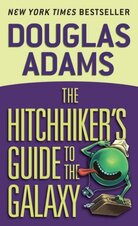
2. The Hitchhiker's Guide To The Galaxy by Douglas Adams

In the first, hilarious volume of Adams' Hitchhiker's series, reluctant galactic traveler Arthur Dent gets swept up in some literally Earth-shattering events involving aliens, sperm whales, a depressed robot, mice who are more than they seem, and some really, really bad poetry.

3. Ender's Game by Orson Scott Card

Young Andrew "Ender" Wiggin, bred to be a genius, is drafted to Battle School where he trains to lead the century-long fight against the alien Buggers.
4. The Dune Chronicles by Frank Herbert

Follows the adventures of Paul Atreides, the son of a betrayed duke given up for dead on a treacherous desert planet and adopted by its fierce, nomadic people, who help him unravel his most unexpected destiny.

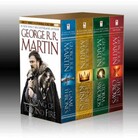
5. A Song Of Ice And Fire Series by George R.R. Martin

As the Seven Kingdoms face a generation-long winter, the royal Stark family confronts the poisonous plots of the rival Lannisters, the emergence of the Neverborn demons, the arrival of barbarian hordes, and other threats.

[...]

10. American Gods by Neil Gaiman

On the plane home to attend the funerals of his wife and best friend, Shadow, an ex-con, encounters an enigmatic stranger who seems to know a lot about him. When Shadow accepts the stranger's job offer, he finds himself plunged into a perilous game with the highest of stakes: the soul of America itself.

11. The Princess Bride by William Goldman

This tale of a handsome farm boy who, aided by a drunken swordsman and a gentle giant, rescues a beautiful princess named Buttercup comes with a slyly humorous, metafictional edge: Goldman claims to have merely abridged an earlier text by one "S. Morgenstern" (actually a pseudonym) and peppers his text with clever commentary.

12. The Wheel Of Time Series by Robert Jordan

At 13 volumes and counting, this sweeping — some would say sprawling – richly imagined epic chronicles the struggle between servants of the Dark One and those of the champion of light known as the Dragon Reborn.

13. Animal Farm by George Orwell

Farm animals overthrow their human owners and set up their own deeply (and familiarly) flawed government. Orwell's mordant satire of totalitarianism is still a mainstay of ninth-grade reading lists.

14. Neuromancer by William Gibson

Gibson's groundbreaking debut novel follows Case, a burned-out computer whiz, who is asked to steal a security code that is locked in the most heavily guarded databank in the solar system. A seminal work in the genre that would come to be known as cyberpunk.

[...]

16. I, Robot by Isaac Asimov

Isaac Asimov changed our perception of robots forever when he formulated the laws governing their behavior. In I, Robot, Asimov chronicles the development of the robot through a series of interlinked stories: from its primitive origins in the present to its ultimate perfection in the not-so-distant future — a future in which humanity itself may be rendered obsolete.


Check out the complete list HERE

Other authors on the list? Robert A. Heinlein, Anne McCaffery, Patrick Rothfuss, Ray Bradbury, Neal Stephenson, Roger Zelazny, and Brandon Sanderson.

What is YOUR favorite science fiction/fantasy novel??

Saturday, April 23, 2011

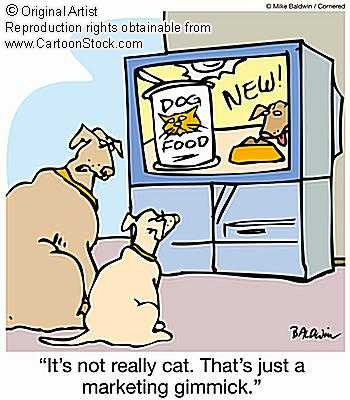
Are Gimmick Books Taking the Place of Good Fiction?

As the book publishing industry evolves as whole, so do the books that comprise it. Fiction, history, memoir, travel, children's books--they're all still being written and being read. But there's a new kid on the block that takes these classic genres and twists them into something showier--the Gimmick Book.

We all know what gimmicks are--some unique scheme to catch people's attention in one way or another. Writers have taken to relying on more than just the merit of their stories these days, using gimmicks to make them stand out in the congested market. For example, the blank book that was buzzing around the book biz recently--What Every Man Thinks About Apart From Sex--is not only a funny idea, but a clear gimmick as well.

Caryn James at The Daily Beast explores the Gimmick book in more detail:

Those live-action newspapers from the Harry Potter books and films—with moving and talking images on the page instead of old-fangled still photographs—don’t seem like a stretch today. They’re more like a prototype for the near future. Soon we’re likely to see a first-rate literary novel written expressly for the iPad or whatever higher-tech device comes next. We already have video books, cross-bred from e-books, and extra features. How can plain ink-on-paper compete with reading as an action sport?

We have entered the Age of the Stunt Novel, literary fiction that relies on gimmicks: photos splashed throughout the text, codes for your smartphone, stand-on-your-head structures, anything that screams “Look, this isn’t a boring old book.”

From Joyce and Beckett through Georges Perec, playing with form is nothing new, of course. The experimental novels of the 1970s turned stunts into a new genre. In Walter Abish’s Alphabetical Africa, for one, all the words in the first chapter begin with the letter A, expanding in chapter two to include words beginning with B, and so on. What we’re seeing now doesn’t come with the same rigorous artistic principles.

The impulse behind today’s shift is partly commercial. You can’t blame frantic authors, stranded in the land of tumbling sales, closing bookstores, and miniscule e-book royalties. But the dynamic also flows, perhaps unconsciously, from the powerful influence of the Web and the way we juggle several things at once, watching online video or TV while texting or checking email and talking on the phone. That multiplicity is creeping into novels. [...]

Read the rest of the article HERE

James goes on to give an in-depth analysis of several gimmick books, asking the questions "but is it good fiction?" Some of the titles he explores are The Lover’s Dictionary by David Levithan, 13, Rue Thérèse by Elena Mauli Shapiro, and The Object of Beauty by Steve Martin.

Wednesday, April 13, 2011

Guest Blogger, Dan Cabrera: Romance In the Romance Section: Do Couples Find Love in Bookstores?

Reading is often a solitary experience. You cozy up by the fire in your big comfy chair, wrapped in your favorite Snuggie, a mug of hot cocoa at your side. You creak open that hardbound copy of Anna Karenina and find yourself enraptured by the philosophical musings on subsistence farming. Oh, the joys of reading!

That might not sound like the most exciting Saturday night, but for many readers it can beat going to a club or hitting up a local bar. There’s no getting around it: bookworms have a reputation. Sure, there’s the sexy librarian thing, but that seems to be the exception to the rule.

Avid readers are often depicted as anti-social nerds wearing Coke-bottle glasses. There’s even the word “bookish,” which doesn’t exactly have the best of connotations. The OED lists one definition of the word as “Acquainted with books only.” Book lovers clearly do not get much love.

Or do they? A recent Slate article suggests that bookstores are a hotbed of romantic activity. The article focuses on Brooklyn independent bookstores and how they are a great pickup spot:

Bookstores are magnets for people with an hour to kill, and isn't that when one's eyes are most likely to wander, to scan other people's faces for signs of friendliness? The wide tables of alluring, face-up hardcovers and paperbacks invite lingering fingers and quiet conversation. Surely, Brooklyn's single population was using the bookstore (and others like it) as a backdrop for finding true love.

There is something romantic about bookstores, maybe now more than ever. Like the record store, a bookstore is where you will find aficionados and true fans—people who share your interests and passions. And like record stores, bookstores are quickly becoming a thing of the past.

But is a bookstore just a quieter bar (one without the social lubricant of alcohol, of course)? Like I mentioned above, book nerds tend to prefer getting lost in a novel, not in someone’s eyes. Would fiction fans or graphic novel groupies have the nerve to strike up a conversation with a complete stranger?

I can barely talk to people I know, and the thought of approaching a stranger in a public place makes me break out in hives. Add to that the possibility of flirting and you’ve got yourself a Code Blue. In a bookstore you are completely out in the open. There is no loud music, no throng of people (unfortunately) to slink into. There’s you, the books, and the cashier who desperately hopes you will buy multiple copies of the The Modernist Cuisine at full price.

Then again, maybe a bookstore isn’t such a bad place to find love after all. If you strike out with your pick-up line, just go behind the stacks and hide your face behind an over-sized atlas. If you like a particular genre, find its section and chat up a fellow fan (If you’re in the horror section here’s a line, free of charge: “Talking to you is scarier than this whole wall of books. Please go out with me.”) If finding love in a bookstore is a possibility, it might be the best reason to forsake Amazon entirely.

Have you picked anyone up in a bookstore? Have you ever found the Barnes to your Noble? If you have, please let me know. I’ll be parked in front of the Self-Help section, waiting.


Monday, March 8, 2010

The YA Bandwagon is Getting a Lil Crowded

With the success of books like Harry Potter, Twilight, The Book Thief, The Sisterhood of the Traveling Pants, and The Absolutely True Diary of a Part-Time Indian, we all know that the YA market is exploding.

And, of course, crossover potential has multiplied, and now everyone wants in. Susan Carpenter of The LA Times has some interesting things to say about the recent genre developments:

It used to be that the only adults who read young
adult literature were those who had a vested interest -- teachers or librarians or parents who either needed or wanted to keep an eye on developing readers' tastes.

But increasingly, adults are reading YA books with no ulterior motives. Attracted by well-written, fast-paced and engaging stories that span the gamut of genres and
subjects, such readers have mainstreamed a niche long derided as just for kids.

Thanks to huge crossover hits like Stephenie Meyer's bloodsucking "Twilight" saga, Suzanne Collins' fight-to-the-death "The Hunger Games" trilogy, Rick Riordan's "The Lightning Thief" and Markus Zusak's Nazi-era "The Book Thief," YA is one of the few bright spots in an otherwise bleak publishing market. Where adult hardcover sales were down 17.8% for the first half of 2009 versus the same period in 2008, children's/young adult hardcovers wer
e up 30.7%.

"Even as the recession has dipped publishing in general, young adult has held strong," said David Levithan, editorial director and vice president of Scholastic, publisher of "The Hunger Games," as well as of J.K. Rowling's Harry Potter books, the series largely credited with jump-starting this juggernaut of a trend.

"You go on the subway and see 40-year-old stockbrokers reading 'Twilight,' " said Levithan, himself a YA author. "That wouldn't have happened five years ago."

Read the rest of the article HERE

Anyone who knows me is aware that I'm kind of a YA freak. I love it. I could read YA forever and be perfectly content. And while I've been obsessed since it was actually age-appropriate, I must admit I'm fearing the current state of YA a little bit.

It's true that the YA market is one of the strongest markets in the industry right now. It's growing in subject, audience, and style. Yes, it's a fabulous thing. But I feel like so many adult authors are just jumping on the bandwagon. They don't have a YA vision. They take an adult idea--often on that didn't sell for adults--and just adapt it for the kiddies. Everyone wants to write YA because it's what's selling. And frankly, that's just depressing.

What makes YA so wonderful is the power it can give a reader, the comfort, the reminiscence, the life lessons. The books you read as a child and as a young adult shape who you become. Or at least that's what I believe. They teach you how to live and sometimes how not to live. But when everyone and their mother is writing YA, it's so powerful anymore. The more the market is flooded with YA-converted authors, the more sub-par YA there is on the shelves. There's something so special about a good YA novel, and I'l admit that I'm scared that quality is going to start to fade.

Thursday, March 4, 2010

Attack of the Mash-Ups!


It all started with Pride and Prejudice and Zombies. Then came Sense and Sensibility and Sea Monsters. Now, there are a whole slew of similar paranormal mash-ups coming down the pipeline.

USA Today posted an article earlier this morning to their website about the recent phenomenon:

It has been a year since Pride and Prejudice and Zombies was unleashed upon the unsuspecting masses.

Rather than running for their lives, readers ran to bookstores, making the quirky collaboration between Jane Austen and Seth Grahame-Smith a huge hit, with more than 1 million copies in print.

With the surprising success of that first literary mashup from Quirk Books, there has been no stanching the flow of bloody titles featuring classic literary icons doing battle with B-movie demons.

Sense and Sensibility and Sea Monsters followed Zombies last year. Pride and Prejudice and Zombies: Dawn of the Dreadfuls, a prequel by Steve Hockensmith, will walk among us starting March 24.

In Sherri Browning Erwin's Jane Slayre (Gallery Books), hitting stores April 13, Charlotte Brontë's plain Jane Eyre is an indomitable zombie killer.

We've seen gimmicky titles like Adventures of Huckleberry Finn and Zombie Jim (Coscom Entertainment) and Queen Victoria: Demon Hunter (Eos) jump on the bandwagon.

But is the trend threatening to jump the shark, as well?

"There are so many classics to explore and so many ways people are approaching mashups. I think it has a long way to go before it exhausts itself," says Slayre author Erwin.

Zombies has had the best showing on USA TODAY's Best-Selling Books list, rising to No. 24. Sea Monsters, with a very respectable 375,000 copies in print, peaked at No. 100. But Queen Victoria and Zombie Jim failed to make the list's top 400.

"We're having discussions on how far we can push this formula," Quirk publisher Jason Rekulak says. "What I don't want to do is something like The Scarlet Letter and Dinosaurs, where you just take a classic because it's a classic and add an element because it's an element."

Read the rest of the article HERE
It's tough to argue though that they aren't already doing just what Rekulak fears. I haven't read any of these mash-ups yet myself, but the concept seems clear enough to me. An author takes a classic novel, adds a pBlockquotearanormal element, and spins the story so that it works on a brand new level.

While creative and certainly entertaining, I think that "[taking] a classic because it's a classic and [adding] an element because it's an element" is exactly what these books do. It's the whole point, isn't it? They're taking something old and making it new again.

I won't deny that the idea is a clever and exciting one. When Pride and Prejudice and Zombies hit the shelves, I was horrified, but also strangely compelled. It was such a unique take on classic literature that I couldn't help but admire the person who came up with the idea. But now, the market is being flooded with similar mash-ups. They come up at editorial meetings all over New York every week, but don't really have a leg to stand on most of the time.

So, how long can a trend like this last? Zombies was such a hit because it was such a new and different concept. Now, the novelty has worn off. Or it will by the end of the year with all the upcoming publications scheduled.

What then? While, yes, there are more classics out there and more ways to "zombie them up," it's going to get old real quick. Readers are going to get sick of books that take someone else's idea and change it, rather than come up with something totally fresh.

Do you read mash-ups? Tell us what you think!