Showing posts with label e-books. Show all posts

Friday, March 9, 2012

Guest Blogger, Gloria Loman: Government Drama. Again.

It's been a while, Booklanders! But when I heard about the DOJ's lawsuits against five major publishers and Apple yesterday, I just couldn't keep my trap shut any longer.

GalleyCat sums up the sitch:
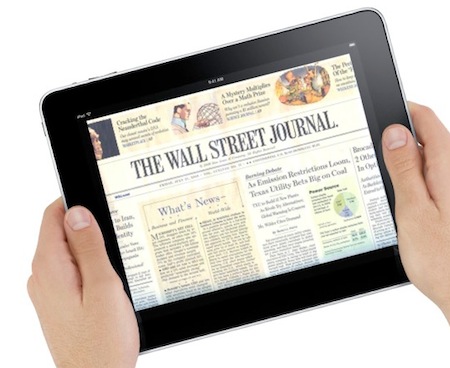
According to a bombshell report in the Wall Street Journal, the Department of Justice could sue Apple and five major publishers for breaking antitrust laws with agency model pricing for eBooks.

A number of civil lawsuits have also been filed against Apple, Simon & Schuster, Hachette Book Group, Penguin Group (USA), Macmillan and HarperCollins for allegedly colluding to fix eBook prices in 2010. Some of these publishers have already spoken with the DOJ in hopes of striking a settlement before the case ever reached court.

Here’s more from the article: “William Lynch, chief executive of Barnes & Noble, gave a deposition to the Justice Department in which he testified that abandoning the agency pricing model would effectively result in a single player gaining even more market share than it has today, according to people familiar with the testimony. A spokeswoman for Barnes & Noble declined to comment.”

If you want to explore some of the legal issues behind the potential suit, consumer rights firm Hagens Berman filed the first agency model lawsuit in 2011–alleging that the agency model for eBook pricing is “in violation of a variety of federal and state antitrust laws, the Sherman Act, the Cartwright Act and the Unfair Competition Act.”

In court filings, the firm speculated that damages “could total tens of millions of dollars.”

Read the original post HERE

Now, let me just say...what the??

Ridiculous, if you ask me (not that anyone ever actually does. I offer my two cents pro bono!). If the book biz as a whole agrees that changes need to be made to agency models or pricing models of any kind, then maybe there's a good reason for it. Maybe the reason such big players are on the same side of this e-book issue is because it's what's best for the industry.

I know, I know, there's more at play here than e-book prices. It comes down to whose selling the e-books and a possible monopoly situation (or at least that's this critic's understanding). And I can see how some people might think publishers and Apple are in "cahoots" but really, let's think about it for a second people. Apple doesn't hold all the e-book cards in the business. Have you heard of a little company called Amazon? Seriously. A new pricing structure industry-wide will change things for all players, not just one.

I see it the way the pubs do, in this case, when they "told investigators that the shift to agency pricing enhanced competition in the industry by allowing more electronic booksellers to thrive" (WSJ).

That's the important piece here, people. Books. Selling more books so the industry can thrive as one.

Just let people read their damn books in peace. The pros will figure out what's best for this changing market. Let's cut the government drama.

Wednesday, March 7, 2012

Judy Blume Moves to the 21st Century, E-book style

Ahhh, Judy Blume....

Like many women my age, I've read my share of her books. My mom awkwardly gave me a copy of Are You There God? It's Me, Margaret when I was ten, to prepare me for "womanhood." It was kind of a cop out in a way, but I'd probably do the same to my daughter, if I ever have one. Why? Because it did actually help. I still have it on my shelf at home, in fact. I learned a lot from Judy Blume. As have likely millions of girls. There's even a book of essays out there called Everything I Need to Know About Being a Girl, I Learned from Judy Blume.

Truth.

Anyway, all that said, it made me smile today to hear the news on GalleyCat today that her books are finally coming out as e-books:
Random House Children’s Books is publishing 13 eBooks from children’s author Judy Blume. The first 10 books will be available on March 21st in the U.S. and Canada.

This includes classic books like Are You There God? It’s Me, Margaret; Deenie; Blubber; and Tiger Eyes. Later this year, Random House will release eBook editions of The One in the Middle Is the Green Kangaroo, Freckle Juice, and The Pain and the Great One, a picture book.

Blume had this quote in the release: “This is an exciting day for me. I’m happy that my readers, many of whom have been patiently waiting, will now be able to choose which format works best for them to enjoy their favorite books.”

Beverly Horowitz, VP & Publisher, Delacorte Press Books for Young Readers, stated: “Judy Blume’s voice has universal appeal. Her honest and witty books will continue to encourage reading, with an expanding reach in this format.”

See the original post HERE

With this digital age upon us and the growing popularity of e-reading, it's becoming more and more important to ensure that important books like these, books that can be so impactful and comforting while coming of age, are available in a variety of formats.

While, sure, some of the things discussed will be outdated here in the 21st century--they were outdated even when I read them--the core concepts are the same. And if that can help even one girl be more confident about growing up, well then I say it's worth it. Bring on the Judy Blume e-books.

Wednesday, November 9, 2011

Amazon Lending Library = FAIL

Since I've been living under a big rock called "Pre-Book Country Launch" for the past week, I just heard news of Amazon's recent foray in the library world. And I kind of wish I hadn't.

I like Amazon for its ease of shopping and quick delivery. I don't like Amazon for its requirement of proprietary DRM on Kindle and the way its trying to monopolize that aspect of the industry. I had thought I was going to give Amazon another "pro" on my little pro-con list when I first got word of the lending library endeavor. But then I kept listening.

I expected the Kindle Lending Library to be much like the Nook's Lend Me feature, something which I haven't gotten to experiment with yet given none of my friends have Nooks (that I know of, at least!). But the concept is brilliant. I'd love to be able to share eBooks with friends, just as I do with print books. It's one of my favorite ways to spread the love.

But much to my dismay, the Kindle Lending Library is only available to Amazon Prime members. Which means, there's an approximately 80-dollar price tag on that sucker. And that's not all: members can only borrow one book per month. So, really, you aren't borrowing an e-book at all. You're paying over $6.50 to read an e-book that you can't even keep.

Sure, a Prime membership gets you other features like deals on shipping from Amazon, etc., but for users who strictly wanted to partake in the library? It's no longer an option. For those readers, it makes more sense just to purchase the e-book and then have it at their fingertips to read whenever they want.

Amazon FAIL.

Monday, October 31, 2011

WSJ Adds E-Books to Bestseller List

If anyone is still arguing that e-books are a passing fad, last Friday's announcement of the Wall Street Journal adding an e-book section to their bestseller list should make them think twice.

According to Publishers Lunch, this past weekend marked the inaugural weekend edition:

Starting [Saturday, October 29, 2001], the WSJ's Weekend edition will feature their own ebook bestseller lists. Like the NYT lists, the Journal will present both ebook-only lists for fiction and nonfiction, as well as combined print and ebook lists in both categories. All titles are eligible--self-published, children's, backlist, etc.--as long as they have a minimum price of 99 cents or higher.

Nielsen BookScan is aggregating the data for the WSJ, drawing on what the release calls "all major retailers," said to include Amazon, Nook, iBookstore, Sony and Google eBooks among others.

Like the other WSJ charts, the new lists will be positional only, and will not reveal actual ebook sales. Nielsen declined to indicate if or when ebook data from major retailers might be incorporate into the BookScan subscription product.

Amazon is in talks with Chinese regulators to sell their Kindle devices in China, according to a report from Soho IT. Amazon senior vp Marc Onetto is quoted as saying that talks are centered around copyright issues, and that there is no timetable for when the devices might launch in China, if at all. Amazon recently dropped the Joyo name (after the company it acquired in 2004 to gain a foothold in China) and rebranded its Chinese website to Z.cn.
Reuters

Atria will release Gary Schwartz's THE IMPULSE ECONOMY: Understanding Mobile Shoppers and What Makes Them Buy as a "smart book", with 1,000 copies stickered with an RFID chip that allows mobile phones to access special content.
Release

Finally, in the latest e-reader rumors department, a grammatically-challenged source tells the Digital Reader that Barnes & Noble will announce its newest Nook Color on November 7 and is expanding their in-store Nook boutiques in preparation.

Read the original post HERE

Topping these first WSJ e-book lists were Bonnie by Iris Johansen (fiction e-book) and Killing Lincoln by Bill O'Reilly (nonfiction e-book).

Thursday, June 23, 2011

A Harry Potter Update

Ah-ha! We have a "Pottermore" update--Harry Potter is finally going to e-book format, according to The Washington Post:
Author JK Rowling announced that Harry Potter fans will be able to read her famous series in e-book form for the first time, starting this fall.

In an announcement launching Pottermore, an interactive Harry Potter Web site and online store, Rowling said that the full series will be available in digital form. The books will be in several languages and will work on any electronic reading device.

The site will also sell digital audiobooks of the novels.

Through the site, Rowling will also share tidbits from the Harry Potter universe that she’s been “hoarding” through the years, she said in a video announcement. While the author has said she will not be writing any more novels about Harry Potter, she has hinted in the past that she would like to write an encyclopedia about the books’ universe. It seems Pottermore will be an outlet for Rowling to share backstory and other facts that did not fit into the seven-book series.

Pottermore will be open to a million users on July 31 — Harry Potter’s birthday — and open to the public in October. Fans can already submit their e-mail addresses on the site to be notified when registration opens.

Read the original post and see a video of Rowling's announcement HERE


Friday, June 10, 2011

A Blast from the Past: Encyclopedias

I'd been thinking recently about encyclopedias.

Strange topic to randomly consider, I know. But when I saw my nearly 7-year-old sister this past weekend and how big she's getting, how much she's learning in school, how well she's reading, etc. it also hit me that she's going to start doing research projects soon. Oof.

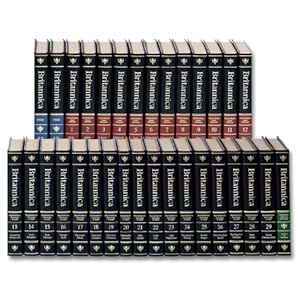
Not sure why that "hit" me like that--I guess because I always enjoyed doing them and learning about something new. I loved flipping through our set of Encyclopedia Britannicas searching for something specific but finding a thousand other random facts in the process. And it made me realize how different the process will be for her than it was for me.

Where I had to dig through thick, hardcover books and scour library shelves for the right tome, she'll be using search engines and finding things at the click of a button. Personally, it struck me as somewhat sad. Yes, there is an abundance of knowledge to be gained out there in this new digital world but you really only find what you're looking for. You don't randomly come across new topics or weird exotic animals to learn semi-useless facts about.

But then I saw a link to an article in the San Francisco Chronicle titled "Britannica Published E-Books for Schools, Libraries."

You can imagine my delight.

Students in elementary school through college can easily access hundreds of high-quality books on the subjects they're studying through a new Web-based e-books service available to schools and libraries from Britannica Digital Learning.

The new service, at ebooks.eb.com, makes it easier than ever to use Britannica's expert-written single-volume titles for research, papers, homework and projects. More than 300 non-fiction digital books are now available. They cover the full range of curriculum, including math, science, language arts, social studies and health.

Each e-book contains the entire text of the print edition and illustrations - many of which are striking, high-definition and full-color. Tables of contents, indexes and glossaries are hyperlinked and fully searchable.

"These books are extremely valuable in digital form. They can be searched by several students at once, making them more accessible and useful than a single bound book," said Michael Ross, senior vice president and general manager of Britannica Digital Learning.

E-books are whiteboard ready, making them ideal for use both in small classrooms and large lecture halls. Schools do not have to spend additional funds on reading devices; these e-books can be accessed 24/7 by students, teachers, and library patrons through any Web connection. All titles in a school's or library's holdings can be searched with a single keyword. Password-protected notes can be saved and the material can be printed.

Britannica plans to add hundreds of additional e-book titles in the next few years. The first 15 pages of each title are available free at ebooks.eb.com. Pricing, titles and more are available at 1-800-621-3900.

Read the original article HERE

I just hope that at least SOME kids use them the "old-fashioned" way.

Thursday, March 31, 2011

Guest Blogger, Dan Cabrera: The Books Are All (Copy)Right: A Close Look At The Google Books Settlement

The battle over the fate of digital books rages on. Last week a judge rejected the Google Books Settlement, a proposed agreement between Google and numerous authors whose works were digitized and added to an online database operated by the search giant.

Before the Settlement, a class-action lawsuit had been filed against Google claiming that the company’s initiative of providing a searchable catalog of every book ever published violated copyright law. Most of these books were “orphans,” or books with no clear copyright holder. This includes older and out-of-print works and academic titles. The issue of public domain, however, is a different story. (To find out more about copyright laws and public domain, check out the embedded links. Oh, and this one too!)

What’s the big deal, then? By all appearances it seems that Google is doing the world a service by digitizing books that have fallen off the map. Google’s unofficial motto of “Don’t be evil” seems to fit nicely with their efforts to preserve the world’s literature. But there’s a big distinction between simply not being evil and actively being good. In this case, Google may be committing a sin of omission.

Or rather, a sin of excessive inclusion.

Google’s aim is to add every book—ever—to its online index. One of the main problems the authors, agents, publishers, and librarians have with Google’s efforts is that the company has chosen an opt-out feature. The feature, part of the Google Books Settlement, means authors and copyright holders would have to notify Google if they didn’t want to be included. Kind of like the Do Not Call registry or a subscription you try out but don’t realize you have to cancel after the trial period. It makes life easier for Google, but would mean constant vigilance on the part of publishers. In his ruling last week, Judge Denny Chin noted that an opt-in feature, where Google would have to wait for permission before scanning a book, may be a good compromise. Yet Google may not want to wait.

While Judge Chin remarked that he believed in an accessible, digital library of all books, he was sure to point out that copyright issues are driving this case. When orphan books are added to the Google library, Google often becomes then the sole distributor of that work since no one else seems to be stepping up. This creates a monopoly of sorts, an issue in itself, but it also returns us to the issue of copyright and who owns what.

Copyright is certainly a tricky problem. According to the U.S. Copyright office, an author retains the copyright for his or her lifetime plus seventy years. Granted, there are many facets to that rule, and if copyright was simple there wouldn’t be legions of copyright lawyers.

Copyright is an important part of protecting your intellectual property and making sure an artist or author gets recognition. But for many, recognition isn’t as important as remuneration. Everyone wants to make money off their ideas, and whether that means getting paid for your patent of a motorized ice cream cone or from copyrighting your Elvis sighting, selling your exclusive product is a safe way of bringing in the dough.

The question on many people’s minds: Is Google breaking copyright law?

So far, no lawsuit has been filed expressly for that reason, though part of the original claim against Google hinted at copyright infringement. Google published snippets of claimants’ scanned books, which caused quite a stir with authors.

The Google Books Settlement poses some interesting ideas about copyright and open access. Right now, major publishers don’t seem to be up in arms about Google’s plans. After all, Google has its own ebook store, similar to Amazon and the Apple book store. It is the digital library that is causing more headaches and is the focus of the settlement. The library is, in a way, an open-access database. Publishers both big and small are realizing the benefits of ebooks and the importance of having an online presence.

Some publishers, namely some specializing in STM (Science, Technical, and Medical publishing) have open-access sites where thousands of books and journals are available for free. Of course, they are free if you belong to an institution that pays handsomely for access to the content in the first place. Project Gutenberg has also been offering online versions of works in the public domain for some time. But the point is that the web makes it easy for information to be shared and more and more we are seeing a move to transparency and free dissemination of content.

There are those who believe all content should be free, no matter what. There are also those who believe governments shouldn’t keep any secrets. While these are noble thoughts, there are legal and ethical ramifications of seeing those staunch beliefs carried out to the letter. Bit-torrent and file-sharing sites like The Pirate Bay have been a thorn in companies’ sides for some time (though recently a court ruled that the site was guilty of facilitating piracy). Wikileaks, of course, continues to make transparency a hot topic of conversation.

The debate over digitizing orphan books will also continue, and Google will keep on scanning out-of-print titles and making them available for free. It’s hard to completely object to Google’s efforts to spread information and make books available to readers. For its ever-increasing dominance in our lives, Google has done wonders for the web and, by extension, our lives (guess which search engine was used to research this article?). But by the same token, authors deserve control of their work, not to mention some financial compensation.

In the end, Google may not be allowed to hold exclusive rights to their library, which means other companies or institutions will join the game (see this article from The New York Times for a good overview of the Google Books Settlement and a better look at what might, and perhaps should, happen next). It may not be great for Google, but with millions of free books available at our fingertips, it certainly isn’t bad for readers.

Thursday, February 3, 2011

NYT Bestseller Lists Finally Catch Up to Digital Market

With the popularity of e-books is on the rise it only makes sense for the New York Times to catch on.

Starting February 11th (online) and February 13th (in print), the creators of the famed bestseller list will carve out a place for the "e-book category," according to Publishers Lunch Deluxe:
The NYT's first-ever e-book bestseller lists will appear in print on February 13 and online on February 11 (reflecting rankings for the week ending January 30), as the paper previewed for publishing people at an event this morning. Not only will the paper publish a separate e-book list, but there will also be a hybrid print and e-book bestseller list. A spokesperson said the paper "wanted to provide more comprehensive lists of which books are selling."

Unlike USA Today's approach, the hybrid lists give no indication of whether e-books outsell print editions; a note on their methodology says only that "until the industry is more settled, sales of e-book titles will not be weighted." (This week, 16 of USA Today's top 50 titles sold more units electronically than in print.)

The new NYT lists also skew predominantly to the biggest publishers. Again, the fine print explains why. Print and e format sales are "reported by venues offering a wide range of general interest titles" but specifically exclude "self-published books including single-vendor self-published titles" as well as these genres: "perennial sellers, required classroom reading, textbooks, reference and test preparation guides, journals, workbooks, calorie counters, shopping guides, comics, crossword puzzles."

In other words, the standard rules for the NYT's magic bestselling formula apply, and then some. The self-publishing exclusion currently seems to incorporate Amazon's own titles (their Crossing imprint's translation of The Hangman's Daughter was No. 2 for the week ending 1/31 on the etailer's own list) as well as electronically self-published titles--or else, if you are a suspicious person, the NYT has determined that those titles are disproportionately boosted on Amazon's own list, or cannot be "verified" as the paper says it does with publisher data. (By comparison, the mock bestseller list created by Publishing Trends earlier this week includes many strong-selling self-e-published titles, with three by Amanda Hocking alone. Hocking does not appear anywhere on the NYT's lists.)

The paper does note the lists are a work in progress, stating that, in contrast to a "well-established" reporting of print book sales, "The universe of e-book publishers and vendors is rapidly emerging, and The Times is keeping pace, looking for new ways to account for growing parts of the industry, including tracking exclusively digital self-published titles." The NYT also says sales of advice and how-to e-books and children's e-book titles "will be tracked and ranked at a future date."

As you might expect, James Patterson's TICK TOCK tops both the print and e-book fiction bestseller lists, and thus, also the hybrid bestseller lists. The top seven fiction sellers on the e-book and hybrid lists are identical, with the only significant difference Susan Wiggs' MARRYING DAISY BELLAMY, which makes #8 on the hybrid list, but just #18 on the e-book-only list. There's a bit more variance on the non-fiction side, with the top 4 sellers the same on both lists, while Justin Halpern's SH*T MY DAD SAYS ranking higher (#5) on e-book only than the hybrid list (#8.)

For some further analysis, we reproduced what Amazon's top 20 fiction titles would look like for nearly the same week (in their case ending 1/31 instead of 1/30) if you followed the NYT's parameters and omitted Amazon's publishing program, other self-published books, children's titles, etc.

Going by that comparison, it appears as if the NYT is also throwing out books boosted by heavy price promotions that have them selling for under a dollar. (Amazon's top title by Lisa Gardner, along with Katriena Knight's deep-discounted ebook do not make the NYT list at all.) Six of the top 20 NYT ebestsellers are discounted by Amazon, at under $6:


Amazon/NYT Comparison list
1. Alone, Lisa Gardner (#1 Amzn; -- NYT) (promo price)
2. The Girl with the Dragon Tattoo, Stieg Larsson (#5 Amzn; #2 NYT) $5
3. The Girl Who Kicked the Hornet's Nest, Stieg Larsson (#6 Amzn; #4 NYT)
4. The Girl Who Played with Fireo, Stieg Larsson (#7 Amzn; #4 NYT) $5
5. Tick Tock, James Patterson (#8 Amzn; #1 NYT)
6. Water for Elephants, Sara Gruen (#9 Amzn; #5 NYT) $5
7. Summer at Willow Lake, Susan Wiggs (#10 Amzn; -- NYT) $5
8. The Confession, John Grisham (#14 Amzn; #6 NYT)
9. Cutting for Stone, Abraham Verghese (#16 Amzn; #7 NYT) $5
10. Towers of Midnight, Robert Jordan (#24 Amzn; -- NYT; pubbed 1/31)
11. Where There's a Will, Katriena Knights (#25 Amzn; -- NYT) (promo)
12. Room, Emma Donoghue (#26 Amzn; #9 NYT)
13. The Help, Kathryn Stockett (#27 Amzn; #8 NYT)
14. Cross Fire, James Patterson (#28 Amzn; #10 NYT)
15. Secrets to the Grave, Tami Hoag (#31 Amzn; #14 NYT)
16. Dead or Alive, Tom Clancy (#32 Amzn; #13 NYT)
17. Hell's Corner, David Baldacci (#33 Amzn; #17 NYT)
18. Marrying Daisy Bellamy, Susan Wiggs (#35 Amzn; #18 NYT) $5.49
19. Strategic Moves, Stuart Woods (#38 Amzn; #12 NYT)
20. What the Night Knows, Dean Koontz (#39 Amzn; #11 NYT)

The NYT's combined print and ebook list is more similar to USA Today's approach--except that they still parse fiction and nonfiction, and observe the NYT's other exclusionary rules (adult titles only, etc.) Bearing in mind those broad differences, here are the few titles that stand out as ranking appreciably higher on USA Today's combined print and ebook list than the NYT's. All three are romance novels, which generally rank higher on USA Today's list, which may incorporate Wal-Mart data alongside other common sources:

4. Marrying Daisy Bellamy, by Susan Wiggs (No. 8 NYT)
7. Wild Man Creek, by Robin Carr (No. 12 NYT)
13. Here to Stay, by Catherine Anderson (No. 23 NYT)

See the original post HERE

Tuesday, January 25, 2011

Guest Blogger, Dan Cabrera: "The Office" Walks Into A Bookstore

You booklovers out there who saw last week’s episode of The Office, “Ultimatum,” may have perked up a bit when three characters walked into a bookstore. For a show ostensibly about people working in an industry that is rapidly diminishing or changing (paper sales), a bookstore should be a familiar setting to the characters, and one that could be a goldmine for jokes. It’s too bad the segment failed to deliver.

In the episode, Darryl (Craig Robinson), Dwight (Rainn Wilson), and Andy (Ed Helms) decide to fulfill their New Year’s Resolutions. For Dwight and Andy, that resolution is to “Meet a Loose Woman,” but Darryl’s goal is to simply read more books. Darryl, always the smooth operator, convinces Dwight and Andy that a bookstore is the perfect place to meet easy girls. All you do is ask a “cutie” what she’s reading then ask if they want to hang out—which, according to Darryl, leads to something more than just late-night discussions on who’s your favorite Brontë sister. It’s that simple. (If it’s actually that simple is the topic for another post.)

When the trio arrives at the bookstore they split up, each deciding to take a section to scour for babes. While Andy and Dwight stake their territory, Darryl goes straight to the saleswoman who is selling eBook readers. This is a generic chain bookstore apparently named Owl, which resembles a typical Borders or Barnes & Noble. A quick glimpse at some of the titles in the background doesn’t give away much. In fact, it looks as if some are prop books, though if you look closely you can see a copy of Jonathan Franzen’s Freedom in the background.

The real fun of the scene happens when Darryl is sold an eReader. The only eReader that seems to be on sale is Kobo’s wireless eReader. It’s a bit hard to tell if Kobo paid for the inclusion of their eReader, or if the producers happened to film in a Borders (or, they didn’t want to offend B&N or Amazon). When offered the eReader Darryl hesitates, claiming he is scared to death of the machines. Because he works at a paper company, he argues, these little contraptions can put him out of business. The saleswoman is persistent, and corrects Darryl when he says he heard the device can carry “ten books at once,” when it’s more like ten thousand. Add the fact that the device is so light (“Like a croissant!”) and Darryl is sold.

Dwight and Andy can’t seem to pick up any ladies at the bookstore and when they leave with Darryl they ask to check out his purchase. Darryl, embarrassed, comes up with a clever lie to keep the other two from looking in his bag (I won’t give it away).

And that’s the end of the bookstore. Yes, later we see Darryl enjoying the eReader, still trying to hide its existence from his friends, but The Office has seemed to close the book—if you’ll pardon the pun—on the idea of eReaders. It’s entirely possible Darryl’s eReader will come back to haunt him, but it’s doubtful.

As publishing insiders know, eReaders are turning the book market upside down. Ebook sales are beginning to surpass physical book sales, a frightening prospect for many in the publishing world. Brick-and-mortar chains aren’t faring well, and it would be foolish not to point to eBooks as part of the problem. Paper books are becoming redundant, to borrow some office lingo.

This is ripe territory for The Office. They’ve dealt with publishing at least once before, when the Dunder Mifflin Scranton branch was able to capture a major New York publishing company as a client. For most of the series’ run, the plots focused on the floundering paper company in an increasingly paperless world. The threats of layoffs are a recurring plot device, and this scary prospect is ringing all too true for publishing employees. The idea of a paper salesman abandoning paper books is sacrilegious! It’s traitorous! It can also lend itself to some great comedy. So it is surprising the idea was treated so casually on last week’s episode.

What if, instead, Jim Halpert (John Krasinski) was using an eReader in the office? Obviously this is heresy, and a good portion of the episode could revolve around Jim trying to hide his eReader from Michael. Eventually, Michael would find out, become upset, do something zany and frustratingly embarrassing. But in the end he would realize—as he so often does—that he has to adapt to the world, rather than trying to make the world adapt to him. It would be slightly more interesting, slightly more relevant, and maybe produce some bigger laughs.

Maybe I’m being too hard on The Office. After all, the show isn’t really about paper. (And don’t they sell printers now? Do they even sell paper anymore? And whatever happened to traveling salesman Timothy Olyphant?) The show is about relationships, about average folks trying to get by in this difficult world. The Office is about the awkward, embarrassing, and downright sad trials of everyday life. But it shows us that with a few laughs and some good friends, we can get by and come out on top.

Hopefully the show will revisit books and eReaders. I think there is more to be said there, and who better (and funnier) to say it than The Office?

Thursday, January 13, 2011

Guest Blogger, Meghan Stevenson: Gloves Off in the E-reading Arena

I live in the book world. My friends are editors, agents, publicists, marketers. We all speak the same language, full of pub dates and signatures and e-books.

But I do have friends on the outside. And the other night, I was privy to a very interesting conversation. I was out with five friends of varying professions, and the talk turned to e-readers. I had my Kindle; my friend Josh—who works at a hospital—had his Nook.

As an aside, I must admit I adore my Kindle. If I leave without it, I feel wrong, just like I did when I first got an iPod or a cell phone. I mean, what am I supposed to do, read an actual book? But at dinner Josh’s Nook initially wiped the floor. He showed off the color touch screen and some of the animation his kids’ books had. Everyone appropriately oohed and ahhed. But then I showed people the cartoons from The New Yorker which were crisper. And the text was better.

“How much is it?” Maddie asked Josh.

“$250?” Josh said about his Nook.

“About $150 when you factor in the cover,” I said, hoping that Maddie would choose me. She asked to play with my Kindle, so I handed it over, showing her how to turn the pages and find individual chapters.

“And how much are books?” she asked. I briefly explained the agency model and how publishers are working with Amazon and B&N to sell e-books at reasonable prices. Then the most interesting segment of the conversation came in.

“I don’t want to pay for books,” interrupted our friend Yama. “I just want to read. Can’t I borrow them from the library?”

“I think they’re still working that out,” I explained and she made a face. “But whatever one store or product does, everyone else ends up copying it eventually. So, for instance, a few months ago someone who had the Nook could lend to other people who had the Nook. But you couldn’t do that on the Kindle—though now, you can.” This got nods all around. “So I expect that library lending will come about eventually. But Yama,” I said, “you know that buying books pays the author and me, right?”

This is an interesting point that few people realize. In fact, my best friend (who also works outside publishing) called the other day to crow about finding all of Stephen King’s e-books for free online---clearly stolen or illegally copied. I hung up on him. When he called back, I told him: “My salary just disappeared.”

Here’s the crux: people want content for free. Whether it’s a Britney Spears single, an e-book or a New York Times article, if we can get away with not paying for it, we will. (And I’m certainly no exception.) That’s because largely, our society thinks of piracy like this: Stephen King, hugely bestselling author, rich guy. He doesn’t need my $9.99. The New York Times, they sell subscriptions, they’ll still exist even if I, an individual, read it solely online for free. Britney Spears, she has tons of mansions and concert revenue, she doesn’t need or even get the .99 cents from iTunes, so why should I pay it?

But all artists need people to pay for their content. While Stephen King may or may not need the advance and royalties off his backlist, Scribner certainly does. It has to pay the editor , her assistant, the cover designer, the production editor, the copyeditor, the publicist, and everything else related to the publication of that book that the consumer never sees and often doesn’t even know exists. And that’s where the conflict comes in.

We’re at a precipice in publishing, where the normal consumer like Josh, Yama, and Maddie are buying Kindles and Nooks. If we want to compare the book publishing industry to music, as we do often, I think we’re in 2004 or 2005. That’s the moment where the early adopters and dedicated music lovers met the average consumer, and iPod sales went through the roof. Hopefully, just like music, book publishing will witness a moment where people give up on finding the new Napster or LimeWire and decide just to buy the new single on iTunes because it’s easier. There’s a moment where it becomes easier to pay than to pirate—and that, I believe--among other factors--will keep publishing afloat.

And, as a side note, all the devout readers in my group of “outsider” friends—including the reluctant Yama—preferred my Kindle.

Friday, December 17, 2010

E-Readers: The New Big Brother

I'd never even heard of the EFF before yesterday. But on the morning edition of "All Things Considered," NPR's Martin Kaste opened my eyes to a recent report from the Electronic Frontier Foundation and an e-reader ability I had not yet heard: the devices can--and do--track user reading habits:

E-books are quickly going mainstream: They represent nearly one out of 10 trade books sold.

It's easy to imagine a near future in which paper books are the exception, not the norm. But are book lovers ready to have their reading tracked?

Most e-readers, like Amazon's Kindle, have an antenna that lets users instantly download new books. But the technology also makes it possible for the device to transmit information back to the manufacturer.

"They know how fast you read because you have to click to turn the page," says Cindy Cohn, legal director at the nonprofit Electronic Frontier Foundation. "It knows if you skip to the end to read how it turns out."

Checking Someone's Alibi, Tracking A Device

Cohn says this kind of page-view tracking may seem innocuous, but if the company keeps the data long-term, the information could be subpoenaed to check someone's alibi, or as evidence in a lawsuit.

And it's not just what pages you read; it may also monitor where you read them. Kindles, iPads and other e-readers have geo-location abilities; using GPS or data from Wi-Fi and cell phone towers, it wouldn't be difficult for the devices to track their own locations in the physical world.

But it's hard to find out what kind of data the e-readers are sending. Most e-book companies refer all questions about this to their posted privacy policies. The policies can be hard to interpret, so Cohn and the EFF created a side-by-side comparison. It's just been updated to include Apple's iPad.

See the entire piece or listen to it HERE

I already knew, of course, that Google, Amazon, and pretty much every online search engine or online retailer tracks our activity in order to give us the most relevant information for each individual. But I had no idea that some e-readers were able to gather so much additional information on users. Something about that fact feels very, very wrong to me. Intriguing, I'll admit, but wrong.

ReadWriteWeb tells us more:

Since WikiLeaks released 250,000 secret U.S. government cables a little over a week ago, the world is suddenly terribly concerned about what we may or may not be reading. Some countries - and some U.S. government agencies - are blocking their people from accessing the Wikileaks site, for fear of reading.

So the EFF's E-Book Buyer's Guide to E-Book Privacy comes at a good time - not just for holiday shopping, but for those of us that want to read that other famous trove of classified materials, The Pentagon Papers (or, okay, perhaps read other things too) with some assurance of privacy.

EFF's guide provides a review of the privacy policies of various e-book providers - both hardware and software makers - from the Amazon Kindle, to Google Books, to the Internet Archive. The report is based on what the policies say themselves, not on how they're enforced in practice.

[...]

The data that many of these e-readers gather does help them deliver a better experience in a lot of ways. iBooks needs to track the last page you've read, for example, if you expect it to be able to sync across devices. Amazon tracks what you search and purchase in order to make suggestions for items you might like.

But one's reading habits, perhaps because reading has been such a private endeavor, have typically been closely guarded. We may want to disguise the fact we never finished Ulysses (I confess). We may want to disguise having read all the Twilight novels - twice - (I haven't, I swear) or having a penchant for really low brow science fiction (no comment). And of course, we may want to read books that are politically unpopular.

Read the entire article HERE

Not only do these revelations surprise me (they probably shouldn't at this point, but they do!), but the timing is quite ironic as well. I've actually been thinking lately about trying out my e-reader for some actual book-reading, instead of just word document viewing--editing and reading friends' manuscripts for feedback. But this privacy breach is making me think twice. So much of what we do is already being watching and recorded by "Big Brother" types that extending their reach into reading--something I consider a very personal and private endeavor--disturbs me to my core.

Thursday, December 9, 2010

Between the Sheets: Romance Heats Up E-book Sales

I've always known that the romance books were not only something I enjoy but also that the genre was one of the best-selling segments of the book biz. It also was kind of a given that romance readers would be some of the top buyers of e-books, given the unfortunately stigmatized nature of the genre and the flashy, less-than-subtle covers.

But I'll admit that I never expected the front page of the New York Times to tout the trend. I gotta say it made me grin like whoa when I heard about this morning's article (I also adore Sarah Wendell of Smart Bitches, Trashy Books, so that didn't hurt either!):

Sarah Wendell, blogger and co-author of “Beyond Heaving Bosoms,” is passionate about romance novels.

Except for the covers, with their images of sinewy limbs, flowing, Fabio-esque locks or, as she put it, “the mullets and the man chests.”

“They are not always something that you are comfortable holding in your hand in public,” Ms. Wendell said.

So she began reading e-books, escaping the glances and the imagined snickers from strangers on the subway, and joining the many readers who have traded the racy covers of romance novels for the discretion of digital books.

If the e-reader is the digital equivalent of the brown-paper wrapper, the romance reader is a little like the Asian carp: insatiable and unstoppable. Together, it turns out, they are a perfect couple. Romance is now the fastest-growing segment of the e-reading market, ahead of general fiction, mystery and science fiction, according to data from Bowker, a research organization for the publishing industry.

Publishers and retailers, spying an opportunity, have begun pursuing in earnest those enthusiastic romance readers who have abandoned print for digital.

“Romance,” said Matthew Shear, the executive vice president and publisher of St. Martin’s Press, which releases 40 to 50 romance novels each year, is “becoming as popular in e-books as it is in the print editions.”

When “Maybe This Time,” a lighthearted ghost romance by the best-selling author Jennifer Crusie, went on sale in August, it sold as many e-books as hardcover books in its first week, Mr. Shear said, a phenomenon that he began noticing this summer with other romance titles.

At All Romance, an online retailer that sells only e-books, sales have more than doubled this year, and the most sought-after titles are usually the raciest.

“It’s easier to check out some naughty little title online than in a brick-and-mortar store where your pastor could step up in line behind you,” said Barb Perfetti, the chief financial officer of All Romance. “We’ve had lots of customers write to us and say, ‘Now I don’t always have to show my husband what I’m reading.’ ”

Barnes & Noble, the nation’s largest bookstore chain, is courting romance readers more aggressively than ever. William Lynch, the chief executive, said in an interview that until recently Barnes & Noble was a nonplayer in the huge romance category, but that it now has captured more than 25 percent of the market in romance e-books. Sometime next year, he said, he expects the company’s e-book sales in romance to surpass its print sales.

“This is a new business for us,” Mr. Lynch said. “Romance buyers are buying, on average, three books a month. That buyer is really, really valuable.”

Dominique Raccah, the publisher and chief executive of Sourcebooks, an independent publisher in Naperville, Ill., said her romance e-book sales had grown exponentially this year, outpacing any other category. In the first quarter 8 percent of total romance sales at Sourcebooks were from e-book sales. By the third quarter that number had gone up to 27 percent. (Major trade publishers say e-books now make up about 9 to 10 percent of overall sales.) “You’re seeing the real development of a market,” Ms. Raccah said.

Romance is a natural leader here. The genre took off in the 1980s, when it expanded from the typical dreamy or bodice-ripping historical novels to include contemporary, plot-driven stories with characters drawn from real life. (Happy endings, though, are still required.) In 2009, when more than 9,000 titles were published, romance fiction generated $1.36 billion in sales, giving it the largest share of the overall trade-book market, according to the Romance Writers of America, which compiles statistics on romance books.

Nearly 75 million people read at least one romance novel in 2008, the group said. (Ms. Wendell and her co-author, Candy Tan, wrote in “Beyond Heaving Bosoms” that romance novels are “easily the most-hidden literary habit in America.”)

Romance readers tend to be women ages 31 to 49 who are — contrary to the popular image of Miss Lonelyhearts living vicariously through fictional tales of seduction — in a romantic relationship, according to the writers group. They frequently fly through a book or more a week, and from the beginning they have jumped at the chance to store hundreds of titles on a single device — where the next happy ending is a download away.


Read the rest of the article HERE


I applaud you, New York Times, for bringing the genre to the forefront--literally--and setting the record straight to a certain extent. It's about time.

For you readers out there who haven't delved into the romance genre just yet, don't be shy--take a peek and enjoy!

Need recommendations? Check out my list of all-time faves HERE. Or just leave a COMMENT on this post! Us romance fans will happily oblige with some great recs for your tastes!

Friday, October 22, 2010

What's That Smell--Bacon or a Book?

For the first time in months, I have a moment to breathe in the office. Granted, I have about ten things on my to-do list, but it's 4:15 on a Friday afternoon and I've been working my butt off all day. So, I'm giving myself ten minutes to surf the net.

And what did I happen on but something hilarious over at Richard Curtis's blog, E-Reads. I laughed-out-loud in my cubicle for about three minutes (that's very long in my world these days!).

Allow me to present you with one of Richard's oldies-but-goodies, "The Best of E-Reads: Aerosol Makes Your Nook Smell Like Crunchy Bacon":

From time to time we bring back some of the more popular articles and blogs posted on E-Reads. This one is from November 2009.
**********
A while back we wrote up a book lover who said she was reluctant to buy a Kindle “unless Amazon comes out with a special ‘book scented’ Kindle.” (See If They Can Make the Kindle Smell Like a Book, Maybe She’ll Buy One). It was all kind of a joke, but an enterprising manufacturer took it seriously enough to produce a line of aromatics simulating book scents. The aromas include New Book Smell and Classic Musty. The product is trademarked as Smell of Books™ and here’s how their website describes it:

Does your Kindle leave you feeling like there’s something missing from your reading experience?

Have you been avoiding e-books because they just don’t smell right?

If you’ve been hesitant to jump on the e-book bandwagon, you’re not alone. Book lovers everywhere have resisted digital books because they still don’t compare to the experience of reading a good old fashioned paper book.

But all of that is changing thanks to Smell of Books™, a revolutionary new aerosol e-book enhancer.

Now you can finally enjoy reading e-books without giving up the smell you love so much. With Smell of Books™ you can have the best of both worlds, the convenience of an e-book and the smell of your favorite paper book. Smell of Books™ is compatible with a wide range of e-reading devices and e-book formats and is 100% DRM-compatible.

Whether you read your e-books on a Kindle or an iPhone using Stanza, Smell of Books™ will bring back that real book smell you miss so much.

Among the five smells offered is “Crunchy Bacon”. This is a welcome novelty for noses jaded by such natural book fragrances as grass, leather, printer’s ink, and decaying paper. Hopefully, the Library of Congress, the New York Public Library and the Bibliothèque Nationale de France will invest heavily in shpritzing their collections with Crunchy Bacon. Some other but lesser known aromas associated with books are baked lamb shank, General Cho’s Chicken, and asparagus vinaigrette.

On a more scientific note, Henry Fountain of the New York Times reports on research to quantify old-book odors to help librarians preserve books more effectively. Fountain describes how conservators “analyzed the volatiles produced by 72 samples of old paper of different types and in varying condition from the 19th and 20th centuries, using liquid chromatography-mass spectrometry. They found that some compounds were reliable markers for paper with certain characteristics — high concentrations of lignin or rosin, for example, which make paper degrade relatively quickly.”

Read the full article HERE

While this post obvious takles the topic in a humorous and silly way, there's certainly something to what's being discussed. What book-lover doesn't get a rush from that somewhat-musty old-book smell?

A favorite pastime of mine (I say pastime because I haven't had any time in the present or even recent past to do this!) is wandering around rare book stores. Not only do I love to look at the brittle pages, the cover stains, etc. but the smell of a book carries with it so much history. Experiencing even a little piece of that history is thrilling to me, even if it is just in a scent.

I have a small, but lovely, collection of rare books myself and sometimes it makes me feel better after a bad day just to look at them, to think about their pasts--who touched them before me, who read them, if the book was a gift to its original owner, what part of the country it was read in, etc. etc.

One of my personal favorites is a Robert Frost greeting card (not the one at this link but for some nice history!)--it's one of merely a couple hundred copies printed by Joe Blumenthal, Frost's dear friend and printer. Normally, it wouldn't be all that exciting--it's just a greeting card. But this one was unique--inside the little card-book was a folded note from Blumenthal himself to the card's recipient, letting him know that Robert Frost dropped off his manuscript that day.

I don't know about you, but I think that's pretty damn cool.

And it smells too.

Not bad, just chock full of history.

Thursday, October 7, 2010

Guest Blogger, Dan Cabrera: Don’t Be Spooked by Scary Book News

Halloween is just around the corner, and if that doesn’t raise the hairs on the back of your neck then maybe the constant stream of terrifying news about the publishing industry will chill you to the bone. Just look around. You can’t miss stories bemoaning the sad state of book affairs. Borders appears on the verge of annihilation, Barnes & Noble is in constant turmoil, and eBooks aren’t even safe! It’s enough to give you the heebie-jeebies.

While publishing insiders have been forecasting doom and gloom for some time (and to be fair, everyone—not just the book industry—has been in dire straits recently), there is always some good news to be had. Sure, maybe the news isn’t as sweet as a candy apple, but it’s good news nonetheless. Borders is opening temporary stores for the holidays! Book sales are up overall from last year! And for even more hope, just check out this article that ran in USA Today this week.

The article lists five myths leading people to believe that traditional books, especially big publishing houses, are in their death throes. Most of the fallacies focus on the surging popularity of eBooks and their supposed inevitable dominance over print books. Even self e-publishing is “threatening” to take down print. However, USA Today's Myth No. 1 explains why this isn’t at all true:

Myth No. 1. Publishers are merely printers. That would be news to companies like ours, which don't even operate their own printing presses. Publishers today are in the content business. We develop it; we design it; and we deliver it however our readers want it.

Ah, yes. Content is king. Publishers and editors not only make the books, they make sure those books are worth reading, that they illuminate, educate, entertain. One of the novelties of eBooks means that now anyone can be an author. In fact, Barnes & Noble just introduced a new program that allows anyone with an Internet connection to upload their latest masterpiece, as the Amazon Kindle store currently does. But just because you can write a book doesn’t mean you should.

Publishing houses help filter through all of the noise to bring readers the best of the best. And yes, this may change in the future as self-publishing becomes more sophisticated. And sure, not all books released by publishing companies are exactly “high art.” But as the USA Today article points out, “At every stage of the editorial process, publishers partner with their authors as creative consultants, editors and designers.” After all, they’re professionals for a reason.

So fear not, faithful reader. We may not be out of the woods just yet, but that’s no reason to cower and let the ghouls and goblins run amok. We can do with a scare every now and then, especially when in the end of the day, we always get to go home and curl up with a piece of candy and a good book. Well, unless you’re diabetic.

Thursday, September 23, 2010

Multimedia Rights No Longer Only for the Film Buffs

This morning, Twitter pointed me to an article on E-reads.com by Richard Curtis. This instantly caught my attention because I'm having lunch with a literary agent, Richard Curtis, tomorrow (he's the agent on the fabulous Jillian Stone novels I recently acquired). But whether it's the same man or not, remains to be seen--and either way, the article is an intriguing one.

I've been in the publishing industry for four years now and until I read Mr. Curtis's article, I was unaware that e-book rights were separated into two different factions--straight text and multimedia. I was also ignorant of the fact that the standard boilerplate electronic rights include straight-text only for a publishing house, so as not to interfere with dramatic rights (film/tv). I've never seen it in a contract, so how was I to know?

But apparently, I'm finding out just in time, as the creation and growing popularity of enhanced e-books is forcing some literary agencies to recall that boilerplate and no longer retain those rights, according to Mr. Curtis's post:

Since the dawn of the digital age – call it Year 2000 – publishers and agents have separated e-rights into two categories. One is verbatim text rights – plain old e-books. The second is interactive use of texts in combination with music, video, audio and other media – what have come to be called enhanced e-books. Commonly, agents struck the latter provision out of publisher boilerplate. Why? Because film studios and networks felt that enhancements incurred on their ability to dramatize the books they acquired.

But with development of vooks and similar hybrids of text and other media (“Vook” = Video + Book), publishers are challenging the assumption that interactive rights must be reserved to authors. As enhanced e-books become viable and valuable, publishers want to know why they are abandoning rights to movie and television companies.

That is the background for the memo that a major literary agency has sent to a number of film agents informing them that henceforth they cannot count controlling those interactive rights.

The memo declared in part:

“As a result of this fundamental change in publishing, we will no longer be able to agree to the boilerplate language in most studio option/purchase agreements that address multimedia. These clauses usually restrict the author’s reserved electronic book rights to digital text only. We cannot agree to this limitation. Authors’ reserved ebook rights must now include the right to grant enhanced digital rights in their work, including all the elements mentioned above.” The memo made it clear that “enhanced digital editions, as long as they are non-dramatic, are best exploited by the author in conjunction with the publisher.”

Despite this distinction it’s not likely that Hollywood is going to take this shift lying down. Where enhancements end and movie effects begin will certainly become a bone of contention, so this is going to get interesting and probably adversarial. Fasten your seat belts, it’s going to be a bumpy night.

Though enhanced e-books are on everybody’s tongue these days, we suspect you won’t see a flood of them any time soon. The cost and complexity of clearing permissions and the time it takes to produce works of real quality will in all likelihood restrict the number released to a precious few. But that may not be the point, as we will eventually see when the titans of publishing and Hollywood clash on the field of enhancements.

See the post HERE

Personally, I think this is a fabulous idea. Many publishers have already jumped on the enhanced e-book bandwagon, and while yes, it is a slower building trend, I know a lot of houses have much in the works regarding this new form of multimedia. (I wish I could tell you specifically what I'm referring to but I can't--you'll just have to keep your eyes peeled!)

Not only do publishers have a lot of great ideas to implement, but the movie biz isn't capitalizing on enhanced e-books anyway. And in contrast to what one commentor on Mr. Curtis's post, Scott Nicholson, suggests--"a Hollywood studio is about as well-equipped as a publisher to release an ebook today, and probably MORE equipped to release an enhanced e-book"--I don't believe that Hollywood does necessarily have that capability. Though the film/tv and book businesses may seem to have similarities to some, they are run--and behave--nothing alike. They have different distribution channels and different ways of producing their products. It's not a mix-and-match scenario.

I can, of course, understand the studios concerns over Vooks, which are completely different than many of the enhanced e-books hitting e-shelves. Quite frankly, as some of you may already know, Vooks don't seem much different to me in concept than movies in the first place (clearly they are different, but they are very similar in many ways). But other kinds of enhanced e-books are horses of another color.

Scribner and Simon and Schuster released Nixonland as an enhanced e-book, for instance (Check out a video demo HERE). In this non-fiction book, S&S embedded video into the e-books e-pages:

The book, a history of how Nixon used the modern media, makes use of archival video footage from Simon & Schuster parent, CBS (NYSE: CBS). Among the 27 videos inserted into the text of the iBookstore’s enhanced e-book, there’s an original interview with the author conducted by CBS News Face the Nation anchor Bob Schieffer. (paidcontent.org)

You can also take the The Cat in the Hat by Dr. Seuss as another good example. The enhanced e-book that has shown up with the creation of the iPad is pretty phenomenal. Kids can click on words and illustrations and the e-book will say the word aloud. It's an amazing tool to help with literacy. And Grand Central Publishing went the fiction route with its release of an enhanced e-book for David Baldacci's Deliver Us From Evil in March 2010. It was "an innovative 'Writer’s Cut' eBook that will hurtle readers inside David’s creative process" (DavidBaldacci.com).

But, of course, you do also have books like Flipped, which was recently released as a movie tie-in enhanced e-book by Knopf for Young Readers:

The FLIPPED enhanced e-book movie tie-in will include an exclusive video feature about the making of the movie with behind-the-scenes footage and interviews from the director and cast as well as three original songs written and recorded by author Wendelin Van Draanen. It will also feature eight video clips of key scenes from the movie. With sixteen full-color photos from the film and four video interviews with the author, as well as a sneak peek of Van Draanen's latest romantic comedy Confessions of a Serial Kisser, the enhanced e-book edition has much to offer fans and will appeal to readers of all ages. (PRNewswire)
Enhanced e-books of that caliber just may help the two industries merge as Nicholson suggests. There are lots of ways this one could play out. I'm very curious to see which reigns supreme (to steal a line from my beloved "Iron Chef").

Tuesday, September 7, 2010

Why "Must Love Books" loves BOOKS

You all know how I feel about e-books (and if you don't, you'll understand quickly if you check out all my tagged RBtL posts ), how I crave the physicality of the book when reading. I've even been struggling lately reading submissions on my e-reader. Yes, that's right. Word documents are difficult for me to even read on screen. I know, I know. It's very sad.

But I'm not the only one who feels this way, as pathetic as I personally may be about it.

Exhibit A: a new post from one of our guest bloggers, T.S. Ferguson, over at his blog Must Love Books:

For a few months now, my mother has been asking me about e-readers, what kind I would recommend (the Sony or the nook, but I have a personal one-man boycott against Amazon especially with e-books, so I’m biased), whatthey’re like to use, and more specifically, what brand I would want if shewere to get me one. Every time she asked I would tell her the same thing.

“Honestly mom, I don’t really want or need an e-reader. I wouldn’t use it so please don’t waste your money on buying me one. I could use some bookshelves though.”

Well she bought me one anyway (yes I said thank you) and many of the friends that I’ve told seem shocked that I’m not more excited about my new “toy.” They don’t understand why I’m not buying thousands of e-books and taking it everywhere with me. Many of them have told me “just wait…you’ll get used to it and then you’ll be addicted.” But I know I won’t and here’s why.

I love books. I don’t just mean reading. I love physical books. So much of the pleasure I derive from the reading process comes from the actual physical book. Maybe that’s a comfort thing from growing up as a reader, but so be it. Let’s start with the purchase. While it’s nice to be able to order a book offline and have it shipped, there’s no substitute in my mind for going to the brick-and-mortar bookstore and browsing the shelves. Some people find it soothing to shop for clothes, I shop for books. I love scanning the shelves, pulling out books that look interesting, reading the copy, judging books by their covers, and ultimately walking away with at least a few books to buy. If I go looking for a specific book and it’s not there, I will almost always say no when the clerk asks if I’d like to special order it. It gives me an excuse to go to the next closest bookstore and repeat the whole process again.

E-books, being digital, cannot be bought at a bookstore. All you have to do is go online or on your reader and click a few buttons. It sounds easy but to me, that’s boring. And unlike my fashion-loving friends, who can order something and then get to try it on when it arrives, I don’t even get something solid I can hold in my hands.

Once I’ve bought my books, I love to look at the covers and read the copy again. Covers are very important to me. There have been times when a cover will make or break a book for me. In fact, you could probably hand me my favorite book and if it had a horrible cover, I would probably not enjoy the reading experience as much as I would if it had a cover I loved. I could still enjoy the book, but part of the experience wouldbe ruined for me. And unfortunately e-books don’t really come with covers.Even the companies that include their covers in the e-book can’t duplicatesome of their most amazing covers on the grayscale e-readers. I downloaded afree sample of Jennifer Brown’s Hate List (which, you’ll recall, was my first acquisition) just to see what it would look like as an e-book, andwhile the cover was included, even that cover, which was incredibly beautiful, simple and only two-colors (black and gray-blue) just didn’t do it for me on the e-reader....

Read the rest of T.S.'s fantastic post HERE

Friday, August 6, 2010

The Cranky Critic, Gloria Loman: Dorchester's Foot is Bleeding

Hey there, Booklanders! So, word on the street is that Dorchester Publishing is reorganizing their entire publishing program.

DearAuthor.com rounds-up the publisher's main changes--and they're big ones:

A source from Dorchester informed me that Dorchester will be revamping its publishing house to focus on trade paperback originals and digital publishing. Digital releases will be forthcoming as scheduled but the print publications will be delayed 6 to 8 months.

In 6 to 8 months, Dorchester will begin releasing the print editions in trade paperback form.
Now, let me just say, this is a terrible idea.

The romance genre, for one thing, is such a huge chunk of Dorchester's business and romances just don't work in trade. The market doesn't want them! Big accounts won't take them! Airports, supermarkets, Walmart, Target, etc. etc. want mass market. Common sense, people.

And these trade paperbacks will hit shelves 6-8 months after an e-book edition is released? Does Dorchester even want to make a profit? Romance readers are avid. They want their books the second they can get their hands on them. No way are they going to wait 6-8 months for a printed edition when they can buy an ebook sooner and for less...

I'm not sure what what you're thinking, dear Dorchester big wigs...

Oh and by the way, your foot is bleeding. You might want to remove that bullet. And maybe while you're at it you can disinfect the gaping wound with that everclear you're drinking.

Because, clearly, you are drunk off your ass.

Thursday, July 8, 2010

E-books, E-books, Everywhere

E-books are everywhere this week.

Borders opened their first eBook Store yesterday with a flourish. They not only offer more than one million titles but also discounted their stock of Sony E-Readers, provided $20 gift cards with the purchase of a Kobo E-Reader, and accepted (and continue to accept) pre-orders for the upcoming low-priced Aluratek Libre eBook Reader Pro (on sale 7/20). In honor of the new online store and e-book application, store locations also handed out free coffee with the presentation of your downloaded Borders app.

It's incentive-tastic.

The Borders eBook Store hook--in addition to all the free goodies and discounts--is the "any device" angle. According to the online store:

With Borders eBooks, you're not tied to reading on a particular device. Our eBook store offers more than one million titles (including lots of free ones!) that you can read on your computer, iPad, and many popular smartphones, as well as on eReaders — devices dedicated to eBook reading.

[...]

Borders offers several free eReader apps so you can browse, buy, and read Borders eBooks on multiple devices.

Our desktop app works with both Macs and PCs. We also have free apps for the iPad, iPhone, and iPod Touch as well as the BlackBerry and Android devices. Each mobile app is specifically designed to work with the unique features of the device on which it is used.
It's surprising to me that it took Borders quite so long to hop on the e-book bandwagon. Barnes and Noble came out with the Nook, and thus launching an e-book store, in late October 2009. Amazon's Kindle and the Sony E-Reader were, of course, already established at that point, but one would think that B&N's swan dive into the e-book biz would've made Borders kick it into high gear, especially with the hits their stores have been taking lately (they closed 200 locations in January, if you recall).

But now that Borders finally has caught up, it'll be interesting to see what happens in the e-book rat race. With two of the major chain stores on board, it's only a matter of time before smaller, indies and specialty stores start creeping into the lead.
The Idea Logical company projects that these specialty stores are truly the future of e-books, not the superstores B&N and Borders have launched. Mike Shatzkin, a blogger for The Idea Logical, wrote an interesting piece on the subject earlier this week:

[...]

It has been a long-established “fact” (although I question if it is still true, as we’ll explain later) that the larger is the selection of books available in a single location, the more powerful is the magnet to attract customers. My father found this out when he was in charge of the Brentano’s chain in the 1960s. Their Short Hills, New Jersey store was the worse-performing store in the chain until they doubled its title selection. And then, like magic, it became the best-performing store in the chain.

[...]

So to that point — one could say to this point — the largest possible selection in one place has been as important to the success of an ebook retailer (obviously: online) as it was historically to a print book retailer with a physical store.

[...]

But there’s another thread of bookselling history on- and offline that I believe will soon become the dominant paradigm for ebook retailing. And, of course (just so you are reminded what blog you’re reading), it fits into the concept of “verticality”.

Publishers have known for a long time that good deals can be made and large sales can be registered through what we call “specialty retailers”. (The label for these sales in a publishing house, and others such as sales to catalogers or premium sales, is “Special Sales.”) The store that sells the tools and materials to refinish your floors can sell you a book to explain how to do it. The store that sells computers and paper and ink can also effectively sell resume or how-to computer books. The garden supply store can sell books on how to make your roses bloom.

[...] [T]he guess from here is that this is about to change and that the change we’ll see in the next few years will obliterate the notion that “all subjects in one place” is a significant marketing advantage, online or in a store. Many book sales, and particularly ebook sales, will move to “contextual” resellers. Your accountant’s web site will sell you the book(s) that help you understand a new tax law or how to ready your business for sale. Your favorite sports web site will sell you the new biography of Alex Rodriguez. And your favorite “Literary Review” newsletter and website will take care of your needs to acquire fiction directly and without your having to shop the vaster stacks of an online superstore.

That is: curated ebook offerings (a click away from the ability to buy lots more content beyond the curated selection) will be featured on every web site with any significant traffic. Delivering purchaseable content — books right now, but ulimately magazines, shorter articles, and relevant audio- and video-content as well — will become a standard expectation of any site (or web community) that aspires to a true mutual embrace with its site visitors. “What I’ve read lately and liked, and why” is a legitimate offering to anticipate from every blogger or commentator with a following.

Read the full article HERE

Shatzkin makes some very compelling arguments here, and his knowledge of publishing history is pretty impressive, I must say. It's certainly a possibility that his prediction turn into a reality.

As always, only time will tell.

In other e-book news...

Amazon was just granted a dual-screen e-reader patent. This new e-book development could cause trouble for B&N's nook, as well as other e-readers on the market. Engadget.com reports:

Looks like the battle for e-reader dominance between Amazon and Barnes & Noble could soon expand beyond the recent spate of price drops and into the courtroom as well: the USPTO just granted a 2006 Amazon patent on e-readers with secondary LCD displays (like the original Kindle's scroller-navigation panel), and several of the claims are potentially broad enough to cover the Nook and many other devices with both electronic paper and LCD displays. What's more, Amazon agreed not to file for any corresponding foreign patents during the four-year approval process and thus wasn't required to publish the patent application -- meaning this is likely a complete surprise to the entire industry. Yeah, it's juicy. Here's one of the claims that could cause problems for Barnes & Noble -- in plain English, it potentially covers any device with both an electronic paper display and a second smaller LCD display next to it.

Learn more HERE