Showing posts with label politics. Show all posts

Friday, March 29, 2013

Goodreads: An Amazon Acquisition

After working in the publishing industry for so many years, I've learned that there's sadly a good bit of passive aggression going on behind the scenes--as it does in every industry, really. But sometimes, publishing's particular brand of rivalry is more public than most.

Like today's announcement that Amazon has purchased Goodreads, for example.

Forbes.com tells us more:

After two years of stops and starts, Bookish, the book discovery and e-commerce website co-owned by three of the world’s biggest publishers, finally opened for business in February. Seven weeks later, Amazon has acquired Goodreads, the leading book-centric social network. 
Coincidence? 
Of course, with 16 million members, San Francisco-based Goodreads is a logical enough acquisition target for the e-tailer. (The sale price hasn’t been disclosed but seems likely to have been in the low eight digits; according to Crunchbase, Goodreads had raised a total of $2.75 million in funding.) 
The two sites aren’t mirror images of each other. In particular, as Laura Hazard Owen explains, Amazon and Goodreads make recommendations based on something called “collaborative filtering,” which factors in a user’s past activity and the behavior of similar users. Lacking Amazon’s servers full of data, Bookish — which is backed by Penguin, Hachette and Simon & Schuster — bases its recommendations more on content analysis. Bookish also lacks Goodreads’ social layer. 
Still, the similarities are sufficient that when Bookish launched in February, a Wired writer dubbed it “the love child of Goodreads and Amazon.” 
One thing to keep an eye on is whether an Amazon-owned Goodreads will continue to drive customers to other retailers. In 2011, the site stopped using Amazon’s API, saying the terms of use were too restrictive – in particular the requirement that all product links go to Amazon rather than to other retailers. 
In a blog post announcing the sale, Goodreads founder Otis Chandler suggested nothing is going to change, at least immediately: “Amazon supports us continuing to grow our vision as an independent entity, under the Goodreads brand and with our unique culture.” 
Obviously, Amazon would rather not send potential book buyers to its competitors. But with a new anti-trust lawsuit accusing it (and the six biggest publishers) of wielding too much control over the e-book market, this isn’t the time to be seen as acting like a monopoly. 
See the original post HERE


Oh, publishing...what will you come up with next?

Wednesday, November 7, 2012

A Flashback for Obama's Future

I haven't been providing much public chatter regarding the U.S. Presidential election this year, but now that it's over and done with, I figured it was time to do something election related on the blog. I will admit, too, that I am personally very happy over the announcement that Barack Obama will be serving another four years as our top dawg. (Yes, I just wrote "dawg." No, I don't know why.)

In the spirit of yesterday's "power of reading" blog post as well, I thought it appropriate to share with you all a flashback to a 2009 New York Times article by Michiko Kakutani outlining Obama's reading  habits (Thanks for the idea, GalleyCat!). Specifically, the article focuses on what books have inspired our 44th president. The New York Times article first appeared in print on January 19, 2009:
In college, as he was getting involved in protests against the apartheid government in South Africa, Barack Obama noticed, he has written, “that people had begun to listen to my opinions.” Words, the young Mr. Obama realized, had the power “to transform”: “with the right words everything could change -— South Africa, the lives of ghetto kids just a few miles away, my own tenuous place in the world.”

 Much has been made of Mr. Obama’s eloquence — his ability to use words in his speeches to persuade and uplift and inspire. But his appreciation of the magic of language and his ardent love of reading have not only endowed him with a rare ability to communicate his ideas to millions of Americans while contextualizing complex ideas about race and religion, they have also shaped his sense of who he is and his apprehension of the world.

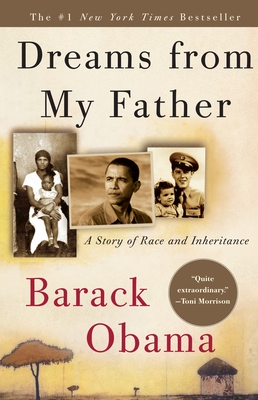
Mr. Obama’s first book, “Dreams From My Father” (which surely stands as the most evocative, lyrical and candid autobiography written by a future president), suggests that throughout his life he has turned to books as a way of acquiring insights and information from others — as a means of breaking out of the bubble of self-hood and, more recently, the bubble of power and fame. He recalls that he read James Baldwin, Ralph Ellison, Langston Hughes, Richard Wright and W. E. B. Du Bois when he was an adolescent in an effort to come to terms with his racial identity and that later, during an ascetic phase in college, he immersed himself in the works of thinkers like Nietzsche and St. Augustine in a spiritual-intellectual search to figure out what he truly believed.

As a boy growing up in Indonesia, Mr. Obama learned about the American civil rights movement through books his mother gave him. Later, after a stint as a fledgling community organizer in Chicago, he found inspiration in “Parting the Waters,” the first installment of Taylor Branch’s multivolume biography of the Rev. Dr. Martin Luther King Jr.

More recently, books have supplied Mr. Obama with some concrete ideas about governance: it’s been widely reported that “Team of Rivals,” Doris Kearns Goodwin’s book about Abraham Lincoln’s decision to include former opponents in his cabinet, informed Mr. Obama’s decision to name his chief Democratic rival, Hillary Rodham Clinton, as Secretary of State. In other cases, books about F. D. R.’s first hundred days in office and Steve Coll’s “Ghost Wars,“ about Afghanistan and the C.I.A., have provided useful background material on some of the myriad challenges Mr. Obama will face upon taking office.

Mr. Obama tends to take a magpie approach to reading — ruminating upon writers’ ideas and picking and choosing those that flesh out his vision of the world or open promising new avenues of inquiry.

His predecessor, George W. Bush, in contrast, tended to race through books in competitions with Karl Rove (who recently boasted that he beat the president by reading 110 books to Mr. Bush’s 95 in 2006), or passionately embrace an author’s thesis as an idée fixe. Mr. Bush and many of his aides favored prescriptive books — Natan Sharansky’s “Case for Democracy,” which pressed the case for promoting democracy around the world, say, or Eliot A. Cohen’s “Supreme Command,” which argued that political strategy should drive military strategy. Mr. Obama, on the other hand, has tended to look to non-ideological histories and philosophical works that address complex problems without any easy solutions, like Reinhold Niebuhr’s writings, which emphasize the ambivalent nature of human beings and the dangers of willful innocence and infallibility.

What’s more, Mr. Obama’s love of fiction and poetry — Shakespeare’s plays, Herman Melville’s “Moby-Dick” and Marilynne Robinson‘s “Gilead” are mentioned on his Facebook page, along with the Bible, Lincoln’s collected writings and Emerson’s “Self Reliance“ — has not only given him a heightened awareness of language. It has also imbued him with a tragic sense of history and a sense of the ambiguities of the human condition quite unlike the Manichean view of the world so often invoked by Mr. Bush.

Mr. Obama has said that he wrote “very bad poetry” in college and his biographer David Mendell suggests that he once “harbored some thoughts of writing fiction as an avocation.” For that matter, “Dreams From My Father” evinces an instinctive storytelling talent (which would later serve the author well on the campaign trail) and that odd combination of empathy and detachment gifted novelists possess. In that memoir, Mr. Obama seamlessly managed to convey points of view different from his own (a harbinger, perhaps, of his promises to bridge partisan divides and his ability to channel voters’ hopes and dreams) while conjuring the many places he lived during his peripatetic childhood. He is at once the solitary outsider who learns to stop pressing his nose to the glass and the coolly omniscient observer providing us with a choral view of his past.

As Baldwin once observed, language is both “a political instrument, means, and proof of power,” and “the most vivid and crucial key to identity: it reveals the private identity, and connects one with, or divorces one from, the larger, public, or communal identity.”

For Mr. Obama, whose improbable life story many voters regard as the embodiment of the American Dream, identity and the relationship between the personal and the public remain crucial issues. Indeed, “Dreams From My Father,” written before he entered politics, was both a searching bildungsroman and an autobiographical quest to understand his roots — a quest in which he cast himself as both a Telemachus in search of his father and an Odysseus in search of a home.

Like “Dreams From My Father,” many of the novels Mr. Obama reportedly admires deal with the question of identity: Toni Morrison’s “Song of Solomon” concerns a man’s efforts to discover his origins and come to terms with his roots; Doris Lessing’s “Golden Notebook” recounts a woman’s struggles to articulate her own sense of self; and Ellison’s “Invisible Man” grapples with the difficulty of self-definition in a race-conscious America and the possibility of transcendence. The poems of Elizabeth Alexander, whom Mr. Obama chose as his inaugural poet, probe the intersection between the private and the political, time present and time past, while the verse of Derek Walcott (a copy of whose collected poems was recently glimpsed in Mr. Obama’s hands) explores what it means to be a “divided child,” caught on the margins of different cultures, dislocated and rootless perhaps, but free to invent a new self.

This notion of self-creation is a deeply American one — a founding principle of this country, and a trope addressed by such classic works as “The Great Gatsby” — and it seems to exert a strong hold on Mr. Obama’s imagination.

In a 2005 essay in Time magazine, he wrote of the humble beginnings that he and Lincoln shared, adding that the 16th president reminded him of “a larger, fundamental element of American life — the enduring belief that we can constantly remake ourselves to fit our larger dreams.”

Though some critics have taken Mr. Obama to task for self-consciously italicizing parallels between himself and Lincoln, there are in fact a host of uncanny correspondences between these two former Illinois state legislators who had short stints in Congress under their belts before coming to national prominence with speeches showcasing their eloquence: two cool, self-contained men, who managed to stay calm and graceful under pressure; two stoics embracing the virtues of moderation and balance; two relatively new politicians who were initially criticized for their lack of experience and for questioning an invasion of a country that, in Lincoln’s words, was “in no way molesting, or menacing the U.S.”

As Fred Kaplan’s illuminating new biography (“Lincoln: The Biography of a Writer”) makes clear, Lincoln, like Mr. Obama, was a lifelong lover of books, indelibly shaped by his reading — most notably, in his case, the Bible and Shakespeare — which honed his poetic sense of language and his philosophical view of the world. Both men employ a densely allusive prose, richly embedded with the fruit of their reading, and both use language as a tool by which to explore and define themselves. Eventually in Lincoln’s case, Mr. Kaplan notes, “the tool, the toolmaker, and the tool user became inseparably one. He became what his language made him.”

The incandescent power of Lincoln’s language, its resonance and rhythmic cadences, as well as his ability to shift gears between the magisterial and the down-to-earth, has been a model for Mr. Obama — who has said he frequently rereads Lincoln for inspiration — and so, too, have been the uses to which Lincoln put his superior language skills: to goad Americans to complete the unfinished work of the founders, and to galvanize a nation reeling from hard times with a new vision of reconciliation and hope.

This article has been revised to reflect the following correction:

Correction: January 26, 2009

An article last Monday about literary influences on Barack Obama misstated the time frame during which he found inspiration in “Parting the Waters,” the first installment of Taylor Branch’s multivolume biography of the Rev. Dr. Martin Luther King Jr. It was after Mr. Obama worked as a community organizer in Chicago, not during that period.

 See the original post HERE

 GalleyCat also took the liberty today to share a list of free eBooks for five of Obama's favorite inspirational tomes:
 5 Free eBooks That Inspired Barack Obama
1. Self-Reliance by Ralph Waldo Emerson (contained in this volume of essays)
2. Complete Project Gutenberg Abraham Lincoln Writings by Abraham Lincoln
3. Moby-Dick by Herman Melville
4. The Complete Works by William Shakespeare
5. The Bible, Old and New Testaments, King James Version

Congratulations, Mr. President. Happy to have you aboard for another four years!

Tuesday, March 13, 2012

Hunger Games Webcomic from Tor.com

With the Hunger Games movie on the brain (I bought my opening night tickets yesterday--w00t!) it's no surprise that @Tordotcom's tweet regarding The Hunger Games and a short comic by @faitherinhicks caught my eye.

The tweet linked to a post on Tor.com, sharing Faith's comic:

The forthcoming film version of The Hunger Games has produced a lot of excitement, but its suprising density for a young adult trilogy has also produced a lot of reflection. In Faith Erin Hicks’s case, this reflection is very, very personal. (Contains spoilers for the end of the series.)

Faith Erin Hicks is the author and illustrator of a number of webcomics, including Demonology 101 and Zombies Calling. Her comic Friends With Boys is now available as a graphic novel from First Second.

Be sure to check out her other comics on Tor.com, as well, including her fantastic tribute on A Wrinkle in Time (“Punch of love!”) and Aliens.

See the original post HERE


This is definitely an interesting concept (and powerful statement of hope). But there's one important thing to remember when creating a parallel between The Hunger Games and war as we know it:

In The Hunger Games, all of this violence is done for sport, not to end some kind of conflict or eventually better the world (NOT saying war does that, but for some, that's how it's viewed!).

Sad on so many levels.

Friday, March 9, 2012

Guest Blogger, Gloria Loman: Government Drama. Again.

It's been a while, Booklanders! But when I heard about the DOJ's lawsuits against five major publishers and Apple yesterday, I just couldn't keep my trap shut any longer.

GalleyCat sums up the sitch:
According to a bombshell report in the Wall Street Journal, the Department of Justice could sue Apple and five major publishers for breaking antitrust laws with agency model pricing for eBooks.

A number of civil lawsuits have also been filed against Apple, Simon & Schuster, Hachette Book Group, Penguin Group (USA), Macmillan and HarperCollins for allegedly colluding to fix eBook prices in 2010. Some of these publishers have already spoken with the DOJ in hopes of striking a settlement before the case ever reached court.

Here’s more from the article: “William Lynch, chief executive of Barnes & Noble, gave a deposition to the Justice Department in which he testified that abandoning the agency pricing model would effectively result in a single player gaining even more market share than it has today, according to people familiar with the testimony. A spokeswoman for Barnes & Noble declined to comment.”

If you want to explore some of the legal issues behind the potential suit, consumer rights firm Hagens Berman filed the first agency model lawsuit in 2011–alleging that the agency model for eBook pricing is “in violation of a variety of federal and state antitrust laws, the Sherman Act, the Cartwright Act and the Unfair Competition Act.”

In court filings, the firm speculated that damages “could total tens of millions of dollars.”

Read the original post HERE

Now, let me just say...what the??

Ridiculous, if you ask me (not that anyone ever actually does. I offer my two cents pro bono!). If the book biz as a whole agrees that changes need to be made to agency models or pricing models of any kind, then maybe there's a good reason for it. Maybe the reason such big players are on the same side of this e-book issue is because it's what's best for the industry.

I know, I know, there's more at play here than e-book prices. It comes down to whose selling the e-books and a possible monopoly situation (or at least that's this critic's understanding). And I can see how some people might think publishers and Apple are in "cahoots" but really, let's think about it for a second people. Apple doesn't hold all the e-book cards in the business. Have you heard of a little company called Amazon? Seriously. A new pricing structure industry-wide will change things for all players, not just one.

I see it the way the pubs do, in this case, when they "told investigators that the shift to agency pricing enhanced competition in the industry by allowing more electronic booksellers to thrive" (WSJ).

That's the important piece here, people. Books. Selling more books so the industry can thrive as one.

Just let people read their damn books in peace. The pros will figure out what's best for this changing market. Let's cut the government drama.

Monday, February 20, 2012

Remembering Abe Through Books

A new memorial of sorts was revealed in honor of Abraham Lincoln today: a tower of books on the president himself, stacked about 34 feet high.

The tower climbs through the center of the new Ford's Theatre Center for Education and Leadership in Washington, D.C.

NPR tells us more:
This President's Day, a group of historians in Washington, D.C., decided they wanted to do something different to recognize the legacy of Abraham Lincoln. But how do you memorialize someone who is already one of the most memorialized people in history?

Their solution: to physically illustrate Lincoln's importance by creating a tower of books written about him. The tower measures about eight feet around and 34 feet — that's three and a half stories tall.

"It makes a real statement to anyone that this is an important guy and there was a whole lot written about him, and there continues to be a whole lot written about him," says Paul Tetreault, director of Ford's Theatre, where Lincoln was assassinated in 1865.

The towering tribute to the 16th president rises up through the middle of a spiral staircase in the lobby of the new Ford's Theatre Center for Education and Leadership, located just across the street.

Some 15,000 books have been written about Lincoln — more books, says Tetreault, than have been written about any other person in world history, with the exception of Jesus Christ.

Nearly 7,000 of these books are contained in the tower. They even look authentic up close (click here to get a closer look) but the tower's books are actually replicas made of pieces of bent aluminum, with the covers of the real books printed on them.

"There are books here for people of all ages," says Tetreault. "There's young people's books, there's an Abraham Lincoln stickers book, there's an Abraham Lincoln coloring book. And then of course there's all of the bestsellers: David Herbert Donald's great book about Lincoln, Doris Kearns Goodwin's book Team of Rivals — all of these major scholars who've written about Abraham Lincoln, they're all contained in this stack."

Read the original post HERE

If I ever do anything worth publicly remembering, I hope I'm honored in such an awesome way.

Wednesday, September 7, 2011

New Book to Commemmorates 9/11

In the middle of a particularly bad day at work yesterday, my friend Alex and I decided to escape and head out to lunch. We sat down, ordered a beer with our food (yes, it was one of those days), and each ranted for a few minutes. Then our conversation drifted in an unexpected direction. But when you're already struggling to get through each hour, what better topic to discuss than terrorism? (*Insert sarcasm here*)

With the upcoming 10-year anniversary of 9/11, it was naturally the main focus of our chat. The heroism of those on the planes, the hatred of those orchestrating the acts, the fear and pain that settled over the nation, that still pierces so many people with just the thought of the sunshine-filled nightmare of a day.

It changed all of our lives forever. Whether we were 43 (like my parents), 17 (like me), 12 (like my friend), or 7 (like, I don't know who), it affected every one of us.

And now, a decade later, Assouline Publishing is honoring the subtle and not-so-subtle ways it's turned our world upside-down with a new book, Art for Heart: Remember 9/11. This compilation not only commemorates September 11, 2001 but also will support the museum and memorials devoted to the event, according to GalleyCat:
The book features a collection of drawings created by young children shortly after the terrorist attacks.

All of the proceeds will be donated to the National September 11 Memorial & Museum, a not-for-profit organization that operates the memorial and museum at Ground Zero. Museum director Alice M. Greenwald wrote the introduction and political journalist Christy Ferer wrote the forward.

Here’s more from the release: “In Art for Heart, the innocence so profoundly disrupted that day is nowhere better demonstrated than in the words and drawings created by children following the attacks. Straightforward and heartfelt, these works reveal the human instinct to bear witness, provide comfort, and attempt to make sense out of the unthinkable.”

Read the original post HERE

Thursday, May 5, 2011

Love of Reading Pouring Out Overseas

The death of Osama Bin Laden has been on everyone's minds this week at one point or another. The incident has also sparked a lot of recognition for the U.S. Military, of course. One way this recognition has been communicated is through the encouragement of donations to our troops overseas, whether it be monetary, letters, supplies, or even books.

I've donated books in the past to the troops through Operation Paperback, but there are a number of great organizations that will help you to send books overseas.

GalleyCat did a nice round-up earlier this week:
As the world comes to terms with the death of Osama bin Laden, we should all take a few minutes to remember American soldiers serving overseas. We’ve collected seven different ways you can share books with our troops.

1. E-Books for Troops will help you share your used Kindle with our troops overseas.

2. Operation Warrior Library connects writers with military personnel.

3. Books for Soldiers mails books to troops.

4. Operation Paperback sends paperbacks overseas.

5. Books-a-Million will let you select and purchase Books for Troops in a special program.

6. Operation eBook Drop focuses on eBooks.

7. Follow this Google search to find many more options for sharing books with soldiers.

See the original post HERE

Monday, April 18, 2011

Sneaky (and False) Hilarity in Washington, D.C.

This Congressional satire from our very own guest blogger, Dan Cabrera, will give you a chuckle on this tiring Monday night--or at least it did for me!

WASHINGTON, D.C. - According to some political watchdogs and alert members of the press, Representative Bill Flores (R-Texas) slipped in some of his novel-in-progress while reading a bill in the House of Representatives.

Flores was reading the bill, House Resolution 1409.21, or the Wildlife Preservation and Census Act, when he started reciting from a book he is writing. From what those in the chamber gathered, the congressman from Texas is working on a particularly steamy romance set on the high seas.

“Funds for the relocation of the Alaskan timberwolf will be appropriated from the closing of the yellow-tipped raptor-watching stations. Such funds shall be administered by an oversight committee set up by Lord Admiral Woolsey. The Admiral was in hot pursuit of the dreaded pirate Red Beard, the most notorious villain this side of Grenada,” Flores read. According to a C-SPAN transcript, Flores continued with his excerpt. “Lady Woolsey, the Admiral’s daughter, objected to her father’s business. Secretly, she longed for the pirate’s embrace, wishing to kiss his gold-toothed mouth and feel his fiery beard caress her cheeks.”

Read the rest of Dan's post HERE


(Don't worry. It's not true. Though I kind of wish it were.)

Wednesday, December 22, 2010

The Story of Obama

Today marks a significant day in GLBT rights in the U.S. as President Obama signed a repeal for the unjust "Don't Ask, Don't Tell" policy. (Yay!)

But that's not the only thing I found about him in the news for when surfing the net on my lunch break. It seems he's also "lost his narrative," according to the Daily Beast, and needs some pointers from the pros:

Obama has a "narrative" problem. Or at least that's the media's storyline.

"Presidential politics is about storytelling," Politico's John F. Harris said last year. "No one understands this better than Barack Obama and his team, who won the 2008 election in part because they were better storytellers than the opposition."

But, as the saying goes, you campaign in poetry and govern in prose, and before long, everyone wants to edit.

Obama has a "narrative" problem. Or at least that's the media's storyline.

"Presidential politics is about storytelling," Politico's John F. Harris said last year. "No one understands this better than Barack Obama and his team, who won the 2008 election in part because they were better storytellers than the opposition."

Take the moment this summer during the Gulf oil spill when Obama seemed upended by calamity. "He'd better seize control of the story line of his White House years," opined Maureen Dowd. "Woe-is-me is not an attractive narrative."

Click on cable television or flip to the opinion pages, and you'll discover that whenever things aren't going the president's way, it's because he has lost control of the narrative. In other words, the Obama camp is desperately in need of a re-write.

But rather than listen to the political journalists, who rate the president like National Book Award judges, we decided to ask some veteran novelists for a few hints of how to improve his plot in 2011.

Sam Lipsyte, author of The Ask, said it's time for Obama to look at his earliest chapters.

"When I am writing and floundering, with no sense of where to go, I look back to the beginning of what I am working on, and ask: Where did I start? What set this all into motion? Obama could do the same with his novel, of which we are all characters," he wrote in an email.

"The answer would be, 'Oh, yeah, I promised change, I promised to fight some very righteous fights, I gave my supporters [the reason] to believe that I would be tough enough, or at least magical enough, to rout the armies of the evil Republican wizards, even though I would try to be nice first.' Then I think he would 'find' his 'narrative,' and perhaps find the will to finally go berserk on these thugs, these goons of the oligarchy, and save the kingdom of the middle class. And people far and wide would say, 'Have you read Obama's latest? It's a great read!' He might even get on Oprah. In short, when you lose something, it's usually where you've been, not where you think you're going."

Canadian poet and author Margaret Atwood at first demurred, claiming her nationality disqualified her from meddling in her neighbor's affairs. But when pressed, she offered that a more interplanetary story line might serve the president well.

"Ask the Sci-fi writers to do some plots whereby the President has been taken over by the Pod People," she told The Daily Beast by email.

Spy novelist Alex Berenson, who published The Midnight House this year, said the way forward might be the creation of an enemy.

"The number one way you change the narrative is give him a villain," Berenson said, pointing out the way in which the country came together behind George W. Bush after the 9/11 attacks.

"I'd give him something to push against. Give him an enemy who is not John Boehner. Maybe he needs an alien invasion. We can all be against invasions."

For Berenson, the story line from the White House remains fuzzy.

"If you came in with that book, your editor would tell you, you needed to focus," he said. "You need to know who your hero was."

Read the rest of the article HERE

I'm not sure why but when I first started reading this article, I couldn't stop laughing. I found it incredibly amusing to compare a presidential term in office to a narrative in a book. But as I read, I realized it made more and more sense. Everything has a story arc to it, a character arc, a conflict, and a lesson. Each and every day can be compared to a narrative, really. And maybe it should be. Maybe it'd help us all be a little more objective, productive, and meaningful...

Tuesday, August 24, 2010

Guest Blogger, Dan Cabrera: Books Not Bombs: Can Reading Bring Peace To Afghanistan?

Yesterday a friend of mine posed an interesting question: If you could translate one and only one book into Pashto, the official language of Afghanistan, what book would you choose?

It so happens that a friend of mine—who is currently serving in the Military Intelligence Corps of the United States Army—was asked by one of his superiors for a recommendation of a novel to translate.

This got me thinking, naturally, as to which novel I would choose (more on that later). But I also thought, perhaps more importantly, why is the Army translating whole novels for the Afghani population? Aren’t there more pressing issues at hand over there?

Bibliophiles like to believe that books make a difference in the world. Reading enlightens, educates, and connects us all through a shared experience—or so it can be argued. Sure, some books and documents have unquestionably changed the course of human history, from The Communist Manifesto to The Jungle to Harry Potter, among others. And let’s not forget that little missive called the Bible.

There’s no question that books can shock, delight, and make readers see the world from a different viewpoint. If a book neglects to move the reader in one way or another then that book has failed. But is the U.S. Army hoping to move the Taliban to tears after reading Sophie’s Choice? Do they hope insurgents will see the error of their ways and the frailty of human life after reading All Quiet on the Western Front?

No matter what book the Army chooses to translate, they may have to deal with a bigger problem than subjective taste to confront. It turns out that most of the Afghani population has the reading comprehension of an American Kindergartener. According to a recent Wired blog post, Afghani police officers and soldiers can’t even read their bank statements or the serial numbers on their weapons. Soldiers who believe they’re not getting paid won’t be soldiers for long, and even if they do stick around they can’t keep track of their weapons?

Realizing this, and recognizing that reading comprehension is just a good thing to have in general, NATO forces in Afghanistan have decided to give all soldiers, police officers, and recruits some homework.

This war on illiteracy may prove just as tough as the real war, especially after considering that smoking heroin and opium—made from the abundant poppy plant found in Afghanistan— is a way of life for soldiers. U.S. generals would rather have Afghanis hooked on phonics than on drugs and are hopeful they are hopeful they can create some bookworms within a year.

So it makes sense that if Afghanis are going to be reading we might as well provide them with some good books. Unless, of course, our intentions aren’t as benevolent as they seem (are they ever?). Books are information, after all, and it wouldn’t be a war without some good, old-fashioned propaganda. Not that I’m suggesting the military is planning something insidious with their translations—though perhaps some publishers, agents, and authors who are losing out on foreign and translation money may think so—nor am I getting ready to don my tinfoil hat and break out conspiracy theories.

After all, propaganda comes in many forms. We love dropping pro-American leaflets on our enemies almost as much as we love dropping some BLU-82 Daisy Cutters or GBU-43 MOABs. And while some may argue that Military Intelligence is an oxymoron, spreading pro-American sentiment through radio and TV broadcasts, websites, and pamphlets can help win the hearts and minds of civilians and, in the best case scenario, change the minds of some bad guys.

So, is the Army using books to help spread the word that we’re the good guys, then? It’s a little far-fetched, considering what we already know about the reading level of the majority of Afghanis. Add to that the fact that novels can take a heck of a long time to read.

Then again, maybe that’s the point: sit everyone down with a good book and fighting will stop. Both sides can form book clubs, discussing which characters were their favorites, which endings surprised them the most, and who would play whom in the inevitably movie adaptation.

One can only hope.

My friend who brought up the subject suggested the Lord of the Rings trilogy (okay, it’s three books—four if you count The Hobbit—but really it’s like one big, long book). A good choice, I think, since 1) it’s a great read, and 2) the story captures the universal themes of good versus evil, bravery versus cowardice, greed versus selflessness. Another friend of mine suggested To Kill a Mockingbird. Atticus Finch is the embodiment of justice; Scout the embodiment of childhood innocence. Both books should be read by everyone, no matter where he or she is from, in my opinion, but I’m not certain they would be top picks for the Army.

Someone else I know suggested The Kite Runner, but that might be a little too raw and harrowing for a newly minted reader. Three Cups of Tea? Sure, definitely, but not exactly the lay-down-your-arms and support your local G.I. book the brass in the Pentagon might be hoping for (plus, it’s non-fiction, which deserves another list).

What novel would you choose as your one book to be translated to Pashto?

Would it be an anti-war book like Catch-22, Slaughterhouse Five, or Johnny Get Your Gun? Maybe some flag-waving novels like The Red Badge of Courage or most anything by W.E.B. Griffin or Tom Clancy?

Or would you choose something timeless and profound, a book that exposes the best and worst of humanity, something that cuts right to the core of our beings, something so devastating that one cannot put down the book without being moved to tears and filled with an overwhelming sense of compassion?

Or maybe you’d pick something fun and frivolous to give the war-ravaged citizens some levity and a brief respite from their troubles? After all, it’s the least a book can, and should, do.

My pick? The Giving Tree.


About the Blogger: Dan Cabrera is currently a peon in the world of book publishing. He enjoys reading all kinds of books, particularly any that involve animals, mysterious diseases, or bittersweet endings. You can read his blog at deartheonion.tumblr.com.

Welcome to Reading Between the Lines, Dan! We're happy to have you aboard!

Wednesday, May 12, 2010

A Second Dose of Palin

So it seems to be becoming an annual trend--Sarah Palin has another book coming out this fall (causing me and my peeps to have to move a pub date of our own, but I'm not irritated, no, not at all heh).

HarperCollins announced the book's release yesterday, according to USA Today :

Sarah Palin's new book has a title, America By Heart: Reflections on Family, Faith and Flag, and a release date, Nov. 23, publisher HarperCollins announced Tuesday.

The Alaska ex-governor and former Republican vice presidential candidate, whose memoir Going Rogue has sold more than 2 million copies, has been working on a tribute to American values.

It will include "selections from classic and contemporary readings that have moved her," according to HarperCollins, along with "the nation's founding documents to great speeches, sermons, letters, literature and poetry, biography, and even some of her favorite songs and movies."

The book is inspired not only by her "strong belief in the importance of family, faith, and patriotism," but by some of the people she met last year while promoting Going Rogue. Palin skipped major cities such as Seattle and Los Angeles, traditional stops on most author tours, and instead focused on smaller communities more receptive to her conservative message.

"The book will also include portraits of some of the extraordinary men and women she admires and who embody her deep love of country, her strong rootedness in faith, and her profound love and appreciation of family," the statement from HarperCollins reads.

HarperCollins spokeswoman Tina Andreadis said Palin will likely tour for America By Heart, but added that details were still being arranged. The book will have a first printing of 1 million copies the initial run for Going Rogue was 1.5 million and a list price of $25.99.

Read the rest of the post HERE

I don't know about the rest of you, but this blogger would rather have the Palin coloring book than deal with another of her agendas.

Tuesday, May 4, 2010

CBA Requests All-Access Pass to American Publications

As some of you may know, I have a good number of friends in Canada. I love them to pieces and so when they occassionally ask me to send them books or certain clothing that they can't buy--or import--in Canada, I'm happy to help out. But not all Canadians are quite so lucky. ;) Most have no way of procuring such items as the country's import bans are pretty much iron-clad.

The Canadian Booksellers Association (CBA), however, is at least trying to address the book-related part of the issue, according to Quill and Quire:

In a bid to force publishers to lower Canadian book prices, the Canadian Booksellers Association is asking the federal government to consider amending the laws that restrict the import of foreign books into the country.

In a press release sent out on Friday, the association said the current regulations that limit “parallel importation” are “no longer commercially reasonable and should be repealed.” The CBA expressed its views in a meeting with Canadian Heritage Minister James Moore on Thursday.

Under the current guidelines, which are governed by the Copyright Act, Canadian booksellers must buy directly from Canadian-owned distributors (such as H.B. Fenn and Company or Canadian Manda Group) and the Canadian arms of multinational publishing houses (such as HarperCollins Canada or Random House of Canada). Booksellers can circumvent the Canadian supply chain and buy directly from the U.S. only if certain titles aren’t available from Canadian sources or are priced at more than 10% of the U.S. price, given that the Canadian dollar is at par. (When the Canadian dollar is valued at less than the U.S. dollar, the price discrepancy allowed under the act is greater.)

If the current regulations are repealed, and if the Canadian dollar (which closed at $0.98 U.S. on Thursday) remains at parity, publishers would be obliged to price their books in line with U.S. titles, or else booksellers could buy directly from U.S. suppliers such as Ingram or Amazon.com.

In an e-mail to Q&Q, CBA vice-president Mark Lefebvre describes the current guidelines as “anti-competitive” and amounting to “a tariff on the Canadian book-buying public.”

Read more HERE

Lifting the ban, as the article explains, will cause a lot of strife in the Canadian publishing world, with publishers no longer being able to overprice their books. But for consumers, booksellers, and for us U.S. publishers, the amended law would be a win-win situation.

For the most part.

Ben McNally--owner of the indy bookstore Ben McNally Books in Toronto--is one bookseller who isn't on board with the idea. Below is Mr. McNally's letter to Q&Q in response to the above piece:

While there certainly is much precedent for the Canadian Booksellers Association to act in a short-sighted and self-defeating fashion, the news that the association has asked the Government of Canada to allow it to bypass Canadian agents and buy directly from the United States really has taken matters too far.

The Canadian book business is small and fragile. The only way it can hope to survive is for all the parties in it to recognize that we are in a partnership, not an antagonistic relationship. Anyone who thinks that the health of the publishing community is not the health of the bookselling community is seriously deluded.

When the dollar unexpectedly strengthened the last time we missed a glorious opportunity to stand together as an industry and explain to the people of Canada what a vital part of its culture we are, and that if we we’re to hope to maintain a publishing industry in this country, higher book prices are not only inevitable but desirable.

This time there is no excuse. If we turn our backs on our partners at this difficult time we will only have ourselves to blame if the Canadian publishing business withers on the vine.

In my opinion this is disgraceful behaviour. This is a selfish and short-sighted attempt to have the cake and eat it, and I am appalled that it has happened without consultation with the publishers, on whom we depend for all facets of our business.

The Canadian Booksellers Association does not speak for me. I have no wish to be a part of this organization.

See the full letter HERE
Come on now, my dear Canadian readers, let us know what YOU think!

Americans, you feel free to chime in too, of course. :-p


Thursday, April 8, 2010

Book Review: The Good Soldiers

So, get ready...this is big...for the first time ever, I'm reviewing a nonfiction title!

I don't typically read nonfiction, as I'm sure I've mentioned in the past, and this particular book--The Good Soldiers by David Finkel--fell into my lap via a freelance project. I was excited when it did though because I know I'm not the most well-versed person in current events. I know bits and pieces here and there, usually enough to hold a relatively intelligent conversation, but details? No way do I know those. I also have a tendency to shy away from military-related topics for a variety of reasons, both political and personal. So, I took the opportunity to force myself to confront my discomfort.

The Good Soldiers is a memoir by Pulitzer Prize-winning journalist David Finkel, chronicling his time spent with a U.S. Army batallion in Iraq during the early months of the surge. Finkel takes readers inside the 15-month deployment of the 2-16 (Second Battalion, 16th Infantry Regiment of the Fourth Infantry Brigade Combat Team, First Infantry Division) by sparing no detail, no matter how vivid or grotesque. Readers get to know Lieutenant Colonel Ralph Kauzlarich (right, on his return home to his family) and his soldiers as they were stationed in one of the most violent areas of Iraq, in the city of Rustimiya.

Published by Sarah Critchon Books, an imprint of Henry Holt and Company, in September 2009, Finkel's memoir stunned reviewers. Publishers Weekly gave it a starred review saying, "Finkel’s keen firsthand reportage, its grit and impact only heightened by the literary polish of his prose, gives us one of the best accounts yet of the American experience in Iraq." Kirkus also gave it a starred review calling the memoir "excellent study of soldiers under fire" and "A superb account of the burdens soldiers bear."

Even The New York Times Book Review was wowed:

Finkel brilliantly captures the terrors of ordinary men enduring extraordinary circumstances. [...] [a] ferociously reported, darkly humorous and spellbinding book. [...] Finkel has made art out of a defining moment in history. You will be able to take this book down from the shelf years from now and say: This is what happened. This is what it felt like. [...] Finkel expertly captures the soldiers’ fear, giddiness and courage. [...] He gives unforgettable voice to the men who fought and lived — and to those who did not — and whose voices we otherwise might not have heard.


I highly recommend reading the entire NYT Book Review article, as it captures the book perfectly. (It also pulls some excerpts and stories from the book itself, which I don't want to relay here in case some of you don't want to partake.)

Phenomenally written, intricately researched, and vividly portrayed, the story of the 2-16 is an emotional rollercoaster filled with comradarie, terror, optimism, tears, and even laughter.My heart breaks for these young soldiers--14 of whom died during their deployment and 75 of whom received Purple Hearts for their valor--and I literally was in tears on more than one occassion as I read.

Finkel shows the struggles--and the silver linings--the soldiers had to push through before they could return home with a keen eye and fully objective viewpoint. Detaching himself completely from the narrative, Finkel gave the book up to the soldiers of the 2-16, focusing solely on their experiences, feelings, and bravery.

I am almost at a loss for how to describe The Good Soldiers. It was harrowing and powerful journey for me through this book, and I think everyone should pick up a copy--even if you don't support the war itself--because it's truly a striking and eye-opening account of the war in Iraq in Iraq, rather than the war in Iraq here in the States.

The Last Word: An intense and moving memoir that takes you into the heart of the war in Iraq and the hearts of the men and women who fight for freedom.

Friday, March 26, 2010

Obama Gives a Nice Shout Out to Indie Bookseller

Health care and bookstores don't come up in a single discussion.

But in President Barack Obama's health care speech on Wednesday, March 24, the two went together like peas and carrots.

Publisher's Lunch reports:

Iowa City independent bookstore Prairie Lights was vaulted into the national spotlight yesterday after President Barack Obama's speech about health care singled the bookstore out as an example of a small business that would benefit from tax credits that would help them cover the cost of insurance for their employees.

"This is a small business that's been offering coverage to their full-time employees for the last twenty years," Obama said about the 32-year-old store. "Last year their premiums went up 35%, which made it a lot harder for them to offer the same coverage. Starting now, small business owners like...the folks at Prairie Lights will have the security of knowing that they could qualify for a tax credit that covers up to 35% of their employees' health insurance."

After the speech, President Obama stopped inside the bookstore and, according to the Associated Press, spent $37.44 on three books: The Secret of Zoom (Henry Holt Children's) by Lynne Jonell and Journey to the River Sea (Dutton Children's) by Eva Ibbotson, and a Star Wars pop-up book. He also posed for this rather amusing photo, [posted on the] WaPo Political Bookworm blog.


I can't help but chuckle when I see the photo taken by AP staffer Charles Dharapak. It's plain classic.

The Washington Post also has an interesting article on the "event" following the pic.

Friday, November 6, 2009

A Book Too Funny Not to Share

I thought I'd seen enough from Sarah Palin in the book world lately, but apparently, I was wrong. Now, there's...wait for it....wait for it...the Sarah Palin COLORING BOOK!!!

According to the Washington Post, Going Rouge--Palin's "much anticipated" memoir--will be on-sale November 17, with some nice little spoof coloring books that share the same name:
Love her or hate her, people are drawn to Sarah Palin. Now, a new book wants you to color her.

One year after the race for the White House, publishers have released several books about the GOP vice presidential candidate. The most anticipated is her own memoir, "Going Rogue: An American Life," which lands on store shelves on Nov. 17 and is tops in pre-orders on Amazon and Barnes & Noble's websites.


Will there be parodies? You betcha.

In fact, the two spoof books share the same title. "Going Rouge: Sarah Palin - An American Nightmare" features essays by writers for The Nation, a liberal magazine. The other is "Going Rouge -- The Sarah Palin Rogue Coloring and Activity Book" by husband and wife team Julie Sigwart and Michael Stinson.

Read more HERE

Tuesday, October 6, 2009

The Political Book Phenomenon

Political books have always been a part of the publishing culture, from Upton Sinclair's The Jungle to Harriet Beecher Stowe's Uncle Tom's Cabin to memoirs by Ted Kennedy and Sarah Palin. No matter what category, books like these enlighten readers (sometimes positively, sometimes NOT positively) to new ideas, old ideas, and unaccepted ideas.

Howard Dean and Elizabeth Wagley over at The Huffington Post's new online Books Section (it's fantastic, by the way) tackle this political book phenomenon:

The re-emergence of Sarah Palin as a successful author should come as no surprise to anyone who recognizes the salience of books in public life. Her decision to write a book and her pre-pub sales demonstrate once more how books confer status in American political culture.Palin's supporters (and those who may be purchasing her book, Going Rogue, in bulk) may or may not realize that by vaulting her to the top of the bestseller lists, they will validate her both personally and ideologically. Like many other books across the political spectrum, her book represents the latest episode in publishing as political and ideological warfare.

These pop bestsellers can serve to legitimize individuals as well as ideas, with consequences stretching beyond the immediate moment. The return of conservatives to the top of the lists this year is being touted as a sure sign of their movement's renewed vitality, despite the battered condition of the Republican minority.
Read more HERE

I am personally a little bit baffled, and often shocked, by the constant prescence of political nonfiction bestsellers these days. If it's not Glenn Beck, it's Mark Levin. If it's not Mark Levin, it's Stephen Colbert, etc. etc. I think I know one person in my personal life who actually reads these kinds of books. But somewhere, they are someone's version of crack cocaine. The biz just keeps pounding them out, and they keep selling like hot cakes.

And despite all of the valid points Dean and Wagley make, I still can't help but think, why do we need SO many?

An editor I know--a liberal editing conversative books, no less--told me once that the majority of these supposed political revelations say exactly the same things in almost exactly the same way. I must admit, though, that after he told me that, I did have the urge to test it out, to pick one of these books up and see what all the fuss was about.

But I didn't. Maybe someday I will. Maybe I'll even review it here, in all my politically ignorant glory, for your amusement. But until then, I'll keep wondering why Americans need to hear the same views preached over and over again before they figure out what they believe for themselves.

Wednesday, September 16, 2009

Speaking of publicity, let's try some unwanted endorsements...

The New York Times reported this week that Osama bin Laden released a new audiotape to the American people two days after the 8th anniversary of 9/11. In his speech, he gives Americans a "reading list": The Israel Lobby and U.S. Foreign Policy, Palestine: Peace Not Apartheid, and Confessions of an Economic Hit Man.

I would not want to be one of the authors of one of those books or the publisher. Despite the phrase "all publicity is good publicity," I don't think it applies here. Bin Laden is not an endorsement anyone wants.

NYTimes bloggers Sharon Otterman and Robert Mackey discuss:

While Oprah’s seal of approval on a book cover is sought after in America, Osama Bin Laden’s is, to put it mildly, not. On Monday, the authors of three books apparently recommended to American readers by the leader of Al Qaeda in his latest communique might be wondering how one goes about returning an unsolicited endorsement to a shadowy militant who has been in hiding for eight years.

As our colleague Mark McDonald reported on Sunday, Mr. Bin Laden apparently released a new audiotape, entitled “An Address to the American People.” According to the SITE Intelligence Group, which monitors jihadist Web sites, on the tape, a voice claiming to be that of the Qaeda leader described three books that he says support his analysis of global politics and the systematic maltreatment of Muslims at the hands of America and her allies.

Read more HERE