Tuesday, April 2, 2013

Authors Give a Hand to Young Writers

Writing is not an easy job. I should know--I've been sitting on partially written manuscripts since I was about 12. Editing I can hop to, no problem, but writing? Writing is tougher for me. Putting my own ideas down on paper is a terrifying thought.

I'm not alone in this fear though, and oftentimes writers need a little encouragement from their peers to get over the hump. Yesterday, BuzzFeed gave us a hand, by sharing "27 Pieces Of Advice For Writers From Famous Authors: where "Celebrated authors, editors and illustrators write advice to young writers on their hands for “Shared Worlds,” a two-week creative writing summer camp at Wofford College."

Here are some of my personal favorites:


1. Neil Gaiman.

Neil Gaiman.
Award-winning author of American GodsCoralineStardust and many more.

3. Garth Nix.

Garth Nix.
Award-winning author of the "Old Kingdom," "Seventh Tower" and "Keys to the Kingdom" series.

4. Karen Lord.

Karen Lord.
Author of Redemption in Indigo and The Best of All Possible Worlds.

5. Patrick Rothfuss.

Patrick Rothfuss.
Author of The Name of the Wind and The Wise Man's Fear.

8. Jody Lynn Nye.

Jody Lynn Nye.
Award-winning author of more than forty novels and one hundred short stories.

9. C.S.E. Cooney.

C.S.E. Cooney.
Noted author of science fiction short stories and poetry.

15. Lev Grossman.

Lev Grossman.
Bestselling author of The Magicians and The Magician King.

16. Gregory Norman Bossert.

Gregory Norman Bossert.
Noted short story author and illustrator.

17. Scott Eagle.

Scott Eagle.
Noted author and illustrator.


18. Jeff VanderMeer.

Jeff VanderMeer.
Award-winning editor, publisher and author of City of Saints and Madmen, among others.

26. Karin Tidbeck.

Karin Tidbeck.
Award-winning Swedish author of fantasy and weird fiction.

See them all HERE


Friday, March 29, 2013

Goodreads: An Amazon Acquisition

After working in the publishing industry for so many years, I've learned that there's sadly a good bit of passive aggression going on behind the scenes--as it does in every industry, really. But sometimes, publishing's particular brand of rivalry is more public than most.

Like today's announcement that Amazon has purchased Goodreads, for example.

Forbes.com tells us more:

After two years of stops and starts, Bookish, the book discovery and e-commerce website co-owned by three of the world’s biggest publishers, finally opened for business in February. Seven weeks later, Amazon has acquired Goodreads, the leading book-centric social network. 
Coincidence? 
Of course, with 16 million members, San Francisco-based Goodreads is a logical enough acquisition target for the e-tailer. (The sale price hasn’t been disclosed but seems likely to have been in the low eight digits; according to Crunchbase, Goodreads had raised a total of $2.75 million in funding.) 
The two sites aren’t mirror images of each other. In particular, as Laura Hazard Owen explains, Amazon and Goodreads make recommendations based on something called “collaborative filtering,” which factors in a user’s past activity and the behavior of similar users. Lacking Amazon’s servers full of data, Bookish — which is backed by Penguin, Hachette and Simon & Schuster — bases its recommendations more on content analysis. Bookish also lacks Goodreads’ social layer. 
Still, the similarities are sufficient that when Bookish launched in February, a Wired writer dubbed it “the love child of Goodreads and Amazon.” 
One thing to keep an eye on is whether an Amazon-owned Goodreads will continue to drive customers to other retailers. In 2011, the site stopped using Amazon’s API, saying the terms of use were too restrictive – in particular the requirement that all product links go to Amazon rather than to other retailers. 
In a blog post announcing the sale, Goodreads founder Otis Chandler suggested nothing is going to change, at least immediately: “Amazon supports us continuing to grow our vision as an independent entity, under the Goodreads brand and with our unique culture.” 
Obviously, Amazon would rather not send potential book buyers to its competitors. But with a new anti-trust lawsuit accusing it (and the six biggest publishers) of wielding too much control over the e-book market, this isn’t the time to be seen as acting like a monopoly. 
See the original post HERE


Oh, publishing...what will you come up with next?

Wednesday, March 27, 2013

A Wednesday Full of Romance

So far this week, I have edited two books, read three submissions, and am about to dive into another edit today. All for romance novels. Which I found ironic given the lead article today on the Huffington Post's Books page: "Trash or Treasure: Why More Women Should Read Romance Novels."

In the post, author Sherryl Woods provides some of her personal insight into romance novels, why they are so popular, why they are significant:

A number of years ago at the height of the shirtless hero craze on romance book covers, one of my novels featured an artist's rendering of an impish little girl dragging angel wings. A television news anchor in Washington, DC, held it up on camera and asked, "Where's Fabio?" 
I laughed and told him, "Fabio doesn't live in my books." 
While it's pretty clear with well over 100 novels to my credit that I'm a huge fan of romance, my infatuation with the genre goes beyond Fabio and other sexy cover models with their six-pack abs and larger-than-life persona. As a reader and as a writer, I want the kind of hero who might well live down the block and walk into my life at any second, the guy with a sense of humor, with strong values and a degree of dependability that will make him a wonderful lifelong partner. 
I often hear from readers that what they love the most are the "real" people who live in the pages of my stories. They identify with the women who face problems that they themselves have faced. They're inspired when the characters not only survive, but thrive. In fact, for some the characters become so real, they tell me they worry about them between books. And just recently I heard from a man who said the stories had helped him to rekindle the romance in his marriage after 22 years and 8 children! The simple fact that he was looking for ways to rekindle the romance made him a hero to my way of thinking. 
As far back as I can recall both proponents and critics of romance novels have labeled many of them as fantasies for women. Critics suggest that creates unrealistic expectations. Proponents cheer for the fantasies that keep female blood pumping and spawn a few steamy dreams. 
I tend to look at romance -- in books and in real life -- a bit differently. While the arrival of a knight-in-shining-armor in the middle of a crisis might be a welcome sight and being carried off to a carefree life of wealth and pleasure might even be a secret dream, most of us are going to find romance in other ways. It's going to be in that sweet, unexpected comment that makes us smile or the little gesture that demonstrates just how much we're appreciated. Our hero is going to be the guy who notices that something needs fixing and just does it or who plans a special date that might mean nothing to another woman, but means the world to us. It may even be the man who stands by, ready to help in a crisis, but wise enough to know how much we need to discover we can depend on ourselves. 
I think our view of romance -- what we want and what we need -- changes over time. Age and experience kick in. While the very young want the heart-stopping excitement and passion, in time we come to appreciate a good laugh, respect, and common interests. 
The one thing that never fades is the longing to see "that" look in someone's eyes, the twinkle that makes us feel desirable and alive. I think that's one reason so many of my books are multi-generational, with people of all ages discovering that a new romance may be just around the corner. I believe in those possibilities that remind us life can be worth living till the very last breath we take. 
In my Sweet Magnolias series, for instance, there are several "senior" Magnolias, who openly talk about their views on finding love at their stage of life. One is actively dating a younger man to the horror of her suddenly traditional middle-age daughter. A few very lively debates ensue that I imagine many of us can relate to -- from one point of view or the other! 
In this latest Ocean Breeze trilogy, which kicks off March 26 with Sand Castle Bay, not only do the three Castle sisters find love, but so does their grandmother, Cora Jane. The issues she faces as a widow who was happily married for many years are very different from those who were unhappily wed. And for me there was something especially endearing about the patient man who stayed in the background, never even hinting at his feelings out of respect for her husband and her marriage. Now, though, he's courting her with all the understanding he's gained through years of friendship. 
Bottom line, whether we're in our twenties or our seventies, we all need a strong bond to another human being. In fact, for older women, who've been widowed or divorced or never married at all and who may have given up on love, unexpectedly finding romance may be the sweetest joy of all. 
And when we're feeling low, reading about romance in the pages of a good book, can be just the reminder we all need to get out there and keep trying. Love could very well be right around the corner, just down the block or even in the house next door! As Jane Seymour says in the commercial for her jewelry designs, the key is to keep our hearts open. 
See the original post HERE


After reading Sherryl's piece, I have to say I agree with her (though have additional opinions--naturally. It is me after all). Romance novels are not just silly fantasies. They are about believing in love and the power of the heart, which is truly the reason we're all here in the first place. Love. Of all shapes and sizes. Romantic, familial, platonic. Romance novels often touch upon them all. It's about the romance of life, not just silly fantasies. Plus, they often make you laugh, cry, and just feel. Something I think we all could use a little more of.

So, pick one up, give it a whirl. And if you need recommendations, you know you to come to... *points to self* this girl.

What is YOUR favorite romance novel? 

Wednesday, March 20, 2013

THE FAULT IN OUR STARS on the Silver Screen

So, it seems they are making a film adaptation of The Fault in Our Stars by John Green. Can anyone say score!!

My book club (I know, members, I know. I need to email you.) read this one a while back with some interesting discussion about the book. I think I was actually the most critical, which perhaps is why I'm so excited for the film adaptation.

As we all know, when moving a book to the silver screen, changes, deletions, and additions must be made for a new medium. It's the beauty of adaptations--a new vision sprouting from the same idea. I did have some issues with the book (though not to say I didn't enjoy it very much--I definitely did! It was excellent overall.) that I'm interested to see what producers and directors do with. Green's story could translate very well to film and has the potential to really dig even deeper and in an even more accessible way into the hearts of its audience.

It seems our heroine has also been cast already. Set to play Hazel is Shailene Woodley, according to Entertainment weekly, via GalleyCat:

The Descendants actress Shailene Woodley has been cast as Hazel Grace Lancaster in the upcoming film adaptation of John Green's The Fault in Our Stars, Entertainment Weekly reports. 
As of this writing, the announcement has attracted 240 “likes” on Facebook. Green himself has endorsed Woodley in a blog post: “I am very excited about this. Here’s the thing, tumblr: Shailene Woodley loves The Fault in Our Stars. She really does, and in her audition, she just was Hazel—at least to me.” 
The Golden Globe-nominated actress has taken roles in numerous book adaptation projects. 
We previously reported that she will portray Beatrice “Tris” Prior in the Divergent movie. According to Yahoo! Movies, she will also play Mary Jane Watson in The Amazing Spider-Man 2. 
See the original post HERE

Shailene was brilliant in The Descendants (and I'm not gonna lie, I am a secret fan of her former ABC show The Secret Life of the American Teenager) and must be doing something to right to by landing so many fantastic roles in upcoming adaptations.

Looking forward to buying my ticket in advance!

P.S. I would totally go on a Divergent squee-ing spree right now, by the way, but I'll save that for another day.

Tuesday, March 19, 2013

Dictionary Drama: "Literally" a Bad Idea

While I am certainly not an innocent when it comes to using the word "literally" in its common slang form, I must say I'm not super thrilled at its new spot in the dictionary.

I do my best not to use literally in every day speech unless doing so correctly, and I think that's what bothers me the most. Adding words to the dictionary gives them validity, tells people it's okay to use this word in the ridiculous way that you do. But really...really...it's not.

GalleyCat tells us more:

For years, readers and writers have debated a common informal use of the word “literally.” 
In conversation, some people use the word to provide exaggerated emphasis for a statement: “I love Haruki Murakami so much I literally read South of the Border, West of the Sun one hundred times.” Back in 2011, we even published a grammar PSA about the word 
Reddit reader "andtheniansaid" shared three separate dictionary definitions that include this informal usage, arguing that “it is okay to use the word ‘literally’ for emphasis.” 
Here are three major dictionaries that mention the exaggerated “literally” usage… 
Merriam-Webster Dictionary added a second “virtually” sense for the word, explaining with this note: “Since some people take sense 2 to be the opposite of sense 1, it has been frequently criticized as a misuse. Instead, the use is pure hyperbole intended to gain emphasis, but it often appears in contexts where no additional emphasis is necessary.” 
Cambridge Dictionaries Online added this informal usage to its definition: “used to emphasize what you are saying: He missed that kick literally by miles. I was literally bowled over by the news.” 
Oxford Dictionaries begrudgingly admitted the shift: “In recent years an extended use of literally (and also literal) has become very common, where literally (or literal) is used deliberately in non-literal contexts, for added effect, as in they bought the car and literally ran it into the ground. This use can lead to unintentional humorous effects (we were literally killing ourselves laughing) and is not acceptable in formal contexts, though it is widespread.” 
UPDATE: Reader Ann Glaviano added this note on Twitter: “‘Literally’ Creeping Since 1914. cf. usage in the opening line of ‘The Dead.’ She passed along an annotated link showing how James Joyce used the word literally in his famous short story. 
(Literal dead end photograph via MorrowLess) 
See the original post HERE

Monday, March 18, 2013

A Monday Morning Joss Whedon Distraction

Since I last posted, I have been to four different countries, moved to a new state with a totally different lifestyle, and begun a sloooow launch of my new editorial company, Double Vision Editorial. It has been overwhelming to say the least. So, let's just pretend my little disappearance never happened, shall we? :)

Instead, let's all enjoy this new trailer for the incredible Joss Whedon's upcoming adaptation of William Shakespeare's Much Ado About Nothing, posted last week on GalleyCat.


The Avengers director Joss Whedon adapted William Shakespeare‘s comedy, Much Ado About Nothing, as a modern-day retelling. The trailer is embedded above–what do you think? 
A limited release date has been set for June 07, 2013. The film has already screened at the Toronto International Film Festival and the Glasgow Film Festival. As we previously reported, Whedon shot the entire movie at his own home in 12 days. Here’s more about the film from NPR
As I watched Much Ado About Nothing, I had the distinct thought, “I wonder whether this is the future.” Not the future, of course — I don’t believe we’re anywhere close to the end of the blockbuster, nor do I believe we’re necessarily entering a new age of Shakespeare — but a big piece of the future. Big films have gotten so big, expensive films so expensive, that all of the risk has to be drained out of them, which often leaves behind a dried-out version of whatever was originally intended. 
See the original post HERE 

See? Now isnt't that a fun start to your week?

Friday, February 8, 2013

That Tricky Narrator

One of the most common problems I see in manuscripts I edit is issues with point of view. It can be so tricky being consistent in writing from a specific character's perspective and slips are bound to happen, especially in early drafts. And the omniscient POV, the one that allows you to jump about, it's very rarely done successfully and seamlessly (though it is possible).

So, when I edit, POV is one of the first things I notice. Is it first or third person? Is it from the right character? Are there too many different characters' POVs being shared? Is the character really showing the reader the story through his or her eyes?

Often the answers to these are not all check marks, causing a massive amount of revision on the author's part after an edit. But sometimes, sometimes, an author just nails the narration. Like these 10 classics compiled by author Antoine Wilson for Publishers Weekly:


Antoine Wilson
The first-person narrator descends from the ancient storyteller unspooling his tale around the fire for the delight and edification of his people. But on the page, two things transform him. One, we readers can ask “Who is this speaker? Why is he telling us this story, and what isn't he telling us?” Two, he can go on as long as he wants. The first case invents the so-called Unreliable Narrator, the second gives rise to what I like to call the World Swallower.

Whether insane, overheated, strung-out, or merely young and naïve, Unreliable Narrators always deliver more than their characters intend to. Comic or tragic, serious or absurd, they can tell just about any story while also reflecting our capacity for self-deception, our limited sliver of knowledge about the world, and the limits of language itself. 
The World Swallower is the unhinged cousin of the old-school omniscient author-narrator (the one who used to say “dear reader”). He stretches (or obliterates) the boundaries of what a character might be able to know. Whether deployed to illuminate the scope of human imagination or to bring under one flimsy umbrella the whole of experience, the World Swallower is the ultimate stand-in for an author who has devoted himself or herself to their art. 
There exist other varieties of first-person narrator, of course, and other ways to describe them, but my favorites (aka this Top Ten) are the Unreliables and the World Swallowers.
(For each book, I’ve also included an alternate, a sort of spiritual cousin to the one on the list.) 
10. Huck Finn, The Adventures of Huckleberry Finn by Mark Twain - Huck's narration exemplifies the triumph of the spoken over the written, the colloquial over the official. With this novel, Twain deployed his skills as a master ventriloquist to rejuvenate American literature, delivering adult ideas through the mouth of a child naïve. (Alternate: Scout, To Kill a Mockingbird by Harper Lee) 
9. Holden Caulfield, The Catcher in the Rye by J.D. Salinger -Another child narrator, so inflected with the language and perspective of a kid that the novel is often assigned to kids themselves, most of whom fail to see beyond Holden's puerile litmus of phony/not-phony. The power lies in the book's structure (pitting dying nobly against living humbly, at one point), and in reading it from an adult's perspective. Having already lost some innocence, we grown-ups understand the significance of Holden's position better than he ever could. (Alternate: Elaine, Cat’s Eye by Margaret Atwood) 
8. F**khead, Jesus' Son by Denis Johnson -A narrative of down-and-out druggy recovery told by an unreliable narrator. F**khead can't even keep his own story straight; he revises along the way. But what Johnson achieves here is innovative and moving. This is a true novel-in-stories, taking the overarching narrative of recovery from the novel form, while allowing F**khead's voice to evolve from chapter to chapter, a discontinuity enabled by the term “short story.” The events of the first story/chapter are no more or less strange than the last, but along the way the voice transforms from imagistic confusion to candid clarity. (Alternate: Esther Greenwood, The Bell Jar by Sylvia Plath) 
7. Ditie, I Served the King of England by Bohumil Hrabal - Hrabal is a modern master of the literature of the Fool. But unlike his forebears (cf Jasek's novel The Good Soldier Svejk), Hrabal lets his fools speak for themselves, giving them the microphone to narrate their own stories in all of their venal, occasionally insightful, narrow-minded glory. Ditie, a hotel waiter, likes to brag that he once served the Emperor of Ethiopia. A poor judge of seemingly everything, he marries a stern German athlete just as the Nazis are taking power. James Wood's review of Hrabal's work is a must-read. (Alternate: Stevens, The Remains of the Day by Kazuo Ishiguro) 
6. Charles Kinbote, Pale Fire by Vladimir Nabokov - Yes, yes, I know, why isn't Humbert Humbert on this list? Because far more interesting (to my mind) is Nabokov's second-most famous creation, Charles Kinbote.Pale Fire is a strange hybrid form; the novel consists of Kinbote's cranky Foreword, a 999-line poem by someone called John Shade, and the footnotes to that poem, in which Kinbote attempts to claim the work for himself in a sort of lit crit hijacking attempt. In doing so, Kinbote manages to both swallow the world and emerge as one of the least reliable and most amusing narrators I've ever read. (Alternate: Humbert Humbert,Lolita by Vladimir Nabokov) 
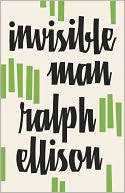
5. Invisible Man, Invisible Man by Ralph Ellison - A song of subjectivity, at times wildly uneven, partly inspired (according to Ellison) by Eliot's “The Waste Land,” the novel comes to us via an unnamed narrator under the guise of autobiography. Invisible Man shimmers as literature for what Ellison turned his back on, the realist protest novel, in favor of a personal and experimental style, one that allows erudition, feverish lyricism, command of the vernacular, fluency in pop culture, jazz, science, preaching, and discourses on communism. A voice to swallow not the world, per se, but the world's many voices. (Alternate: The Underground Man, Notes from Underground by Fyodor Dostoevsky) 
4. Franz-Josef Murau, Extinction by Thomas Bernhard - Bernhard's narrators are distinguished by their musicality, repetition, and relentlessness. The intellectual black sheep of a powerful Austrian family, Franz-Josef Murau must leave his exile in Rome when he finds himself sole heir to his family's estate, Wolfsegg. Brilliant, darkly comic, and enlightening, Murau's pseudo-autobiography is a triple-shot of bile from the Austrian master. (Alternate: Any of Beckett's narrators) 
3. Ruth, Housekeeping by Marilynne Robinson - In relating her and her sister's somewhat feral childhood in fictional Fingerbone, Idaho, Ruth depicts events and scenes she could not have witnessed firsthand but which have taken root in her imagination. The result is an intimate bildungsroman interwoven with a world-swallowing depiction of place, people, and history. All told through a voice that, at times, approaches the “I am nothing. I see all.” of Emerson's Transparent Eyeball. As stealthy as it is ambitious. (Alternate: Del Jordan, Lives of Girls and Women by Alice Munro) 
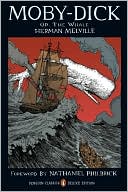
2. Ishmael, Moby-Dick by Herman Melville - “Call me Ishmael,” he says, but can we still call him Ishmael by the final chapter, when we get (spoiler alert) a third-person description of the destruction of the Pequod? Ishmael is the ultimate world-swallowing narrator, one who bursts at the seams with the volume of all he has swallowed, narrative consistency be damned. (Alternate: The author/narrator of Don Quixote) 
1. M., In Search of Lost Time by Marcel Proust - Cookie, tea, go! (Alternate: Howie, The Mezzanine by Nicholson Baker) 

See the original post HERE 

Some of my personal favorites (first and third person selections): Scout from To Kill a Mockingbird, Jo from Little Women, Guy from Fahrenheit 451, and Esther from The Bell Jar.


Who are some of YOUR favorite narrators in literature?