Wednesday, March 20, 2013

THE FAULT IN OUR STARS on the Silver Screen

So, it seems they are making a film adaptation of The Fault in Our Stars by John Green. Can anyone say score!!

My book club (I know, members, I know. I need to email you.) read this one a while back with some interesting discussion about the book. I think I was actually the most critical, which perhaps is why I'm so excited for the film adaptation.

As we all know, when moving a book to the silver screen, changes, deletions, and additions must be made for a new medium. It's the beauty of adaptations--a new vision sprouting from the same idea. I did have some issues with the book (though not to say I didn't enjoy it very much--I definitely did! It was excellent overall.) that I'm interested to see what producers and directors do with. Green's story could translate very well to film and has the potential to really dig even deeper and in an even more accessible way into the hearts of its audience.

It seems our heroine has also been cast already. Set to play Hazel is Shailene Woodley, according to Entertainment weekly, via GalleyCat:

The Descendants actress Shailene Woodley has been cast as Hazel Grace Lancaster in the upcoming film adaptation of John Green's The Fault in Our Stars, Entertainment Weekly reports. 
As of this writing, the announcement has attracted 240 “likes” on Facebook. Green himself has endorsed Woodley in a blog post: “I am very excited about this. Here’s the thing, tumblr: Shailene Woodley loves The Fault in Our Stars. She really does, and in her audition, she just was Hazel—at least to me.” 
The Golden Globe-nominated actress has taken roles in numerous book adaptation projects. 
We previously reported that she will portray Beatrice “Tris” Prior in the Divergent movie. According to Yahoo! Movies, she will also play Mary Jane Watson in The Amazing Spider-Man 2. 
See the original post HERE

Shailene was brilliant in The Descendants (and I'm not gonna lie, I am a secret fan of her former ABC show The Secret Life of the American Teenager) and must be doing something to right to by landing so many fantastic roles in upcoming adaptations.

Looking forward to buying my ticket in advance!

P.S. I would totally go on a Divergent squee-ing spree right now, by the way, but I'll save that for another day.

Tuesday, March 19, 2013

Dictionary Drama: "Literally" a Bad Idea

While I am certainly not an innocent when it comes to using the word "literally" in its common slang form, I must say I'm not super thrilled at its new spot in the dictionary.

I do my best not to use literally in every day speech unless doing so correctly, and I think that's what bothers me the most. Adding words to the dictionary gives them validity, tells people it's okay to use this word in the ridiculous way that you do. But really...really...it's not.

GalleyCat tells us more:

For years, readers and writers have debated a common informal use of the word “literally.” 
In conversation, some people use the word to provide exaggerated emphasis for a statement: “I love Haruki Murakami so much I literally read South of the Border, West of the Sun one hundred times.” Back in 2011, we even published a grammar PSA about the word 
Reddit reader "andtheniansaid" shared three separate dictionary definitions that include this informal usage, arguing that “it is okay to use the word ‘literally’ for emphasis.” 
Here are three major dictionaries that mention the exaggerated “literally” usage… 
Merriam-Webster Dictionary added a second “virtually” sense for the word, explaining with this note: “Since some people take sense 2 to be the opposite of sense 1, it has been frequently criticized as a misuse. Instead, the use is pure hyperbole intended to gain emphasis, but it often appears in contexts where no additional emphasis is necessary.” 
Cambridge Dictionaries Online added this informal usage to its definition: “used to emphasize what you are saying: He missed that kick literally by miles. I was literally bowled over by the news.” 
Oxford Dictionaries begrudgingly admitted the shift: “In recent years an extended use of literally (and also literal) has become very common, where literally (or literal) is used deliberately in non-literal contexts, for added effect, as in they bought the car and literally ran it into the ground. This use can lead to unintentional humorous effects (we were literally killing ourselves laughing) and is not acceptable in formal contexts, though it is widespread.” 
UPDATE: Reader Ann Glaviano added this note on Twitter: “‘Literally’ Creeping Since 1914. cf. usage in the opening line of ‘The Dead.’ She passed along an annotated link showing how James Joyce used the word literally in his famous short story. 
(Literal dead end photograph via MorrowLess) 
See the original post HERE

Monday, March 18, 2013

A Monday Morning Joss Whedon Distraction

Since I last posted, I have been to four different countries, moved to a new state with a totally different lifestyle, and begun a sloooow launch of my new editorial company, Double Vision Editorial. It has been overwhelming to say the least. So, let's just pretend my little disappearance never happened, shall we? :)

Instead, let's all enjoy this new trailer for the incredible Joss Whedon's upcoming adaptation of William Shakespeare's Much Ado About Nothing, posted last week on GalleyCat.


The Avengers director Joss Whedon adapted William Shakespeare‘s comedy, Much Ado About Nothing, as a modern-day retelling. The trailer is embedded above–what do you think? 
A limited release date has been set for June 07, 2013. The film has already screened at the Toronto International Film Festival and the Glasgow Film Festival. As we previously reported, Whedon shot the entire movie at his own home in 12 days. Here’s more about the film from NPR
As I watched Much Ado About Nothing, I had the distinct thought, “I wonder whether this is the future.” Not the future, of course — I don’t believe we’re anywhere close to the end of the blockbuster, nor do I believe we’re necessarily entering a new age of Shakespeare — but a big piece of the future. Big films have gotten so big, expensive films so expensive, that all of the risk has to be drained out of them, which often leaves behind a dried-out version of whatever was originally intended. 
See the original post HERE 

See? Now isnt't that a fun start to your week?

Friday, February 8, 2013

That Tricky Narrator

One of the most common problems I see in manuscripts I edit is issues with point of view. It can be so tricky being consistent in writing from a specific character's perspective and slips are bound to happen, especially in early drafts. And the omniscient POV, the one that allows you to jump about, it's very rarely done successfully and seamlessly (though it is possible).

So, when I edit, POV is one of the first things I notice. Is it first or third person? Is it from the right character? Are there too many different characters' POVs being shared? Is the character really showing the reader the story through his or her eyes?

Often the answers to these are not all check marks, causing a massive amount of revision on the author's part after an edit. But sometimes, sometimes, an author just nails the narration. Like these 10 classics compiled by author Antoine Wilson for Publishers Weekly:


Antoine Wilson
The first-person narrator descends from the ancient storyteller unspooling his tale around the fire for the delight and edification of his people. But on the page, two things transform him. One, we readers can ask “Who is this speaker? Why is he telling us this story, and what isn't he telling us?” Two, he can go on as long as he wants. The first case invents the so-called Unreliable Narrator, the second gives rise to what I like to call the World Swallower.

Whether insane, overheated, strung-out, or merely young and naïve, Unreliable Narrators always deliver more than their characters intend to. Comic or tragic, serious or absurd, they can tell just about any story while also reflecting our capacity for self-deception, our limited sliver of knowledge about the world, and the limits of language itself. 
The World Swallower is the unhinged cousin of the old-school omniscient author-narrator (the one who used to say “dear reader”). He stretches (or obliterates) the boundaries of what a character might be able to know. Whether deployed to illuminate the scope of human imagination or to bring under one flimsy umbrella the whole of experience, the World Swallower is the ultimate stand-in for an author who has devoted himself or herself to their art. 
There exist other varieties of first-person narrator, of course, and other ways to describe them, but my favorites (aka this Top Ten) are the Unreliables and the World Swallowers.
(For each book, I’ve also included an alternate, a sort of spiritual cousin to the one on the list.) 
10. Huck Finn, The Adventures of Huckleberry Finn by Mark Twain - Huck's narration exemplifies the triumph of the spoken over the written, the colloquial over the official. With this novel, Twain deployed his skills as a master ventriloquist to rejuvenate American literature, delivering adult ideas through the mouth of a child naïve. (Alternate: Scout, To Kill a Mockingbird by Harper Lee) 
9. Holden Caulfield, The Catcher in the Rye by J.D. Salinger -Another child narrator, so inflected with the language and perspective of a kid that the novel is often assigned to kids themselves, most of whom fail to see beyond Holden's puerile litmus of phony/not-phony. The power lies in the book's structure (pitting dying nobly against living humbly, at one point), and in reading it from an adult's perspective. Having already lost some innocence, we grown-ups understand the significance of Holden's position better than he ever could. (Alternate: Elaine, Cat’s Eye by Margaret Atwood) 
8. F**khead, Jesus' Son by Denis Johnson -A narrative of down-and-out druggy recovery told by an unreliable narrator. F**khead can't even keep his own story straight; he revises along the way. But what Johnson achieves here is innovative and moving. This is a true novel-in-stories, taking the overarching narrative of recovery from the novel form, while allowing F**khead's voice to evolve from chapter to chapter, a discontinuity enabled by the term “short story.” The events of the first story/chapter are no more or less strange than the last, but along the way the voice transforms from imagistic confusion to candid clarity. (Alternate: Esther Greenwood, The Bell Jar by Sylvia Plath) 
7. Ditie, I Served the King of England by Bohumil Hrabal - Hrabal is a modern master of the literature of the Fool. But unlike his forebears (cf Jasek's novel The Good Soldier Svejk), Hrabal lets his fools speak for themselves, giving them the microphone to narrate their own stories in all of their venal, occasionally insightful, narrow-minded glory. Ditie, a hotel waiter, likes to brag that he once served the Emperor of Ethiopia. A poor judge of seemingly everything, he marries a stern German athlete just as the Nazis are taking power. James Wood's review of Hrabal's work is a must-read. (Alternate: Stevens, The Remains of the Day by Kazuo Ishiguro) 
6. Charles Kinbote, Pale Fire by Vladimir Nabokov - Yes, yes, I know, why isn't Humbert Humbert on this list? Because far more interesting (to my mind) is Nabokov's second-most famous creation, Charles Kinbote.Pale Fire is a strange hybrid form; the novel consists of Kinbote's cranky Foreword, a 999-line poem by someone called John Shade, and the footnotes to that poem, in which Kinbote attempts to claim the work for himself in a sort of lit crit hijacking attempt. In doing so, Kinbote manages to both swallow the world and emerge as one of the least reliable and most amusing narrators I've ever read. (Alternate: Humbert Humbert,Lolita by Vladimir Nabokov) 
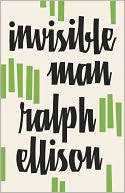
5. Invisible Man, Invisible Man by Ralph Ellison - A song of subjectivity, at times wildly uneven, partly inspired (according to Ellison) by Eliot's “The Waste Land,” the novel comes to us via an unnamed narrator under the guise of autobiography. Invisible Man shimmers as literature for what Ellison turned his back on, the realist protest novel, in favor of a personal and experimental style, one that allows erudition, feverish lyricism, command of the vernacular, fluency in pop culture, jazz, science, preaching, and discourses on communism. A voice to swallow not the world, per se, but the world's many voices. (Alternate: The Underground Man, Notes from Underground by Fyodor Dostoevsky) 
4. Franz-Josef Murau, Extinction by Thomas Bernhard - Bernhard's narrators are distinguished by their musicality, repetition, and relentlessness. The intellectual black sheep of a powerful Austrian family, Franz-Josef Murau must leave his exile in Rome when he finds himself sole heir to his family's estate, Wolfsegg. Brilliant, darkly comic, and enlightening, Murau's pseudo-autobiography is a triple-shot of bile from the Austrian master. (Alternate: Any of Beckett's narrators) 
3. Ruth, Housekeeping by Marilynne Robinson - In relating her and her sister's somewhat feral childhood in fictional Fingerbone, Idaho, Ruth depicts events and scenes she could not have witnessed firsthand but which have taken root in her imagination. The result is an intimate bildungsroman interwoven with a world-swallowing depiction of place, people, and history. All told through a voice that, at times, approaches the “I am nothing. I see all.” of Emerson's Transparent Eyeball. As stealthy as it is ambitious. (Alternate: Del Jordan, Lives of Girls and Women by Alice Munro) 
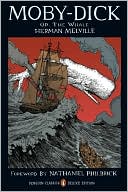
2. Ishmael, Moby-Dick by Herman Melville - “Call me Ishmael,” he says, but can we still call him Ishmael by the final chapter, when we get (spoiler alert) a third-person description of the destruction of the Pequod? Ishmael is the ultimate world-swallowing narrator, one who bursts at the seams with the volume of all he has swallowed, narrative consistency be damned. (Alternate: The author/narrator of Don Quixote) 
1. M., In Search of Lost Time by Marcel Proust - Cookie, tea, go! (Alternate: Howie, The Mezzanine by Nicholson Baker) 

See the original post HERE 

Some of my personal favorites (first and third person selections): Scout from To Kill a Mockingbird, Jo from Little Women, Guy from Fahrenheit 451, and Esther from The Bell Jar.


Who are some of YOUR favorite narrators in literature?

Tuesday, January 29, 2013

Happy Release Day, Kerry Schafer!

Today marks a very exciting day for a friend and colleague of mine, Kerry Schafer. As you may recall, back in January of last year, I came across Kerry's manuscript on Book Country and passed it along to the editorial staff at Penguin, who quickly fell in love with it as I had, acquiring a two-book deal from the debut author.

Now, the day has come that the fabulous manuscript is bound and hitting the shelves!

Vivian Maylor can’t sleep. Maybe it’s because she just broke up with her boyfriend and moved to a new town, or it could be the stress of her new job at the hospital. But perhaps it’s because her dreams have started to bleed through into her waking hours. 
All of her life Vivian has rejected her mother’s insane ramblings about Dreamworlds for concrete science and fact, until an emergency room patient ranting about dragons spontaneously combusts before her eyes—forcing Viv to consider the idea that her visions of mythical beasts might be real. 
And when a chance encounter leads her to a man she knows only from her dreams, Vivian finds herself falling into a world that seems strange and familiar all at once—a world where the line between dream and reality is hard to determine, and hard to control…

In honor of the release of BETWEEN (Ace Books), Kerry took time out of her busy blog tour schedule to do a little Q&A with me:

DP: So, the big question...how does it feel to be a published author?!

KS: Honestly? It feels like I've walked into my own book. Reality has become a little fuzzy, in all the good ways. I just can't believe my book is actually really going to be on bookshelves! I've been throwing around a lot of exclamation marks.

DP: What inspired the story behind BETWEEN?

KS: A lot of factors came together at just the right moment: an errant penguin (who happened to be named Vivian), my introduction to the works of MC Escher, and long, fascinating conversations on the nature of reality with my friend and co-worker, Jamie. Oh, and Nanowrimo! I'm pretty sure that writing fast and furiously had something to do with those disparate elements coalescing as they did.

DP: The revision process can be a tricky--and exhausting--one. What was the hardest thing for you to revise/rewrite? Did you have to kill any of your darlings?

KS: I have an entire graveyard full of darlings. Very few elements of the initial draft remain, in fact. I eliminated favorite characters and entire plot arcs and even my very favorite phrases.

DP: Tell us a little about your experience with the publishing process. Any particular likes, dislikes, surprises? Give it to me straight!

KS: Publishing is a strange animal. One of the fascinating (and frustrating) things about it is the aspect of "hurry up and wait." You are given some sort of a deadline. You clear your schedule, forego important aspects of daily living, and drive yourself to the finish line. You turn your manuscript or your revisions or copy edits or whatever in on time, excited by your success at meeting said deadline. Time then passes. Slowly. Two months later, your editor is just finding time to get to what you slaved away to turn in! I know this isn't just my story, because I hear it from my friends. Also? This isn't because editors are sitting around with their feet up, gossiping about their authors and drinking Margaritas. They too are busting their butts.

DP: Who, if anyone, guided you or acted as your mentor as you went from being an aspiring writer to a debut author?

KS: It wasn't just one person – sort of that "it takes a village" thing. My wonderful agent, Deidre Knight, for starters. And my friend Leigh Evans blazed the path for me – her debut (The Trouble with Fate, and you should definitely read this!) released about a month before Between. She was awesome about sharing information and her experience, which kept me from panic a few times, and from blunders a lot of times. Also, Julie Butcher, who has been through the book release experience with loved ones more times than I can easily count. My whole Twitter support team, people at work – the list is very long.

DP: Do you have a blog tour or any signings lined up that we should be putting on our calendars?

KS: I do have a fabulous blog tour lined up, which is currently ongoing. You can see the details of that here on my blog. I will be signing at Auntie's Bookstore in Spokane, WA on February 16 at 2 pm. And I'm planning to be at RT in Kansas City.

DP: What's up next??

KS: The second Book of the Between, tentatively titled Wakeworld. This is currently with my editor. (Reference question #4 and the whole waiting thing.)

Thank you so much for having me at your blog today! And thank you for discovering me on Book Country!!

Thank YOU for joining us, Kerry! 

HAPPY RELEASE DAY!


Sunday, January 27, 2013

A Lesson in Collecting Rare Books

I am a big fan of rare books. It's that simple. I could spend hours roaming around rare bookstores, poking my nose in the musty, yellowed pages and running my fingers along the rough leather bindings.


My own collection of rare books is small. Just one little bookshelf of editions of various ages, styles, genres--even languages. My three favorites are a first edition of Robert Frost's A WITNESS TREE, a  first edition of A.A. Milne's WE ARE SIX, and a random 19th century French religious tome that was neither bound nor had its pages cut for reading.

My hope as I start to settle down into my future is to grow my collection, have a little library or rare and used books to make me smile. But how do you really start that kind of collection, I sometimes wonder. Now, I can wonder now more, as this week, Publishers Weekly posted a piece called "Book Collecting 101" by Richard Davies of AbeBooks.com:

It might just be me, but I believe far fewer ‘Physical Books are Dead’ articles are being published these days. Just as well because book collecting is alive and well, and co-existing happily alongside digital media. Avid readers are still becoming book collectors. Beautiful, rare and interesting editions are still being bought and sold.
The first question for any potential book collector to answer is ‘What should I collect?’ The answer is simple – collect the books you love. I always advise collecting for love rather than financial gain. It could be an author or a literary group, every possible edition of a single title, a genre or a sub-genre, an era or a publisher, first editions, signed copies or books illustrated by a particular artist.
Can you make money from collecting rare books? Yes, but like the stock market, the value of books can decrease as well as increase. Can you build a collection of valuable books? Again yes, but, again like the stock market, it takes knowledge and research to strike gold. Are books a good long-term investment? It depends – can you identify books that will gain value over a couple of decades? 
Collecting books for financial gain is not easy. That’s why it’s good to start with the books you love and know well. Many collectors read every book published by an author and then begin collecting first editions of each title. Many collectors return to the books they loved as children. The loss of Maurice Sendak sparked interest in his work from collectors and a signed first edition of Where the Wild Things Are sold for $25,000 on AbeBooks just weeks after his death. Children’s books can be challenging to collect because young readers often treat them roughly. 
Spend time in rare bookshops. Bauman’s Rare Books in New York and Las Vegas, the Brattle Book Shop in Boston, Royal Books in Baltimore, Ken Sanders Rare Books in Salt Lake City and Wessel & Lieberman in Seattle are just a few famous names. Get to know your local rare booksellers. 
Considering many people now consume books via digital files, book collectors are often drawn to books as objects of art. The look (and feel) of particular books can define a collection. Bindings, dust jackets in certain styles and illustrations can be attractive drivers behind a collection. In December, AbeBooks sold a 1944 first edition of Pasiphaé illustrated by Henri Matisse for $30,000. Books by Picasso and Dali regularly fetch high prices. 
First editions and signed copies are two cornerstones of book collecting, but, once you have delved into the world of used books, the golden rule is condition, condition, condition. The difference in financial value between a first edition that’s been gently read once and a heavily worn first edition with a torn, price-clipped dust jacket can be significant. 
For modern first editions, the presence of a dust jacket is vital in itself – DJs were commonly thrown away by owners in the early years of the 20th century. The most significant example of how a dust jacket can affect value is the first edition of The Great Gatsby – with a dust wrapper, the book is worth more than $100,000 (one sold for $182,000 at auction in 2009). A first edition lacking its jacket is worth less than $10,000.
A book’s value increases when there is demand from buyers but copies are scarce. Simple economics. There can be many influencing factors, such as the literary or social significance of the book, interest in the author, awards or controversy. Das Kapital by Karl Marx shaped world politics, so first editions are worth $50,000. At the lower end of the scale, signed copies of the 2012 Booker-winning Bring up the Bodies start at $90. 
Moby-Dick was a flop when it was first published. Then a warehouse fire in 1853 destroyed the vast majority of the American first editions. Slowly, critics and readers came to understand Herman Melville had delivered a masterpiece and the few remaining first editions soared in value. Today, a first US edition will be priced over $60,000. 
Some authors are generous signers and that makes their signed books affordable. Ray Bradbury signed thousands of books, and today prices start at less than $20 – very low for a writer of such magnitude. Salman Rushdie and Ken Follett are two more prolific signers and prices for their signed books begin at around $15 and $8 respectively. 
If an author has reclusive status (think Harper Lee and J.D. Salinger) then you will pay a premium for a signed book. AbeBooks sold a rare signed first edition of To Kill a Mockingbird for $25,000 in 2011 – an unsigned first edition went for $18,000 last year.
As a reader of Publishers Weekly, you probably already have many books on your shelves. But a good book collection is not defined by quantity but quality. New books from successful authors often have a large first edition print run but you need to find the first edition of that writer’s debut title where only 1,500 copies were printed. A famous example is J.K. Rowling’s first edition of Harry Potter and the Philosopher’s Stone. She was an unknown writer and only 500 first edition copies were printed. One of those books sold for $37,000 on AbeBooks in 2005 at the height of Pottermania. 
If you already have first editions from up-and-coming authors on your shelves, you need patience. The big bucks are generated by books from legends of literature such as Kipling, Hemingway, Kafka and Tolkien – writers who have inspired millions of readers. It can take a long time to become legendary. 
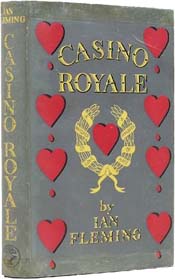
Another key question is how much should be spent on a book collection? Thanks to the Internet, it’s easy to spend $40,000 on a signed first edition of Casino Royale by Ian Fleming. Set a budget and stick to it. If you are collecting books that have prices out of your reach, be smart – spread your net into charity book sales, library sales, and thrift shops. Spot undervalued copies and snap them up. I met one collector who loved first editions from Fleming but could not afford them – instead he bought later editions and added facsimiles of first edition dust jackets. Facsimile jackets can be bought for $20. 
There are hundreds of ways to build an eye-catching collection without breaking the bank. A bookshelf filled with vintage Penguin paperbacks will impress anyone. Penguins published in 1936, the company’s first year, can be bought for under $5. Pulp paperbacks are also plentiful, fun to collect, and just as cheap. 
For more on book collecting, visit AbeBooks's online guide to book collecting
Read the original article HERE

Thursday, January 17, 2013

Poking My Head Out of My Hidey Hole

Oh, my dear readers. My sincerest apologies for my seemingly random disappearance. First it was the holidays. Then it was being massively ill, putting me behind on all my work by about 10 days. Now, just a week ago, I finally had my last day at a full-time traditional job and am fully self-employed. As you can see, things have been less than leisurely!

What have I been doing, you wonder? Editing like a madwoman, and getting settled over at my consulting gig as Editorial Director of Entangled's Select and Edge imprints. With our upcoming Edge launch--Monday!--I have been especially wrapped up, finalizing manuscripts and covers, promotions and marketing copy, mission statements and branding plans. Craziness!

In all that time, not only have I not been able to blog, but I also haven't been able to read for pleasure or work on any of my own writing. Not that I think I could turn my editorial brain off right now, even if I did have time.

Which brings me to the topic of conversation over at Word-Whores this week. Allison Pang wrote a spot-on post today that I think outlines some of my own feelings on the topic quite well:


Like so many of my fellow word whores, I also find that I have less time to read - but then, I seem to have a lot less time for a lot of things. Gone are the days where I might play WoW until my eyes bled. Or stayed up all night to devour an 800 page book. Or spent all weekend cross-stitching. 
Or hell, even sleeping in. Which hasn't happened for at least nine years now. >_<  Silly children. 
It's not something I'd really thought about when I was trying to get published, but writing tends to suck up a good deal of my free time, so when I do read books I want them to be worth my time. So now I'm much more picky. Before all this, I nearly always finished every book I started - I guess I felt that I owed it to the author to see it through to the end. But these days, if it doesn't strike my fancy I put it down and move on to something else. 
The problem is that after spending so much time going over my own work and trying to improve my craft, it's hard to shut down that "editor brain" even when I read for fun. It's a bit of a bummer really. Part of it is nitpicking on things, but part of is is because now I *know* how much work and love goes into crafting a story - it's hard not to simply stop and appreciate a lovely turn of phrase or scene that truly transports or wince when I come across something that doesn't work. 
Reading has always been one of my greatest pleasures, so it's wonderful when I come across a book that I can forget the work that goes behind it. I think in some ways it becomes a measure of trust - I have a list of authors or book series that I trust - e.g. I know if I pick up a book by one of them, I will be satisfied. 
(Which is why it becomes so hard when an author or series suddenly seems to take a sharp right-hand turn into nowhere - sometimes it works, sometimes it doesn't. That trust can become bitter disappointment.) 
These days I have books I read to feed my craft - highlighting bits and pieces or even certain words or scenes that strike my fancy that I want to remember - and books that are my comfort. When I look past the craft of the words and fall into the story like I used to? That's become rather precious to me because it doesn't happen as often as it used to. Things I could easily have overlooked before become glaring problems that pull me straight out of the story.
And of course, I realize that other people probably do the same thing with my books - which is both cool and somewhat mortifying all at once. And it's one of the reasons I can't really read my own books after they're out - the cool parts are cool, but wow, seeing the mistakes I made and can no longer change are often groan-inducing. 
But that's only fair, isn't it? :)
See the original post HERE