Wednesday, January 12, 2011

Book Review: Unbearable Lightness

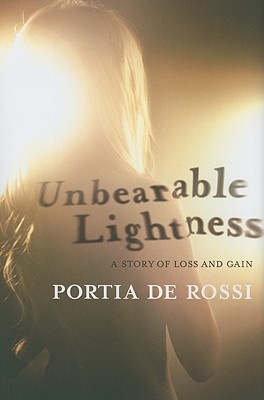
It's been a little under a year since William Morris Endeavor announced the sale of Portia de Rossi's memoir to a at-the-time-discreet publisher. But now, de Rossi's book, Unbearable Lightness: A Story of Loss and Gain, sits on the shelves, touting the Atria Publishing logo on its spine. It also happens to be sitting on my bookshelf at home, its binding happily cracked and pages fully read--and autographed by the author to some girl named Christine, might I add (it was a leftover copy from a signing courtesy of my dear friend, Rachel).

If you recall, when the book deal went public last year, I was surprised. I didn't know much about de Rossi, hadn't seen her in anything, but was inexplicably intrigued. Since then, I've watched her in "Arrested Development" and "Better Off Ted," her comedic acting chops--and her phenomenal beauty--glaringly evident. Naturally, my desire to read her memoir increased exponentially.

And I've gotta say, I was not disappointed.

Unbearable Lightness is a powerful, no-holds-barred story of de Rossi's struggle with body image, eating disorders, societal expectations, and her sexuality. With beautifully constructed prose written by de Rossi herself--a refreshing change for the celebrity publication--she transports the reader into her mind and her body.

At times, the things running through de Rossi's head--the fears, the voices demanding more of her, the justifications--seem excessive and unrealistic, but it's immediately apparent that that's kind of the point. The distorted views of a scared, sick, and sensitive soul aren't reasonable or sensible. They just are. And when you can't understand them, when you know they are wrong but can't seem to fight back, that's when it's the most palpable and traumatic. It's also when it's the hardest to overcome.

De Rossi, however, fought her demons and won. It took a trip to the hospital and diagnoses of lupus, osteoporosis, and more, to get her on the road to recovery but she made the journey. Her struggle and success is inspiring and hopeful for any who have ever experienced any of the thoughts de Rossi so craftily expresses. I had a few issues with some of the narrative drive, at times feeling like the multiple themes de Rossi tackled weren't coming together quite cohesively enough. I also wasn't a fan of the lengthy epilogue, wishing it had been written as part of the story itself and having her recovery process fleshed out in more detail. But I understand why it was structured the way it was, and really, there are more significant aspects of this book. Its impressive conveyance of de Rossi's hardships, for one.

Though I haven't personally experienced any of de Rossi's specific situations, I have--like most women of my generation--dealt with issues of body image, weight, and self-hate. And I will admit, that de Rossi hits the nail on the head, to be cliched. I too have heard that voice in my head telling me I'm too fat, that I'm too ugly to succeed in my career, to find love, to be worthy of, well, anything.

It's such a logically ridiculous concept, but society has burned it into our brains and, as much as I wish it hadn't affected me, I can't lie and say it hasn't. The thoughts still happen on a weekly basis, but I've learned to listen to them less and to tell them to scram when they start to take hold.

In college I had a particularly difficult time with it though. (Yes, I'm going into personal-story mode now...). I had gained about 25 pounds my first year of college--freshman 15 my big butt!--and when I was home for the summer and put on a bathing suit, I was distraught. I decided that I was going to turn things around, that I was going to loss all the weight I gained through exercise and eating better. I was also in a long-distance relationship and terrified that my boyfriend at the time was going to cheat on me since I was so far away and had gained so much weight. There were much thinner, prettier girls at his disposal and I was crazy if I thought he wouldn't jump at the chance if it arose--or so the voice in my head told me. So, I had to get in shape. I had to.

So, I started eating much less--I never counted calories, but I certainly restricted my diet, limiting my sugar intake (a particularly difficult feat for someone with the biggest sweet tooth in the, umm, world) and eating loads of salad, rice cakes with peanut butter, and such, and ignoring my stomach's grumbles when I was still hungry after my meal. I also started working out regularly--going to the gym to alternate cardio to shed fat with weight lifting to tone 4-5 days a week.

It wasn't too excessive, but my mindset shifted. If I missed a day at the gym or ate an extra cookie when I hadn't allotted it, I beat myself up psychologically. I would get angry and feel disgusting, often resorting to measuring myself in various spots and keeping a record to stare at when I was failing. I became obsessed with looking in the mirror to pick apart my body, to point out every teeny tiny flaw and make myself feel like crap until I left my dorm and went to the gym. I never thought of myself as having a disorder--and maybe I didn't, who knows--but my then boyfriend certainly commented, expressing his concern that I was obsessing over my weight and appearance when he thought I was the most beautiful, sexist girl he'd ever seen. I was furious when he said those things, thinking he was lying to me just to humor me. I'd get irritable and we'd argue. I'd be upset and he'd be frustrated. At the time, I didn't understand--I didn't get why he was so annoyed that I was trying to look better for him. But I see it now: the thoughts I was having, the obsessions, were simply unhealthy.

We broke up a year later, despite the fact that I shed all the weight I'd wanted. I'd gone from 150 back to 125. The break up devastated me though and my appetite disappeared completely. I went from 125 to 110 in about a week and a half. I'm not sure how that's even possible, but it happened. Then I dropped two more pounds to 108. That's when the comments about my being "too thin" began. I denied it for a while, happy to fit into clothes I hadn't worn in ages, but one day, I looked in the mirror as I was getting in the shower and saw what everyone else saw--bones jutting out, once-strong hips looking weak, the small amount of fat I did have sagged off my bones. It was time to eat again, to snap out of my stupor. This is also when I started drinking for the first time. The combo shot me back up to about 135, and the partying I was experiencing for the first time (and my exercise regime going by the wayside) pushed me back to 140. I was now not caring. With my knee injury occurring shortly thereafter, I cared even less, justifying my lack of activity.

About a year after I hit 108 though, I was back to about 130--a weight that I'm learning is my "healthy weight," the same in fact, as Portia de Rossi's. I focused on eating healthier, silencing the voices, letting myself slack once and a while without giving myself a lecture for it, and doing what I could to exercise without overdoing it and hurting myself. All in all, a much, MUCH healthier routine.

I still struggle with it on a regular basis, as I don't think these kinds of things ever really completely go away (not to mention the fact that I still have a bad knee so my activity is limited), but as de Rossi shares in her pretty incredible memoir, you learn to control it, to be the one in charge of the voice and not the other way around. You just learn to be better.

The Last Word: A moving, relatable, and superbly crafted memoir that any girl who's had even a speck of low self-confidence will find inspiring in one way or another.

Tuesday, January 11, 2011

A Rough Week for the Book Biz

The week started off to a depressing start in book publishing with the death of editor Ruth Cavin, and today is no different. Another perennial publishing guru, Manie Baron, has passed as well, according to GalleyCat this morning:
Literary agent, editor, and bookseller Manie Barron (pictured) passed away on Saturday.

His friends sent this obituary: “Manie began his nearly three-decade career in publishing as a bookseller at the Doubleday bookstore at South Street Seaport in Manhattan. He became a buyer for Golden Lee book distributors, from where he was recruited as a founding member of the Random House telephone sales team. He transitioned from sales to editorial, laying the foundation for what would become the Striver’s Row imprint at Random House, before moving on to HarperCollins, where he was publishing manager of the Amistad imprint. He then spent three years as a literary agent with the William Morris Agency before partnering with Claudia Menza in the Menza Barron Agency.”

See the original post for memorial information and donations HERE

I didn't know Manie personally, but I've heard a great many things about him. My thoughts are with his loved ones during this time. RIP Manie...

To continue the sad trend further, these less-than-lovely headlines grace today's Publishers Lunch Automat:

Nigerian Novelist Okey Nidbe Arrested, Passport Seized at Nigerian Airport

Paulo Coelho Says Iran Has Banned His Books

Orson Scott Card Suffers Mild Stroke

Gulliver's Travels Books In Portsmouth, NH to Close

Hopefully Wednesday will get us over this sad hump and bring some good book news for a change...

Monday, January 10, 2011

RIP: Respected Editor Ruth Cavin, 92, Dies

Beloved Macmillan editor Ruth Cavin passed away yesterday at the ripe old age of 92. With her, the industry has certainly lost an optimistic and dedicated booklover, that's for sure.

When I worked at St. Martin's, I came across Ruth a number of times--I didn't know her well by any means, but she was always chipper, always eager to help, and always just there. I'd never seen anyone work so hard so late into his/her life. Her age showed in her body as, over the years, it deteriorated so she was bent at an almost-90-degree angle when she walked, but she seemed young at heart, with an attitude that was better than any young person I knew in the Flatiron building.

Like I said, I barely knew her--and it's been years now since I worked there and came across her--but when I heard the news this morning of her death, I had to stop and pause. She has certainly been getting appropriate tributes throughout the blogosphere, and I wanted to share a particularly moving one with you today, written by Mike Shatzkin over at The Idea Logical Company blog:

The title of “nicest person on the planet” is now open. The longtime incumbent, Ruth Cavin — also a veteran book editor who was known to many as the doyenne of mysteries — died early Sunday morning at the age of 92. She was still holding down a full time position as an editor with the Thomas Dunne Books imprint at St. Martin’s at her death.

What is unique about Ruth’s career is that she didn’t become an editor until she was past her 60th birthday and didn’t start her more than two decades at St. Martin’s until she was 70. She was sort of the Grandma Moses of mystery editors.

I had the very good fortune to have known Ruth all my life.

Ruth Brodie grew up in Pittsburgh where she first met my mother, Eleanor Oshry, when they went to kindergarten together. They were active together as schoolchildren in the YPSLs (Young People’s Socialist League, the youth arm of the political party that was led by Norman Thomas) and they both attended college locally at Carnegie Tech (now Carnegie-Mellon).

The story in the family is that when my father, Leonard Shatzkin, went out to Tech in 1938 to get his degree in printing, he had the phone number of two girls in his pocket: my Mom and Ruth. He called Mom first. She said she knew he had both numbers, so she kept him too busy from that point on to have time to call Ruth.

But they all became friends and worked together on the Carnegic Tartan, the school paper, on which Ruth was a columnist, Dad eventually the editor, and Mom the managing editor.

I realize as I write this that I never asked Ruth exactly how she ended up in New York after college. What I do know is that between when the war ended, during which my Dad had been exempted from service because he was working on the Manhattan Project, and when my arrival could be anticipated (which would have been late in 1946), they thought he would be drafted. My parents organized a going-away party for him for which the guests were all married couples except for two single friends: Ruth and a young Business Week writer named Bram Cavin.

The families remained close, personally and professionally. When Dad started the Dolphin Books imprint at Doubleday, he was able to hire Bram as an editor. In the early 1960s, the Cavins with their young children, son Tony and twin daughters Emily and Nora, moved to Pleasantville near where we lived in Croton and we saw them increasingly often. They moved to Cleveland in about 1964 when Bram took a job as an editor with World Publishing and Ruth’s home was my stop the first night I was driving across the country to go to UCLA in 1965.

Ruth was not working full time then but was active in anti-war politics. She was also interested in whatever you were interested in. I remember in the late 60s when bands starting putting out “concept” albums sitting with her for an hour with the Moody Blues’ “Days of Future Passed”, talking about what was “different” about all this, or whether anything really was.

In the early 1970s, my father started The Two Continents Publishing Group, setting up a trade book distributor on what is now the PGW-NBN model before there really any prototypes. Dad hired Ruth as his first employee to do the publicity. She also sold the subsidiary rights. I got the entirely-too-inflated title of Director of Marketing which meant that I got credit for a lot of what Ruth did.

Her output was prodigious. She wrote all the catalog copy, edited or wrote press releases, flap copy, and rep information for what grew into many dozens of books a year. She called on all the book clubs and all the senior book reviewers. Meanwhile, she had written a couple of books. One was called “Dinners for Beginners”. Another was on inter-urban rail transportation, mostly in the midwest, called “Trolleys.”

And, I must stress, it would be an understatement to say she had a smile on her face every day. Ruth had a smile on her face every minute. Nothing flustered or annoyed her. When you knew her well, you knew she had smiled her way through some pretty significant annoyances. She had a mastectomy in 1941. (She told me about two years ago that she now thinks she didn’t have cancer; that the diagnosis was a mistake.) She had a pacemaker installed in the late 1960s. I’ll bet that very few people who knew her had any idea about either of these things.

When the Shatzkins sold out of Two Continents in 1979, Ruth was 61 but definitely not done working. She was looking for new worlds to conquer. She managed to get a job at Walker and Company, a family-owned independent publisher that did a lot of mysteries. And thus did Ruth become a mystery editor.

Among the people she worked with at Walker were Philip Turner, who went on to work at Random House, Kodansha, and Sterling, and David Sobel, later at Wiley and Holt. I had an exchange with David yesterday in which he said, tongue only partly in cheek, that Ruth taught him everything he knows.

Ruth would teach you without it feeling like teaching. Every conversation was with an equal; every relationship was collegial. Her respect for other people was universal and deep and entirely genuine.

Tom Dunne was the man who “discovered” Ruth (when she was 70) for his imprint but he had support for the idea from then-CEO Tom McCormack. McCormack (another Doubleday alumnus originally recruited by my father) told me that he had a previous good experience with Joan Kahn, a mystery editor who had been retired by Harper at age 65 and then gave St. Martin’s ten great years.

Ruth started five years older and gave them more than 20!

The enormous productivity that my family and I saw in Ruth at Two Continents continued to be her reputation at St. Martin’s. I heard over the years that she routinely acquired, edited, and put into production more books than anybody. Since I pitched a few and sold her a couple over that time, I can tell you that she did all that without stinting on any part of the job from first contact through contract and editing and launch. Working with her was a positive experience for every author I know who did it.

With greater diligence since my Mom died in 2007, I’d see Ruth every few months outside the holiday season. We’d have lunch. She’d come along to see my nephew A.J. Shively in a play. I took her downtown a couple of times to get new hearing aids. I could see her decline. The scoliosis in her spine had her bent over so her back was nearly parallel to the ground. That meant she couldn’t breathe. We’d have to stop 3 times on the one block walk from her office to the restaurant she frequented.

Her memory, which, for names, had been sliding for years, started showing other lapses. I’d always ask her about her job. She always had a determination to keep it; the time she spent in the office with her colleagues was precious to her. A couple of years ago, she told me a bit abashedly that her company had insisted she stop taking the bus down from Grand Central to the office and provided her with a cab and then a car to take her back at the end of the day. (This was at the time that Bram was in a home near the White Plains train station, and Ruth stopped and saw him every evening on the way home.) A year or so ago, she said there was a plan afoot to have her work at home sometimes because the travel to the office was exhausting her. But she loved being with her colleagues. And she revered her boss, Tom Dunne, who really was the one who gave her this magnificent post-retirement-age career.

I had a conversation with St. Martin’s Publisher Sally Richardson (Dunne’s boss) about Ruth at a party for Al Silverman’s book three years ago. Sally was saying that she was working on making sure Ruth got a decent winter coat; she was so frugal and unconcerned with her own comfort that Sally had to, more or less, do it for her.

I told a few people at Macmillan that I wanted to acknowledge them publicly on Ruth’s behalf for the extraordinary sensitivity and generosity they showed her over the last months, perhaps even years, of her life. Although Tom McCormack made the point that they had learned that a “no age limit” policy made sense through their experience decades ago with Joan Kahn, that policy would not have obliged them to give her the extra support and reduced expectations that she must have required in the recent past.

They did that because they loved her, which was an inevitable consequence of knowing her well, so that isn’t extraordinary. But the fact that the company, particularly a company of the size of Macmillan, treated her better than many families would, is both rare and worthy of commendation. From this lifelong friend of Ruth’s, thanks very much.


See the original posting HERE


RIP Ruth...

Friday, January 7, 2011

Ethics Police: Editing Huckleberry Finn

When I heard that Mark Twain's classic novel Huckleberry Finn was being edited to remove two non-PC words--"nigger" and "injun"--I was somewhat livid. I kept myself away from blogging yesterday I was so upset, knowing I would probably just rant and rave about it if I tried to put figurative pen to paper.

But today, my head is a little clearer, though my heart is still distressed by the news. And I'm not the only one. The New York Times published a lengthy piece yesterday slamming the new edition, and I'd never have guessed I'd agree so wholeheartedly with Michiko Kakutani:

“All modern American literature,” Ernest Hemingway once wrote, “comes from one book by Mark Twain called ‘Huckleberry Finn.’ ”

Being an iconic classic, however, hasn’t protected “Adventures of Huckleberry Finn” from being banned, bowdlerized and bleeped. It hasn’t protected the novel from being cleaned up, updated and “improved.”

A new effort to sanitize “Huckleberry Finn” comes from Alan Gribben, a professor of English at Auburn University, at Montgomery, Ala., who has produced a new edition of Twain’s novel that replaces the word “nigger” with “slave.” Nigger, which appears in the book more than 200 times, was a common racial epithet in the antebellum South, used by Twain as part of his characters’ vernacular speech and as a reflection of mid-19th-century social attitudes along the Mississippi River.

Mr. Gribben has said he worried that the N-word had resulted in the novel falling off reading lists, and that he thought his edition would be welcomed by schoolteachers and university instructors who wanted to spare “the reader from a racial slur that never seems to lose its vitriol.” Never mind that today nigger is used by many rappers, who have reclaimed the word from its ugly past. Never mind that attaching the epithet slave to the character Jim — who has run away in a bid for freedom — effectively labels him as property, as the very thing he is trying to escape.

Controversies over “Huckleberry Finn” occur with predictable regularity. In 2009, just before Barack Obama’s inauguration, a high school teacher named John Foley wrote a guest column in The Seattle Post-Intelligencer in which he asserted that “Huckleberry Finn,” “To Kill a Mockingbird” and “Of Mice and Men,” don’t belong on the curriculum anymore. “The time has arrived to update the literature we use in high school classrooms,” he wrote. “Barack Obama is president-elect of the United States, and novels that use the ‘N-word’ repeatedly need to go.”

Haven’t we learned by now that removing books from the curriculum just deprives children of exposure to classic works of literature? Worse, it relieves teachers of the fundamental responsibility of putting such books in context — of helping students understand that “Huckleberry Finn” actually stands as a powerful indictment of slavery (with Nigger Jim its most noble character), of using its contested language as an opportunity to explore the painful complexities of race relations in this country. To censor or redact books on school reading lists is a form of denial: shutting the door on harsh historical realities — whitewashing them or pretending they do not exist.

Mr. Gribben’s effort to update “Huckleberry Finn” (published in an edition with “The Adventures of Tom Sawyer” by NewSouth Books), like Mr. Foley’s assertion that it’s an old book and “we’re ready for new,” ratifies the narcissistic contemporary belief that art should be inoffensive and accessible; that books, plays and poetry from other times and places should somehow be made to conform to today’s democratic ideals. It’s like the politically correct efforts in the ’80s to exile great authors like Conrad and Melville from the canon because their work does not feature enough women or projects colonialist attitudes.

Authors’ original texts should be sacrosanct intellectual property, whether a book is a classic or not. Tampering with a writer’s words underscores both editors’ extraordinary hubris and a cavalier attitude embraced by more and more people in this day of mash-ups, sampling and digital books — the attitude that all texts are fungible, that readers are entitled to alter as they please, that the very idea of authorship is old-fashioned.

Efforts to sanitize classic literature have a long, undistinguished history. Everything from Chaucer’s “Canterbury Tales” to Roald Dahl’s “Charlie and the Chocolate Factory” have been challenged or have suffered at the hands of uptight editors. There have even been purified versions of the Bible (all that sex and violence!). Sometimes the urge to expurgate (if not outright ban) comes from the right, evangelicals and conservatives, worried about blasphemy, profane language and sexual innuendo. Fundamentalist groups, for instance, have tried to have dictionaries banned because of definitions offered for words like hot, tail, ball and nuts.

In other cases the drive to sanitize comes from the left, eager to impose its own multicultural, feminist worldviews and worried about offending religious or ethnic groups. Michael Radford’s 2004 film version of “The Merchant of Venice” (starring Al Pacino) revised the play to elide potentially offensive material, serving up a nicer, more sympathetic Shylock and blunting tough questions about anti-Semitism. More absurdly, a British theater company in 2002 changed the title of its production of “The Hunchback of Notre Dame” to “The Bellringer of Notre Dame.”

Whether it comes from conservatives or liberals, there is a patronizing Big Brother aspect to these literary fumigations. We, the censors, need to protect you, the naïve, delicate reader. We, the editors, need to police writers (even those from other eras), who might have penned something that might be offensive to someone sometime. According to Noel Perrin’s 1969 book, “Dr. Bowdler’s Legacy: A History of Expurgated Books in England and America,” Victorians explained their distaste for the colorful, earthy works of 18th-century writers like Laurence Sterne and Henry Fielding by invoking the principle of “moral progress” and their own ethical superiority: “People in the 18th century, and earlier, didn’t take offense at coarse passages, because they were coarse themselves.”

Read the rest of the article HERE

Kakutani's insights and arguments ring 100 percent true in my ears, and it's baffling to me how people can see it otherwise.

I understand that these words are no longer socially acceptable, but Huck Finn wasn't written yesterday--it was first published in 1884. Back then, it's how things were; it's history. Whether it's something we agree with or not, it's part of America's past, and our past helps us grow and improve as individuals and as a society. Teaching our children about the way things were, remembering the past and learning from it, is the only way to stop it from repeating itself. Some of us--aka me--even have tattoos to that effect. There's a West African Andrika symbol called a Sankofa on my right shoulder blade, representing the importance of learning from the past. It's something I strongly believe in and never want to forget.

I've also got to give Kakutani props for actually using the word "nigger" in her article (*gasp* I just did it too! AGAIN!). Many pieces have been calling it the "N-Word," making me feel like Hermione Granger as she maintains that "Fear of a name increases fear of the thing itself" in regard to He-who-must-not-be-named. I may not like the implication behind words like "nigger" and "injun" and even "Voldemort," but using them out of context does not mean I condone their meanings. The whole censorship argument aside (that would take up an entire blog post in itself, if not a series of them!), it's just a word. There's nothing to be afraid of. It might offend people, but it can't really hurt you unless you let it.

But clearly, people are letting it. And as a result, Twain's classic is getting the shit end of the stick, to put it bluntly.

Wednesday, January 5, 2011

Dual Purpose: 2011 Must-Reads & RBtL's First Giveaway!

It's that time again, the time when everyone publishes lists of their most anticipated books of 2011--The Telegraph, The Daily Beast, The Millions...the list goes on.

Personally, I still haven't read most of the books I liked from last years' most anticipated lists, but I'm always up to see what's new and exciting. Just for kicks, here are some of the ones I find exciting/interesting for the first quarter of the year from the various lists (because that's of course all you readers care about :-p):

Give Me Your Heart by Joyce Carol Oates (January, from The Telegraph list) - I will admit it: I love JCO. I'm not sure what it is about her, but she's brilliant. I wrote a college paper on her famed novel Firefox--a comparative study of the book versus the film adaptation--but I haven't read many of her short stories. This collection is sure to be a thought-provoking one!

The Illumination: A Novel by Kevin Brockmeier (February, from The Millions list) -I've never heard of Brockmeier but his premise sounds intriguing as he "asks the question: What if our pain is the most beautiful thing about us?" (themillions.com). This idea is actually one that I ponder frequently. I even have a drawing framed on my living room wall by my favorite Etsy artist (The Black Apple) that interweaves a sketch of a sad girl and the words "I love everything in you that hurts." I just find it immensely beautiful. Obviously, Brockmeier's second novel has now piqued my interest for similar reasons.

Sing You Home by Jodi Piccoult (March, from The Telegraph list) - I've read a number of Piccoult's books, though certainly not every one in her massive arsenal. Her writing is strong, her voice is engaging, and her stories are always intriguing. This one, about homosexuality and parenthood, has "controversial bestseller" written all over it.

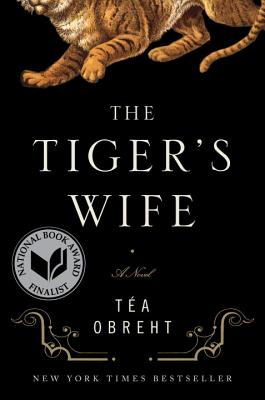
The Tiger’s Wife by Tea Obreht (March, from The Daily Beast list) - A debut novel by one of The New Yorker’s twenty best American fiction writers under forty, this one caught my eye pretty instantly. With a synopsis--and even cover--that promises family, lies, beauty, and love painted on a cultural canvas in the Balkans, it sounds immensely powerful and perhaps even painful to read.

With those four very different works now on my to-read list, I am compelled to shift gears over to commercial fiction and tell you about my very own most anticipated book of 2011.

Most of you have already heard me ooh-and-ahh, but allow me to refresh your memory: debut urban fantasy novel A Brush of Darkness by Allison Pang.

Yes, I have a close relationship with this one--not only was it the first book I acquired (jointly, but still) and I edited it, but the author and I are good friends. But even if I hated her guts (love you, AP! :-p) I would still love her book. Hilarious, powerful, sexy, and imaginative, Brush has it all. And with just 20 days until it hits shelves, I can barely sit still.

The gorgeous bookmarks Allison sent me yesterday do not make it any easier to be patient. What they do make easier though is helping spread the excitement.

Soooooo, in honor of my most anticipated release of the season, I'm giving away a bookmark from my stash to each of the first three people to comment on this post and share with us his/her most anticipated book of 2011!

Come on now, folks. Don't be shy. And don't let my first giveaway (albeit it's a mini-one) be a total bust!!

Monday, January 3, 2011

Two Sides to the Self-Publishing Coin

This morning, my dear friend Allison Pang sent me an interesting link to a post by blogger/author Joe Konrath.

Konrath, a successful self-published thriller writer, responds to an article by Richard Curtis regarding whether or not "authors make good publishers." Konrath says, "Yay." Curtis says, "Nay."

Let's take a look at what they each think about the matter:

CURTIS:

Do authors make good publishers? The answer is No. But it’s fascinating to watch them try.

Years ago as the e-book revolution dawned, we said that in order to keep pace with the new digital culture, authors would have to become more like publishers. “As electronic technology hurtles too fast for even futurists to keep up with,” we wrote, “a generation of readers is emerging that will not accept text unless it is interactively married to other media.” (See Author? What’s an Author?)

Unfortunately, in order to master publishing skills, authors face the prospect of abandoning commitment to their muse. Digital technology has given writers the key to the funhouse, and few have been able to resist the allure of all those glittering tools empowering them to steal fire from Simon & Schuster, Penguin and Random House.

In the past year a number of prominent authors have accepted the challenge with varying degrees of success. We’re thinking in particular of Cory Doctorow, Seth Godin and J. A. Konrath. Whether their move to the other side (as publishers ourselves we’re in no position to call it the dark side) proves detrimental to their writing careers is a question that will play out in time. But because their experiments are being watched and emulated by other writers, these adventures are worth noting.

[...]

For authors, the lesson to be learned from these examples is that you must distinguish between writing and publishing your writing and weigh the goals and satisfactions of those two vastly different processes. In this age of instant gratification and entitlement the idea of long, uncompensated apprenticeships seems to be a relic of another age, But the rigors of artistic achievement are no different from those of the Middle Ages, the Renaissance or the Age of Enlightenment. Talent and hard work will out, but they must be leavened over time.

Publishers too have a lot to learn from the efforts of these authors, particularly from Cory Doctorow who has more and fresher ideas than an army of old-line publishers. A review of his Publishers Weekly articles detailing his innovations will generously reward every editor young or old.

Read the rest of the post (and see cited examples) HERE

KONRATH:

Yesterday, respected agent Richard Curtis posted an article he wrote called Do Authors Make Good Publishers?

His conclusion is: No.

He cited me as one of his examples, and quoted my website. I wish he'd contacted me personally, because the quote he took is out of date.

It's my fault for not updating my website regularly, but I've since had a 180 degree change of stance on self publishing.

Authors should self-publish.

As ebooks continue to gain ground, and print continues to lose ground, and publishers and bookstores continue to report losses, this industry isn't nearly as stable as it once was. In fact, I'm not sure the industry will survive.

In an ebook-dominated world, are publishers even needed?

I can't think of a single, compelling reason to allow publishers to keep 52.5% of ebook royalties and give authors just 17.5%--especially when any writer can make 70% by uploading to Kindle themselves.

[...]

If you browse the Kindle genre bestseller lists, between 20% and 90% of the authors listed there are self-published authors. In some cases, because of the higher royalties Amazon offers, these writers are making more money than traditionally pubbed authors. I earn $2.09 on a $2.99 ebook. I only earn 82 cents on a $4.79 ebook published by my print publisher.

Read the entire post HERE

I remain Switzerland on this one. Both parties make some merited arguments, but in my opinion, there's no real answer to this question. I think it all depends on the author himself/herself, what they're willing to do, what networking connections they have, etc. It doesn't work or not work--it varies tremendously.

Of course, traditional publishing certainly offers a great deal of opportunities that self-publishing does not--editing, ad/promo, marketing, larger distribution channels, etc.--but with some elbow-grease and talent, self-pub can still gain an author acclaim and value, as Konrath and others have shown. But that author needs to be open-minded and dedicated to his/her pub and ready to work hard and learn the industry ropes. If not, traditional publishing is the only way to go.

Thursday, December 23, 2010

Ethics Police: Pedophile Author Arrested for Obscenity

Some of you might recall back in November when a self-published book on pedophilia popped up on Amazon. The book, which was a how-to guide for pedophiles by a Colorado man, was pulled off the site as soon as it was acknowledged.

Now, the author--Phillip R. Greave--has been arrested on charges of obscenity, opening a huge Bill-of-Rights can of worms, no matter how morally justified it may be.

The Associated Press reports:
A Colorado man who wrote a how-to guide for pedophiles was arrested Monday and will be extradited to Florida to face obscenity charges, after deputies there ordered a copy of the book that has generated online outrage.

Officers arrested Phillip R. Greaves at his home in Pueblo on Monday on a warrant that charges him with violating Florida's obscenity law. During a brief court appearance, Greaves waived his right to fight extradition to Polk County, Fla., where Sheriff Grady Judd claimed jurisdiction because the author sold and mailed his book directly to undercover deputies. Judd said Greaves even signed the book.

"I was outraged by the content," Judd told The Associated Press. "It was clearly a manifesto on how to sexually batter children ... You just can't believe how absolutely disgusting it was."

The book — "The Pedophile's Guide to Love and Pleasure: a Child-lover's Code of Conduct" — caused a flap when it showed up on Amazon in November. The book was later removed from the site.

Greaves, who has no criminal record, writes in the book that pedophiles are misunderstood, as the word literally means to love a child. He adds that it is only a crime to act on sexual impulses toward children, and offers advice that purportedly allows pedophiles to abide by the law.

Judd said he was incensed when he heard about the book and that no one had arrested Greaves for selling it. The book, Judd said, included first-person descriptions of sexual encounters, purportedly written from a child's point of view.

"What's wrong with a society that has gotten to the point that we can't arrest child pornographers and child molesters who write a book about how to rape a child?" said Judd, who keeps a Bible on his desk and is known throughout Florida as a crusader against child predators.

Florida' obscenity law — a third-degree felony — prohibits the "distribution of obscene material depicting minors engaged in conduct harmful to minors." Pueblo County sheriff's spokeswoman Laurie Kilpatrick said Greaves would leave for Polk County later in the day.

Legal experts questioned whether Greaves' right to free speech would come into play if there's a trial. If prosecutors can charge Greaves for shipping his book, they ask, what would prevent booksellers from facing prosecution for selling Vladimir Nabokov's "Lolita," a novel about a pedophile?

"As bad as this book may be, the charge opens a very big Pandora's box," said Dennis J. Kenney, a former police officer in Polk County and a professor at John Jay College of Criminal Justice in New York. "The charge sounds to me like a significant overreach."

Greaves was among a group of prisoners who made brief appearances before District Court Judge David Crockenberg in Pueblo on Monday, all of them represented by the same public defender. He was the only one not wearing a striped prison uniform although his wrists were handcuffed in front of him.

Dressed in a cream colored T-shirt and khaki pants, Greaves said he understood the extradition process. When Crockenberg asked him if he understood he would be taken to Florida, Greaves responded, "That is correct, your honor."

Judd said his undercover detectives got Greaves to mail the book to them for $50; he told officers it was his last copy.

"If we can get jurisdiction ... we're coming after you," Judd said. "There's nothing in the world more important than our children."

Read the article on Yahoo! News HERE
It's unbelievably disturbing to me what people are capable of. And as Judd points out, we have a responsibility to protect our families and society's youths, and I agree that we should do whatever we can--within reason--to do so.

But I'll admit it is a blurry line to toe given our country's "freedoms." The question is: what is "within reason"? The conditions set out by our founding fathers seem more detrimental than anything else in cases like this, but what can we legally and morally do about it?

As our country is wont to do, I'm sure they'll find other, more "just" and "appropriate" charges on which to take action against Greaves, but they may be sticking their hands into a giant honey pot in doing so.

The Ethics Police are baffled...and sitting here with the creeps, to say the least.