Showing posts with label books. Show all posts

Thursday, May 2, 2019

Book Clubs, Summer Reads, and the Motor Vehicle Commission (Oh my!)

Yesterday ran away with me. Or rather, drove away with me. I ended up realizing I missed my car inspection (thanks, surgery!), so I hurried over after a doctor's appointment and got it checked out. Then I realized my registration said it was expired in April 2019, too...

Except I renewed it online in August when I put in my address change... So I had to go over to the actual Motor Vehicle Agency and talk to someone there. Turns out, my payment/renewal doesn't show up in the system for some reason. So I had to renew it again. And now I have to apply for a refund once I pull together the documentation of my August payment. Is your head spinning yet? Mine sure is!

And naturally, I left my book at home because I didn't think I'd be waiting in so many lines... Instead, I browsed GoodReads, looking for potential book selections for RBtL Book Club 2.0, which I'm very excited to be rebooting. I think I came up with some pretty good options, but I sure could've used this awesome list of the best summer reads from the staff over at Publishers Weekly
Looking for the perfect book to throw in the suitcase or take to the beach? Let us help. We've polled our staff for their personal recommendations, and PW's reviews editors have put together some stellar picks in fiction, mysteries and thrillers, romance, sci-fi, graphic novels, nonfiction, and YA and children’s books. Whether you want something breezy, laugh-out-loud funny, terrifying, thought-provoking, or anything else, really, we've got you covered. Enjoy!
Aurora Rising by Amie Kaufman and Jay Kristoff (Knopf Books for Young Readers)
My favorite reads from last year were the bestselling Illuminae series, which Kaufman and Kristoff cowrote. When I learned that they were collaborating on a new trilogy, well, I don’t think I can accurately describe my excitement. An SF YA with an ensemble cast of misfits, blistering sarcasm, and characters who are really good at what they do but terrible when interacting with other people? Sign me up, please! —Drucilla Shultz, assistant editor
The October Man by Ben Aaronovitch (Subterranean) 
It’s lucky that Aaronovitch turns out new additions in his Rivers of London supernatural police procedural series so often, since their deadpan humor and sexy river gods make them perfect diversions in any season. The latest entry is a spin-off, introducing a new protagonist, magic-practicing cop Tobias Winter, in a new setting: Germany. It’s a wine-related mystery I can’t wait to uncork. —Hannah Kushnick, reviews editor 
The Paper Wasp by Lauren Acampora (Grove) 
That feeling when you know things are about to go horribly wrong, but you’re not sure exactly how and you can’t look away? That’s the sensation of reading Acampora’s debut novel, which opens with Abby, an artistic near recluse in a dead-end job, on her way to visit Elise, a promising Hollywood actress, after they’ve reconnected at their high school reunion. Because here’s the thing about rekindling a friendship—it just might end in ashes. —Carolyn Juris, features editor 
The Perfect Fraud by Ellen LaCorte (Harper) 
What is a beach read exactly? For me, it’s a perfect page-turner that adds to the bliss of summer. This one hits all the marks with two women, one a reluctant fourth-generation commitment-phobic faux psychic, the other a brash single mother with a very mysteriously sick child. The tension rises as the women’s lives collide in the red rocks of Sedona. —Louisa Ermelino, editor-at-large 
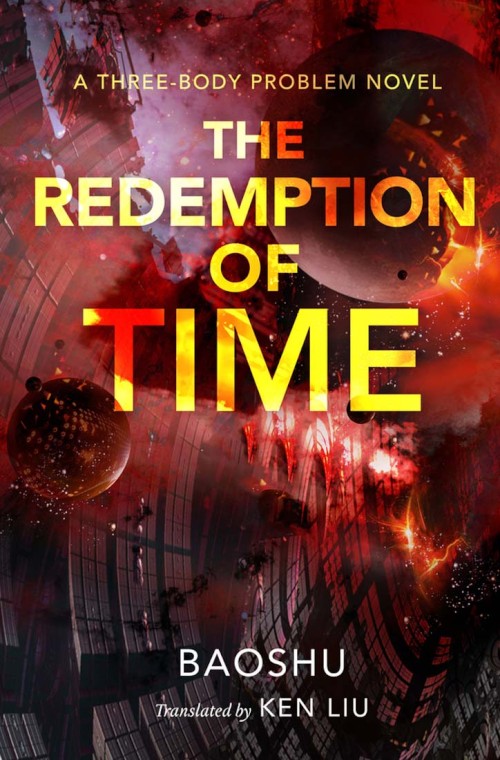
The Redemption of Time: A Three-Body Problem Novel (Remembrance of Earth’s Past) by Baoshu, trans. from the Chinese by Ken Liu (Tor) 
Nine years ago, science fiction novelist Cixin Liu published Death’s End in China, finishing his 1,500-page Remembrance of Earth’s Past trilogy. “No matter how many posts we wrote, the magnificent, grand arc of the trilogy was at an end,” Baoshu writes, describing the “melancholy” that inspired him to write a fanfiction tribute. This cosmic Romeo and Juliet story takes a welcome journey back to Liu’s fictional universe (with the master’s blessing). —Jason Boog, West Coast correspondent 
And the list goes on... 
Read the original post with the FULL list HERE

What's on YOUR summer reading list?

Tuesday, September 12, 2017

The Delight of Fall Reading

Fall is almost here, and I couldn't be happier about it. I'm a temperate-weather girl, and so fall and spring are my jam. Especially since I can just put on a light jacket, make a cup of tea and maybe get myself a slice of pie, and grab a book, and take it all outside to sit and read. Delightful!

That's what I'd do if I had more free time, at least. So this fall, I need you to step up, dear readers, and let me live vicariously through your reading lists. If you need a hand deciding where to start, Buzzfeed has pulled together a list of "28 Exciting New Books You Need To Read This Fall."

And if you have trouble deciding, Buzzfeed has even created a quiz to help you out.

 Her Body and Other Parties by Carmen Maria Machado 
[Machado] shows off her fresh new voice in Her Body and Other Parties, a genre-bending short-story collection that is part magical realism, sci-fi, fantasy, and horror. In Machado's imaginative, unsettling, haunting stories, she explores the violent realities of being a woman and having a female body in our society. 
Publication date: Oct. 3
 My Absolute Darling by Gabriel Tallent
In [Tallent's] dark and gripping debut novel My Absolute Darling, Turtle Alveston is a 14-year-old girl who's lived in isolation with her survivalist father on the northern California coast since her mother's death. But when she finds a friend in a high school boy, she realizes she must escape her dysfunctional, abusive life with her father, using the survival skills he taught her and a whole lot of courage. 
Publication date: Aug. 29


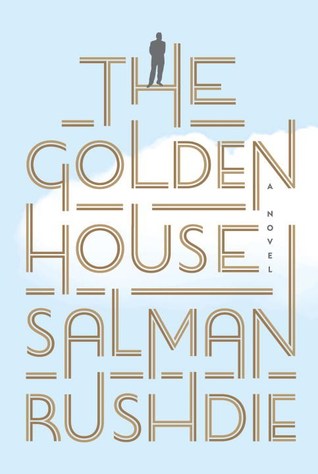
The Golden House by Salman Rushdie
[Rushdie] makes a return to realism in The Golden House, a novel about an eccentric billionaire named Nero Golden and his three adult sons — who make quite the splash when they mysteriously move to a cloistered community in downtown Manhattan — and their aspiring filmmaker neighbor who chronicles their undoing. A tale of identity, reinvention, truth (and lies), and terror, The Golden House also captures the climate of American politics and culture from the Obama era to today — including the rise of a "narcissistic, media-savvy villain wearing make-up and with coloured hair" who embarks on a presidential run. 
Publication date: Sept. 5

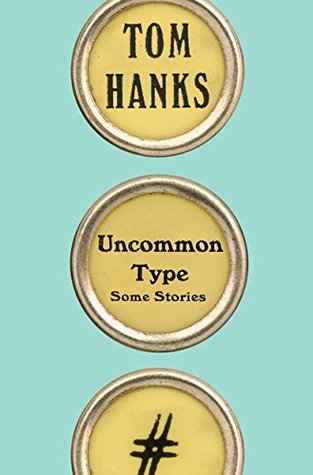
 Uncommon Type by Tom Hanks 
Who knew beloved, Academy Award-winning actor Tom Hanks could also write?! In Uncommon Type, his debut short-story collection, Hanks explores what the American dream looks like for a multitude of characters, from an Eastern European immigrant to a war veteran. And, of course, Hanks' love for typewriters makes a cameo through each of the 17 stories. 
Publication date: Oct. 17


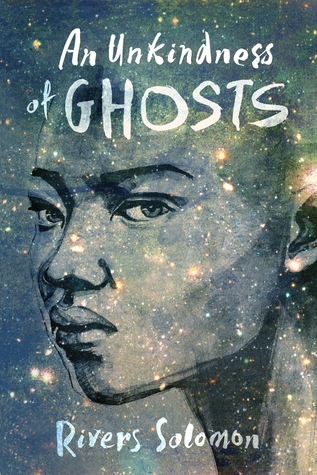
An Unkindness of Ghosts by River Solomon 
In [Solomon's] highly imaginative sci-fi novel An Unkindness of Ghosts, eccentric Aster was born into slavery on — and is trying to escape from — a brutally segregated spaceship that for generations has been trying to escort the last humans from a dying planet to a Promised Land. When she discovers clues about the circumstances of her mother's death, she also comes closer to disturbing truths about the ship and its journey. 
Publication date: Oct. 3 

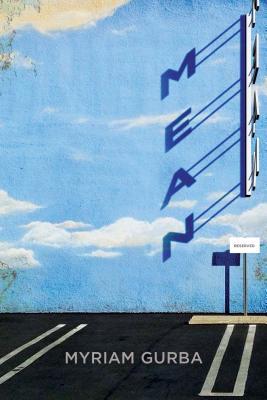
Mean by Myriam Gurba  
[Gurba's] Mean is a hilariously honest coming-of-age memoir about growing up as a queer, mixed-race girl in 1980s California. A fearless account of racism, homophobia, misogyny, sexual assault, and true crime that manages to be as funny as it is dark. 
Publication date: Nov. 14 


Turtles All the Way Down by John Green 
[This is Green's] first novel since The Fault in Our Stars. Aza is a 16-year-old girl who finds herself investigating the mystery of a fugitive billionaire (for a hefty reward) with her best friend, while dealing with her own mental health struggles; at heart, a tale of the bonds of friendship and love. 
Publication date: Oct. 10


To see the full list, visit the original post HERE 


Wednesday, September 6, 2017

Hello, It's Me.

So it's been over two years since I've posted directly on the Reading Between the Lines blog. I won't bore you with the details, but life has been pretty all over the place. In fact, a friend of mine recently came to this site for the first time and promptly informed me that I haven't blogged in a really long time.

I was immediately embarrassed, of course, but it got me thinking. And I realized that even though my life is insane and deadlines I deal with as an editor are sometimes ridiculous and incredibly stressful, I miss blogging, even if it's merely to share an article--something I also haven't even had much time to do. But maybe it's worth carving time out for. Life has changed so much in so many ways that I haven't been very good about letting myself have "me time." It's something I really need to work on.

In that spirit, I recently started going back to yoga (but very light, gentle yoga and restorative yoga only once or twice a week due to various medical conditions--they account for some of aforementioned craziness). And now I'm going to attempt to get back on the blogging horse, since really, it's an easy thing to do if I just do it.

Now, with all that said, I'm going to start off by sharing an article with you that the very friend who unknowingly nudged me back into blogging sent to me yesterday, written by his favorite indie writer, Hugh Howey, "What a Book is Worth."


There is something otherworldly about a book, something absolutely magical. This one simple container is somehow full of unlimited potential — you never know what awaits inside. What will you learn? What world will you be transported into? Whose life will you inhabit?
Nonfiction books teach us new facts, but the real magic is fiction. Here, we zip another’s skin over our own bones and suddenly see through their eyes, learn what it feels like to be someone other than ourselves. Fiction imparts the gift of empathy. It’s also a vehicle for satire, for warnings, for reflection, and most importantly . . . for hope.
An obsession for books binds millions of us together, all the avid readers and book collectors. In antique stores, we’re the ones ignoring the furniture and trinkets as we rummage through piles of musty tomes. We’re the ones at dinner parties standing in front of shelves and running our fingers across a stranger’s spines. We steal glances at jackets on subways. Used bookstores are mandatory stop signs. Piles of books stand like teetering monuments in our homes and on our bedside tables. Floor joists creak, bookshelves groan, and we sigh in contentment to be surrounded by all these stories and bound words.
My dream job was to work in a bookstore, something I was able to do in college and again while trying to make it as a writer. I couldn’t believe I got paid to open boxes of brand new books fresh off the press. I got to arrange them prettily on shelves. I also had the pleasure of working as a book critic, which lead to publishers sending me an unrelenting stream of advanced copies right to my door. Books newer than new! Not even out yet. I read and reviewed a book a day and still couldn’t keep up. The teetering monuments around my home grew taller, and I covered every wall of my house with bookshelves.
At some point, it becomes a fetish. The heft and feel of an old leather-bound book sends chills through me. I remember when Barnes & Noble came out with faux leather-bound books of old classics for $19.95, and I wanted them all. Poe, Swift, Shakespeare, Twain. I would gladly pay a premium for books I’d already read, just because they were more booky than other books.
I won’t admit to having a problem, because I don’t see it as a problem. Books have defined and shaped my life. I always had one in my hand as a kid, and these days I pick out my clothes based on my reading habit. When I try on a pair of cargo shorts, the first thing I do is make sure my Kindle slips easily into the lower right pocket. That’s my holster; there’s an entire library locked and loaded.
Transitioning to ebooks was not easy for me, I’ll admit. I resisted. But the advantages eventually won me over. My Kindle allows me to read more books, more often, and more affordably. I started traveling for work, and now I could take plenty of books with me and also buy more from anywhere in the world. Living on a boat, this portable library is crucial. It also means a lot of thought and care goes into which physical books I keep. Most of my reading takes place on my Kindle, but that doesn’t mean I’ll ever stop loving books. If anything, my appreciation has grown.
I’ve spent a lot of time over the years thinking about books and the book trade. As a reader, a bookseller, a writer, a publisher, an editor, and as a book designer. I ask myself questions about the value of books, the value of reading, the cost of publishing, and sometimes these questions lead me to weird answers. I’ve blogged about much of this over the years, and I’ve shared my strange ideas about books and bookselling as I describe my ideal bookstore or what I think publishers should do to reverse their falling fortunes.
My quest to understand the value of a book and reading has led me down many different and unusual paths. When it comes to my own work, I’ve long embraced piracy. I don’t see piracy as any different than a friend borrowing a book from a friend, or a single book making its way through a household or a school classroom. To me, the value is in being read. The danger is in losing an audience. I do not speak for other authors or condone stealing in general; I’ve just never had a problem with it when it comes to my own works.
I also think books are both priceless and that they should be free if possible. I love the Gutenberg Project, where you can download out-of-copyright classics at no cost. This website and an old ereader means a lifetime of reading and learning without spending another penny. My bestselling work of all time – the story that allowed me to become a full-time writer – has been free for years. You can get it here for nothing.
But I also believe in supporting writers and paying what you can for a good book. When authors try to give me their books for free, I usually decline and buy a copy for my Kindle. I’ve paid more than cover price for an early edition, or a signed copy, or an especially beautiful binding. I guess I think books should be readily accessible to all, and those who can afford to be patrons should support the medium and the artists. And this is precisely the world I believe we’re heading towards.
Small bookstores with full-price books are rebounding, largely because affluent readers understand the value of these bookstores in their communities, and they are choosing to pay extra to keep them open. Amazon, meanwhile, is doing gangbusters with their discounted print book sales, ebooks, and Kindle Unlimited, because not everyone can afford current retail book prices, and not everyone lives close to a bookstore. Different needs and different means for different readers.
If you haven’t heard of Kindle Unlimited, it’s basically an all-you-can-read book binging buffet. $9.99 a month to access a metric ton of ebook electrons. Programs like this place a very high value on reading by making more reading affordable to more people. And here is where the bizarreness of my philosophy on books arises: A high value for reading means a low price for books. A high value for books means the opposite.
Here’s a Venn Diagram for avid readers and book nuts [below left]:
On the right side, you have people who decorate their house with books they’ll never read (There’s actually a company that sells books by the linear foot for decorating your home. They arrive in all kinds of foreign languages. Beautiful and unreadable). On the left side, you’ve got people who will gladly mainline books into their neck veins once Amazon perfects the technique; these are the readers who are causing ebook and audiobook sales to explode while print sales stagnate.
And in the middle, you have addicts of both. Here is where I think we’re missing some potential in the book trade.
The publishing market is bifurcating between those who are obsessed with reading and those who are obsessed with books. While there is common ground between the two sides, important differences remain. I know people who read several books a week, year after year. They can’t afford to buy full-priced books to support this habit. Libraries, used bookstores, ebooks, free books, Amazon discounts, and programs like Kindle Unlimited are what they need. If you look at this bolded list, you’ll see all the things publishers regularly complain about. And yet these are the readers publishers need the most. Again, these readers can’t afford their habits any other way.
The right side of the Venn Diagram also thinks of reading as a defining characteristic of their lives, and quite rightly. Reading a book is an enormous investment in time. These people might read a dozen books a year, or twenty books a year. Spending full price at the local bookstore, and working through a chapter a night, these readers attach a lot of significance to reading and to books. They have home libraries. They’ve even read half of what’s on their shelves. They can’t resist a bookstore and always find something new to purchase. They just wish they had more time to read. They aspire to be like the first group, but life gets in the way. Publishers absolutely adore these readers and their value systems, even as these readers constitute a dwindling percentage of publishers’ profits.
The difference between these two crowds explains some conflicting headlines. You may have seen that most people still read physical books. You may have also seen that most books sold today are ebooks. These two facts are neatly explained by the fact that ebook readers consume far more books per person. It doesn’t matter how many people prefer physical books if they’re only buying a handful of them a year. A handful of books is a slow week for the group on the left side of the diagram. And ignorance of the existence of this group explains much of the ignorance and confusion within the book biz.
But what about the group at the intersection of these two groups? That middle slice of the Book and Reading Venn Diagram? Here is where you find the people who are both obsessed with reading and obsessed with books as objects. Here is much of the YA crowd and young readers in general, where solid objects provide highly prized substance for the expression of their individual selves. Here is where people who love one book in particular seek out signed copies, old copies, and multiple copies. This is a crowd that ebooks can’t sate. For this group, current print book standards are falling short. In the pursuit of profit margins, the margins within actual books are suffering. Fonts are shrinking, whitespace disappearing, paper and bindings getting cheaper, some formats disappearing altogether. Choices in print books are diminishing.
It need not be so.
Always one to experiment, I decided to take these ruminations and questions and put them to the test. I started asking myself what I would pay for my favorite books, the ones that truly shaped me. Years ago, Barnes & Noble showed me that I would gladly pay $19.95 for a fake leather-bound copy of a book that I could otherwise legally download and read for free. That’s amazing when you think about it. It speaks to the value of the book as an object. The reading aspect costs nothing. The $19.95 is all about the packaging. How far can we take this?
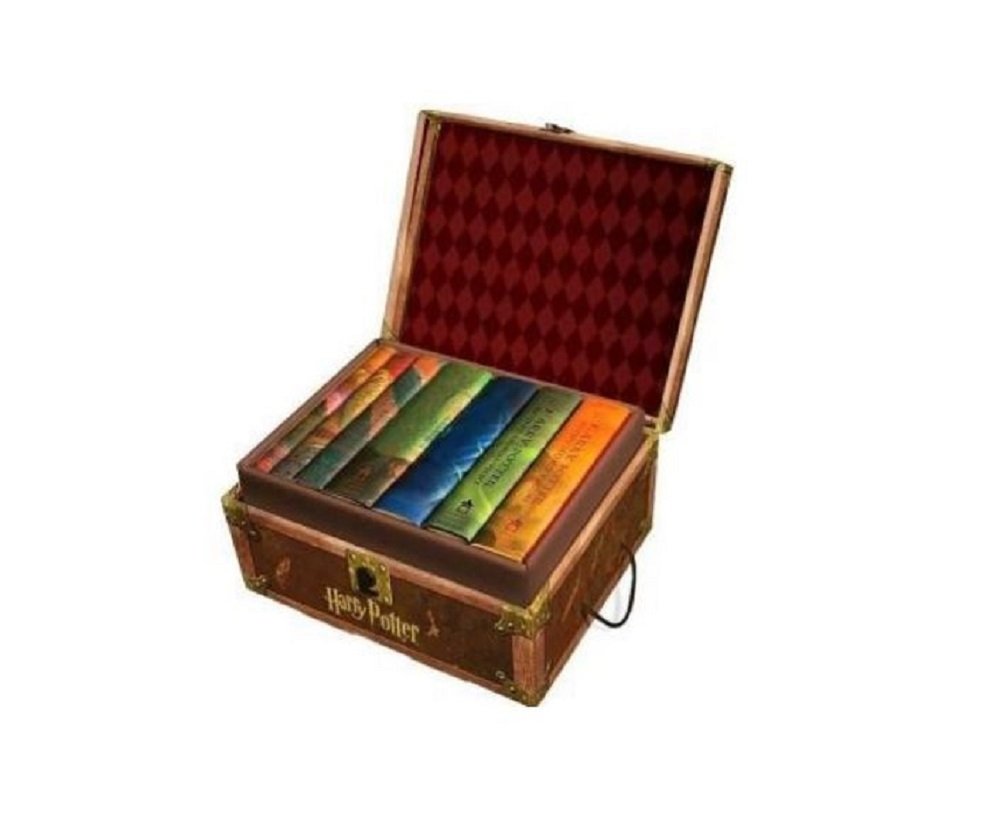
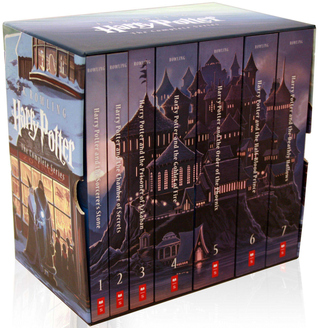
There’s a Harry Potter hardback box set that comes in a special chest and sells not as a route to cheap and quick, but as a route to one-off and exquisite. A technology that publishers have avoided and frowned upon is one that they could instead use to cater to that overlap in our Venn Diagram.
for around $130. This doesn’t seem unreasonable at all to fans of the series. For some of my readers, hundreds of dollars for a first edition of WOOL seems reasonable to them, even though the ebook is free. This got me thinking about print-on-demand technology 
Print-on-Demand (POD) means unlimited or zero copies, and both ends of this spectrum are important. Unlimited means never running out as demand goes up. Zero means not wasting a penny if there is no demand at all. POD is an end to guessing what readers want and constantly getting those guesses wrong.
Check out this Print-on-Demand book:
That’s a copy of MACHINE LEARNING, a complete collection of my short stories. It will be released on October 3rd by Houghton Mifflin Harcourt in hardback, paperback, and ebook. It was edited by John Joseph Adams, who also came up with the idea of publishing it. Before now, my short fiction has been scattered to the wind, published in so many places that I doubt anyone other than my mom has read them all. Some of these stories used to exist only on my old website; they became unavailable when I redesigned my homepage. Two of the included stories are brand new for this collection.
In addition to the stories, I wrote new thoughts about what each story means to me, or what I was thinking about or going through when I wrote them. These tidbits follow each story, and I think they add something to the reading experience. For those who are familiar with my work, you know how much the short fiction medium means to me. My success as a writer has mostly come through my short stories. I doubt any novel over my career will ever be as meaningful to me as this collection.
Which is why, when I needed to print out a proof copy of the manuscript to look over the final draft for changes and typos, I decided to do something a little different. Instead of going to Kinko’s and binding this as cheaply as possible (my normal practice), this time I went all-out. I tried to marry my love of the contents with an exterior to match. And here’s what I learned from this project:
I learned that I would have paid a week’s wage for a book like this, if it was the right book. As a bookseller, I used to make $10 an hour, and I worked thirty hours a week. Yeah, I was poor. But I spent what money I had on books, and I would’ve paid an entire week’s wage for a copy of ENDER’S GAME that looked like this – a one-of-a-kind hand-bound leather edition of my favorite read, signed by the author if possible. And I would’ve treasured that book for life and passed it down to a loved one. I’m one of those book freaks. I don’t think I’m alone. And I think it would cost precisely zero dollars for publishers to target this demographic using print-on-demand technology and by employing the fine folks who are keeping the art of bookbinding alive.
Here’s how I would make it work: I would convince a publisher (or a number of them) to enroll a ton of books into this program. I would especially go after the books that have sold millions of copies and have meant so much to so many readers. But really, just make every book available. It costs nothing, and millions of books are someone’s absolute favorite of all time. I bet every self-published author would add their works to the mix, and I bet Amazon would include their imprints as well.
The next thing you do is sign up a handful of book binders and crafters to meet whatever demand arises. I think you could get the cost of these books down if the people making them had steady sales. The crafter I used was Lindsey of BooksForAllTime. Lindsey is a true artist, and working with her was an absolute joy. I got to pick out the leather, the type of paper, the design on the cover, the gold leaf inlay, all of it.
So the program would work like it does with BooksForAllTime: You pick out your favorite book, customize it to your delight, and it shows up on your doorstep a month or two later. Slow. Expensive. The opposite of ebooks. But tapping into the same market of avid readers. That overlap in our diagram.
You might only own a dozen of these sorts of books in a lifetime. Or perhaps just one. Maybe you make a wishlist of your favorite books and make that list public for friends and family, so they know what to get you for Christmas or your birthday. Perhaps you have book clubs and programs that send you books on your wishlist every three months. Whatever you can afford. Maybe authors order one of each of their releases to have a library of their own books on display in their homes.
These books might cost $200 to $400 bucks apiece. Crazy? Then you aren’t part of the crowd I’m thinking of. I’m thinking of the crowd that collects these slowly, saving up, to see a row of Harry Potter books on a shelf that look like they came from Hogwarts itself. A Tolkien trilogy that even an orc could love. A Foundation Saga that could last from one foundation to another. The ultimate copy of Dune, Cosmos, or To Kill a Mockingbird. Eventually, after decades of a reading and collecting life, a small bookshelf of absolute treasures emerges. If you’re smiling at this imagery, then you are the crowd I’m thinking of.
But here’s where it gets very interesting: What if the author agrees to take a very small slice of that sale, a slice that would still be double the amount they make for a hardback (say, $3.00). And what if the publisher agrees to take the same measly cut (this would be a first). And what if the retailer did the same?
In other words: What if the book binder kept most of the profit?
Why would this make sense? Because I think there would be enough demand for these books to employ a good number of book binders like Lindsey. I think keeping the price of these books as reasonable as possible would expand the number of people who fit into the middle of the Venn Diagram. These exquisite books will expand the love of reading, the fetish for books and stories, and they’ll last for ages.
The ridiculous and ultimate fantasy is that we parlay the untapped money in the pockets of book lovers worldwide, and we move that money into the pockets of people whose jobs are being displaced or upended by changes elsewhere in the global economy. Books being bound in developing countries. Books being bound by former coal miners. Would global demand for bespoke books be enough to move a million leatherbound titles a year? If so, that’s a living wage for thousands of people. Much more if you’re talking about developing countries.
This might sound crazy, but community bookstores are made possible in part by the willingness of some readers and gift shoppers to pay extra for something they love. The reason books make such great gifts is that we feel like we’re buying something that is good for the recipient, as well as bringing them joy. Parents of book-loving kids know what this feels like: it’s like having kids who beg for their veggies.
Imagine buying a loved one a book they’ll cherish forever, and knowing that the person making the book is having their life changed as well. Imagine spreading the joy of reading and the joy of books by using a technology that removes the risk from publishing, that allows us to create something not cheap and expendable, but rather exquisite and irreplaceable.
When I’m done with this book, I’m going to do what we often do with physical I’m going to pass it on. It’ll be a gift to someone who has furthered my writing career. If you want your own copy of MACHINE LEARNING, you’ll have to settle for the regular hardback, paperback, or ebook, which you can pre-order here. Or if you’re interested in something leather-bound and special, I own the print rights to lots of my works. Maybe Lindsey could make you a special edition of MOLLY FYDE AND THE PARSONA RESCUE or HALF WAY HOME. Or perhaps other indies will open their works, and other bookbinders will get in on the fun.
books: 
This won’t be for everyone. Just the nuts in the middle.
So what would your favorite book be worth to you?
Howey has written an interesting piece here, and a lot of it I wholeheartedly agree with and find hopeful. However, I do think Howey is being a bit too idealistic when it comes to some things, particularly the cost of publishers creating POD books. The truth of the matter is, every book and every step of said book's sale, has overhead. It isn't free for publishers to do this sort of thing. So many people have the same view as Howey when it comes to things like POD and e-books because they think that once the book is written and formatted, there aren't anymore costs. Even turning an e-book into a POD requires more work and cost.

I do wish it could be as easy as he says, though, and that more people who can afford it would be willing to pay extra so that people who can't can pay less. But honestly, I don't think that's going to happen. People who can afford it may buy more expensive editions of books, but that doesn't affect people who need to buy less expensive editions. It doesn't work like a subsidy does, and publishers aren't going to have an expensive and a cheap edition for each book. And if they did, people are going to pick the cheap one, often even people who can afford the expensive one. So then we'll be right back where we are now, and publishers will continue to price books the way they need to in order to cover their overhead, advances, and make a profit. Because publishing is, after all, a business, even if it's one that has art at its core.

Friday, May 8, 2015

Does (Book) Length Really Matter?

It always surprises me when I poke around a bookstore and see super thick hardcover or even trade paperback bestsellers. I've noticed this particularly in the past year or so with books such as We are Not Ourselves, The Girl on the Train, The Forgotten Garden, and The Goldfinch. And quite frankly, it baffles me. I've read two of the aforementioned bestsellers, both of which I struggled to get through. Not because I have an issue in general with "long books," but because neither of them needed to be as long as they were.

As an editor, I am keenly aware of these things, and it makes me cringe when novels meander and go off on tangents that are entirely irrelevant to the story. In fact, when I was working at Simon and Schuster, I once was tasked with taking a 700+ page women's fiction novel from overseas and paring it down to 400 pages at the most. Crazy, right? But the craziest part is that I actually accomplished it. Not only could the language itself be tightened on a sentence level but whole paragraphs could come out because they didn't tie into anything or have any real purpose. What was really shocking, though, is that I kind of killed off a character. o_O There was entire plotline and POV that was unnecessary to the story. It didn't weave into the main plot or character arcs at all, other than that character being related to one of the other characters. While the character certainly still "existed" in the story, every section with her POV narrating lifted right out. It was interesting plotline in and of itself, don't get me wrong, but it was its own story, not the one this book was telling. That plotline alone took up about 200 pages long and it wasn't needed.

This is something I see a lot in early drafts of manuscripts and it's my job to address it, to make sure a reader is engaged from the first to the last page, that the pace is moving at a readable clip, and that the story is clear, tight, and moving along with each scene. So the fact that so many books go to publication with these sorts of issues--and do well sometimes--makes me kind of sit there and blink at the wall. My first question is always "what did the editor even do, then?" and second, "how on earth are all these readers getting through these books, especially in today's world of ADD?"

Of course, classic literature has always been on the longer side, so there's certainly a precedent of it. Just look at the unabridged versions of Les Miserables, The Count of Monte Cristo, and Don Quixote. They were all over 400,000 words. But note something I just said...these are unabridged versions. There are abridged version of all three of those classics. Meaning, if you think about it, that extra length...? Yeah, it wasn't necessary. It might have lovely language or a nice lesson or tangent behind it, but it wasn't telling the story the book was meant to tell.

Now, don't get me wrong, it is incredibly impressive when people can write such tomes and find a way to keep readers' attention. But why is this mini-trend happening right now? Is it something people really like or is it just happening because of good marketing and reviews that focus on only the strong points? Just because people buy the books doesn't mean they enjoy them. It doesn't mean they didn't skim over half the book to get to the good parts (what I did with both those novels I mentioned earlier).

A recent article by the BBC (and what do you know, like this blog post, it's a super long!) takes a look after hearing about the UK publication of  an 800+ page novel called Death and Mr. Pickwick by debut author Stephen Jarvis. (They also mention an upcoming book that is one million words long. Yes, one million words. That is not a typo.)

Debut novels don’t come more heavyweight than Stephen Jarvis’ Death and Mr Pickwick. Twelve years in the writing, it tells the story of the creation and afterlife of Charles Dickens’ own first novel, The Pickwick Papers, one of the world’s most written-about works of fiction. Pickwick was the book that made Dickens a celebrity, and it was published in monthly installments starting in March 1836, using his pen name, Boz. 
Out this month in the UK and next month in the US, Death and Mr Pickwick is a gloriously meandering tour of 19th Century London that has already been dubbed “a staggering accomplishment” by Publishers Weekly. 
Yet it’s heavyweight in another, more obvious sense too. Lug this book to the beach and back every day, and you’ll be getting a full-body workout. Drop it, and you risk breaking a toe. Weighing two-and-a-half pounds, it’s a whopping 802 pages long – an audacious claim on readers’ time in an age when our attention spans are supposedly being whittled away to nothing by ever-more insistent digital distractions. 
There is plenty of longer fiction, of course. Kelidar, Mahmoud Dowlatabadi’s Persian language novel following a Kurdish family in the wake of World War II, is 2,836 pages. The Son of Ponni, a historical novel written in Tamil by Kalki Krishnamurthy, and published in the 1950s, is barely any shorter at 2,400 pages. And then there’s Proust, whose In Search of Lost Time is 3,031 pages long. 
Don’t think it’s just a 20th Century phenomenon, either. Nothing compares to the 17th Century French novel Artamène. The tale of a shepherd’s son who’s really a Persian prince, its 2 million or so words (the average 280-pager contains just 80,000) fill 13,095 pages. Originally credited to Georges de Scudéry, these days it’s more commonly attributed to his sister, Madeleine. 
A bulky bedfellow 
Though it can’t quite compete in terms of pagination, Jarvis’ novel is part of a mini-trend that seems to be gathering momentum – and bulk. In the next few months alone, playwright Larry Kramer publishes the first of his two-volume fictionalised history, The American People, which comes in at 800 pages (he’s been working on it for 40 years and at one point the manuscript was 4,000 pages long), Amitav Ghosh completes his Ibis trilogy (the final installment is 624 pages), and review copies of Hannah Yanagihara's A Little Life have been sent out filled with Post-It notes attached to flag representative passages, presumably because the book’s girth is so daunting (at 736 pages, it’s really not so little at all). In July, you can expect to hear bookshelves groaning as William T Vollmann’s new novel, The Dying Grass, is published. Set in the Wild West during the 1870s, it totals 1,376 pages. And next year, British graphic novelist Alan Moore publishes his second non-graphic novel, Jerusalem, which is billed as a fantastical exploration of his hometown, Northampton. It’s said to be a million words long. 
Together, these bulky books call into doubt the received wisdom about our besieged attention spans. They might also make you wonder what editors are up to. And they question, too, the evolving role of the literary novel in the wider culture. Doesn’t there come a point at which the sheer scale of these works is so out of kilter with the reading time available to even the most dedicated bookworms, that they have to be seen as wilfully marginalising themselves? Think of this as well: every purchase of a novel over 600 long pages may well come at the expense of two or three others. 
If you wanted to pinpoint the start of all this, you could do worse that looking to 2013, when 28-year-old Eleanor Catton became not only the youngest author ever to win the Man Booker Prize, but did so with the longest book. The Luminaries is 832 pages long. Did the judges not deem its length problematic? Not according to their chair, author and academic Robert Macfarlane. 
“Length never poses a problem if it's a great novel”, he insisted. To prove his point, that same year, Donna Tartt’s The Goldfinch (760 pages) sold and sold. 
As a reader, you know what you’re in for when you begin a long book. It’s not that we necessarily expect more – after all, as much can be said in a poem, never mind a short story – but we do tend to indulge the author a little, allowing for the fact that in a longer work time can be taken establishing characters, and the subplots layered on with plenty of scope for resolution. It’s a different relationship. A novella may be read in a single sitting, making for a more intense reading experience. The bulky epic, meanwhile, inveigles its way into your life over a period of weeks or even months, becoming a travel buddy and bedfellow. 
Is bigger better? 
In genre fiction, big has never fallen out of fashion. Fantasy novels especially tend to run long, and plenty of airport paperbacks are so dense they look almost square. But then those tend to be vastly pacier affairs. In the US, too, there’s an expectation that a great literary work will also be physically imposing. Still, how many of even those wouldn’t be improved by a judicious nip and tuck here and there? The Goldfinch is one of my favourite novels of this century, but if I were forced to come up with a quibble, it would be that Tartt spends too long in Las Vegas in the middle section. 
“Very few really long novels earn their length. My fingers are always twitching for a blue pencil,” Ian McEwan told the BBC last year. He was speaking on publication of his own most recent novel, The Children Act, a work so slender it might almost be called a novella. The story of a high court judge who must decide whether to compel a young Jehovah’s Witness to receive a life-saving blood transfusion, it radiates brilliance, and yet weren’t there a couple of passages that felt too research-heavy? Sometimes, authors themselves simply become too big to cut. Remember how the Harry Potter books grew as JK Rowling’s fan-base exploded? 
In an age of 140-character tweets and six-second Vine videos, it’s hard not to view the abundance of fat books as a throwback trend. A tome so heavy it’s barely portable is, after all, the ultimate anti-e-book. Novelist Naomi Alderman is well placed to comment, as she also creates video games, most notably the top-selling Zombies, Run! 
“The trend towards long books is a fascinating counterpoint to the suggestion that we're all becoming iPhone-junkies, with minuscule attention spans, twitchily unable to concentrate on anything longer than a tweet,” she told BBC Culture. In fact, she suggests, technology might be making us more ready to sign over large chunks of time to a novel. As well as the oft-cited influence of TV binge-viewing, made possible by streaming, she points to the fact that AAA video games – those with the highest development and promotion budgets – frequently demand upwards of 100 hours of gameplay. 
“The death of the ‘attention span’ might have been declared prematurely,” she adds. “But at the same time, novels are competing with other entertainment forms that provide a lot of instant thrills. To start a long novel these days, I think the reader needs to feel certain that the tale will be worth the journey.” 
Of course, Stephen Jarvis, who’s 57 and lives in Maidenhead in the south of England began writing his novel in 2001, in a world before Facebook. It was influenced, he says, by reality TV’s Big Brother. ‘It strikes me that there are parallels between Big Brother and The Pickwick Papers – both of them are plotless things which just sort of ramble along. There’s an emphasis on character and you don’t really know what’s going to happen.’ 
At one point, Death and Mr Pickwick rambled to 800,000 words, but he cut it back by over half in order to have it fill 802 pages – the exact same number as Dickens’ novel.
Jarvis has no worries about readers being put off by the novel’s length, though he does admit this wife has vowed never to read it. “She has special dispensation – her excuse is she doesn’t need to read it because she’s had to live it,” he says. She supported him while he wrote, and so it seemed only fair that he let her type the letter ‘d’ of the ‘The End’ before they went off to the pub to celebrate. When finished copies arrived, however, the words had been cut. Turns out it’s not house style. 
See the original article HERE

So what do you think, dear readers? Would you pick up (and read in its entirety) an excessively long novel? If so, what would compel you to do so?

I am truly curious...

Friday, January 23, 2015

National Readathon Day Takes Off Tomorrow

Happy friday, fellow readers! This upcoming weekend is an exciting one for the book world, so I hope your week has prepared you to curl up on the couch (especially for those of you who are expecting a snowstorm this weekend!) with a cup of hot cocoa and a good book. And while I wish that type of relaxation for you all the time, there is an additional reason this particular weekend is so special...

Tomorrow is the first annual National Readathon Day!

Initially created by the recently merged Penguin Random House, National Readathon Day is about more than just reading a book, though. It's also about fundraising for literacy, GalleyCat points out:

Proceeds will support the National Book Foundation’s education programs, including an after-school reading program called BookUp. Fundraisers will win prizes from The National Book Foundation. 
More than 200 bookstores and libraries across the country will be participating in the event. To find out where to participate in your local area, check out this map. 
Fifteen bestselling authors including: Khaled Hosseini, Jacqueline Woodson, Delia Ephron, Harlan Coben and Simon Doonan have supported the cause in this #timetoread video.
See original post HERE 

The National Book Foundation website tells us more about the celebration:

Consider this: 53% of 9-year-olds read for pleasure daily, and by the time they turn 17, that number drops to 19%. Without your help, book worms may soon become an endangered species.  
That's why Penguin Random House and the National Book Foundation are launching National Readathon Day. We're asking book lovers across America to pledge to read for four hours starting at noon (in respective time zones) on January 24, 2015. 
Make your commitment here on FirstGiving and fundraise to support the National Book Foundation's efforts to create, promote, and sustain a lifelong love of reading in America. Proceeds will support our education programs, like BookUp, our after-school reading program which has given away over 25,000 books to middle schoolers since 2007. 
To show our appreciation, we're delighted to offer some exciting rewards at a variety of fundraising milestones. 
Individual fundraising premiums for National Readathon Day are awarded at the following levels:  
$100 - an I Love Reading tote bag  
$250 - a copy of a 2014 National Book Award winning book   
$1000 - a tote bag plus all four 2014 National Book Award winning books. 
$2500 - 2 tickets to the invite-only 2015 National Book Awards ceremony, dinner, and after-party  
$7500 - 2 tickets to the invite-only 2015 National Book Awards ceremony, dinner, and after-party plus hotel and airfare (from anywhere in the continental United States) 
Additionally, the top fundraising team will have the opportunity for an exclusive reading (in-person or online) with Phil Klay, author of Redeployment, the 2014 National Book Award Winner for Fiction. 
Thank you for joining us for National Readathon Day and in celebration of how important reading is to American culture.

The mission of the National Book Foundation is to expand the audience for literature in America. Its programs include BookUp, 5 Under 35, the Innovations in Reading Prize, and the National Book Awards. 
If you need more information about the National Book Foundation or National Readathon Day, email bsamuel@nationalbook.org. And for press inquiries, email syoung@nationalbook.org.
See original post HERE

As of a week ago, there were already more than 120 teams that had "raised more than $20,000 as part of the event" (GalleyCat).  As of today there are 153 teams, raising more than $40,000 according to the FirstGiving website. There is still time to get involved and get excited, so hop to, folks!

Tuesday, January 20, 2015

The Perfect Cookie for the Perfect Book

Lately I have been hearing an awful lot about Girl Scout cookies. And I always hear an awful lot about books, of course. So when I saw that someone over at Book Riot put the two together, pairing different GS cookies with certain reads, I was delectably intrigued:

Girl Scout cookies are great no matter what they’re paired with, but I think we can all agree that everything is better with books. As a former Girl Scout, I know that people have their favorite cookies (Reppin’ Samoas, what what!). After some extensive taste tests, we here at Book Riot have found the perfect book/cookie pairings – no matter what your cookie preferences may be!
 See the original post HERE

Some of these pairings are utterly fantastic, I must say. Others, I admit, I don't quite get because I don't know enough about the book. :( Buuuut I do think a fun pairing for Savannah Smiles, though, would be "The Particular Sadness of Lemon Cake" by Aimee Bender. :-p Ahh irony. Gotta love it.

What would YOUR perfect pairing be?


As a side note, my littlest sister, who has been selling GS cookies for years, won't be doing so this year. But I'm stoked that GS has finally moved some cookies sales online, so those of us who don't know any Girls Scouts aren't missing out on the deliciousness itself and on helping out such a great organization!


Friday, January 2, 2015

Welcome to 2015

With 2015 now upon us, "Best of 2014" lists are coming out our ears, making it hard to focus on what's to come in the year ahead. While I like "Best of" lists just as much as the next booklover, the start of a new year is a time to look forward, not back.

But where do we start? There are so many amazing books hitting the shelves this year! If you're struggling like I am (despite the giant TBR pile that is basically every room in my home), Book Riot has given us readers a fun challenge to get us started with the "2015 Read Harder Challenge":

Whatever your preference for reading challenges, we here at the Riot enjoy the odd challenge. We’ve written before about the benefits of a reading challenge; they can stretch your reading, whether the intention is to push you to read more of your TBR, more classics, more backlist, more new releases, or just to read more. Or even if the intention is to read less. 
January 1st brings with it both an abundance of challenges for the new year and an abundance of resolutions. These are often connected for readers, many of whom – Rioters included – make reading resolutions. As many of us here resolve to read more diversely, in any number of ways, we thought it would be a good idea to come up with our own reading challenge for 2015 to help you stretch your reading limits. 
I’ve included 24 tasks, averaging out to two per month, that will hopefully inspire you to pick up books that represent experiences and places and cultures that might be different from your own. We encourage you to push yourself, to take advantage of this challenge as a way to explore topics or formats or genres that you otherwise wouldn’t try. But this isn’t a test. No one is keeping score and there are no points to post. We like books because they allow us to see the world from a new perspective, and sometimes we all need help to even know which perspectives to try out. That’s what this is – a perspective shift – but one for which you’ll only be accountable to yourself. 
Where applicable, I’ve linked to previous Book Riot posts, to Goodreads lists, or other resources that might help you find books to fit the tasks.* 
We hope this challenge will help you not only to read more, but to Read Harder. 
We’ll be checking in here on the Riot periodically throughout the year, but we’ll also be talking about this challenge on social media with the hashtag #ReadHarder. Share your books, share your challenge plan, share your recommendations.
A book written by someone when they were under the age of 25 
A book written by someone when they were over the age of 65 
A collection of short stories (either by one person or an anthology by many people) 
A book published by an indie press 
A book by or about someone that identifies as LGBTQ 
A book by a person whose gender is different from your own 
A book that takes place in Asia 
A book by an author from Africa 
A book that is by or about someone from an indigenous culture (Native Americans, Aboriginals, etc.) 
A microhistory 
A YA novel 
A sci-fi novel 
A romance novel 
A National Book Award, Man Booker Prize or Pulitzer Prize winner from the last decade
A book that is a retelling of a classic story (fairytale, Shakespearian play, classic novel, etc.) 
An audiobook 
A collection of poetry 
A book that someone else has recommended to you 
A book that was originally published in another language 
A graphic novel, a graphic memoir or a collection of comics of any kind (Hi, have you met Panels?) 
A book that you would consider a guilty pleasure (Read, and then realize that good entertainment is nothing to feel guilty over) 
A book published before 1850 
A book published this year 
A self-improvement book (can be traditionally or non-traditionally considered “self-improvement”) 
*Goodreads lists are user-created and the books on them may not fit the challenge requirements. Double check any book you’re using, just to make sure. 
Have ideas for what books you want to use for certain tasks? Leave 'em below! 
Editor’s note: we’ve created a Goodreads group for this challenge! Give it a join!

See the original post HERE

I think I might give this challenge a try! What about you? Any books spark to mind when you hear these categories?

Happy new year, dear readers! May your year be filled with books to make you laugh, cry, and feel all the feels. :)

Tuesday, July 8, 2014

Sad Days for Books and Cupcakes

Today, I saw an announcement that the famed CRUMBS cupcake shop in NYC has closed its doors. It happened without warning and now all the other numerous cupcake shops will surely be fighting for those abandoned customers.

While I did enjoy their carrot cake cupcake quite a lot, I'm honestly more upset by another company/organization going under from financial strain: World Book Night.

GalleyCat tells us more:
World Book Night is shutting down after three years of distributing free books across the country. The volunteer-run organization is shuttering due to lack of funding. 
“The expenses of running World Book Night U.S., even given the significant financial and time commitment from publishers, writers, givers, booksellers, librarians, printers, distributors, and shippers, are too high to sustain without additional funding,” explained the organization on its Facebook page. 
“This has been a remarkable, passionate undertaking, and it has been a success by all measures, except for one: Outside funding,” stated Carl Lennertz, Executive Director of World Book Night U.S. “For three years, the publishing industry and book community have very generously footed the bill and contributed enormous time and effort, and our gratitude is immeasurable, especially for the givers. For us here at World Book Night, this experience has been life-changing, as we hope it has been for the givers and recipients of the books.” 
World Book Night UK, a separate organization that also hands out free books in April, will not be affected by this change. “We want to assure our followers and supporters that the suspension of operations in the US will not affect World Book Night in the UK,” the organization explained on its blog. “We have exciting plans for World Book Night 2015 and beyond, which will be shaped and informed by the evaluation we have carried out this year.” 
See the original post HERE

It's so sad when a great program like this comes to an end, simply due to lack of donations, not lack of interest. There are so many people out there just swimming in cash, and if only they would lend a hand, things like this, that supports literacy and benefits so many people, could keep going. Sigh. If I were one of them, I'd be throwing money toward reading-related causes left and right.

But I'm not, so all I can say is, we'll miss you World Book Night. Thank you for three years of such immense book love.

Friday, July 4, 2014

A Booklover's Fourth of July

I don't know about y'all, but this 4th of July I am stuck inside editing. Wah. Waaaaaah.

But for those of you who are not, you just might have time for some Independence Day reading! Maybe try one of these patriotic reads, compiled by Wall Street Cheat Sheet:

1. On the Road, Jack Kerouac 
Hard travelin’ is a pastime idealized in a country that has lots of room for it, and On the Road is the bible of hard travelers. King of the Beat poets Jack Kerouac wrote the novel about his own experiences hitchhiking and driving back and forth across America with his freewheeling friends, and its publication marked a huge shift in American youth culture. 
Kerouac’s friend (and a character in the novel himself) William Burroughs famously wrote of On the Road that it “sold a trillion Levi’s, a million espresso coffee machines, and also sent countless kids on the road.” Bob Dylan said, “It changed my life like it changed everyone else’s.” A litany of important additions to pop culture wouldn’t have been possible without Kerouac’s poetic and hellbent road trip. “Whither goest thou, America, in thy shiny car in the night?” Kerouac asks, and answers, in the novel. 
2. 1776, David McCullough 
If you want to go super literal with the whole Independence Day thing and learn a ton about the Revolutionary War that you probably weren’t taught in school, McCullough’s massive 1776 is the way to go for an in-depth account of the events leading up to the signing of the Declaration of Independence. Gen. George Washington in particular is profiled, as he led the ragtag American troops to an unlikely victory over the British. The book takes a close look at key military battles during the year, including the Battle of Long Island and the Battle of Trenton. 
3. Lincoln, Carl Sandburg 
Poet Carl Sandburg’s lengthy two-part biography of Abraham Lincoln is considered to be the most influential book about the man credited with the dual feats of ending slavery and keeping the United States together in the face of the Civil War. Lincoln: The Prairie Years and Lincoln: The War Years are the defining books on Lincoln’s life, and the second installment won Sandburg his third Pulitzer Prize. The first book was published in 1926 and the second in 1939, and since then, they have been criticized for some bad scholarship and too much poetic license (what do you expect from one of America’s most beloved poets?). However, Sandburg’s book is still the go-to biography of Lincoln and a major source of many of the idealistic myths that surround him. 
4. The Sound and the Fury, William Faulkner 
William Faulkner has been called the American Shakespeare, and his modern stream-of-consciousness style as well as his Southern Gothic subject matter make his novels the most enduring literary picture of the American South. The Sound and the Fury is frequently cited as one of the great American novels, and its shifting perspectives, experimental style, and morose tale of the formerly high-class Compson family is all classic Faulkner at his best. The Compsons pop up in other Faulkner novels, as well, in particular Absalom, Absalom!, in which the highly intelligent but suicidal Quentin Compson is a main character. The Sound and the Fury chronicles how the puritanical morals of the South, racism, greed, and violence ruin the entire Compson clan. 
5. The Great Gatsby, F. Scott Fitzgerald 
While Fitzgerald may have been an ex-patriot, fleeing to Paris with others that Gertrude Stein dubbed “the lost generation,” The Great Gatsby is considered to be one of the most important American novels, and the entire book is fixated on that brutal fable that is the American dream. The book is the most iconic and lasting portrait we have of the post-World War I era in which America lost its innocence and became decadent. There are flappers, drinking, beautiful parties, and the charismatic Daisy Buchanan, all of which is glitter on the surface to distract from the characters’ desperate attempts to discover a sense of purpose. The Fourth of July is a perfect occasion to read or reread Gatsby and think about how achieving the American dream still couldn’t bring Gatsby happiness. 
6. The Adventures of Huckleberry Finn, Mark Twain 
Hemingway famously said, “All modern American literature comes from … Huckleberry Finn.” Mark Twain is a great American icon, an author and humorist whose influence on literature and comedy cannot be overstated. Huckleberry Finn is a scathing look at racism and other backwards attitudes held in the South on the Mississippi River, where the novel is set. It is also a celebration of unlikely friendship and fierce independence bordering on rebelliousness, both important characteristics of our national character. The book is cited as the first major American work to be written completely in vernacular English, capturing Americans as they actually spoke. 
See the original post HERE

Happy Fourth of July, y'all!!

Wednesday, July 2, 2014

Hump Day Humor: How Finishing a Book Can Break Your Heart

Last week, Epic Reads posted a hilarious and so so true video about the experience of finishing a book, or the "book hangover" as they are calling it.

I don't know how I missed it when it came up, but thank goodness I took a look at HuffPo Books this morning and found it! It was exactly what I needed first thing on a Wednesday morning:


Happy Wednesday, all. I hope you read a book today that you never want to end!

Wednesday, June 25, 2014

Teen Reading Statistic Ridiculousness

This morning I was wishing (again) that I could just curl up with a good book and read all day, just for fun. I remember doing that so often in the summer when I was a kid. I had one of those miniature Jennifer Convertibles in my room, and I'd sit there all day long, squished up between the arms, a stack of novels next to me, and just read and read and read. Sometimes I'd go sit outside, stretched out on a towel, but wherever I was, there was a back.


Sure, back then, we had video games, television, all that jazz, and yes, I'd go play outside, too, but most days, I could be found huddled right in that spot. I was a little book nerd then and still am today, and while it wasn't super common for kids to do that in the summer, it wasn't nearly as uncommon as it is now. According to a new study by the Labor Department, teens only read an average of 4.2 minutes in a weekend nowadays.

o_O

GalleyCat tells us more:
Americans between the ages of 15 and 19 spend an average of 4.2 minutes of their weekends and holidays reading, according to new research from the Labor Department. 
The research revealed that 20 to 24 year olds spend an average of 10.2 minutes reading on weekends and 55 to 64 year olds spend a whopping 26.4 minutes on weekend days reading. For the most part, the average time spent reading goes up with age, except among 25 to 34 year olds who only spend an average 7.8 minutes reading on weekends. 
Vox Media has more: “The oldest Americans, meanwhile, read for more than an hour a day. These data only include reading for fun, however, which may be why the count for the student-age population is strangely low.” 
See the original post HERE

My mind boggles.


Thursday, June 12, 2014

In Defense of the Love of Reading

Today, I'm feeling overwhelmed with a love of reading. Probably because I'm not feeling well, physically or emotionally, and all I want to do is curl up on the couch with a good book (for pleasure! not to edit!). So it is quite apropos that the lead post on the HuffPo Books page this morning is titled "7 Ways Books Can Change Your Life."

I will let this one speak for itself:

Often times, during a dark hour or an idle point, a book has changed my life. There are countless books that have pointed me in a different direction, or taught me a lesson. There are also many books that have helped me articulate my own emotions or thoughts, helped me find a voice. If it weren't for the books I've read, I'd be a very different man today...I'd even argue I'd be less of a man. 
Books, especially good ones, have that sort of power. If you let them, they can change your life, serve as another compass or guide, or give you a lift when you need it most. I'm sure you can think of at least one book that fundamentally changed you as a human being.
For all of us who've felt this transformation, or for anybody who hopes to find that in a good book, this is for you. Here are some of the ways reading a book can change your life. 
Belonging 
At the very least, you will connect with the person at the other of the dialogue, the author. But you will likely connect with much more than that: the zeitgeist, the universe, a reality that exists somewhere else or that one day could be yours. Reading is a lifeline to all else that is. 
Think about it: the book you are reading may have been written decades ago, in another country, maybe even in another language by a person who lived a completely different life. Or it may have been written in New Jersey a few years ago by some guy you know. Either way, you are having a conversation with someone else, and, if you nod along enough while reading the book, you're also finding a new friend and a friendlier existence.
Reading reminds you that you are not alone. Your struggles and dreams are shared. Your life is a part of a larger ecosystem. The greatest books comfort you with this sense of belonging. 
Empathy 
As with any good conversation, when you read you do a lot of listening. You are on the receiving end of a wire transfer of knowledge (with no transaction fee). This other person, the writer, is imparting something, at the very least one thing, you didn't have before: a fact, a theory, a point of view, an emotion. They are letting you into a psyche (theirs, their alter ego's, their main character's) and letting you in on some secrets.
And they are hoping you care enough to truly listen. 
So reading flexes your empathy. It works your capacity to connect to another person and invest yourself in their story. Even if you vehemently disagree with them, you get to know them, and as any script writer will tell you, that is how you end up using that giving-a-damn muscle. 
Humility 
Give any book the opportunity and it will teach you something. It will at least teach you what not to do or say or believe in. But in order for anything to happen, you have to give it a chance, and to give it a chance you need to be humble. You need to think, OK, let me put down my ego and hear ya out.
Reading will very likely remind you that everybody else is smarter than you. In some way, everyone else has an edge on you. Every one of us knows at least one thing better than everyone else. Our life experiences, by themselves, give us a leg up on the competition; nobody has lived our life.
Once you embrace this truth, your humility deepens, because you know you don't have all the answers, you and your world are not all of it. 
It is like studying astronomy: you start with this world which encompasses everything you know; and then you move on to the planets, the awesome sun, the stars that dwarf the sun, the overwhelming constellations made of their own stars and planets, and on and on... 
This makes me feel tiny. My entire reality, that which has taken me over 30 years to put together, is an infinitesimal part of "all of it." 
But that's not where it ends. It also reminds me of how much more is out there. How much more is left to explore and know and live. My tininess is actually an invitation to let my imagination roam, let my eyes widen as much as possible to take more of it in. 
Same goes with the books we read. Each of them open up a new window of this universe, and we have the option of letting our eyes widen and start exploring. But first, check that "I know everything" ego at the door. 
Self-knowledge 
The most moving (and enduring) books you collect are those that become a mirror. This mirror is placed in front of you when you read something that has you nodding along and thinking, yes, that is how it is. You just found a part of yourself. 
You may cry, smile, or wince, because that's you you're reading. You feel like you've been searching this whole time for this moment, but never knew that. The author has perfectly described the world (your world), or reminded you of your past, shone a light on your core beliefs, or lit up that dim hope you carry. 
The words written by a likely stranger have helped you connect with the person you ought to know the best, yourself, thus reminding you that sometimes a stranger appears within, too. But the more read, the more you'll educate yourself on yourself by finding what rings true. 
Confidence 
Reading challenges you. Taking a book seriously means risking the chance of finding an adversary. A book may become a headwind. These challenging books push back on everything you hold true. They tell you human nature is inherently evil, or that the Church is at fault, or that America is not the greatest country in the world. It will essentially say you're wrong. 
A poorly constructed book that does this is easy to dismiss. But one that has been carefully crafted, one that shakes you at your core, you can't brush off. It will demand that you stand up and defend your truths. 
A challenging book will force you to re-think those flabby truths. What you considered true will be put to trial, and by defending them you will grow stronger, regardless of the outcome. 
Presence 
Reading helps you remain calm. It's as therapeutic as anything else. Once you start digging into a book that's caught your attention, time ceases to exist, your mind is completely immersed in what is in front of you. 
As with anything that fully engages your attention, reading makes you stop rushing or running from one point to the next. Instead, you are where you need to be, right here, doing this, and all other things are secondary. The worries, anguish, fears, and ambitions of a moment ago are boxed away in a container that read "for later." Your only worry is flipping to the next page to find out what's next. 
Joy 
Reading is a pleasure -- it ought to be. Nobody has any time to read books you don't like. 
These are not books you disagree with or challenging ones, but just those that cannot keep you interested. Whatever you choose to read should bring you pleasure at some level. The amount of time and space that you invest in these darlings should be an investment, not a cost. The return on this investment should be some sort of joy: a joy in having experienced it, a joy in having learned from it, or a joy in having found a new friend in it. 
If this joy does not come up, not even in the first few pages, then I'd ask you this: would you buy a DVD for a movie you didn't like? Would you go on a second date with a guy who made you wince? Then why would you invest more of yourself in a book that is on that same level? 
Life is too short to read books that don't bring you joy, or worse, that don't matter at all. Read what enriches your life, and your life will change because of it.  
See the original post HERE

This post definitely sums up most of my thoughts on the matter when it comes to pleasure reading.

What do YOU love about reading?