Showing posts with label editing. Show all posts

Friday, May 8, 2015

Does (Book) Length Really Matter?

It always surprises me when I poke around a bookstore and see super thick hardcover or even trade paperback bestsellers. I've noticed this particularly in the past year or so with books such as We are Not Ourselves, The Girl on the Train, The Forgotten Garden, and The Goldfinch. And quite frankly, it baffles me. I've read two of the aforementioned bestsellers, both of which I struggled to get through. Not because I have an issue in general with "long books," but because neither of them needed to be as long as they were.

As an editor, I am keenly aware of these things, and it makes me cringe when novels meander and go off on tangents that are entirely irrelevant to the story. In fact, when I was working at Simon and Schuster, I once was tasked with taking a 700+ page women's fiction novel from overseas and paring it down to 400 pages at the most. Crazy, right? But the craziest part is that I actually accomplished it. Not only could the language itself be tightened on a sentence level but whole paragraphs could come out because they didn't tie into anything or have any real purpose. What was really shocking, though, is that I kind of killed off a character. o_O There was entire plotline and POV that was unnecessary to the story. It didn't weave into the main plot or character arcs at all, other than that character being related to one of the other characters. While the character certainly still "existed" in the story, every section with her POV narrating lifted right out. It was interesting plotline in and of itself, don't get me wrong, but it was its own story, not the one this book was telling. That plotline alone took up about 200 pages long and it wasn't needed.

This is something I see a lot in early drafts of manuscripts and it's my job to address it, to make sure a reader is engaged from the first to the last page, that the pace is moving at a readable clip, and that the story is clear, tight, and moving along with each scene. So the fact that so many books go to publication with these sorts of issues--and do well sometimes--makes me kind of sit there and blink at the wall. My first question is always "what did the editor even do, then?" and second, "how on earth are all these readers getting through these books, especially in today's world of ADD?"
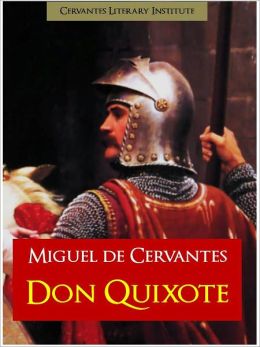
Of course, classic literature has always been on the longer side, so there's certainly a precedent of it. Just look at the unabridged versions of Les Miserables, The Count of Monte Cristo, and Don Quixote. They were all over 400,000 words. But note something I just said...these are unabridged versions. There are abridged version of all three of those classics. Meaning, if you think about it, that extra length...? Yeah, it wasn't necessary. It might have lovely language or a nice lesson or tangent behind it, but it wasn't telling the story the book was meant to tell.

Now, don't get me wrong, it is incredibly impressive when people can write such tomes and find a way to keep readers' attention. But why is this mini-trend happening right now? Is it something people really like or is it just happening because of good marketing and reviews that focus on only the strong points? Just because people buy the books doesn't mean they enjoy them. It doesn't mean they didn't skim over half the book to get to the good parts (what I did with both those novels I mentioned earlier).

A recent article by the BBC (and what do you know, like this blog post, it's a super long!) takes a look after hearing about the UK publication of  an 800+ page novel called Death and Mr. Pickwick by debut author Stephen Jarvis. (They also mention an upcoming book that is one million words long. Yes, one million words. That is not a typo.)

Debut novels don’t come more heavyweight than Stephen Jarvis’ Death and Mr Pickwick. Twelve years in the writing, it tells the story of the creation and afterlife of Charles Dickens’ own first novel, The Pickwick Papers, one of the world’s most written-about works of fiction. Pickwick was the book that made Dickens a celebrity, and it was published in monthly installments starting in March 1836, using his pen name, Boz. 
Out this month in the UK and next month in the US, Death and Mr Pickwick is a gloriously meandering tour of 19th Century London that has already been dubbed “a staggering accomplishment” by Publishers Weekly. 
Yet it’s heavyweight in another, more obvious sense too. Lug this book to the beach and back every day, and you’ll be getting a full-body workout. Drop it, and you risk breaking a toe. Weighing two-and-a-half pounds, it’s a whopping 802 pages long – an audacious claim on readers’ time in an age when our attention spans are supposedly being whittled away to nothing by ever-more insistent digital distractions. 
There is plenty of longer fiction, of course. Kelidar, Mahmoud Dowlatabadi’s Persian language novel following a Kurdish family in the wake of World War II, is 2,836 pages. The Son of Ponni, a historical novel written in Tamil by Kalki Krishnamurthy, and published in the 1950s, is barely any shorter at 2,400 pages. And then there’s Proust, whose In Search of Lost Time is 3,031 pages long. 
Don’t think it’s just a 20th Century phenomenon, either. Nothing compares to the 17th Century French novel Artamène. The tale of a shepherd’s son who’s really a Persian prince, its 2 million or so words (the average 280-pager contains just 80,000) fill 13,095 pages. Originally credited to Georges de Scudéry, these days it’s more commonly attributed to his sister, Madeleine. 
A bulky bedfellow 
Though it can’t quite compete in terms of pagination, Jarvis’ novel is part of a mini-trend that seems to be gathering momentum – and bulk. In the next few months alone, playwright Larry Kramer publishes the first of his two-volume fictionalised history, The American People, which comes in at 800 pages (he’s been working on it for 40 years and at one point the manuscript was 4,000 pages long), Amitav Ghosh completes his Ibis trilogy (the final installment is 624 pages), and review copies of Hannah Yanagihara's A Little Life have been sent out filled with Post-It notes attached to flag representative passages, presumably because the book’s girth is so daunting (at 736 pages, it’s really not so little at all). In July, you can expect to hear bookshelves groaning as William T Vollmann’s new novel, The Dying Grass, is published. Set in the Wild West during the 1870s, it totals 1,376 pages. And next year, British graphic novelist Alan Moore publishes his second non-graphic novel, Jerusalem, which is billed as a fantastical exploration of his hometown, Northampton. It’s said to be a million words long. 
Together, these bulky books call into doubt the received wisdom about our besieged attention spans. They might also make you wonder what editors are up to. And they question, too, the evolving role of the literary novel in the wider culture. Doesn’t there come a point at which the sheer scale of these works is so out of kilter with the reading time available to even the most dedicated bookworms, that they have to be seen as wilfully marginalising themselves? Think of this as well: every purchase of a novel over 600 long pages may well come at the expense of two or three others. 
If you wanted to pinpoint the start of all this, you could do worse that looking to 2013, when 28-year-old Eleanor Catton became not only the youngest author ever to win the Man Booker Prize, but did so with the longest book. The Luminaries is 832 pages long. Did the judges not deem its length problematic? Not according to their chair, author and academic Robert Macfarlane. 
“Length never poses a problem if it's a great novel”, he insisted. To prove his point, that same year, Donna Tartt’s The Goldfinch (760 pages) sold and sold. 
As a reader, you know what you’re in for when you begin a long book. It’s not that we necessarily expect more – after all, as much can be said in a poem, never mind a short story – but we do tend to indulge the author a little, allowing for the fact that in a longer work time can be taken establishing characters, and the subplots layered on with plenty of scope for resolution. It’s a different relationship. A novella may be read in a single sitting, making for a more intense reading experience. The bulky epic, meanwhile, inveigles its way into your life over a period of weeks or even months, becoming a travel buddy and bedfellow. 
Is bigger better? 
In genre fiction, big has never fallen out of fashion. Fantasy novels especially tend to run long, and plenty of airport paperbacks are so dense they look almost square. But then those tend to be vastly pacier affairs. In the US, too, there’s an expectation that a great literary work will also be physically imposing. Still, how many of even those wouldn’t be improved by a judicious nip and tuck here and there? The Goldfinch is one of my favourite novels of this century, but if I were forced to come up with a quibble, it would be that Tartt spends too long in Las Vegas in the middle section. 
“Very few really long novels earn their length. My fingers are always twitching for a blue pencil,” Ian McEwan told the BBC last year. He was speaking on publication of his own most recent novel, The Children Act, a work so slender it might almost be called a novella. The story of a high court judge who must decide whether to compel a young Jehovah’s Witness to receive a life-saving blood transfusion, it radiates brilliance, and yet weren’t there a couple of passages that felt too research-heavy? Sometimes, authors themselves simply become too big to cut. Remember how the Harry Potter books grew as JK Rowling’s fan-base exploded? 
In an age of 140-character tweets and six-second Vine videos, it’s hard not to view the abundance of fat books as a throwback trend. A tome so heavy it’s barely portable is, after all, the ultimate anti-e-book. Novelist Naomi Alderman is well placed to comment, as she also creates video games, most notably the top-selling Zombies, Run! 
“The trend towards long books is a fascinating counterpoint to the suggestion that we're all becoming iPhone-junkies, with minuscule attention spans, twitchily unable to concentrate on anything longer than a tweet,” she told BBC Culture. In fact, she suggests, technology might be making us more ready to sign over large chunks of time to a novel. As well as the oft-cited influence of TV binge-viewing, made possible by streaming, she points to the fact that AAA video games – those with the highest development and promotion budgets – frequently demand upwards of 100 hours of gameplay. 
“The death of the ‘attention span’ might have been declared prematurely,” she adds. “But at the same time, novels are competing with other entertainment forms that provide a lot of instant thrills. To start a long novel these days, I think the reader needs to feel certain that the tale will be worth the journey.” 
Of course, Stephen Jarvis, who’s 57 and lives in Maidenhead in the south of England began writing his novel in 2001, in a world before Facebook. It was influenced, he says, by reality TV’s Big Brother. ‘It strikes me that there are parallels between Big Brother and The Pickwick Papers – both of them are plotless things which just sort of ramble along. There’s an emphasis on character and you don’t really know what’s going to happen.’ 
At one point, Death and Mr Pickwick rambled to 800,000 words, but he cut it back by over half in order to have it fill 802 pages – the exact same number as Dickens’ novel.
Jarvis has no worries about readers being put off by the novel’s length, though he does admit this wife has vowed never to read it. “She has special dispensation – her excuse is she doesn’t need to read it because she’s had to live it,” he says. She supported him while he wrote, and so it seemed only fair that he let her type the letter ‘d’ of the ‘The End’ before they went off to the pub to celebrate. When finished copies arrived, however, the words had been cut. Turns out it’s not house style. 
See the original article HERE

So what do you think, dear readers? Would you pick up (and read in its entirety) an excessively long novel? If so, what would compel you to do so?

I am truly curious...

Friday, June 28, 2013

Double Vision Editorial Now Up and Running!

This past week has been a crazy one for me, getting all the finishing touches ready for my official Double Vision Editorial launch, as well as the usual editing jazz. But I've now got two edits down, two in progress, and a press release (below!) out to the world.

Though I've been freelance editing for six years now, I've got to say that it feels different having sent out my launch announcement. Nothing has really changed, but I feel like I'm now finally giving myself a true chance at success.

Working with authors (and being one myself) has been a dream of mine since I was a kid. I used to play "publishing" with my Barbie dolls, dreaming of owning a publishing company where I could help writers make their books the best they can be (little did I know at the time, that was called editing). It's a scary thing, working for myself, not knowing where my next rent check or medical insurance bill is going to come from. But they say you should always at least try to follow your dreams, so this is me trying. Fingers crossed everything else just starts to fall into place. (With a ton of hard work and dedication, of course!)


June 28, 2013
Press Release

Danielle Poiesz, former Big-Six publishing industry professional, has officially launched her independent editorial company, Double Vision Editorial.

Aimed toward quality collaboration at fair prices, Danielle offers both book and non-book editorial services, including content editing, copy editing, and proofreading/cold reading for fiction, nonfiction, digital, educational, and technical projects. She is also trained in script/manuscript analysis, as well as the creation of various types of original content. Through Double Vision, Danielle hopes to share her knowledge and expertise in a way that helps writers, students, and businesses improve upon their original vision to create a finished product they can be proud to introduce to the world.

At Double Vision, we believe that just one pair of eyes is never enough. With the help of an imaginative and trained editorial specialist, an initial vision and inspiration can be amplified and deepened to give any project a broader appeal and brighter shine. But making it possible to perfect any project involves teamwork, mutual respect, trust, joint effort, and of course, creativity. The client-editor relationships brought about through Double Vision aim to be professional and personal partnerships that last for longer than just the course of a single project.

As owner and editorial guru of DVE, Danielle would love to work with you and yours on any of your editorial needs. Please visit her at http://www.doublevisioneditorial.com for more information, or feel free to email her directly at danielle@doublevisioneditorial.com.

Follow DVE at @DoubleVisionEds
Facebook Page Coming Soon!

Friday, February 8, 2013

That Tricky Narrator

One of the most common problems I see in manuscripts I edit is issues with point of view. It can be so tricky being consistent in writing from a specific character's perspective and slips are bound to happen, especially in early drafts. And the omniscient POV, the one that allows you to jump about, it's very rarely done successfully and seamlessly (though it is possible).

So, when I edit, POV is one of the first things I notice. Is it first or third person? Is it from the right character? Are there too many different characters' POVs being shared? Is the character really showing the reader the story through his or her eyes?

Often the answers to these are not all check marks, causing a massive amount of revision on the author's part after an edit. But sometimes, sometimes, an author just nails the narration. Like these 10 classics compiled by author Antoine Wilson for Publishers Weekly:


Antoine Wilson
The first-person narrator descends from the ancient storyteller unspooling his tale around the fire for the delight and edification of his people. But on the page, two things transform him. One, we readers can ask “Who is this speaker? Why is he telling us this story, and what isn't he telling us?” Two, he can go on as long as he wants. The first case invents the so-called Unreliable Narrator, the second gives rise to what I like to call the World Swallower.

Whether insane, overheated, strung-out, or merely young and naïve, Unreliable Narrators always deliver more than their characters intend to. Comic or tragic, serious or absurd, they can tell just about any story while also reflecting our capacity for self-deception, our limited sliver of knowledge about the world, and the limits of language itself. 
The World Swallower is the unhinged cousin of the old-school omniscient author-narrator (the one who used to say “dear reader”). He stretches (or obliterates) the boundaries of what a character might be able to know. Whether deployed to illuminate the scope of human imagination or to bring under one flimsy umbrella the whole of experience, the World Swallower is the ultimate stand-in for an author who has devoted himself or herself to their art. 
There exist other varieties of first-person narrator, of course, and other ways to describe them, but my favorites (aka this Top Ten) are the Unreliables and the World Swallowers.
(For each book, I’ve also included an alternate, a sort of spiritual cousin to the one on the list.) 
10. Huck Finn, The Adventures of Huckleberry Finn by Mark Twain - Huck's narration exemplifies the triumph of the spoken over the written, the colloquial over the official. With this novel, Twain deployed his skills as a master ventriloquist to rejuvenate American literature, delivering adult ideas through the mouth of a child naïve. (Alternate: Scout, To Kill a Mockingbird by Harper Lee) 
9. Holden Caulfield, The Catcher in the Rye by J.D. Salinger -Another child narrator, so inflected with the language and perspective of a kid that the novel is often assigned to kids themselves, most of whom fail to see beyond Holden's puerile litmus of phony/not-phony. The power lies in the book's structure (pitting dying nobly against living humbly, at one point), and in reading it from an adult's perspective. Having already lost some innocence, we grown-ups understand the significance of Holden's position better than he ever could. (Alternate: Elaine, Cat’s Eye by Margaret Atwood) 
8. F**khead, Jesus' Son by Denis Johnson -A narrative of down-and-out druggy recovery told by an unreliable narrator. F**khead can't even keep his own story straight; he revises along the way. But what Johnson achieves here is innovative and moving. This is a true novel-in-stories, taking the overarching narrative of recovery from the novel form, while allowing F**khead's voice to evolve from chapter to chapter, a discontinuity enabled by the term “short story.” The events of the first story/chapter are no more or less strange than the last, but along the way the voice transforms from imagistic confusion to candid clarity. (Alternate: Esther Greenwood, The Bell Jar by Sylvia Plath) 
7. Ditie, I Served the King of England by Bohumil Hrabal - Hrabal is a modern master of the literature of the Fool. But unlike his forebears (cf Jasek's novel The Good Soldier Svejk), Hrabal lets his fools speak for themselves, giving them the microphone to narrate their own stories in all of their venal, occasionally insightful, narrow-minded glory. Ditie, a hotel waiter, likes to brag that he once served the Emperor of Ethiopia. A poor judge of seemingly everything, he marries a stern German athlete just as the Nazis are taking power. James Wood's review of Hrabal's work is a must-read. (Alternate: Stevens, The Remains of the Day by Kazuo Ishiguro) 
6. Charles Kinbote, Pale Fire by Vladimir Nabokov - Yes, yes, I know, why isn't Humbert Humbert on this list? Because far more interesting (to my mind) is Nabokov's second-most famous creation, Charles Kinbote.Pale Fire is a strange hybrid form; the novel consists of Kinbote's cranky Foreword, a 999-line poem by someone called John Shade, and the footnotes to that poem, in which Kinbote attempts to claim the work for himself in a sort of lit crit hijacking attempt. In doing so, Kinbote manages to both swallow the world and emerge as one of the least reliable and most amusing narrators I've ever read. (Alternate: Humbert Humbert,Lolita by Vladimir Nabokov) 
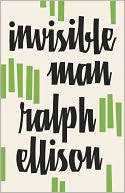
5. Invisible Man, Invisible Man by Ralph Ellison - A song of subjectivity, at times wildly uneven, partly inspired (according to Ellison) by Eliot's “The Waste Land,” the novel comes to us via an unnamed narrator under the guise of autobiography. Invisible Man shimmers as literature for what Ellison turned his back on, the realist protest novel, in favor of a personal and experimental style, one that allows erudition, feverish lyricism, command of the vernacular, fluency in pop culture, jazz, science, preaching, and discourses on communism. A voice to swallow not the world, per se, but the world's many voices. (Alternate: The Underground Man, Notes from Underground by Fyodor Dostoevsky) 
4. Franz-Josef Murau, Extinction by Thomas Bernhard - Bernhard's narrators are distinguished by their musicality, repetition, and relentlessness. The intellectual black sheep of a powerful Austrian family, Franz-Josef Murau must leave his exile in Rome when he finds himself sole heir to his family's estate, Wolfsegg. Brilliant, darkly comic, and enlightening, Murau's pseudo-autobiography is a triple-shot of bile from the Austrian master. (Alternate: Any of Beckett's narrators) 
3. Ruth, Housekeeping by Marilynne Robinson - In relating her and her sister's somewhat feral childhood in fictional Fingerbone, Idaho, Ruth depicts events and scenes she could not have witnessed firsthand but which have taken root in her imagination. The result is an intimate bildungsroman interwoven with a world-swallowing depiction of place, people, and history. All told through a voice that, at times, approaches the “I am nothing. I see all.” of Emerson's Transparent Eyeball. As stealthy as it is ambitious. (Alternate: Del Jordan, Lives of Girls and Women by Alice Munro) 
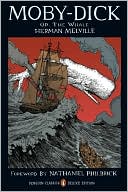
2. Ishmael, Moby-Dick by Herman Melville - “Call me Ishmael,” he says, but can we still call him Ishmael by the final chapter, when we get (spoiler alert) a third-person description of the destruction of the Pequod? Ishmael is the ultimate world-swallowing narrator, one who bursts at the seams with the volume of all he has swallowed, narrative consistency be damned. (Alternate: The author/narrator of Don Quixote) 
1. M., In Search of Lost Time by Marcel Proust - Cookie, tea, go! (Alternate: Howie, The Mezzanine by Nicholson Baker) 

See the original post HERE 

Some of my personal favorites (first and third person selections): Scout from To Kill a Mockingbird, Jo from Little Women, Guy from Fahrenheit 451, and Esther from The Bell Jar.


Who are some of YOUR favorite narrators in literature?

Thursday, January 17, 2013

Poking My Head Out of My Hidey Hole

Oh, my dear readers. My sincerest apologies for my seemingly random disappearance. First it was the holidays. Then it was being massively ill, putting me behind on all my work by about 10 days. Now, just a week ago, I finally had my last day at a full-time traditional job and am fully self-employed. As you can see, things have been less than leisurely!

What have I been doing, you wonder? Editing like a madwoman, and getting settled over at my consulting gig as Editorial Director of Entangled's Select and Edge imprints. With our upcoming Edge launch--Monday!--I have been especially wrapped up, finalizing manuscripts and covers, promotions and marketing copy, mission statements and branding plans. Craziness!

In all that time, not only have I not been able to blog, but I also haven't been able to read for pleasure or work on any of my own writing. Not that I think I could turn my editorial brain off right now, even if I did have time.

Which brings me to the topic of conversation over at Word-Whores this week. Allison Pang wrote a spot-on post today that I think outlines some of my own feelings on the topic quite well:


Like so many of my fellow word whores, I also find that I have less time to read - but then, I seem to have a lot less time for a lot of things. Gone are the days where I might play WoW until my eyes bled. Or stayed up all night to devour an 800 page book. Or spent all weekend cross-stitching. 
Or hell, even sleeping in. Which hasn't happened for at least nine years now. >_<  Silly children. 
It's not something I'd really thought about when I was trying to get published, but writing tends to suck up a good deal of my free time, so when I do read books I want them to be worth my time. So now I'm much more picky. Before all this, I nearly always finished every book I started - I guess I felt that I owed it to the author to see it through to the end. But these days, if it doesn't strike my fancy I put it down and move on to something else. 
The problem is that after spending so much time going over my own work and trying to improve my craft, it's hard to shut down that "editor brain" even when I read for fun. It's a bit of a bummer really. Part of it is nitpicking on things, but part of is is because now I *know* how much work and love goes into crafting a story - it's hard not to simply stop and appreciate a lovely turn of phrase or scene that truly transports or wince when I come across something that doesn't work. 
Reading has always been one of my greatest pleasures, so it's wonderful when I come across a book that I can forget the work that goes behind it. I think in some ways it becomes a measure of trust - I have a list of authors or book series that I trust - e.g. I know if I pick up a book by one of them, I will be satisfied. 
(Which is why it becomes so hard when an author or series suddenly seems to take a sharp right-hand turn into nowhere - sometimes it works, sometimes it doesn't. That trust can become bitter disappointment.) 
These days I have books I read to feed my craft - highlighting bits and pieces or even certain words or scenes that strike my fancy that I want to remember - and books that are my comfort. When I look past the craft of the words and fall into the story like I used to? That's become rather precious to me because it doesn't happen as often as it used to. Things I could easily have overlooked before become glaring problems that pull me straight out of the story.
And of course, I realize that other people probably do the same thing with my books - which is both cool and somewhat mortifying all at once. And it's one of the reasons I can't really read my own books after they're out - the cool parts are cool, but wow, seeing the mistakes I made and can no longer change are often groan-inducing. 
But that's only fair, isn't it? :)
See the original post HERE 

Tuesday, July 24, 2012

New Release: WHISPERS IN AUTUMN by Trisha Leigh

Every so often a story comes around that you just fall in love with. It's become rarer and rarer for me these days, though, and I'm not entirely sure why. But not too long ago, I was able to feel that feeling again. And lucky for me, the author wanted me to edit the book and the others in the series. I was thrilled that she wanted me to be a part of it! "Yay," I squealed!

On now the first book in the series, Whispers in Autumn by Trisha Leigh, has hit the virtual shelves:

In 2015, a race of alien Others conquered Earth. They enslaved humanity not by force, but through an aggressive mind control that turned people into contented, unquestioning robots.

Except sixteen-year-old Althea isn’t content at all, and she doesn’t need the mysterious note inside her locket to tell her she’s Something Else. It also warns her to trust no one, so she hides the pieces that make her different, even though it means being alone.

The autumn she meets Lucas, everything changes.

Althea and Lucas are immune to the alien mind control, and together they search for the reason why. What they uncover is a stunning truth the Others never anticipated, one with the potential to free the brainwashed human race.

It’s not who they are that makes them special, but what.

And what they are is a threat. One the Others are determined to eliminate for good.

It's been fantastic working with Trisha the past few months to hone and polish her already awesome book. I'm excited to see what she has in store for us next...

So, if you're looking for a fun YA read, order yourself a copy and enjoy! :)

You can find a print edition of Whispers in Autumn on Amazon.com. Electronic versions are available on Kindle, Nook, Kobo, and iBooks.

You can even order an autographed copy from Trisha herself via her website.

Congratulations on the release, Trisha!

Monday, October 25, 2010

The Author-Editor Relationship: Jane-Austen-style

I came into the office this morning to a find hilarious--and thoughtful--article sent to me from one of my awesome authors. The article, written surprisingly by Jill Lawless of the Associated Press, focuses on how even the most reknowned authors need a helping editorial hand to polish a manuscript.

Lawless's example author-editor pair? Jane Austen and William Gifford.

She's renowned for her precise, exquisite prose, but new research shows Jane Austen was a poor speller and erratic grammarian who got a big helping hand from her editor.

Oxford University English professor Kathryn Sutherland studied 1,100 handwritten pages of unpublished work from the author of incisive social comedies such as Pride and Prejudice. She said Saturday that they contradicted the claim by Austen's brother Henry that "everything came finished from her pen."

"In reading the manuscripts, it quickly becomes clear that this delicate precision is missing," Sutherland said.

She said the papers show "blots, crossings out, messiness," and a writer who "broke most of the rules for writing good English."

"In particular, the high degree of polished punctuation and epigrammatic style we see in Emma and Persuasion is simply not there," Sutherland said.

Sutherland said letters from Austen's publisher reveal that editor William Gifford was heavily involved in making sense of Austen's sensibility, honing the style of her late novels Emma and Persuasion.

Gifford did not edit earlier books such as Sense and Sensibility and Pride and Prejudice, whose inconsistencies have sometimes been blamed on bad printing.

"In fact, the style in these novels is much closer to Austen's manuscript hand," Sutherland said.

Sutherland said the revelations shouldn't damage the reputation of Austen, who was little known when she died in 1817 at the age of 41 but has since become one of Britain's most beloved authors.

Sutherland said the documents reveal an experimental writer who was "even better at writing dialogue and conversation than the edited style of her published novels suggest."

"The manuscript evidence offers a different face for Jane Austen, one smoothed out in the famous printed novels," she said.

Austen's handwritten manuscripts will go online Monday at http://us.rd.yahoo.com/dailynews/ap/ap_on_en_ot/storytext/eu_britain_jane_austen/38166432/SIG=10toupjf8/*http://www.janeausten.ac.uk, the result of a three-year project to digitize the author's unpublished work.

See the article on Yahoo! News HERE

I've always believed that editing is a team effort--that author and editor need to work hand-in-hand to bring out the best of a story. One person is emotional connected to the material and the other is more objective, though enamored with the author's talents and abilities. That dichotomy is imperative, in my opinion.

Lawless's article also feeds into my love of manuscripts and the controversial topic of authorial intent. I had no idea that Austen's unpublished works would be going online (today!) and I'm excited to take a peek.

Wednesday, September 22, 2010

Harry Potter Galore at Scotland Book Fest

It's very rare that I ever wish I lived in Scotland. And when I do, it's usually the result of some sexy man in a kilt from a historical romance novel. But right now, I'm kind of wishing I were able to just hop in my car (if I had a car, that is) and drive on over to the Wigtown Book Festival in southwest Scotland.

Why, you ask?

Because, for the first time ever, one of J.K. Rowling's Harry Potter manuscripts is going on display, according to CBC News:
Handwritten manuscripts by Harry Potter author J.K. Rowling are going on public display for the first time at a book festival in Scotland.

The original manuscripts, which are signed, were written as part of Harry Potter and the Chamber of Secrets — the second title in the seven-book series that stormed the world and made Rowling a multimillionaire.

The framed pages contain "The Ballad of Nearly Headless Nick" and will be put on display at the ReadingLasses bookshop as part of the Wigtown Book Festival in southwest Scotland.

Nearly Headless Nick is the ghost who haunts Hogwarts School of Witchcraft and Wizardry. The ballad was edited out of the book before publication.

"This is a one-off exhibition and contrary to belief it is not on a world tour," Gerrie Douglas-Scott of ReadingLasses, which focuses on books by women, told the Scotsman newspaper.

"We're very excited that this bit of Harry Potter is coming home to Scotland for 10 days."

The pages were first donated in 2005 by the author, who lives in Edinburgh, to the Scottish Language Dictionaries organization to help raise funds for a new Scottish language dictionary.

They subsequently ended up in the hands of Ilyas Khan, owner of the Asia Literary Review and a book collector. The Review is one of the festival's sponsors.

In 1999, the Scottish Parliament recognized the town as Scotland's National Book Town, marking the inaugural year of the festival, which runs from Sept. 24 to Oct.3.
See the complete post HERE
I'd kill to get an up close look at Rowling's manuscripts. I look at manuscripts every day, yes, but there's something so powerful about looking at an MS of one of the beloved titles on your bookshelf, years after you first read it. Or even just looking at an old manuscript will do it for me. Whenever libraries and museums put new manuscripts on display, I go weak in the knees. I'm not sure when I began having that reaction to manuscripts, but my love certainly escalated in college when I took a class called "Book Work."

Our main topic of study in the class was authorial versus editorial intent and, as such, we spent a great deal of time in the Boston University and Harvard University libraries and archives, getting a first-hand look at what the authors themselves had written in their notebooks. I love donning those white gloves, having each piece carried out to me, slipped out of its protective plastic sleeve so I could spend some time with the work.

Reminiscing over one particular project is even making me feel all jello-y inside. My big paper in that class was on Robert Frost's first collection of poetry, A Witness Tree, and the word/punctuation choices editors over time had made when reissuing the collection. So, given my thesis topic (I can't recall my thesis exactly at the moment haha), I would go to the archives and sit there for hours, transcribing Frost's handwritten poems into my notebook.

It was just love.

Monday, July 19, 2010

The Cranky Critic, Gloria Loman: S&S Needs R&R After Karp Sets Up Firing Squad

Hey Booklanders -- There's a shit-storm brewing over at Simon & Schuster.

Approximately 50 measly days after John Karp replaced David Rosenthal as publisher of Simon & Schuster, the original imprint of the CBS-owned publishing house of the same name, Karp is already earning himself a bad rep, both in house and out.

Rumor has it that Karp, the previous head of Warner's Twelve imprint, was brought in to revitalize S&S after some stagnant profit margins. President and CEO of S&S, Carolyn Reidy told the New York Times of Karp back in June:

Jonathan Karp is one of the most versatile, talented and creative publishers working today [...] At every stage of his career he has shown a true gift for finding and making bestsellers of quality. Having competed against him to acquire books in which we were keenly interested, and then watching as he published them with great flair, I’m delighted that he will now bring his abundant editorial and publishing skills to the Simon & Schuster imprint.

While Karp certainly has a solid resume, his expertise doesn't quite fit S&S's hardcover trade titles and an extensive paperback list. As a result, this "changing of the guard," as the New York Observer calls it, took many by surprise and left them feeling wary and somewhat off-kilter.

And apparently for good reason!

According to Publishers Marketplace's announcement of the switch on June 3, Karp told the Associated Press, "I'm going to take a cue from one of Simon & Schuster's most successful authors, Hillary Clinton, and I'm going to go on a listening tour for a very long time and listen to what people at S & S think and we'll figure out the next step together."

He is also quoted as saying, "I'm definitely not coming the[re] to clean house. I'm coming there to build upon a foundation." On the fiction publishing program in particular, as raised above, "I hope that we will broaden the sweep and impact of the S&S fiction program."

But word on the street is that cleaning house is exactly what Karp is doing, breaking his word only one month in.

Early last week, Publishers Weekly announced the hiring of two new editors, Ben Loehnen and Jofie Ferrari-Adler, both of whom are well-versed in nonfiction, but not as fluent in trade fiction, S&S's most lucrative genre.

Then, just last Thursday, The Observer reported the firing of long-time S&S editor Amanda Murray, who worked with a number of bestselling authors including Mary Higgins Clark and Sandra Brown.

And people are pissed about Murray's dismissal. I hear she was a beloved presence at S&S, not to mention significant. While new acquisitions were not Murray's main focus, her plate was chock-full, making her an integral member of the editorial team. So, while Murray's absence won't change the acquisitions at S&S, she’ll be missed, and Karp will now need to hire a fiction expert to fill her very big figurative shoes. Word has it that someone has already been lassoed for the job.

But that's not all. More pink slips are expected to be handed out at S&S in the coming weeks, indicating that "cleaning house" was on Karp’s agenda from the get-go, despite his bullshit (pardonnez mon français) claim that he’d be "build[ing] upon the foundation."

Karp had also told the AP, "I think that a big publisher can be focused and passionate, especially if the editors have the latitude to do their best work and champion the authors they believe in. S&S has a culture of great editors."

"Great editors" who Karp is now firing.

It looks like bringing Karp in may not be working out exactly as planned—or as claimed. With employees who now struggle with trusting their publisher and a huge disconnect between what the imprint stood for and what it's now morphing into, perhaps the decision to set Rosenthal free may not have been a good one.

Maybe it would have been more productive to deal with the rumored issues of a disappearing marketing department, a somewhat strained publicity department, and overpaying for projects, rather than replacing a well-respected publisher who Reidy herself calls, "A truly original thinker [who] brought a wealth of creative and inspired ideas to the entire publishing process, and [who] has been a trusted and valued colleague who made many contributions to the overall success of our company."

No one knows how it will all shake out, but one thing's for certain: Karp hasn't started off at S&S on the right foot. And people are not happy about it.

I wonder what the Ethics Police would think about this one...

Wednesday, January 27, 2010

The Sensitivity of Literary Editing


This week, the Recalcitrant Scrivener blogged about editing and revising a manuscript from both an editor's and an author's point of view:

Editing is a sensitive issue—for writers, for editors, for everyone involved. Virtually all writers can benefit from working with a good editor. But note: the key terms here are “with” and “good.” Which is to say, the writer and editor have to be well matched—they have to understand each other and be able to communicate. What most writers resent is an editor who has a very different view of the trajectory of their work and then attacks the manuscript in a vigorous manner based on that view.

Most notably, editors are essential for serving as a sounding board for ideas, catching unintentional repetitions, and identifying passages and plot developments that don’t work. Word by word revisions are less important, and in some cases counterproductive. Finishing the manuscript of a novel is after all very different from writing and editing a magazine or newspaper article.

Read the rest of the blog post HERE


The Recalcitrant Scrivener goes on to discuss two examples of unacceptable literary editing, one by an editor (Raymond Carver's editor) and one by an author (Jack Kerouac).

I'd never heard these two particular examples myself but the idea of literary editing has always been intriguing to me (duh, my job), but editing literary fiction is very different from what I've been doing thus far in my career. I took two classes in college on the very topic and it's amazing how varied opinions can be on what is and isn't go editorial-wise and how authorial intent can be so subjective, especially if the author isn't there to set editors or readers straight.

Personally, I think the key to being a good editor is understanding the authorial intent by communicating with the author first-hand and then doing everything he/she can to help the author achieve that intent in a way that everyone is happy with. While that's a very simple concept, it can be difficult in execution. But for me, it's always, always the goal. It's the author's book. Not mine. I just do the best I can to guide.