Showing posts with label The Daily Beast. Show all posts

Saturday, April 23, 2011

Are Gimmick Books Taking the Place of Good Fiction?

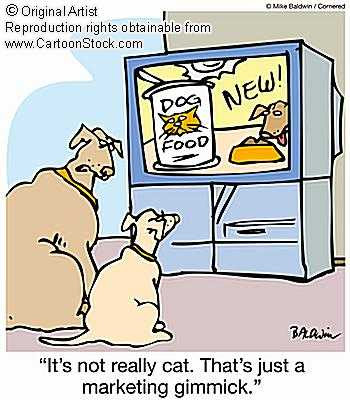
As the book publishing industry evolves as whole, so do the books that comprise it. Fiction, history, memoir, travel, children's books--they're all still being written and being read. But there's a new kid on the block that takes these classic genres and twists them into something showier--the Gimmick Book.

We all know what gimmicks are--some unique scheme to catch people's attention in one way or another. Writers have taken to relying on more than just the merit of their stories these days, using gimmicks to make them stand out in the congested market. For example, the blank book that was buzzing around the book biz recently--What Every Man Thinks About Apart From Sex--is not only a funny idea, but a clear gimmick as well.

Caryn James at The Daily Beast explores the Gimmick book in more detail:

Those live-action newspapers from the Harry Potter books and films—with moving and talking images on the page instead of old-fangled still photographs—don’t seem like a stretch today. They’re more like a prototype for the near future. Soon we’re likely to see a first-rate literary novel written expressly for the iPad or whatever higher-tech device comes next. We already have video books, cross-bred from e-books, and extra features. How can plain ink-on-paper compete with reading as an action sport?

We have entered the Age of the Stunt Novel, literary fiction that relies on gimmicks: photos splashed throughout the text, codes for your smartphone, stand-on-your-head structures, anything that screams “Look, this isn’t a boring old book.”

From Joyce and Beckett through Georges Perec, playing with form is nothing new, of course. The experimental novels of the 1970s turned stunts into a new genre. In Walter Abish’s Alphabetical Africa, for one, all the words in the first chapter begin with the letter A, expanding in chapter two to include words beginning with B, and so on. What we’re seeing now doesn’t come with the same rigorous artistic principles.

The impulse behind today’s shift is partly commercial. You can’t blame frantic authors, stranded in the land of tumbling sales, closing bookstores, and miniscule e-book royalties. But the dynamic also flows, perhaps unconsciously, from the powerful influence of the Web and the way we juggle several things at once, watching online video or TV while texting or checking email and talking on the phone. That multiplicity is creeping into novels. [...]

Read the rest of the article HERE

James goes on to give an in-depth analysis of several gimmick books, asking the questions "but is it good fiction?" Some of the titles he explores are The Lover’s Dictionary by David Levithan, 13, Rue Thérèse by Elena Mauli Shapiro, and The Object of Beauty by Steve Martin.

Wednesday, December 22, 2010

The Story of Obama

Today marks a significant day in GLBT rights in the U.S. as President Obama signed a repeal for the unjust "Don't Ask, Don't Tell" policy. (Yay!)

But that's not the only thing I found about him in the news for when surfing the net on my lunch break. It seems he's also "lost his narrative," according to the Daily Beast, and needs some pointers from the pros:

Obama has a "narrative" problem. Or at least that's the media's storyline.

"Presidential politics is about storytelling," Politico's John F. Harris said last year. "No one understands this better than Barack Obama and his team, who won the 2008 election in part because they were better storytellers than the opposition."

But, as the saying goes, you campaign in poetry and govern in prose, and before long, everyone wants to edit.

Obama has a "narrative" problem. Or at least that's the media's storyline.

"Presidential politics is about storytelling," Politico's John F. Harris said last year. "No one understands this better than Barack Obama and his team, who won the 2008 election in part because they were better storytellers than the opposition."

Take the moment this summer during the Gulf oil spill when Obama seemed upended by calamity. "He'd better seize control of the story line of his White House years," opined Maureen Dowd. "Woe-is-me is not an attractive narrative."

Click on cable television or flip to the opinion pages, and you'll discover that whenever things aren't going the president's way, it's because he has lost control of the narrative. In other words, the Obama camp is desperately in need of a re-write.

But rather than listen to the political journalists, who rate the president like National Book Award judges, we decided to ask some veteran novelists for a few hints of how to improve his plot in 2011.

Sam Lipsyte, author of The Ask, said it's time for Obama to look at his earliest chapters.

"When I am writing and floundering, with no sense of where to go, I look back to the beginning of what I am working on, and ask: Where did I start? What set this all into motion? Obama could do the same with his novel, of which we are all characters," he wrote in an email.

"The answer would be, 'Oh, yeah, I promised change, I promised to fight some very righteous fights, I gave my supporters [the reason] to believe that I would be tough enough, or at least magical enough, to rout the armies of the evil Republican wizards, even though I would try to be nice first.' Then I think he would 'find' his 'narrative,' and perhaps find the will to finally go berserk on these thugs, these goons of the oligarchy, and save the kingdom of the middle class. And people far and wide would say, 'Have you read Obama's latest? It's a great read!' He might even get on Oprah. In short, when you lose something, it's usually where you've been, not where you think you're going."

Canadian poet and author Margaret Atwood at first demurred, claiming her nationality disqualified her from meddling in her neighbor's affairs. But when pressed, she offered that a more interplanetary story line might serve the president well.

"Ask the Sci-fi writers to do some plots whereby the President has been taken over by the Pod People," she told The Daily Beast by email.

Spy novelist Alex Berenson, who published The Midnight House this year, said the way forward might be the creation of an enemy.

"The number one way you change the narrative is give him a villain," Berenson said, pointing out the way in which the country came together behind George W. Bush after the 9/11 attacks.

"I'd give him something to push against. Give him an enemy who is not John Boehner. Maybe he needs an alien invasion. We can all be against invasions."

For Berenson, the story line from the White House remains fuzzy.

"If you came in with that book, your editor would tell you, you needed to focus," he said. "You need to know who your hero was."

Read the rest of the article HERE

I'm not sure why but when I first started reading this article, I couldn't stop laughing. I found it incredibly amusing to compare a presidential term in office to a narrative in a book. But as I read, I realized it made more and more sense. Everything has a story arc to it, a character arc, a conflict, and a lesson. Each and every day can be compared to a narrative, really. And maybe it should be. Maybe it'd help us all be a little more objective, productive, and meaningful...