Showing posts with label short stories. Show all posts

Tuesday, September 12, 2017

The Delight of Fall Reading

Fall is almost here, and I couldn't be happier about it. I'm a temperate-weather girl, and so fall and spring are my jam. Especially since I can just put on a light jacket, make a cup of tea and maybe get myself a slice of pie, and grab a book, and take it all outside to sit and read. Delightful!

That's what I'd do if I had more free time, at least. So this fall, I need you to step up, dear readers, and let me live vicariously through your reading lists. If you need a hand deciding where to start, Buzzfeed has pulled together a list of "28 Exciting New Books You Need To Read This Fall."

And if you have trouble deciding, Buzzfeed has even created a quiz to help you out.

 Her Body and Other Parties by Carmen Maria Machado 
[Machado] shows off her fresh new voice in Her Body and Other Parties, a genre-bending short-story collection that is part magical realism, sci-fi, fantasy, and horror. In Machado's imaginative, unsettling, haunting stories, she explores the violent realities of being a woman and having a female body in our society. 
Publication date: Oct. 3
 My Absolute Darling by Gabriel Tallent
In [Tallent's] dark and gripping debut novel My Absolute Darling, Turtle Alveston is a 14-year-old girl who's lived in isolation with her survivalist father on the northern California coast since her mother's death. But when she finds a friend in a high school boy, she realizes she must escape her dysfunctional, abusive life with her father, using the survival skills he taught her and a whole lot of courage. 
Publication date: Aug. 29


The Golden House by Salman Rushdie
[Rushdie] makes a return to realism in The Golden House, a novel about an eccentric billionaire named Nero Golden and his three adult sons — who make quite the splash when they mysteriously move to a cloistered community in downtown Manhattan — and their aspiring filmmaker neighbor who chronicles their undoing. A tale of identity, reinvention, truth (and lies), and terror, The Golden House also captures the climate of American politics and culture from the Obama era to today — including the rise of a "narcissistic, media-savvy villain wearing make-up and with coloured hair" who embarks on a presidential run. 
Publication date: Sept. 5

 Uncommon Type by Tom Hanks 
Who knew beloved, Academy Award-winning actor Tom Hanks could also write?! In Uncommon Type, his debut short-story collection, Hanks explores what the American dream looks like for a multitude of characters, from an Eastern European immigrant to a war veteran. And, of course, Hanks' love for typewriters makes a cameo through each of the 17 stories. 
Publication date: Oct. 17
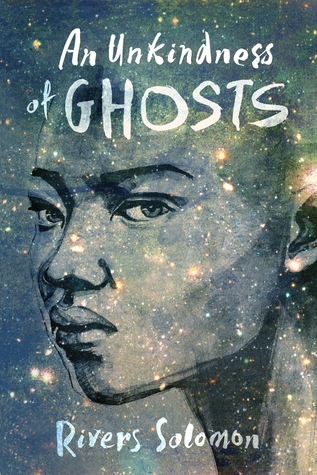

An Unkindness of Ghosts by River Solomon 
In [Solomon's] highly imaginative sci-fi novel An Unkindness of Ghosts, eccentric Aster was born into slavery on — and is trying to escape from — a brutally segregated spaceship that for generations has been trying to escort the last humans from a dying planet to a Promised Land. When she discovers clues about the circumstances of her mother's death, she also comes closer to disturbing truths about the ship and its journey. 
Publication date: Oct. 3 

Mean by Myriam Gurba  
[Gurba's] Mean is a hilariously honest coming-of-age memoir about growing up as a queer, mixed-race girl in 1980s California. A fearless account of racism, homophobia, misogyny, sexual assault, and true crime that manages to be as funny as it is dark. 
Publication date: Nov. 14 


Turtles All the Way Down by John Green 
[This is Green's] first novel since The Fault in Our Stars. Aza is a 16-year-old girl who finds herself investigating the mystery of a fugitive billionaire (for a hefty reward) with her best friend, while dealing with her own mental health struggles; at heart, a tale of the bonds of friendship and love. 
Publication date: Oct. 10


To see the full list, visit the original post HERE 


Thursday, May 7, 2015

Scholars Discover 150 Unpublished Stories by Mark Twain

Just when you thought classic American Literature couldn't get any better with the upcoming second novel from Harper Lee, scholars at the University of California, Berkley proved that thought wrong. Just this week the news broke that they discovered over 150 unpublished stories by Mark Twain.

The Guardian tells us more:

Scholars at the University of California, Berkeley have uncovered and authenticated a cache of stories written by Mark Twain when he was a 29-year-old newspaperman in San Francisco. Many of the stories are 150 years old. 
Twain wrote some of the letters and stories at the San Francisco Chronicle when it was called the San Francisco Dramatic Chronicle, where his job included writing a 2,000-word dispatch every day and sending it off by stagecoach for publication in the Territorial Enterprise newspaper in Virginia City, Nevada. 
His topics range from San Francisco police – who at one point attempted, unsuccessfully, to sue Twain for comparing their chief to a dog chasing its tail to impress its mistress – to mining accidents. 
Bob Hirst is editor of the UC Berkeley’s Mark Twain project, which unearthed the articles by combing through western newspaper archives and scrapbooks. The author’s characteristic style authenticated some of the unsigned letters. 
Hirst told the Guardian the digitisation of newspaper archives had been like “opening up a big box of candy”, allowing as it did Twain’s articles to be tracked down in a way that was not possible when archives were all on microfilm. 
The articles were written, Hirst said, at a time of great uncertainty in Twain’s life, when he was trying to decide in which direction to take his career. 
“It’s really a crisis time for him,” Hirst said. “He’s going to be 30 on 30 November 1865, and for someone not to have chosen a career by that time in this period was quite unusual.” 
Twain had been resisting becoming a humorist, according to Hirst, because at the time humor was considered a lower order of writing. He was in debt and drinking heavily, and even wrote to his brother that he was contemplating suicide, saying: “If I do not get out of debt in three months – pistols or poison for one – exit me.” 
Nonetheless, the articles, Hirst says, are brilliant examples of Twain’s inimitable style. 
“He knows the city, he’s a bohemian of a certain kind, he’s interested in what’s going on,” Hirst said. “He simply weaves that all together with the greatest clarity and the greatest humour that you could possibly imagine.” 
See the original article HERE

I don't know about you, but I'm itching to get a look at these stories. Here's hoping his estate allows for posthumous publication!


Friday, November 9, 2012

Posthumous Publishing for Bradbury

Publishers Weekly spread the news today that two short pieces written by the classic science fiction writer Ray Bradbury will soon be available for public consumption.

As a huge Fahrenheit 451 fan, I'll admit to being pretty stoked about even just a few new pages from the literary icon.

Here's the scoop from the Associated Press (via Salon.com):

NEW YORK -- Ray Bradbury was in failing health during his final years, but he could still reminisce about his love for books or finish a brief and mysterious Christmas story.

Two pieces released this fall were written late in life by the science fiction/fantasy master, who died in June at age 91. He contributed “The Book and the Butterfly,” an introduction to this year’s edition of “The Best American Nonrequired Reading.” And he conceived a stark encounter between a young boy and a man he believes is Santa Claus in “Dear Santa,” which appears in the holiday issue of Strand Magazine, based in Birmingham, Mich.

The publication of each work was made possible, in part, by deep admiration for the author. Strand managing editor Andrew Gulli, who befriended Bradbury in 2009, has featured several Bradbury works and had an informal agreement with him for “Dear Santa.”

“I never heard anything back or received a contract for a couple of months,” Gulli wrote in a recent email, adding that final word did not arrive until the day of Bradbury’s death. “I was picking up my mail and opened up an envelope to find Ray’s signature on the contract.”

Dave Eggers, who edits the “Nonrequired” series, once contributed a story to a Bradbury tribute anthology and knows a close associate of Bradbury’s, the author and journalist Sam Weller. Based in San Francisco, Eggers helps a student committee compile the anthology and allows the students to choose a writer for the introduction.

“In the past they (the introducers) have ranged from Beck to Guillermo Del Toro to Judy Blume,” Eggers, a National Book Award finalist for his novel “A Hologram for the King,” wrote in an email Thursday.

“Last year the kids voted to ask Ray Bradbury, and because I knew Sam, and because I grew up a few towns from Bradbury’s native Waukegan, Ill., I thought we might have a shot. When Sam let us know he agreed, the students and I were flabbergasted. His intro was wonderful of course – so full of undiminished joy. He passed on a few weeks after sending it to us.”

“The Book and the Butterfly” is a three-page tribute to reading and how it nurtured Bradbury’s extraordinary imagination. He describes visiting his local library in Waukegan at age 7 and startling the librarian by borrowing 10 books a week. On “magnificent autumn nights,” he would hurry home and read about everything from Egypt to physiology.

“The books I brought home from the library caused me to think about the origins of life and the universe,” writes the author of “The Martian Chronicles,” “Fahrenheit 451″ and other classics. “How did it start? Where does it end? I recall Midwestern summer nights, standing on my grandparents’ hushed lawn, and looking up at the sky at the confetti field of stars. There were millions of suns out there, and millions of planets rotating around those suns. And I knew there was life out there, in the great vastness. We are just too far apart, separated by too great a distance to reach one another.”

His mind was a rocket ship, but “Dear Santa” is a written in a clipped, chilly style, as if Dashiell Hammett had been commissioned to write a sketch for The Radio City Christmas Spectacular. No names are given, except for Santa. The location is not identified. The mood is dreamlike and much of the action takes place through dialogue.

“Oddly enough the older Ray got, the less patience he had for adjectives and the more skeletal his style was, which for an editor is a dream,” Gulli wrote in his email. “Often times authors will slip into phases especially when they start getting on in years where they will pad a very simple story with a lot of things that should be edited out of the manuscript.”

The story begins with a boy standing in the back of a long and slow-moving line to meet Santa. A tall stranger stops the boy and asks his age.

“Twelve,” the boy says. The stranger warns he may well be older when he finally gets to Santa. As the boy approaches the front, he whispers his age to Santa, who insists the boy is lying and sends him away, complaining the boy is too heavy to sit on him, as if the boy himself might be turning into Santa.

Outside, the boy spots a tall, blue-cheeked man and they walk together. The boy is convinced the man is Santa, the man gives nothing away. The boy says he will write him during the next holiday season, and insists he knows where to address the letter. As they part, the boy has a final question.

“My dear Santa, sir, please tell me, do you believe in you?”

“Maybe right now I’m beginning to believe,” the man says. “I think I owe you thanks.”

See the original post HERE

Tuesday, May 29, 2012

A Twitterific Short Story...Maybe?

When I first joined Twitter I loved reading people's little 140-character stories. I followed a bunch of people who actually made the goal of writing them. (Naturally, now that I'm thinking about it, I can't remember any of their handles anymore.) It was a quick, fun little burst of creativity for the day.

But even so, the news that The New Yorker will be "publishing" Jennifer Egan's newest original short story "tweet-by-tweet" doesn't sound super appealing to me. Okay, that's a lie. I'm not actually interested in it at all. 10 tweets at 140 characters doesn't seem all that exciting, especially when they come only one a day and I will likely have forgotten the previous day's tweet.

But, alas, The New Yorker--and I'm sure many others--disagree. Here's the scoop from the New York Times:
When the novelist Jennifer Egan submitted her latest short story to The New Yorker, she hinted to Deborah Treisman, the fiction editor, that there was a catch. It soon became evident: Ms. Egan had written an entire work of fiction in 140 character bits, to be first posted on Twitter and then published in the magazine.

“I had a sense it could work for a spy story,” Ms. Egan said this week while sitting in Ms. Treisman’s office.
Ms. Treisman was receptive to the idea, so much so that this week the New Yorker will begin publishing the story, “Black Box,” in segments on Twitter. Starting Thursday night, the New Yorker’s Twitter fiction handle, @NYerFiction, will post a new tweet of text from Ms. Egan’s 8,500 word story every minute between 8 p.m. and 9 p.m. The tweets will continue for 10 straight nights. Readers can find a summary of the text posted on the magazine’s Web site at 9 p.m. each evening.

The article, built around a character in her Pulitzer Prize-winning novel “A Visit From the Goon Squad,” will appear in the magazine’s first science fiction issue, which comes out on May 29th.

While many writers have used social media to promote their work, Ms. Egan was especially interested in Twitter. She said she wanted to explore writing something serialized because that’s how many people watch television programs today.

The story is a running scroll of a spy keeping a log of her current mission. Ms. Egan said that when she was writing, she struggled not to make the language sound “gimmicky” or “cartoonish.”

“I’m just interested in serialization in fiction,” said Ms. Egan. “I’m fascinated by it. I love the 19th-century novels. I’m interested in ways to bring that back to fiction.”

Ms. Egan said that she is not entirely comfortable posting tweets. She marvels that she has nearly 3,000 followers when she has only posted four tweets, including one apologizing for being spammed. She said she feels comfortable posting to her Web site but that her posts on Twitter didn’t work.

“I felt tongue tied. It seemed phony,” said Ms. Egan. “I felt really self-conscious.”

But Ms. Egan said that after plugging so many lines of text into Twitter to make sure they were 140 characters or less, she said she felt less fearful.

Since the story’s text as written for Twitter didn’t look right in the standard New Yorker format, the magazine is using a different font called Neutra Face. The creative director, Wyatt Mitchell, said it had never been used before in the body of the magazine.

As New Yorker editors wait to see the response from readers, Ms. Egan notes the story has already lured one new follower to Twitter. “My mom is joining,” she said.

See the original post HERE

Friday, February 17, 2012

Guest Blogger, Dan Cabrera: Short Stories for a Short Month

It’s common knowledge that February is the shortest month of the year. Having verified this using various reputable sources (thanks, Far Side desk calendar), I can also say a short February is for the best. For some in northern climates, February can be cold and dreary. For others who dislike Valentine’s Day, February can also be cold and dreary. February, in short, can stand to be shorter. Sure, Presidents’ Day cuts the workload down by one day, but there’s little time to think of that as we trudge through the dead of winter hoping for the first signs of Spring (groundhogs be damned).

Luckily for us, February remains the shortest month and we’re already halfway through. Unluckily for us, this is a leap year, which means we’ll see that rarest of days, February 29. But fret not, because I have a fitting way to help you while away the hours: read some short stories! Revel in the brevity of the short form as you hibernate through the extra February gloom.

Here, for your reading pleasure, are some classic (and should-be-classic) short stories for you to enjoy:

“The Most Dangerous Game” by Richard Connell (You can read it for free here!)

Chances are you’ve read this one (along with others on the list), and for good reason. This classic thriller tells the tale of a man who washes ashore of a mysterious island, only to discover an amiable host turns out to have a deadly secret. A hunting expedition comes with a twist that has been redone and parodied throughout the years, but this short, effective story gives you chills, action and a nice twist. Reading this for class in middle school made me realize how fun literature can be.

“All The King’s Horses” by Kurt Vonnegut

A story similar to the one above, this follows an American colonel, his family and crew emerging from a plane crash in the Chinese jungle. A Chinese officer captures the party and sets up a game of chess with the American colonel, except the pieces are his compatriots. Lose a piece and that player loses their life. This more dangerous game plays out as a taught drama and also as a nice piece of Cold War analogy. This story can be found in one of Vonnegut’s collections, Welcome to the Monkey House.

“Where Are You Going, Where Have You Been?” by Joyce Carol Oates (You can read it for free here!)

A very popular short story, this one from prolific writer Joyce Carol Oates seems simple, kooky, frightening and perplexing all at once. A young girl, just at the point of blossoming into adulthood, is confronted by Arnold Friend, a strange young man who appears outside of the girl’s house. Through their interaction, the girl comes to realize the power--for good and bad--of her budding sexuality. We’re never quite sure who Arnold is supposed to be, or what exactly he represents (he can be “A. Friend” or, if you remove the ‘r’s, “An old Fiend”). What’s clear is the young girl, and you the reader, will come out changed when Arnold leaves. Fun fact, Oates devoted the story to Bob Dylan, though some claim this admission really means Oates based Mr. Friend off the singer.

“St. Lucy’s Home for Girls Raised by Wolves” by Karen Russell

Another coming-of-age story, and similarly obtuse and perplexing, “St. Lucy’s” follows a group of what appear to be wolf-girls at a boarding home. The story is told from a young pup’s point of view, so we’re jostled about, trying to make sense of her bizarre story. Once it becomes clear that these wild young animals are being domesticated by the strict nuns of the home, everything falls into place. A nice allegory for growing up and conforming to strange societal norms, you’ll find where these wild things are to be exciting, poignant, and a little sad. This story can be found in Russell’s collection of the same name.

“Wait” by Roy Kesey

A perfect short story to read during a layover, “Wait” takes place at a nondescript, run-of-the-mill airport that exists everywhere and nowhere. A mysterious fog surrounds the airport, causing delays and grounding flights. Soon, the stranded passengers react normally, but as time passes tension escalates until there’s complete pandemonium and all hell breaks loose. If the girls in “St. Lucy’s” are forced to civilize, here we see what happens when civilization breaks down. Surreal, dark, and side-splittingly funny, “Wait” takes the history of human experience and crams it into an airport terminal. You can find this story in The Best American Short Stories 2007.

The beauty of the short story is that there are countless great ones available and they take a fraction of the time to read. Clearly, this list is missing many, many short stories. But then again, it’s a short list. What are some of your favorite short stories?

Wednesday, June 9, 2010

More from Bestselling Author Steig Larsson...Maybe

Steig Larsson--the late, famed author of The Girl with the Dragon Tattoo and its bestselling counterparts--apparently was rejected for publication by Jules Verne Magazine when he was 17 years old.

It's not surprising, as all authors--even bestselling ones like Larsson, J.K. Rowling, and J.D. Salinger--were rejected by someone early in their careers. What's interesting about Larsson's case, though, is how/why this information was uncovered--when they found the actual hardcopies of his early short stories.

The Associated Press reported on the discovery yesterday:

Two early science fiction stories by the late crime novelist Stieg Larsson have been uncovered in Stockholm, the Swedish National Library said Tuesday.

The best-selling author sent the short stories to the Swedish science fiction magazine Jules Verne when he was 17, hoping to have them published, but the magazine rejected them.

The library received the stories, titled "The Crystal Balls" and "The Flies," as part of a private donation of the magazine's archives in 2007, library spokesman Hakan Farje said.

Larsson never had time to enjoy the success of his Millennium trilogy of crime novels, which have sold more than 20 million copies worldwide. He died in 2004 of a heart attack at age 50, a year before the first novel in the series, "The Girl With the Dragon Tattoo," was published in his native Sweden.

In the letter to the Jules Verne magazine, Larsson described himself as "a 17-year old guy from Umea with dreams of becoming an author and journalist," Farje said. He called the science fiction stories his "first tentative efforts" at writing.

Farje said the author's heirs should decide whether to publish the stories.

Larsson had originally planned to compose 10 books in the Millennium series and had written about half of a fourth book before he died. That work hasn't been published because of a legal battle over Larsson's estate between his brother and father and Larsson's longtime partner, Eva Gabrielsson.

Public access to material in the archive of the Swedish National Library is decided on a case-by-case basis, depending on the content. Farje said it was unclear if the public will get access to Larsson's work.

See the article HERE

Wednesday, May 5, 2010

Oh New York, New York

Anyone who's ever lived in New York City has an "Oh, New York" moment when he or she first moves here. In fact, those moments continue throughout the years--I had a couple this morning myself--but they're never quite as exciting as those first experiences.

For example, have you ever had a seemingly drugged-up (but clearly harmless) Columbia lit student wearing Michael Jackson moonboots and a wide open polo shirt hand you his full wallet, ask to borrow your cell phone to call Eliza Dushku's brother, then follow you around like a sad little puppy dog, tell you he wants to buy you some candy and then pull a whole kiwi out of his boot, offer it to you, and then when you decline, take a big bite out of it like it's an apple?

No? You haven't? Well, I have--August 2005. My first summer living in NYC.

The staffers over at New York Magazine seem to agree that these early moments are by far the most memorable. So much so that they've pulled together a series of essays by 50+ of the city's most famous New Yorkers, including Yogi Berra, Parker Posey, Danny DeVito, Amy Sedaris, Mike Meyers, and more. The book, My First New York, hit shelves in late March from Harpercollins:

A book as effervescent and alive as the city itself.

My First New York features candid accounts of coming to New York by more than fifty of the most remarkable people who have called the city home. Here are true stories of long nights out and wild nights in, of first dates and lost loves, of memorable meals and miserable jobs, of slow walks up Broadway and fast subway rides downtown.

The contributors—a mix of actors, artists, comedians, entrepreneurs, musicians, politicians, sports stars, writers, and others—reflect an enormous variety of experiences: few have arrived with less than filmmaker Jonas Mekas, a concentration-camp survivor on a UN refugee ship; few have swanned in with more than designer Diane von Furstenberg, a princess. And an extraordinary number managed to land in New York just as something historic was happening—the artist Cindy Sherman arrived in the middle of the Summer of Sam; restaurateur Danny Meyer came on the day John Lennon was shot.

Arranged chronologically, these moving and memorable stories combine to form an impressionistic history of New York since the Great Depression. They also provide an accidental encyclopedia of New York hotspots through the ages: from the Cedar Tavern and the Gaslight to Lutèce and Elaine's, from Max's Kansas City and the Mudd Club to the Odeon and Bungalow 8, they're all here, dots on the unbroken line of the Next Next things.

Read more about the book HERE

Thanks to Rebecca for pointing this one out to me--I'm definitely going to check it out!

Now, all you New Yorkers out there, what's YOUR most memorable NYC experience from your early days in the Big Apple?

Monday, April 26, 2010

Book Review: Easy for You

I don't read short stories nearly enough.

I realize that every single time I finish reading a short story collection, yet, I still read so few.

So, when my fellow editor and friend, Kate, told me about Easy for You by Shannan Rouss (one of her beloved authors) I jumped at the chance to snag a copy. And I am very glad I did. I devoured it.

Rouss's debut collection is smart, witty, and unforgettable. Each of the 10 stories in Easy for You take place in a different version of Los Angeles, a city that sparkles with glitz and glamour but also reeks of poverty and homelessness, while still housing the down-to-earth folks that you'd more likely imagine setting up camp in the midwest. Rouss transports readers into whatever LA-scape applies, and she tackles her dark subjectmatter--death, prejudice, anorexia, homosexuality, pretension, etc.--with vivid detail and sharp intelligence.

My favorite thing about Rouss's stories, however, is how flawed and remarkably realistic her characters are. They're people you might walk by on the street without a second glance, and they are all people that a reader can relate to in one way or another. Their stories moved me in a variety of different ways and even made me laugh out loud at times. They are just so inherently human.

The Last Word: A stunning and refreshming collection of stories you won't want to miss. Easy for You will stick with you long after your done reading. ("Neither Here Nor There" is my fave story of the bunch.)

Friday, November 6, 2009

Book Review: Interpreter of Maladies

I've never reviewed a short story collection before, and quite frankly, I'm not sure how. Do I review individual stories or the collection as a whole? Who knows. But however I end up reviewing it--I still haven't a clue--it doesn't change the fact that Interpreter of Maladies by Jhumpa Lahiri is a gorgeous literary gem.

I read one of her stories, "Sexy," in my "Women in Literature and Film" class in college. I was surprised to find how much I enjoyed it, even after spending two weeks dissecting it in class (I, of course, have blocked out all the lectures though and so can't share what we discussed). So, I went straight out and bought a copy of her first short story collection, with its Pulitzer Prize Winning sticker on the front, and proceeded to let it gather dust on my shelf.

I'm not sure why it took me so long to get to it--short stories are fantastic! They're humble and bite-sized, just right for someone on the go and who is constantly reading some lengthier piece, whether for work or for pleasure, and needs something more digestible. Plus, I write short stories. I like short stories. Why do I not read them more? I think I will start making them a staple in my literary life.

Especially after reading Interpreter of Maladies. Lahiri's language in this collection is lyrical, but not too much so; it still feels casual somehow, realistic, despite its brilliance. Her characters are interesting and unique, with quirks and fears and flaws. I can always empathize with them, even when they are my polar opposite. Lahiri pulls out the very basic human elements in her characters to connect us all, through time and culture.

The culture of her stories is another thing I love about her writing. Always the multi-culturalist, she shares a variety of viewpoints with her readers, focusing mainly on American and Indian cultures. Richly drawn and deeply described, she introduced me again and again to new ideas and traditions. I do, however, wish she'd branch out further to explore some different cultures, as the constant presence of Indian, American, and Indian-American cultures can sometimes feel a little stale when reading more than one story at a time.

My favorite thing about Lahiri's work, though, is the bittersweet tone her stories have. They never quite end happily but never end in disaster either. There's always something uplifting though in the emotional destruction she often represents. That's my favorite kind of story. It's the kind I like to write too because it's just, well, real.

Last Word: A beautiful and bittersweet collection of stories, with characters and themes that span the globe. Read them all, though my personal favorite is the first story in the collection, "A Temporary Matter."